Shelf Scan 2025: That Modern Look

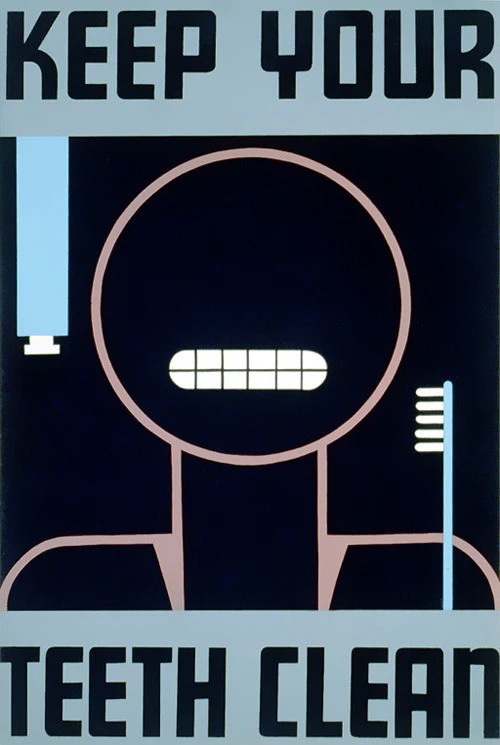
Two of my favorite books this year were not about comics specifically but about the larger visual culture in which comics emerged during the first half of the American 20th Century. Christopher Long’s overview of commercial graphic ideas, Modern Americanness: The New Graphic Design in the United States 1890–1940 takes us from the poster art craze of the 1890s to the streamlining motif that flourished in  late 1930s graphic storytelling. And Ennis Carter’s Posters for the People: Art of the WPA reproduces nearly 500 of the best posters from the New Deal-funded Federal Art Project of the 1930s. Between the two books we peer into a comics-adjacent history of commercial art and how it was incorporating design ideas that expressed the experience of modernity and absorbed some of the artistic concepts of formal modernist art. Although neither book mentions cartooning per se, their subjects are engaged in the same cultural project as cartoonists – to find visual languages that capture and often assuage the dislocations of modern change.

Continue reading

Get Me to The Church on Time: Decoding the Postwar Cartoon Marriage Boom

“It is a old comical strip trick – pretendin’ th’ hero gotta git married.” It keeps “stupid readers excited,” Li’l Abner claims in 1952. Days later he unwittingly weds Daisy Mae, ending a nearly 20 year tease. But this time it was no “comical strip” trick. In fact, several perennial bachelors of the comics pages fell in a post-WWII rush to the altar. Along with Abner, Prince Valiant, Buz Sawyer, Dick Tracy and Kerry Drake all enjoyed funny page weddings between 1946 and 1957. Comic strip heroes were just following the lead of the real-world heroes returning from WWII. Desperate to make up for lost time and return to normality, over 16 million Americans got hitched in 1946, the year after war ended in Europe and the Pacific. But each of these strips framed the new normal in American life differently. As the best of popular art often does, Vale, Dick, Abner, Buz, Kerry and their mates offered Americans a range of stories, myths really, about what this new normal meant.

Continue reading

The Year in Pre-Code Comic Book Reprints, 2025

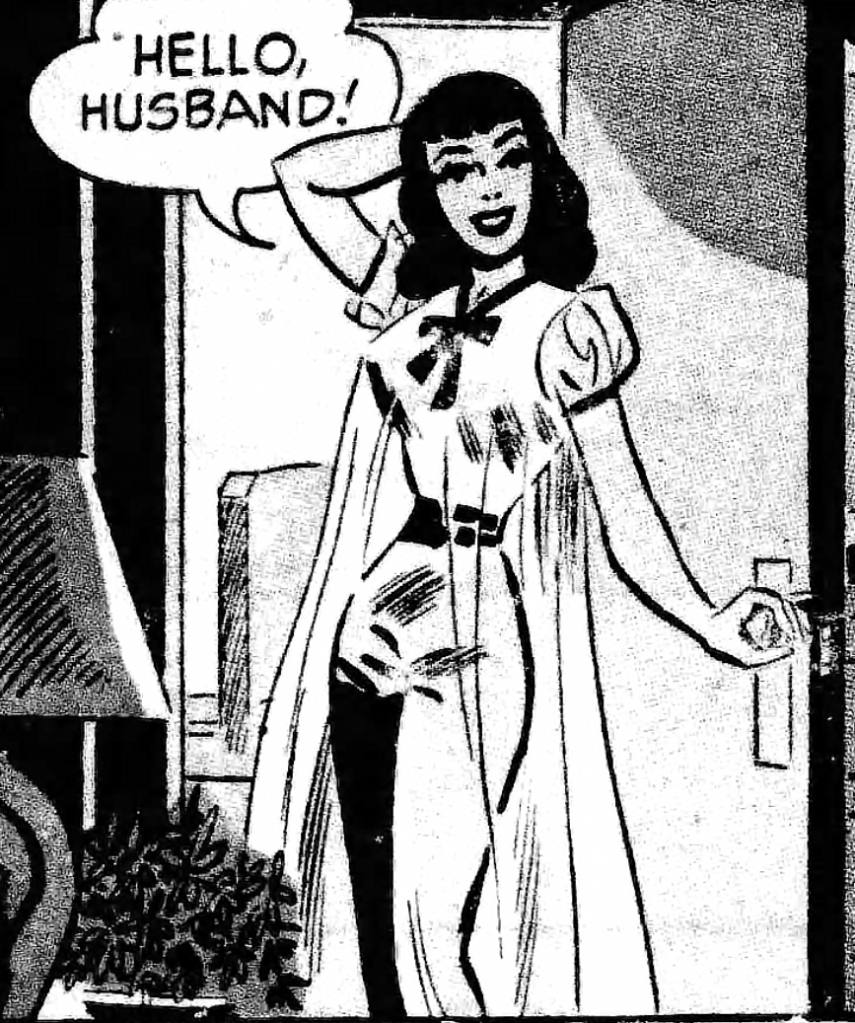
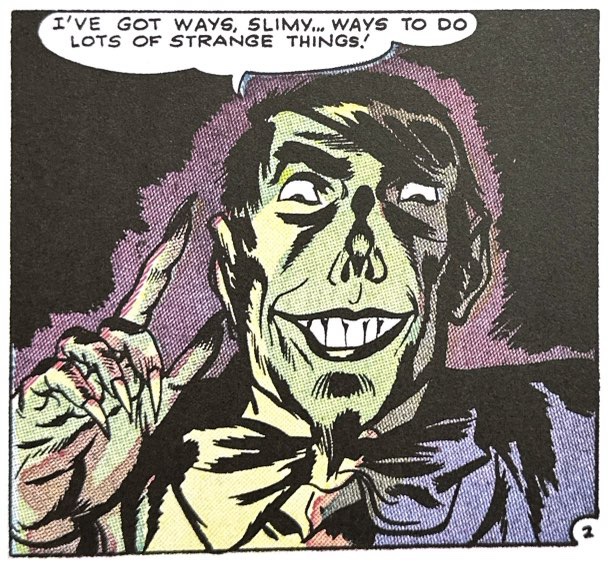
I am an EC chauvinist. I should cop to this before rounding up the notable pre-code comic book reprints from the last year. For decades now I have been devouring the many crime, horror, sci-fi, and romance comics that were part of the glut of adult titles after WWII, in part because they represented the unrealized potential of the comics format in post-war America. This was a real pop culture moment. War veterans ate a steady diet of comic books “over there” and seemed primed to follow the medium into more nuanced and adult storylines in the 40s and 50s. Likewise overseas, Japanese manga and Franco-Belgian bandes dessinées were on a similar path towards the popular, if not literary, mainstream. But in the U.S. that evolution was derailed and slammed into reverse by anti-comics crusades and the industry’s own “Comics Code Authority” in 1954. Self-censorship effectively arrested the medium in pre-adolescence, focused the industry on anodyne morality tales and pubescent fantasies of super-human prowess for at least a couple of decades.

Continue reading

2025 Comic Reprints: Rediscovering Lost Classics

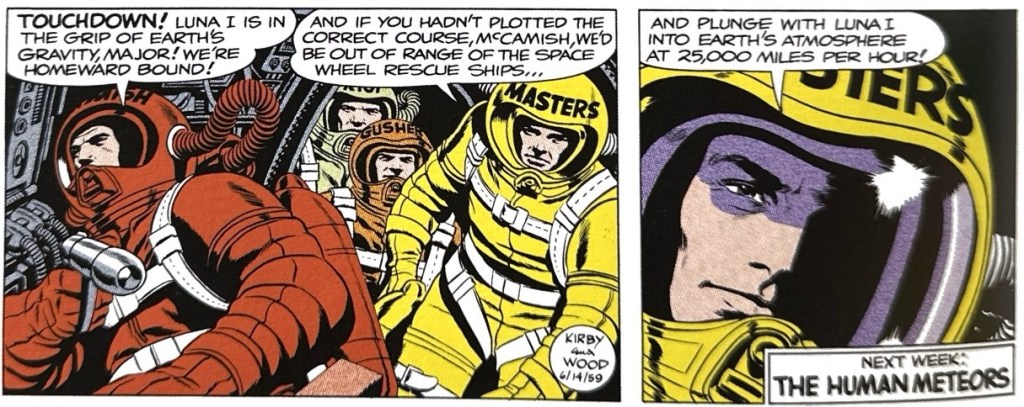
We have already reviewed some of the major 2025 comic reprint releases from major publishers: the reissue of Sunday Press’s Society is Nix, the anniversary celebrations of  Peanuts, Hagar and Beetle Bailey as well as Cathy, and the resurfacing if Rea Irvin’s The Smythes. But this year saw a number of self-publishers bring back everything from Sky Masters of the Space Patrol to Milt Gross. I wanted to devote one round-up that highlights these laudable efforts and the often-obscure treasures they have unearthed.

Continue reading

Shelf Scan: Celebrating Peanuts, Beetle Bailey, Hagar and Donald

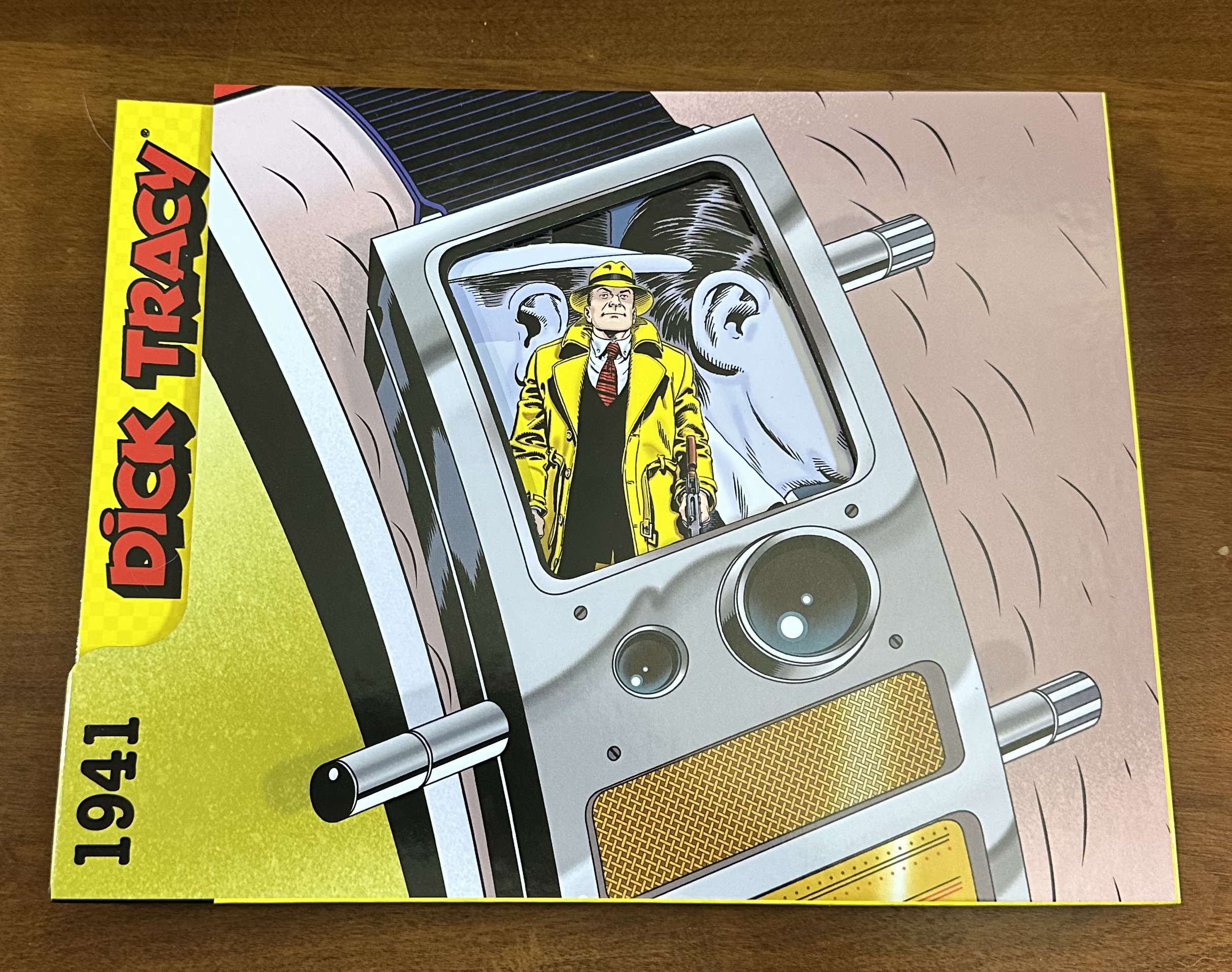
Before Thanksgiving and the shopping season overcomes us, let’s make sure we start our annual Panels & Prose quick takes on recent books for comic strip fans. The pile of new releases is high and teetering, so let’s break this down into several posts this week and next. Today, we handle the celebratory and anniversary collections involving Peanuts, Hagar, Beetle Baley. For a hands-on look at these books, look for the video “Quick Flip” at the end.

Continue reading

Review: Emanata and Lucaflects, Blurgits and Maladicta: Mort Walker’s Lexicon of Comicana

Like the comics art it dissects, Mort Walker’s legendary Lexicon of Comicana is unseriously serious. It is a lighthearted, profusely illustrated breakdown of the visual language of comics, the tropes, conventions, conceits, cliches that artists use to communicate a range of emotions and personalities at a glance. NYRB Comics has reissued this hard-to-find 1980 classic with a ton of supporting material from Chris Ware and Brian Walker. It is a must-have for anyone interested in the medium.

Continue reading

The Great Buster Brown ‘Scheme’ of 1906: Inventing Celebrity Endorsement

A 43-year-old man, something over 3 feet tall, is dressed in the signature, foppish, Buster Brown garb and wig. He commands his trained dog Tige to do tricks and then engages an audience of schoolchildren, sometimes hundreds, and prompts their pledge only to wear Buster Brown shoes. It was a good pitch in 1906. For local shoe merchants who secured this road show from the Brown shoe Company, “the scheme is the best they ever tried,” reported the trade publication Profitable Advertiser.  This was the dawn of mass media celebrity endorsements and syndicated point-of-sale marketing programs.

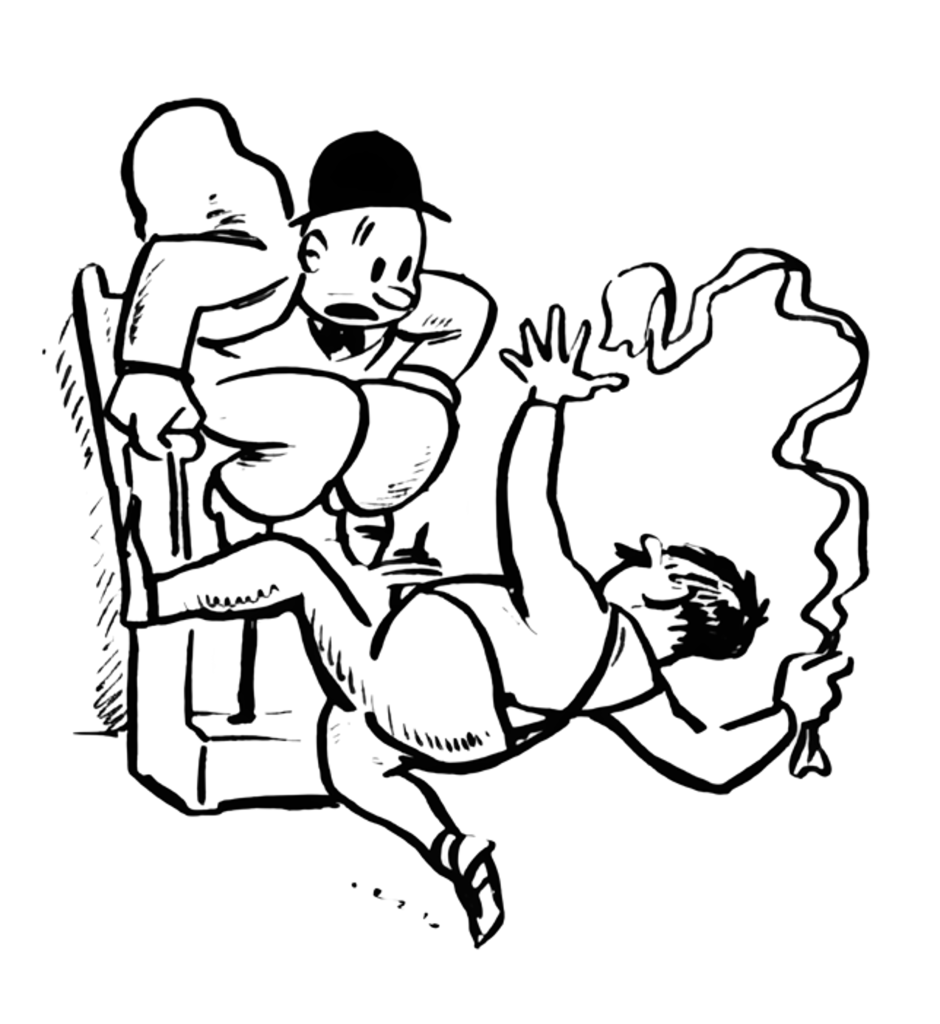
By the time creator R.F. Outcault started licensing his spectacular Buster Brown comic strip character in 1904, its boyish pranks and domestic chaor were familiar to audiences across the nation. Soon after premiering on May 4, 1902 in The New York Herald, the strip became a national sensation. At first blush, Buster seems an unlikely brand ambassador. Along with the Katzenjammer Kids and the many other copy cat pranksters of the “Sunday Supplements,” he was a quintessential comics “smart boy,” just more obviously middle class. His were the kind of antics that were commonly denounced by social reformers, clergy and teachers’ associations for their cruel pranks and disrespect for authority. And yet, here he was, his weekly sins somehow whitewashed by commodification. When Outcault sold licensing rights to the Brown Shoe Company in 1904, and launched the partnership at the St. Louis World’s Fair that year, he was also contracting Buster out to another 200 brands.

But it was the Brown Shoe Company that elevated the Buster Brown partnership into one of the longest-running comic character associations in history. And this was among the first examples of an emerging mass media ecosystem driving a new consumer culture of mass consumption. Brown not only married a celebrity to a mass produced and distributed product, but it showed how to standardize and syndicate a marketing program to a new nationwide market. Along the way, the Buster Brown marketing program pioneered marketing directly to kids in order to influence their parents’ buying habits.

Dubbed “Reception Tours,” the model provided for a Buster actor and a Tighe for day-long visitation to the retail outlet to drum up attention and drive shoe sales for the shoes. According to the St. Louis government’s history site, the Brown company hired up to 20 “midget” actors and trained dogs to staff the many road shows, which ran until 1930. But a forgotten article, “Buster Brown, Advertiser” in the obscure trade paper Profitable Advertiser gives us a more detailed look at “how the scheme is worked.” Retailers who agreed to buy at least 50 dozen pairs of Buster Brown shoes could access the program from Brown. The company provided a package that included the talent as well as marketing templates for local newspaper ads and handbills which the retailer agreed to buy in support of the Reception.

In this 1906 iteration, the company hired a 3-foot tall, 43-year old former salesman and “orator of ability,” Major Ray. In a trip to the town of Berwick, Buster and Tighe enjoyed a full day touring the local sites and manufacturing plants, visiting local officials and leading a parade through town. These tours became wildly popular local events. A Brown salesman claimed that “There were in the neighborhood of 8,000 to 10,000 people out to witness the reception.”

But Buster and Tighe kept their aim at the sales job. As Profitable Advertiser describes it, organizers scheduled the parade to pass local schools around dismissal time. Kids would gather back at the shoe store (or even rented theaters) to watch Tighe perform tricks and Buster entertain and pitch the crowd. They stood before a 30-foot banner across the store window declaring “Buy Buster Brown Shoes for boys and girls here. Every pair the best.” At times the crowd of youngsters were asked to raise their hands to acknowledge they will wear only Buster Brown shoes.

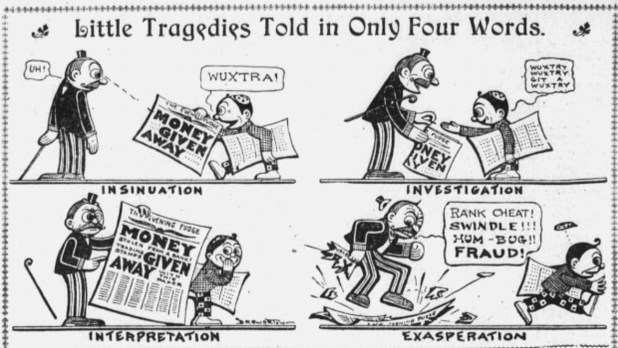
The Brown Shoe Company was writing the early scripts around modern media celebrity endorsement. Arguably, the American comic strip represented the first truly mass medium of the new century. Via newspaper networks and early syndication, premiere strips like Happy Hooligan, Katzenjammer Kids, Foxy Grandpa and Buster Brown were read on the same day coast to coast, a simultaneous, communal experience. That common content drafted nicely onto the new processes of mass production and distribution in manufacturing. Commodities now needed national identities. Consumer product branding emerged at precisely the time national entertainment heroes emerged in comic strips and soon in movies. The marriage of branding and celebrity seems natural and inevitable in part because they both came from a common source, the nationalization and standardization of both media and consumer goods. Consumer culture was being born, and in Buster Brown Shoes we see one of its weirder contours. Characters could be made into anodyne brands, while inert commodities could be given the gloss of personality.