Nemo’s Consumer Dystopia: The Man Who Owned Mars (1910)

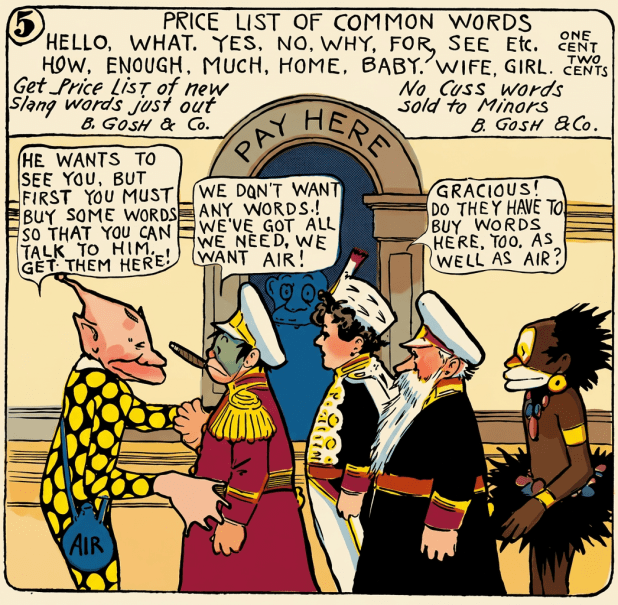
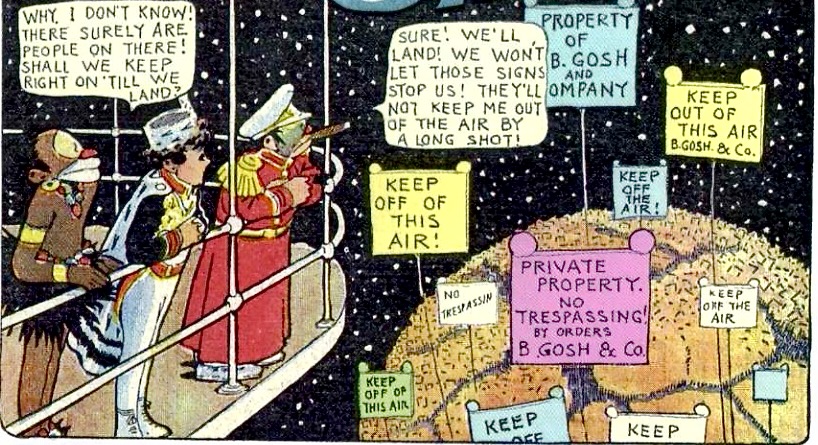
Between April 24 and Aug 23 1910 Winsor McCay sent Little Nemo and his wise-ass sidekick Flip to Mars, making for one of the longest and most politically pointed of the Little Nemo in Slumberland adventures. Mars was a dystopia of cement canyons and urban overgrowth, clots of faceless worker bodies rushing to thankless jobs. The landscape, with endless skyscrapers and spherical flying cars was as technologically wondrous as its lived reality seemed dismal. Mars is overtly Dante-esque. As the archway to the main city declares, “Abandon Hope All Ye Who Try to Enter Here Without the Price.” Unlike the classic Inferno, there is only one main sin driving the despair – greed. Even as the modern age of consumer capitalism was just taking shape, McCay satirized its logical extreme. Everything, from air to words, comes at a cost.

Continue reading
Random Nightmares: Winsor McCay Gets Rarebit

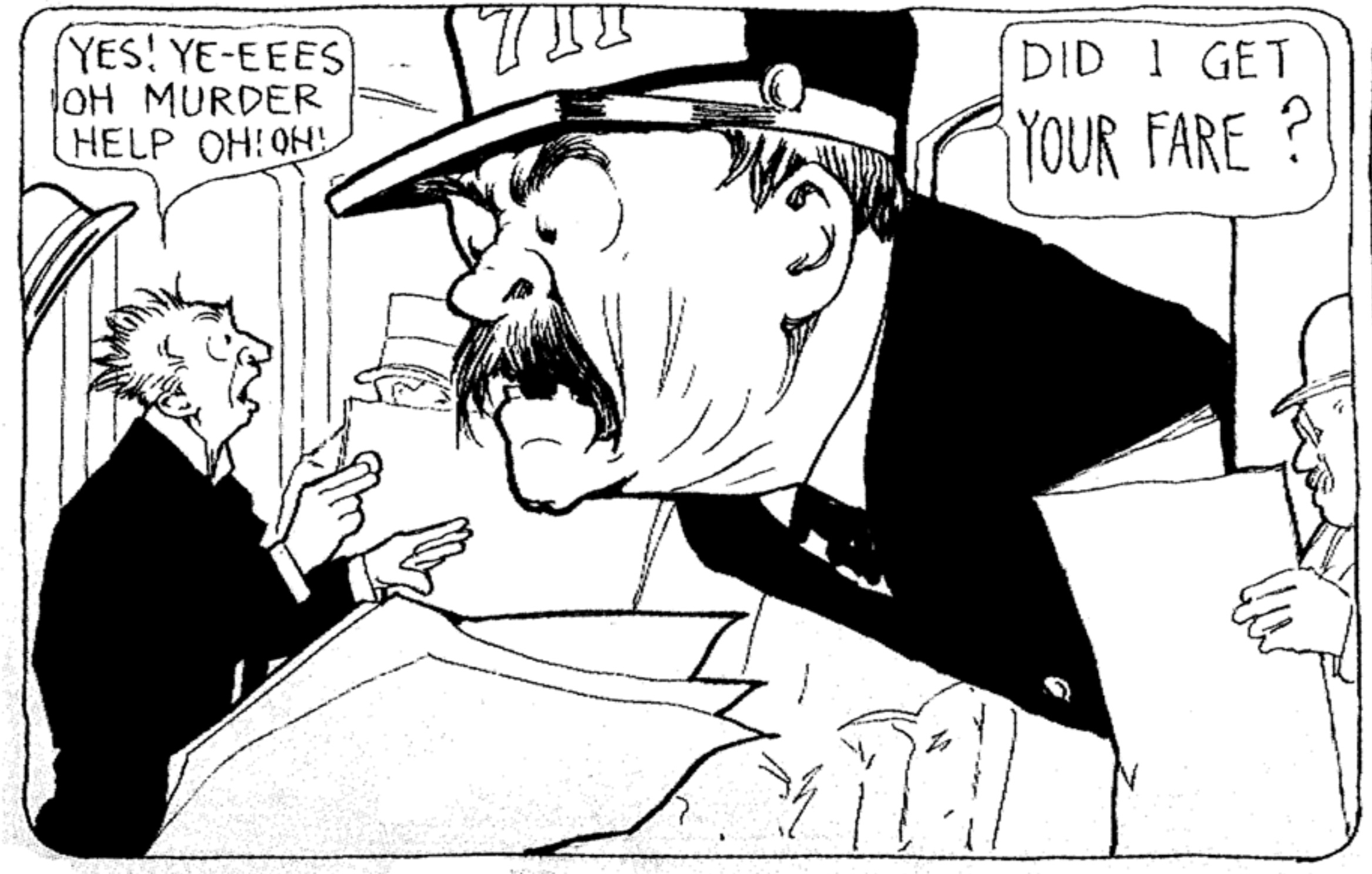
Where do we even start to highlight the wicked strangeness of Winsor McCay’s “Dream of the Rarebit Fiend?” The master comics artist drew over 800 nightmares in the first decade of the 20th Century, and most of them include startling examples of his surrealist imagination like the above. The conceit was simple. A normal scene in the opening panel quickly devolves into some bent reality: giant insects sucking a man’s forehead; a gent sneezing his head into the street; various limbs expanding to absurd sizes; people exploding willy nilly; or the characters themselves dissembling or penetrating the cartoon panels themselves. And it all ends in a final panel of the man or woman involved waking up and cursing the rich melted cheese dish (“Rarebit”) that prompted the nightmare.

Continue reading

Morning Meta: Winsor McCay’s Fabulist Realism

Just a reminder of Winsor McCay’s genius, this wondrous episode from Dream of the Rarebit Fiend. In other hands the simple furling of the panel would be enough of an inspired use of form. But McCay runs with the creative move to play through the possibilities of reimagining the comic strip frame as an object in the story. And as with all of McCay, the aesthetic innovation is laid atop the journalistic awareness of the real turn-of-the-century world. His middle class characters are just a few steps ahead of the debt collector. McCay’s special talent was for anchoring a fabulist imagination in a draughtsman’s respect for physics and a journalist’s awareness of the world changing around him.