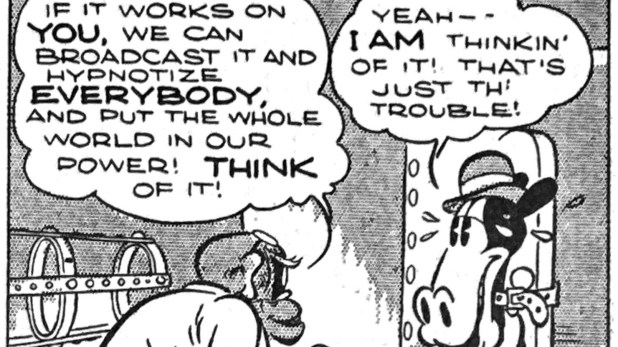
Getting nervous about the prospect of an AI oligarchy, a kind of anti-democratic sensibility that the Tech Bros finally say out loud? That they see in their own machines the prospects of a “post-human” future where rational engineers like themselves finally get the respect, authority and control they think they deserve? That compassion, democracy, maybe humanity itself are only for the weak willed? That this could be a better world if only pesky governments and, you know, people, would just leave them alone?
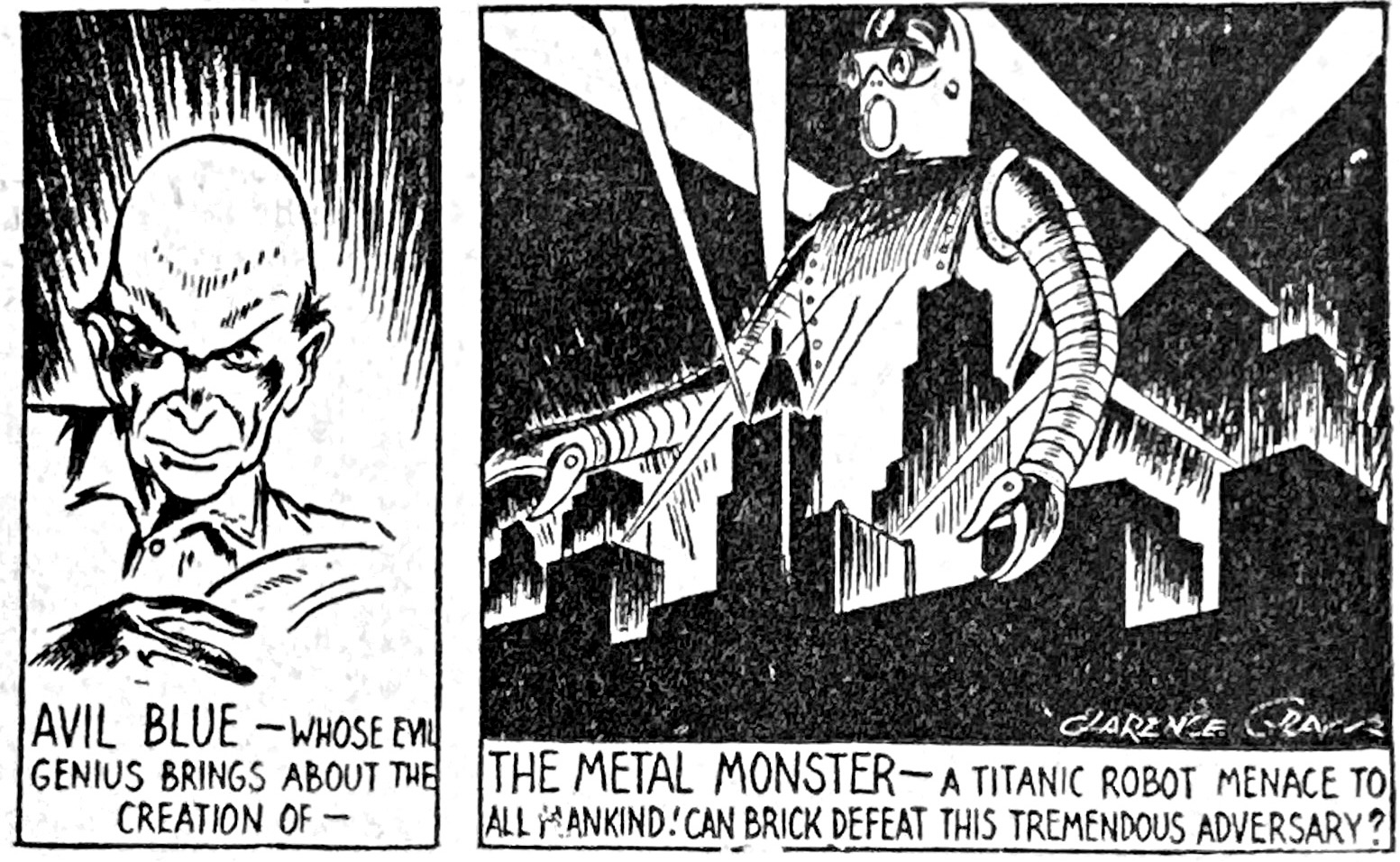
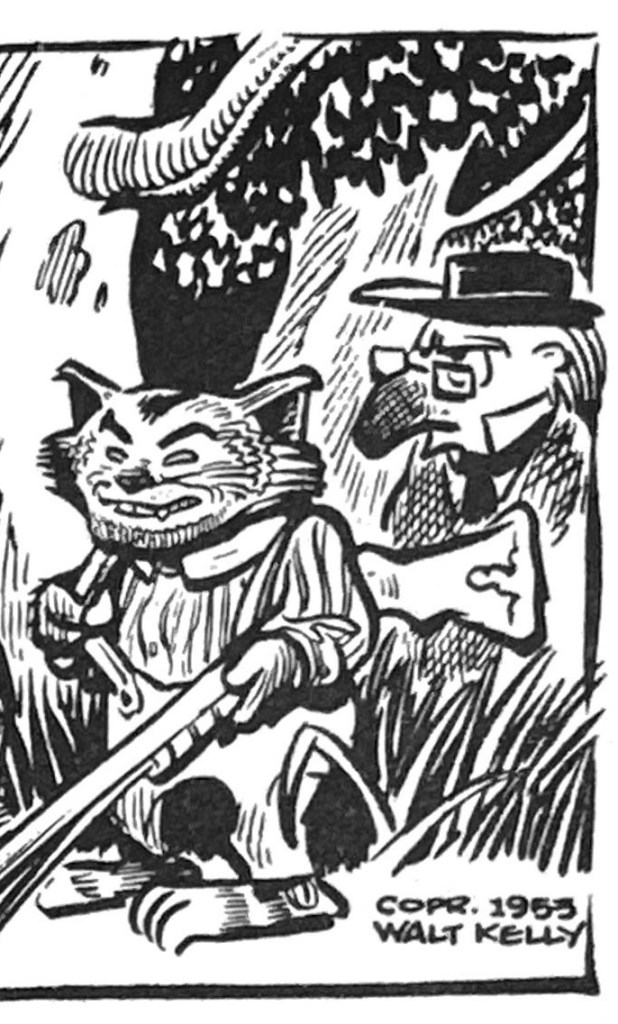
We round out our survey of comic strip baddies steeped in post-WWII American culture. As are our choices for standout villains. The funny papers followed popular culture into new Cold War mythologies around both heroism and its counterparts. Main currents of a rapidly changing social, economic, and political environment are imprinted unmistakably on all of these villains.
For the first 15 members of our rogues’ gallery, click into Part 1, Part 2, and Part 3. And once again, credit also goes to the the comics hibbyists of Facebook who contributed many ideas that made this review of villainy broader.
As the 1930s progressed, comic strip adventuring matured its visions of villainy. And the times were changing, as world war was becoming a reality rather than a distant rumble. As we saw in Part 1 and Part 2 of our favorite comic strip badasses, the thuggish, petty, and naturally mean antangonists of the 20s and early 30s (Bull Dawson, Sea Hag, etc.) had given way to the world-eating maniacs like Ming and The Cobra. By the late 30s, villainy becomes a bit more real and local – often focused on espionage or just personal greed. And the characters are evolving as well, more conniving and cerebral, less tied to gangsterism and power-madness than to cool demeanors and low-key malevolence. Evil was no longer wearing crowns, medieval cloaks or mustaches. They were well-dressed and brainy – the villain next door.
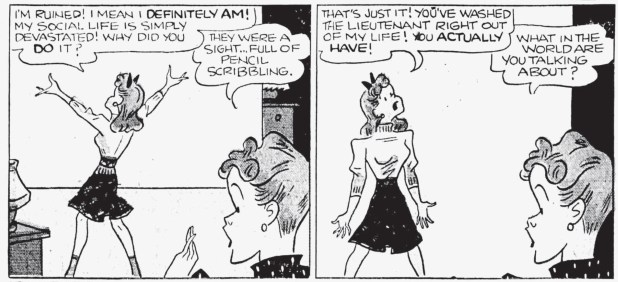
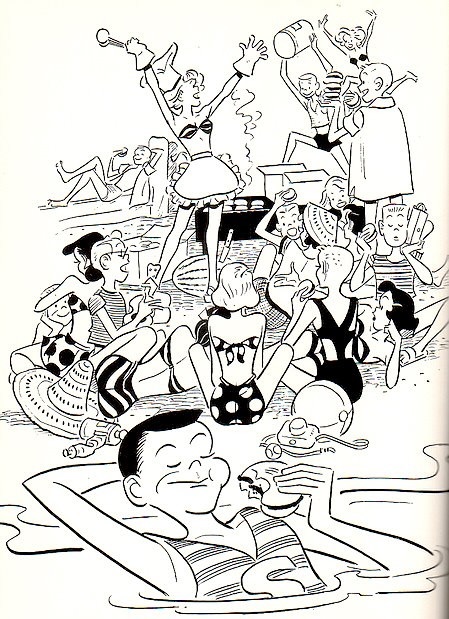
Like all American mass media of the last century, demographics and market forces provide the frame within which trends in comic strip content lived. Harry Haenigsen’s Penny launched in 1943 directly out of the intersection of two new social realities – gal power and the “invention of the teenager.” It is not surprising, then, that Haenigsen took an almost sociological approach to portraying two things he certainly was not – young nor a girl. Like any good cartoon anthropologist, he decided to go native. The Oct. 6 1946 Philadelphia Inquirer reports how the New Hope artist researched Penny by eavesdropping on soda shop conversations and even hosting cookouts for the local high schoolers.
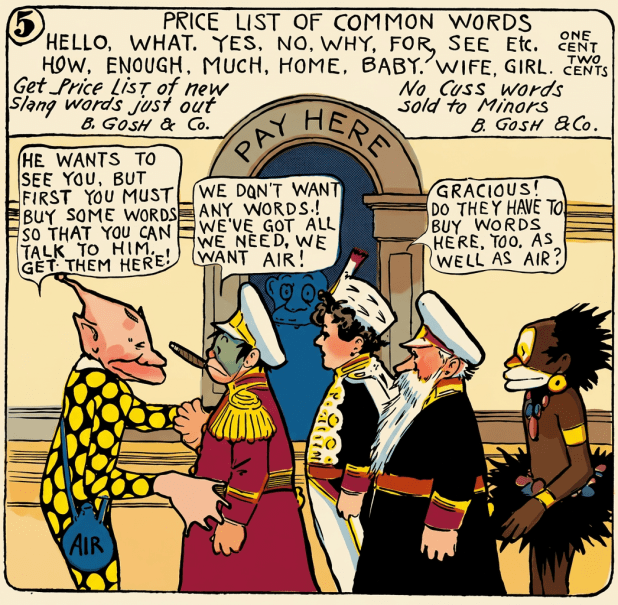
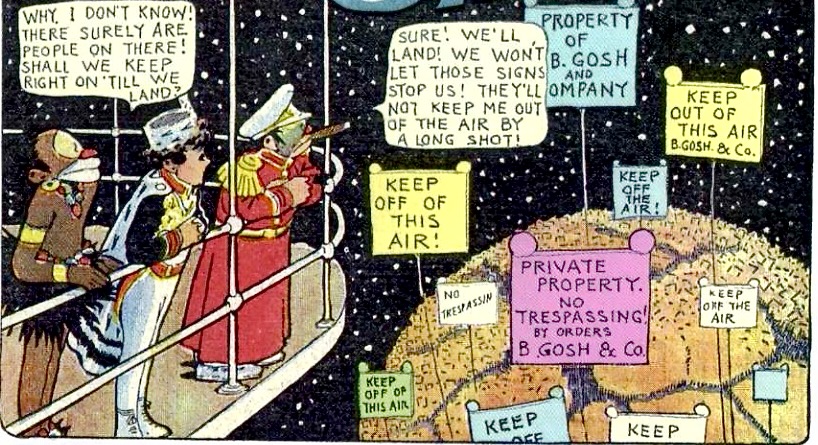
Between April 24 and Aug 23 1910 Winsor McCay sent Little Nemo and his wise-ass sidekick Flip to Mars, making for one of the longest and most politically pointed of the Little Nemo in Slumberland adventures. Mars was a dystopia of cement canyons and urban overgrowth, clots of faceless worker bodies rushing to thankless jobs. The landscape, with endless skyscrapers and spherical flying cars was as technologically wondrous as its lived reality seemed dismal. Mars is overtly Dante-esque. As the archway to the main city declares, “Abandon Hope All Ye Who Try to Enter Here Without the Price.” Unlike the classic Inferno, there is only one main sin driving the despair – greed. Even as the modern age of consumer capitalism was just taking shape, McCay satirized its logical extreme. Everything, from air to words, comes at a cost.
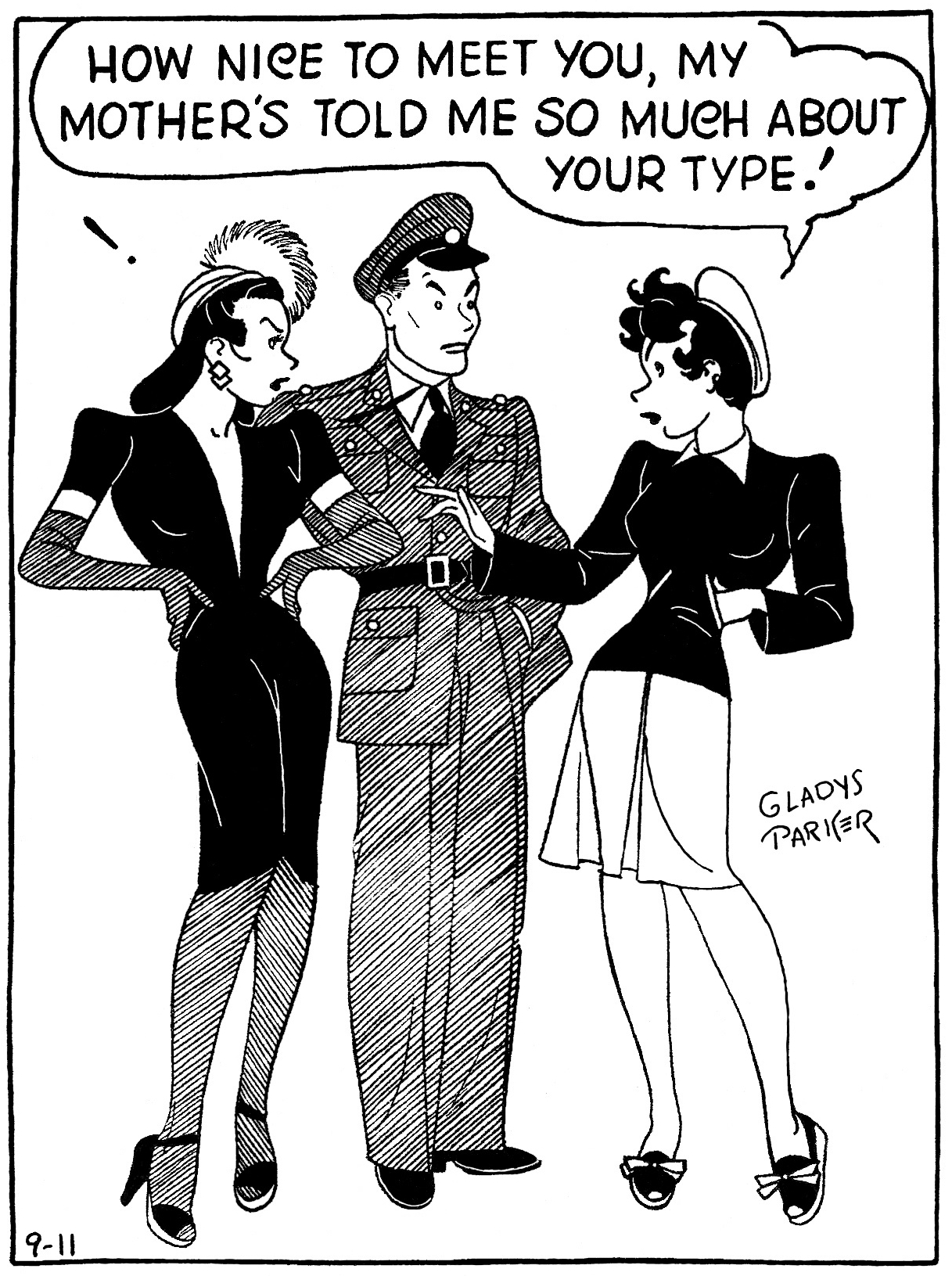
Gladys Parker was among the most recognizable and well-reported cartoonists of the 1930s and 40s. It was hard to miss her. She was the spit-curl image of her avatar Mopsy, the sharp-tongued and stylish star of her own single-panel comic (1937-1966). It is hard to say which came first, Parker’s cartoonish look or Mopsy’s, but they shared the same shock of black curlicues, sharply lined brows and eyes, and a precisely “sticked” set of lips. And since Parker was also a noted, audacious clothes designer, Mopsy was a working girl with a seemingly endless closet of ultra-modern fashions.
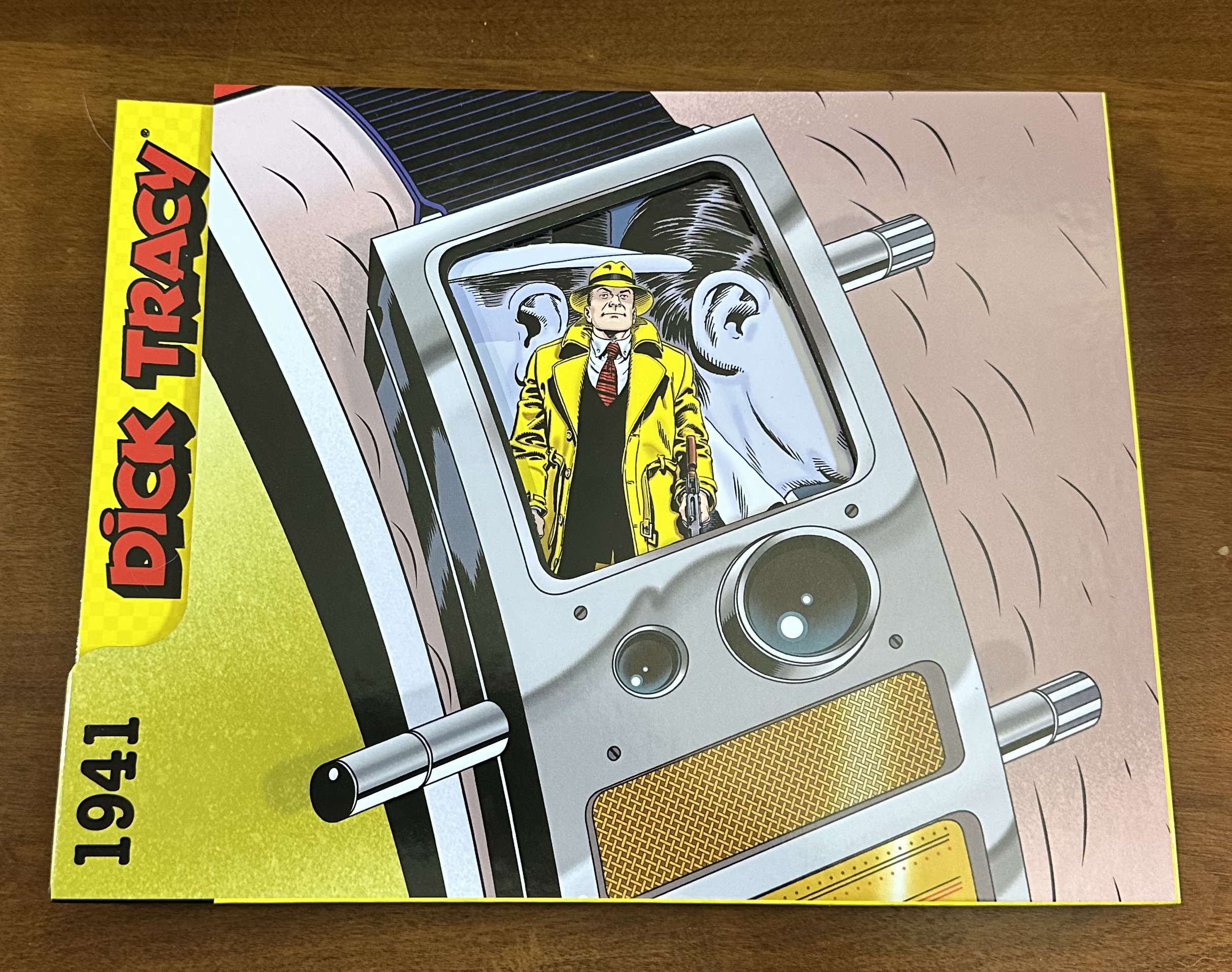
Chester Gould’s Dick Tracy has been among the most reprinted strips of all time. The reasons are obvious, and I don’t need to rehash this site’s exegesis on my personal favorite. Tracy was the strip that turned me on to classic newspaper comics. Gould’s singular visual signature, his grisly violence, grotesque villains and deadpan hero made Dick Tracy compelling on so many levels. And now we get yet another packaging style from the same Library of American Comics group that finished its magisterial 29-volume complete Gould run, 1931-77. With new publishing partner Clover Press, LOAC has reworked some of its earliest projects, like the magnificent upgrade of Terry and the Pirates and the first six volumes of The Complete Dick Tracy. And now we get slipcased, paperback editions of prime-time Gould, 1941 through 1944. Much more affordable, manageable, and available than the original LOAC volumes, each of which covered about two years of comics, the four $29.99 books are also available as a discounted set from Clover. This new series started as a crowd-funded BackerKit project last year.