
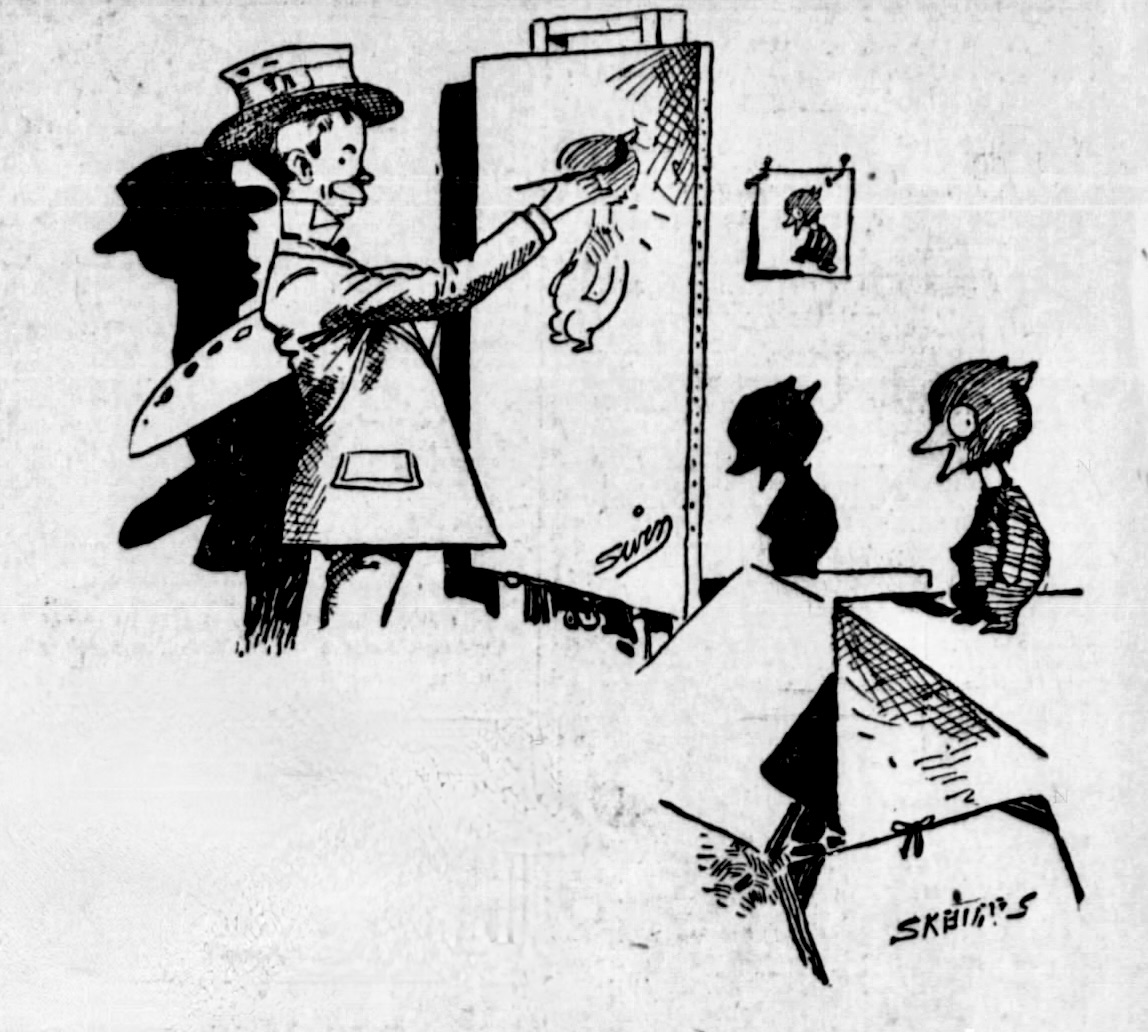
Jimmy Swinnerton’s adorable cartoon bears are generally considered the first recurring daily newspaper comic character. More than that, however, he may have been smarter than the average bear. He may also be an important bridge across traditional newspaper illustrated reporting and editorial cartooning that spawned the very different conventions of comic strips as we came to know them.
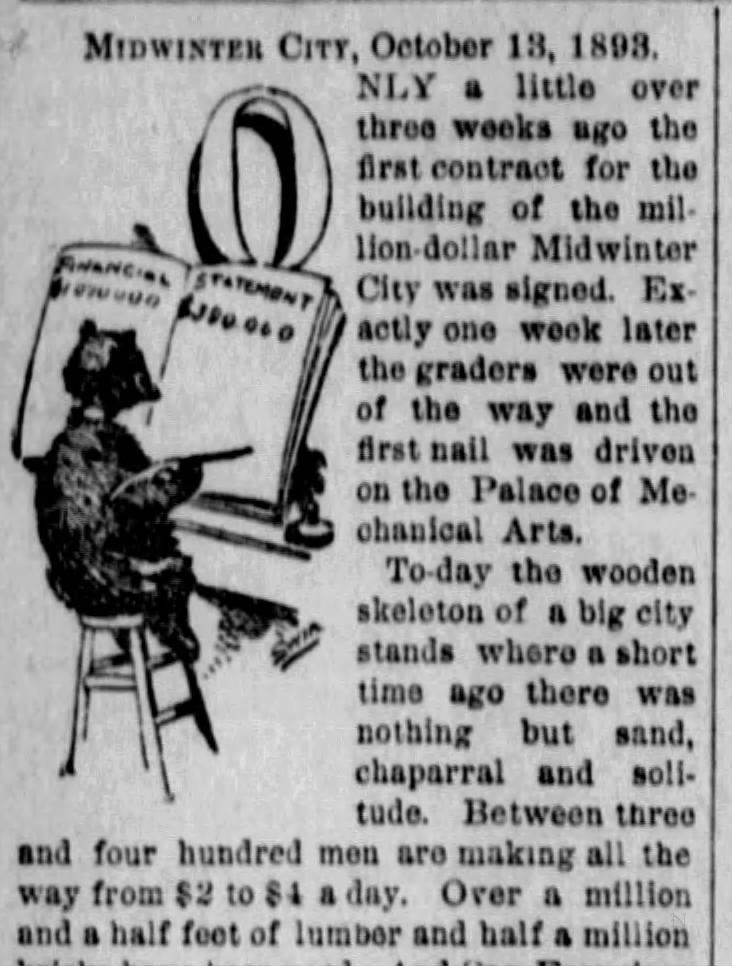
When his first bear appeared in the San Francisco Examiner on Oct. 14, 1893, Swinnerton was already an old hand at both illustrated reporting and editorial cartooning. But the bear was a different and new animal. First crafted by a follow artist as a spot illustration for reporting about San Francisco’s upcoming California Midwinter International Exposition of 1894, it was passed on to Swinnerton, who soon made it his own.
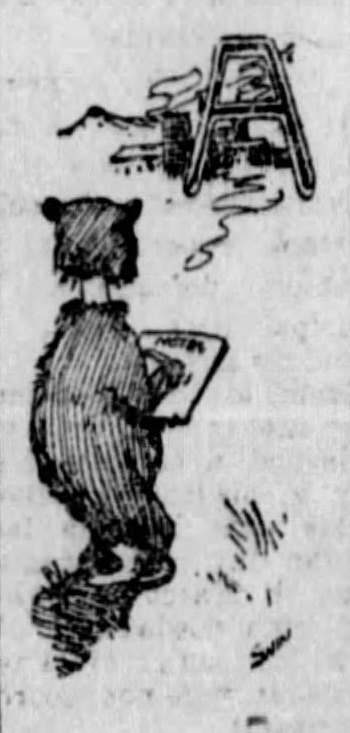
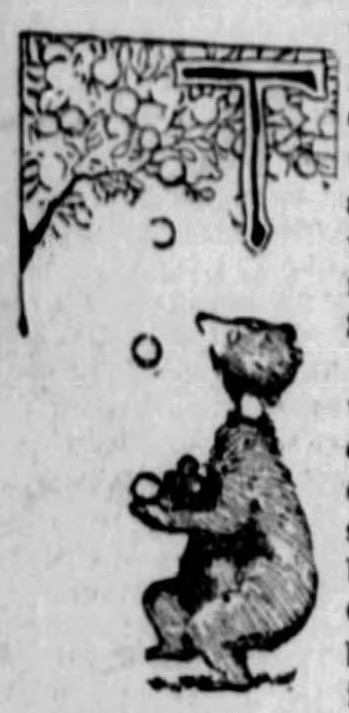
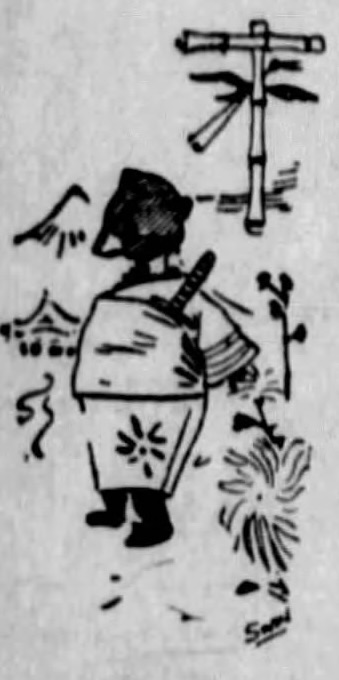
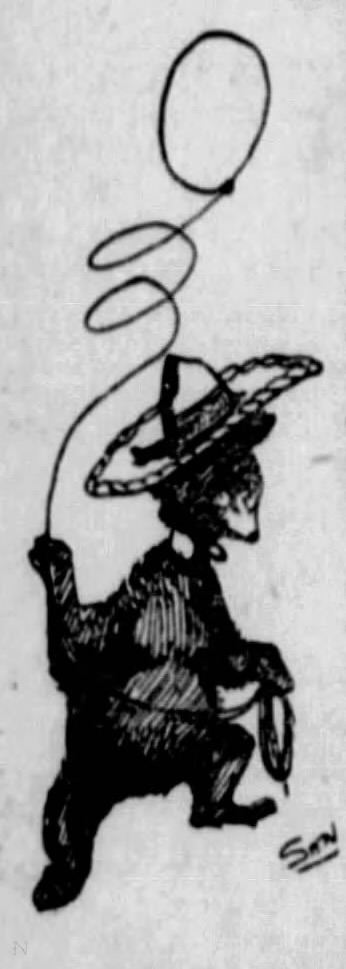
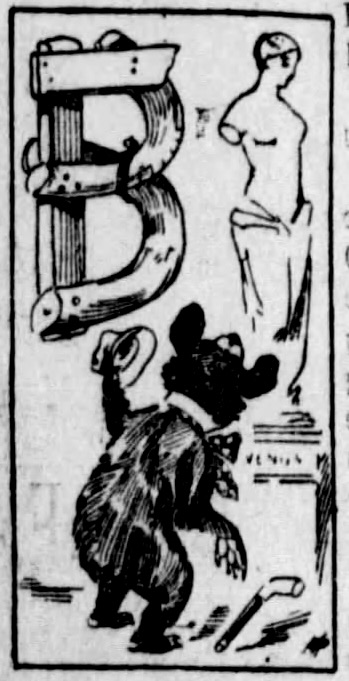
The bear was an all-purpose mimic related to the day’s reporting about Expo exhibits coming from around the world. One day he is a sculptor, another a Geisha, an accountant, a wrangler, an orange juggler, etc. Swin gave him a rotund torso and pronounced circular ears, but pinched his neck tightly with an oversized collar. Cuddly and assuredly tame, this bear had one paw in the topicality of illustrated reporting and another in the abstractions and caricature of editorial cartooning. But it had its own look and tone – more whimsical and ironic. Foreshadowing the comics medium itself, this bear started as crudely drawn, marginal filler that audiences forced into the center of attention. Whatever that bear represented in tone or spirit, perspective or identification, resonated quickly with Examiner readers.
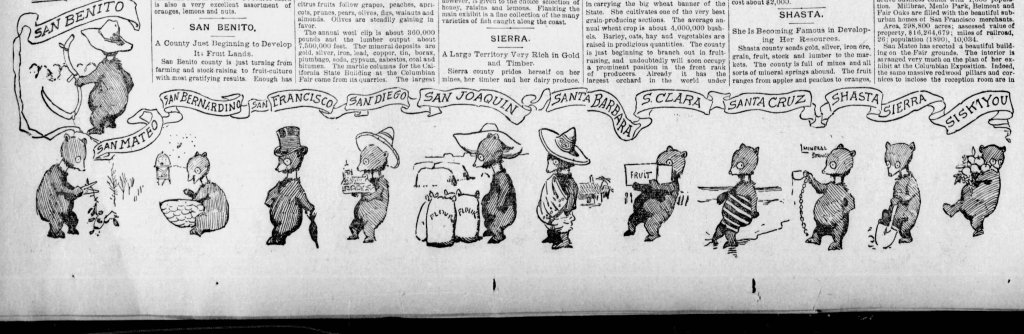
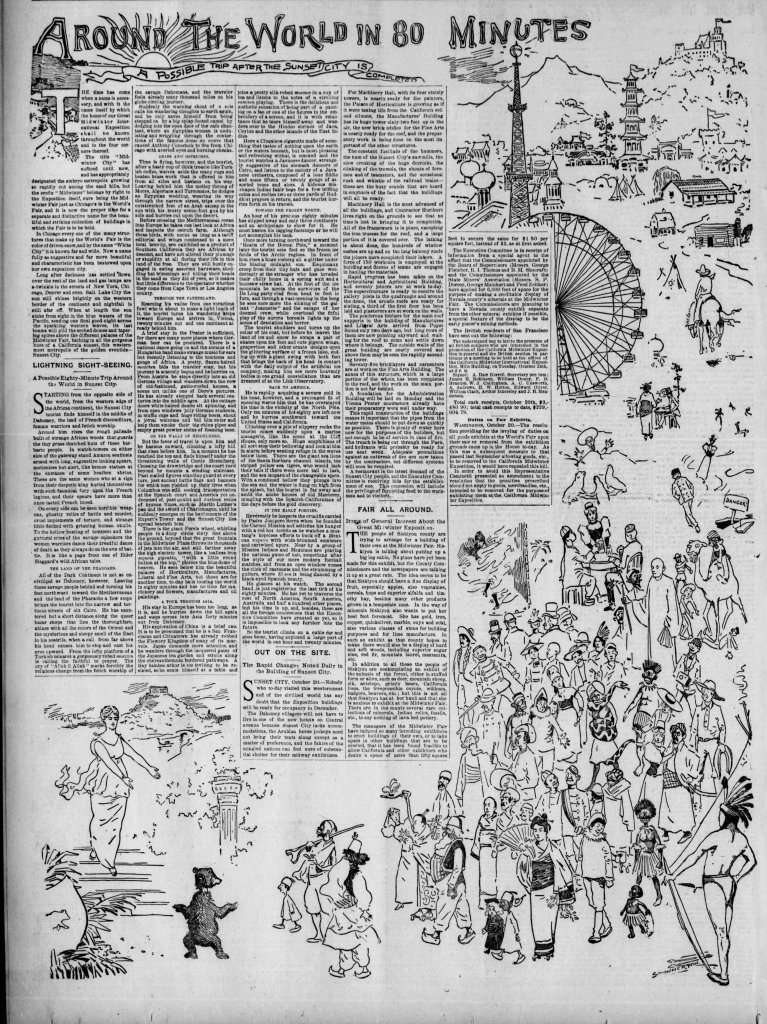
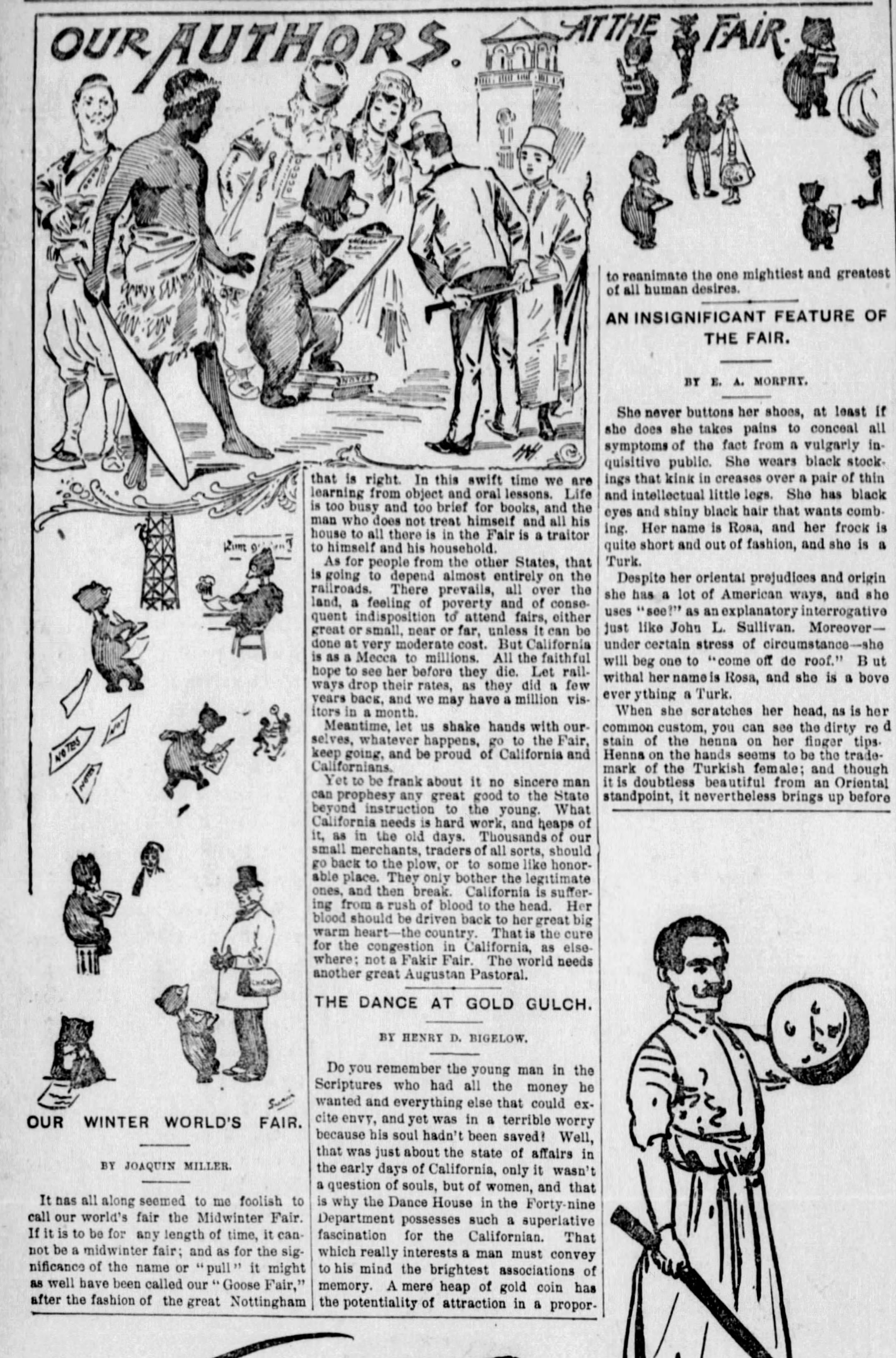
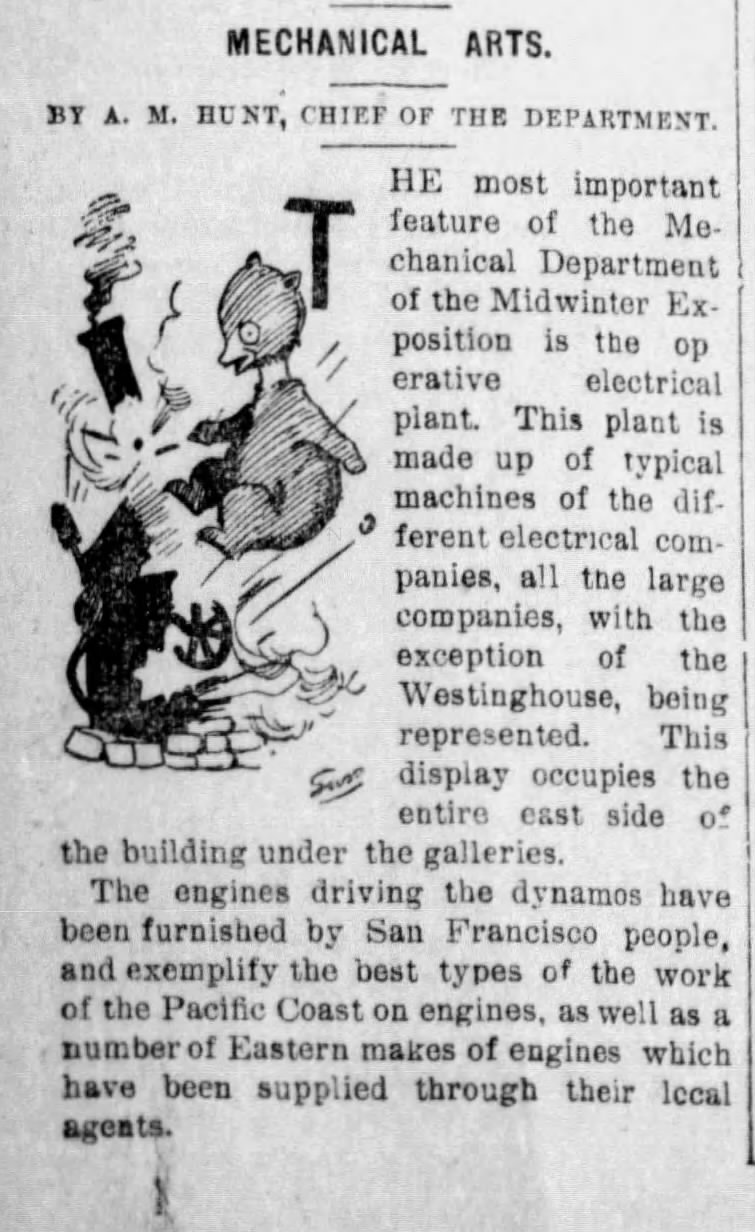
By the time the Fair opened in January 1894, the Swinnerton’s bear had become a widely recognizable emblem and a mascot for the Examiner. Plaster of Paris statues of the bear appeared in the newspaper’s own exhibit. And in the Jan. 28 commemorative issue of the newspaper, the bear was everywhere. It was rendered as reporters and artists covering the Fair. It goofed on exhibit themes, and it characterized the many communities represented at this celebration of California’s role in the world economy. The cartoonish bear even appears within realistic scenes involving figures done in the usual reportorial style.
This makes for an interesting juxtaposition of illustration modes in late 19th Century newspapers and raises questions of how and why the comic strip took on the aesthetic conventions it did. Comics history generally pays little attention to the visual context of the newspaper itself when discussing how the art of comics strips evolved. In fact, the newspapers of the 1880s and 1890s, especially the ones like The Examiner with a sensational tone and wider mass appeal, had multiple visual voices at work across its pages – from news drawings to editorial cartoons, fashion illustration and political portraits to advertising art. Illustrated journalism, while it purported to be representational, either took the form of a posed bust of a public figure or a drawing of a reported scene at its melodramatic height. Hearst’s Examiner was among the pioneers of the sensational style. But then there was also in the daily paper a much different caricature style practiced in editorial cartooning. Also grounded in everyday events, the editorial cartoon either works through exaggerating human features or highly abstracted symbols designed to surface an underlying reality. At the same time the visual culture of the newspaper also sports advertising imagery, which is aimed at inspiring trust and desire.
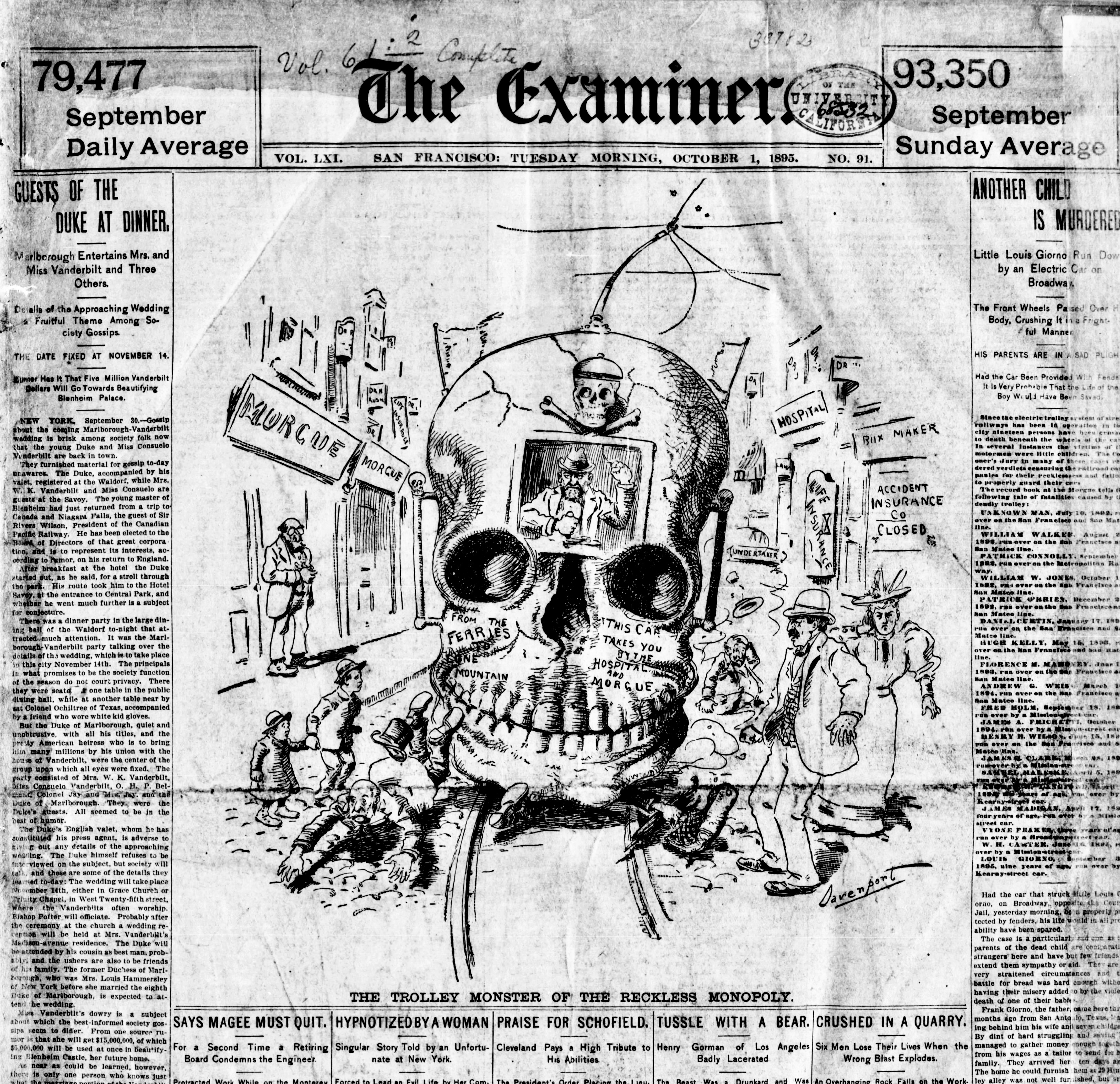
To understand the nuances among illustrative styles, just consider one issue of The San Francisco Examiner from October 1, 1895. By this point in Examiner history, Hearst’s use of sensational headlines and imagery is unrestrained. Massive editorial cartoons often appeared on the front page. In this case, the legendary Hearst cartoonist Homer Davenport imagines a surreal death’s head trolley trampling and decapitating innocent San Franciscans. Trolley accidents, runaway cars, and attendant liability suits against operators were reported incessantly in most city newspapers. And in this caricature mode of editorial cartooning, exaggeration and symbolism are aimed at heightening a sober reality of life. This front page also demonstrates all of the conceits of the sensationalist press that was about to fuel the comic strip phenomenon to come. Hearst, like his coming rival Joseph Pulitzer, positioned their papers as populist defenders of working and middle calls Americans who were seen exploited and endangered by corrupt government and monopolies. Tales of municipal malfeasance and corporate inhumanity were their bread and butter. As were impolite stories of mayhem. Note the headlines surrounding the cartoon: “another” murdered child, quarrymen killed by misplaced blast, a bear mauling. The raucous, violent, socially rude, retributive themes that characterized the first decades of American newspaper cartooning were very much extensions of the tone already set by the new mass appeal newspapers that would germinate the new medium. And the circulation wars that drove much of this content is in full display above the banner. In an emerging age of “mass media” circulation numbers were part of a newspaper’s identity and appeal. Popularity, not quality, was the new currency.
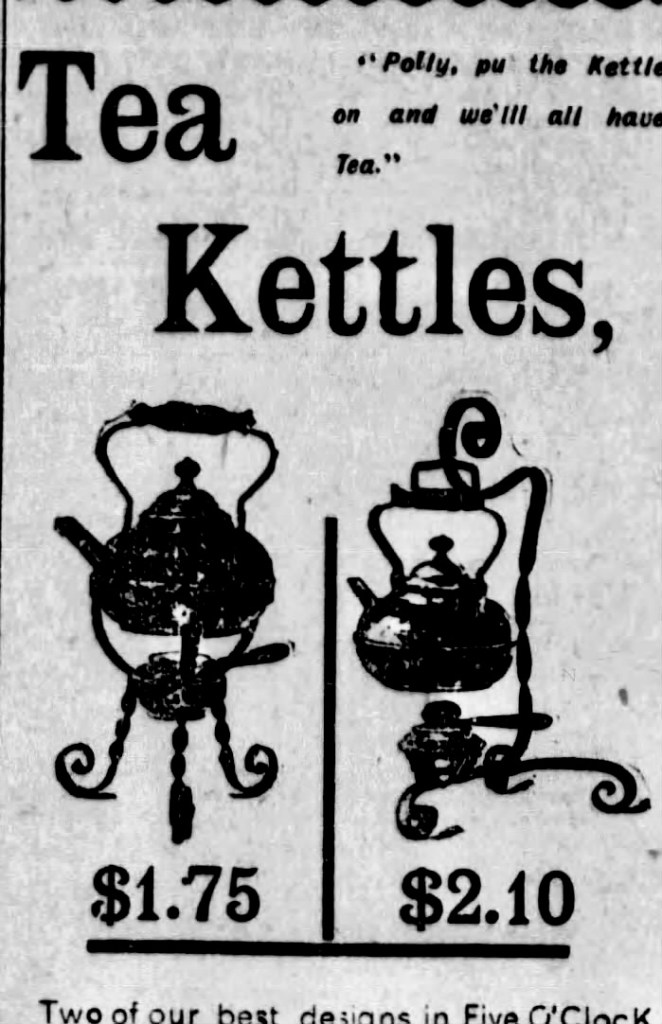
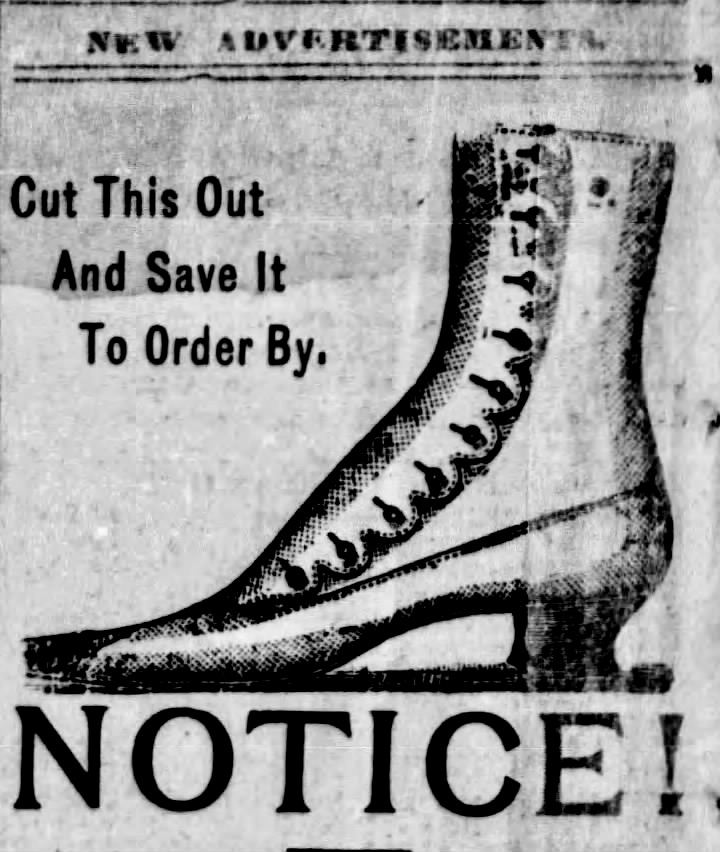
The financial engine behind this new age of mass media was, of course, advertising, which brought its own visual style to newspapers. While it went through many different stages and visual strategies over the next century, most of advertising art aims towards aspiration and idealization – what sociologist Michael Schudson deftly labeled “capitalist realism.” The earliest visual ads in late 19th Century newspaper tried to establish trust, both in the nationwide distribution of brands as well as the new advertising industry that was hawking them. The concept of advertising itself was still associated with chicanery and deception, he stuff of snake oil peddlers. Its style of choice is diagrammatic, a technical look of verisimilitude and detailing designed to sell product by accurately detailing its features and look.
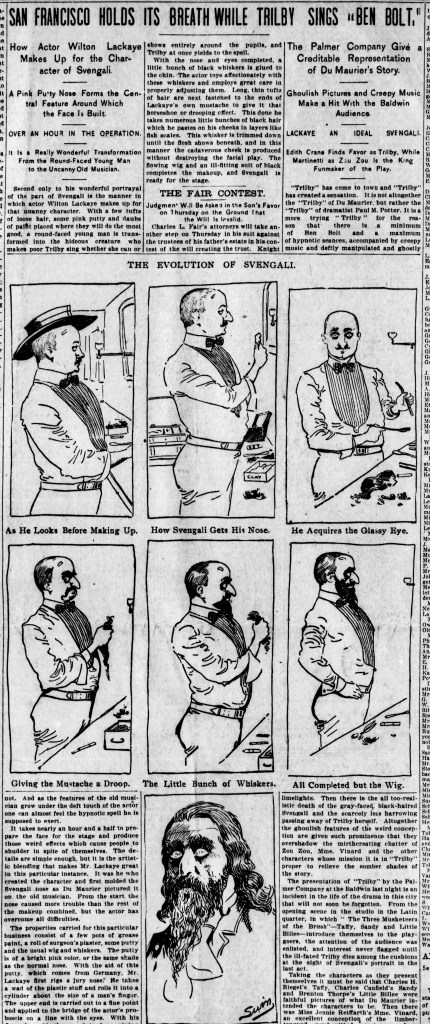
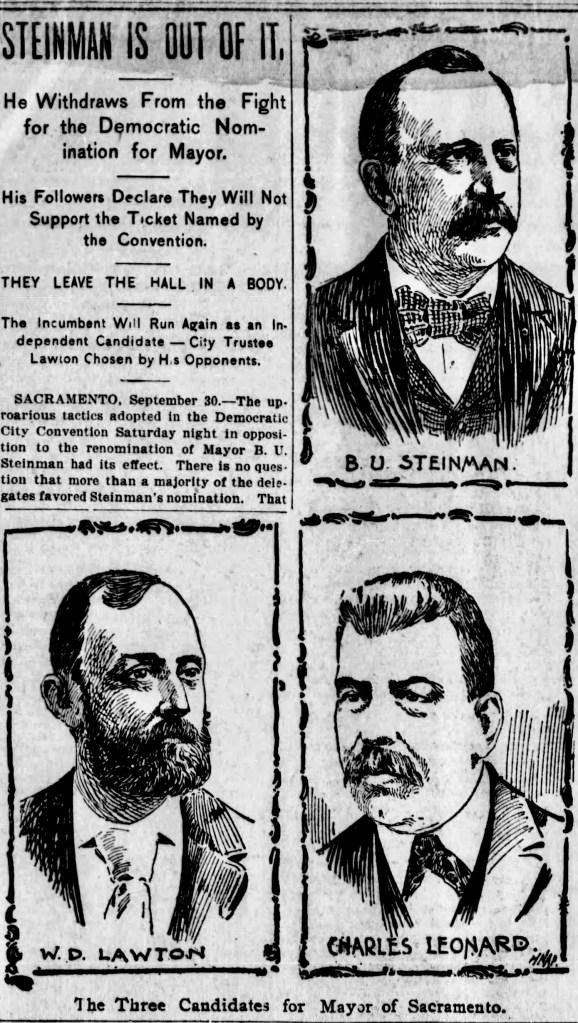
But the more prevalent art style in the newspaper’s visual experience was news illustration. Starting in the 1860s, evermore city newspapers maintained full staffs of artists were were assigned along with reporters to visualize breaking stories. In this same Oct. 1 1895 issue, for instance, we also get to see the Examiner bear’s father, Swinnerton himself, working in that reportorial mode. He breaks down a current actor’s stage make-up routine using both a slightly cartoonish sequential style culminating in a reportorial realism that resembles the bust-style of other illustrated reporting. Again, verisimilitude is the implied aim of this style, but it it also trying to capture either identity or a heightened moment. Swin, like most of the earliest newspaper cartoonists, started in illustrated reporting, sports and editorializing. They had already learned to exercise different artistic modes for different purposes when this cartoon bear dropped into the mix and became so popular so quickly.
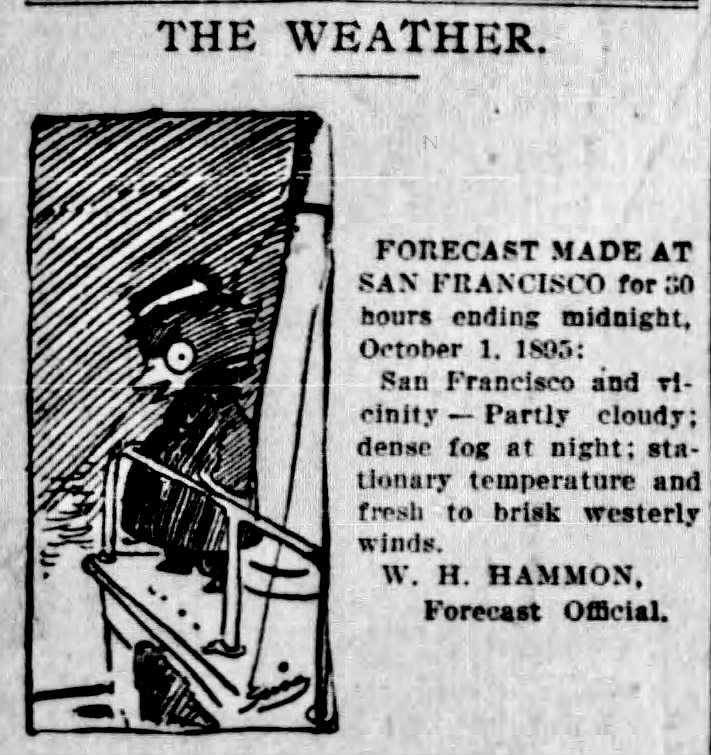
Within the gallery of diverse newspaper imagery, the Swinnerton bear quickly settles into a different look and role from other illustrations. He becomes the weather mascot, a kind of representative everyman stand-in who dramatizes and responds to each day’s forecast. responding to each day’s forecast. Neither caricature nor realistic, this figure is drawn anthropomorphic fantasy that is still tied to the basic business of the news, chronicling life. Unlike the other illustrations that have us observe or emulate events (reporting), judge (caricature) or aspire to (advertising), the bear invites identification. That identification is reinforced by the everydayness of the character. Serial characters certainly existed in popular arts before the comics, in folk tales, dime novels, etc. But this serial exposure to the mascot, and the bears’s connection to the mundane, unremarkable, everydayness of the weather, indicates a different kind of relationship brewing between cartoon characters and readers. Swinnerton’s bear figures are developing personality, if not a personality. It is a bit of a cypher – taking on and taking in the weather around it, playing a range of roles at the World’s Fair. But there is always the suggestion of identification – that he is standing in for us in a scene.
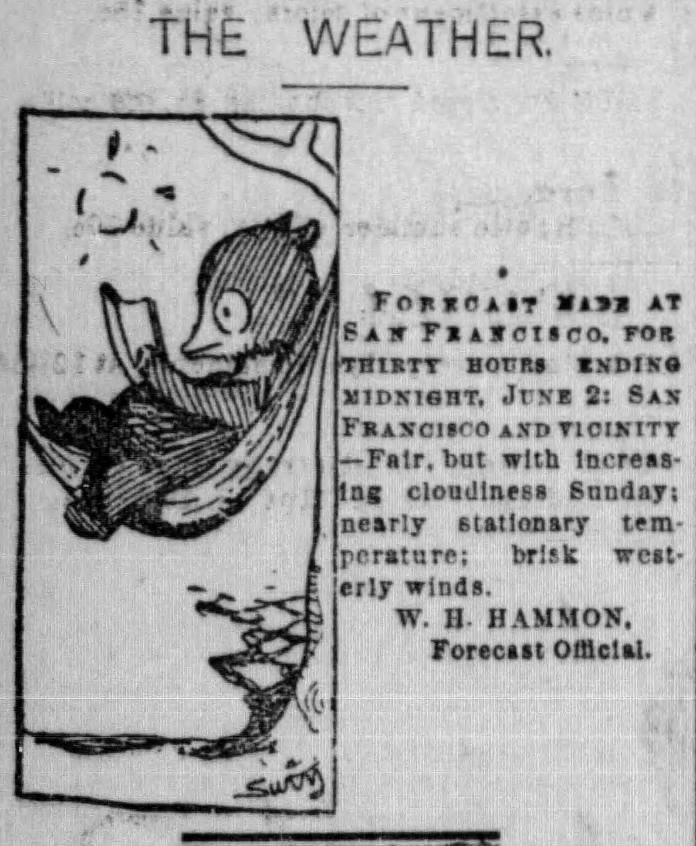
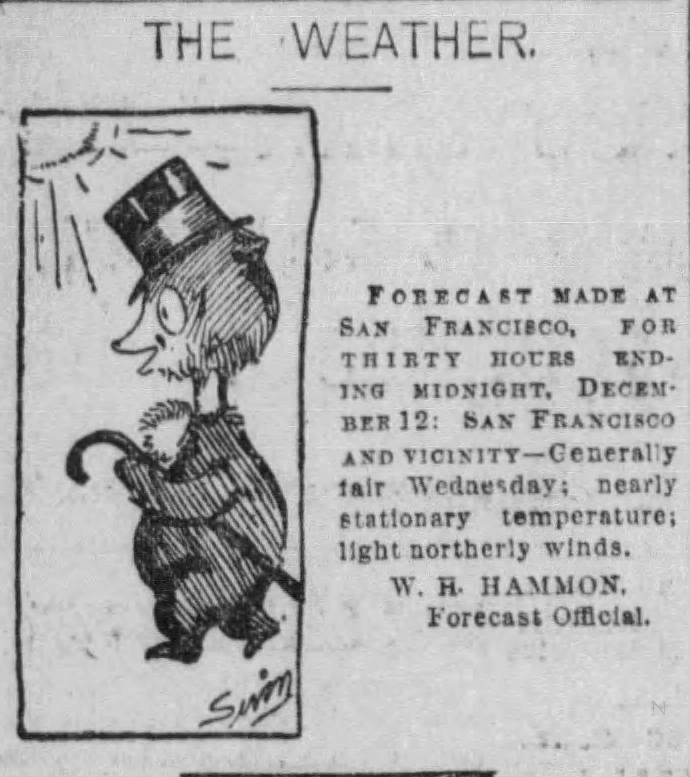
This vague sense of identification and personality propel Swin’s bears when they evolve into a regular Sunday cartoon feature in 1895. The Examiner itself says as much in their announcement on June 2 that the newly dubbed “Little Bears” would become a weekly fixture on the Sunday children’s page.
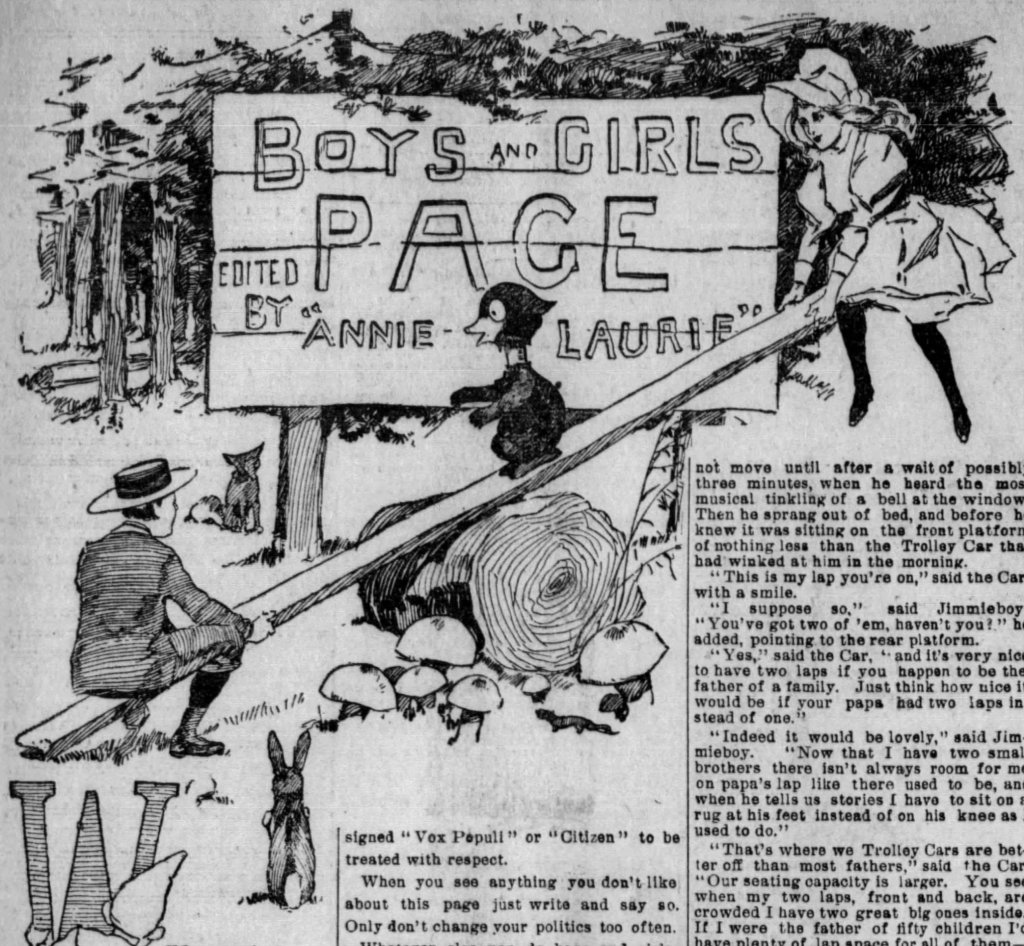
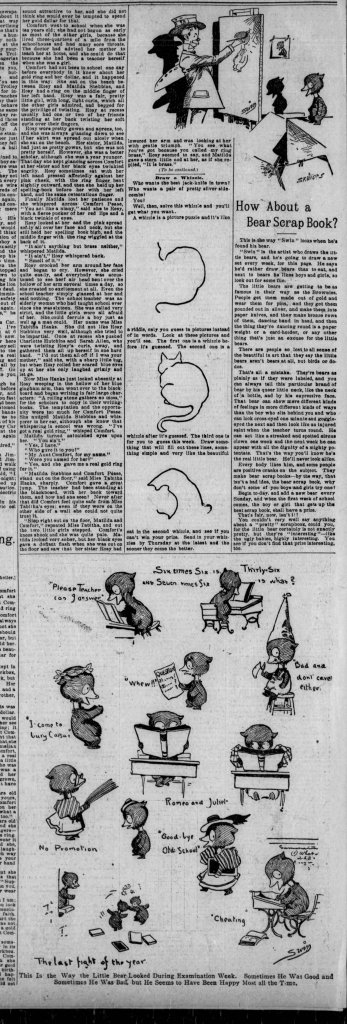
The newspaper recognized that the daily bear had become a hit among readers, who had refashioned the cartoon into real life objects and saved them into scrapbooks. And who is this alluring bear? Perhaps everyone all at once, suggests the newspaper. “That bear can show more different kinds of feelings, in more different kinds of ways than the boy who sits behind you and who can look cross-eyed one minute and goggle-eyed the next and then look like an injured saint when the teacher turns around. He can act like a streaked and spotted circus clown one week and the next week he can appear with all the dignity of a mighty potentate. That’s the way you’ll know he’s the real little bear. He’ll never look alike.”
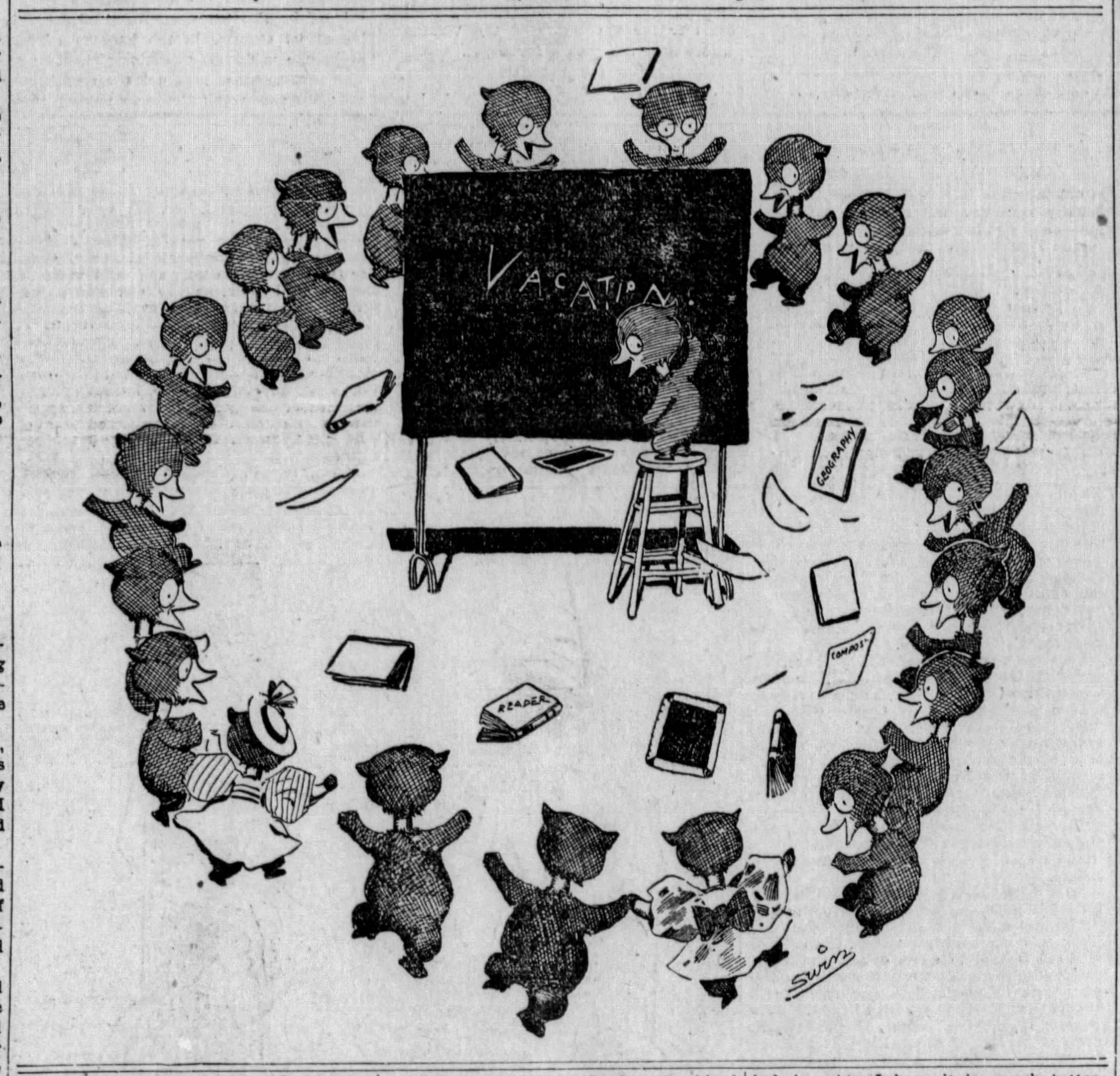
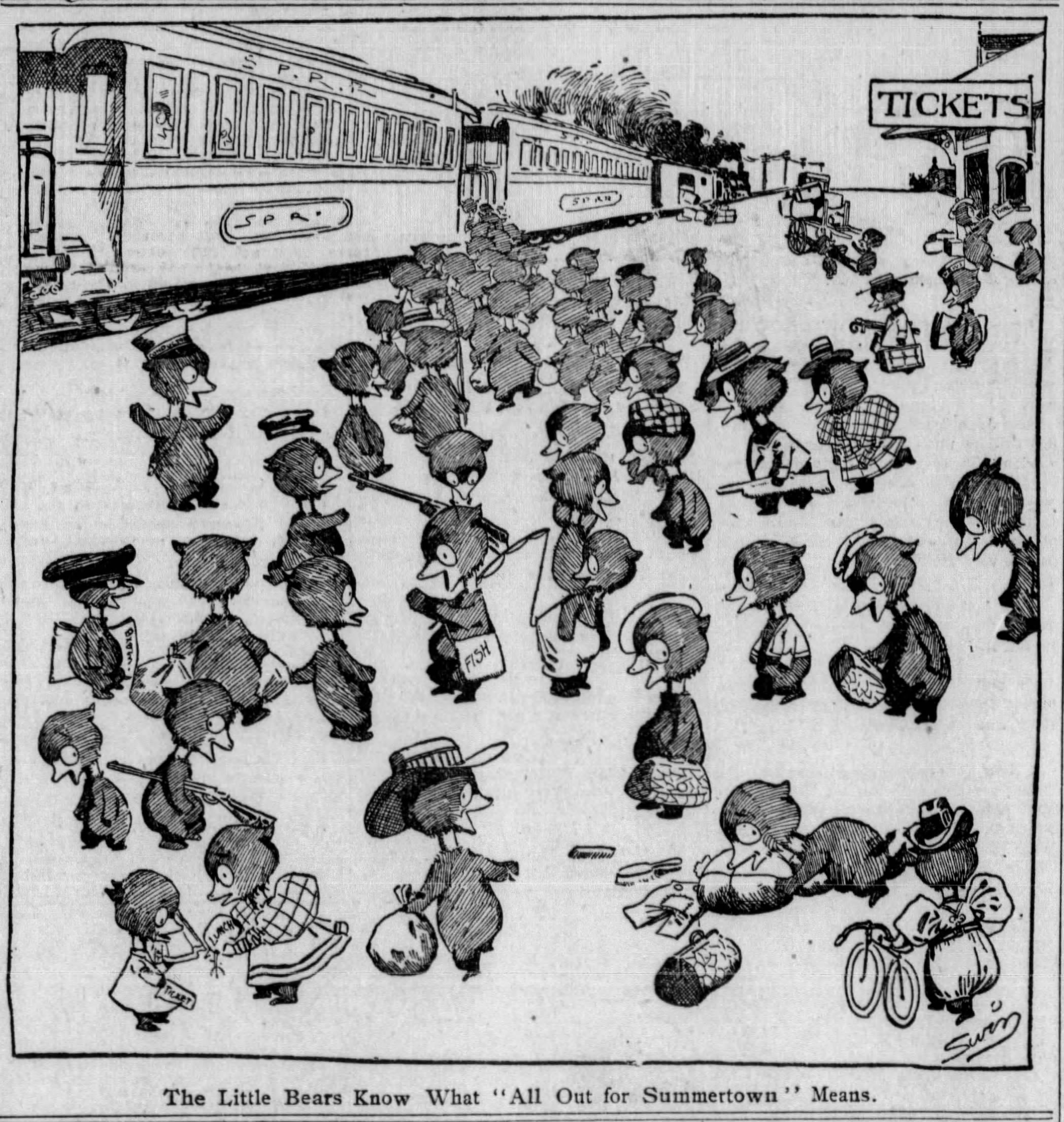
In the short evolution of the Little Bears, from spot decoration to mascot to open-ended personality, we are seeing the development of a particular kind of new medium that carries a novel connection to its audience. The reader’s loose identification with an indeterminate and shifting personality left this character open to a wide range of audiences. Often overlooked by media historians is that the newspaper comic strip was the first true “mass medium.” This is the first time millions of Americans across the continent were absorbing the exact same content on the same day. Swin’s bear, and many early comic strip personalities seemed to have the perfect configuration of character for a nationalized “mass art” that required wide appeal: accessible to many audiences, alienating no one. “Everybody likes him,” the Examiner assures us.
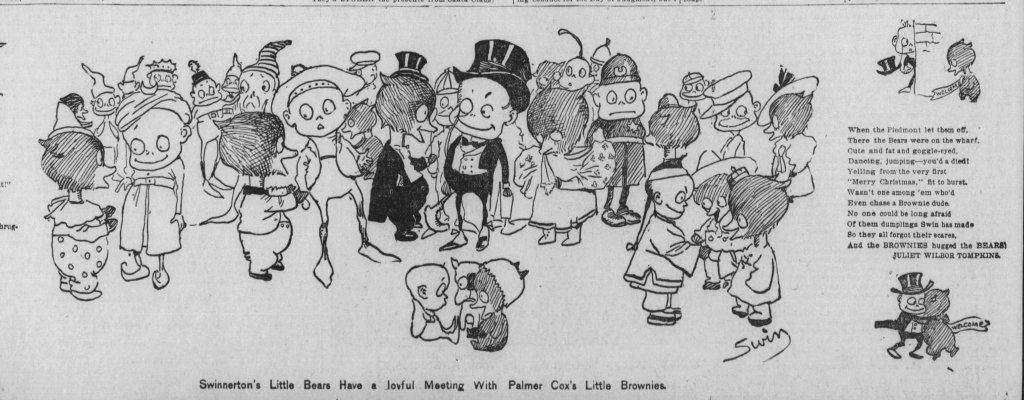
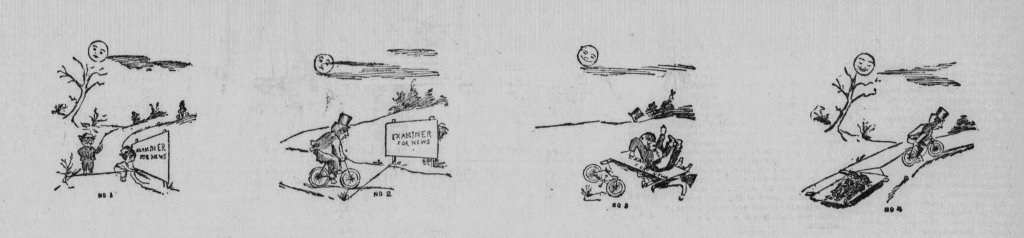
Swinnerton’s Little Bears also represent a particularly new kind popular fiction that is both of and apart from the world. Like their style of illustration, The Little Bears have elements of reportage, social commentary and caricature but are even more abstracted and stylized. The weekly strip and its world are topical but removed takes on the world reported in the rest of the newspaper. The Little Bears experience the end of the school year, summer vacation, holidays, familiar rituals and social organization that parallel the adult, real world, but at a fantastic, sometimes ironic and satirical remove. It anticipates the ways The Yellow Kid, Happy Hooligan, Katzenjammer Kids, Buster Brown and countless other early recurring “heroes” of the early strips occupied a new kind of satiric space in the culture. And perhaps this tells us something about the kind of unique cultural experience the comics were shaping in American life, why they proved so compelling. Swinnerton and his generation were bending, abstracting generalizing pre-existing newspaper art styles into new ways of depicting that same everyday world in a new fictional space. Visually, the cartoon conventions were more abstracted than other illustration – often child-like, rounded, fantastic and anthropomorphic – safer and comforting. But thematically these comic fictions used that safe graphic space to explore extremes of emotion, rage, violence, haplessness, mayhem, ardor, ego, etc. It seems to me this is the powerful cultural aesthetic the comics were offering later 19th Century Americans. Watching the evolution of Swinnerton’s Little Bears in the first few years that the comic strip germinated out of the art and culture of the newspaper itself, I think gets us closer to understanding how this medium came to offer such a singular take on American life itself.

Discover more from Panels & Prose
Subscribe to get the latest posts sent to your email.


Pingback: “Demented Woman Drops Thirty Feet…And Lands on Policeman’s Head” – Panels & Prose
Pingback: Zeitgeist Funnies: The Paranoid Style…Of 1898 – Panels & Prose