
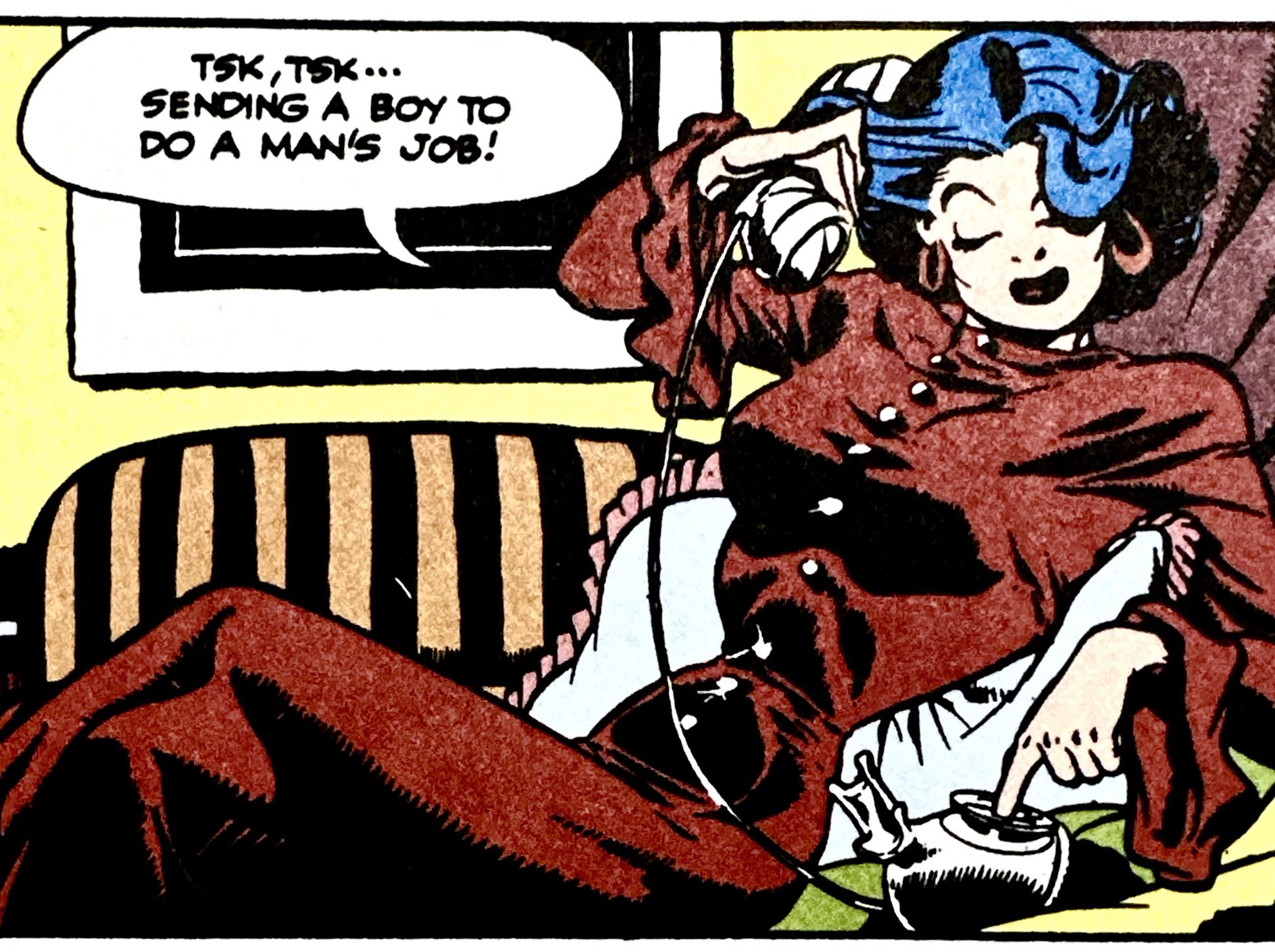
As the 1930s progressed, comic strip adventuring matured its visions of villainy. And the times were changing, as world war was becoming a reality rather than a distant rumble. As we saw in Part 1 and Part 2 of our favorite comic strip badasses, the thuggish, petty, and naturally mean antangonists of the 20s and early 30s (Bull Dawson, Sea Hag, etc.) had given way to the world-eating maniacs like Ming and The Cobra. By the late 30s, villainy becomes a bit more real and local – often focused on espionage or just personal greed. And the characters are evolving as well, more conniving and cerebral, less tied to gangsterism and power-madness than to cool demeanors and low-key malevolence. Evil was no longer wearing crowns, medieval cloaks or mustaches. They were well-dressed and brainy – the villain next door.
Singh Brotherhood: The Phantom
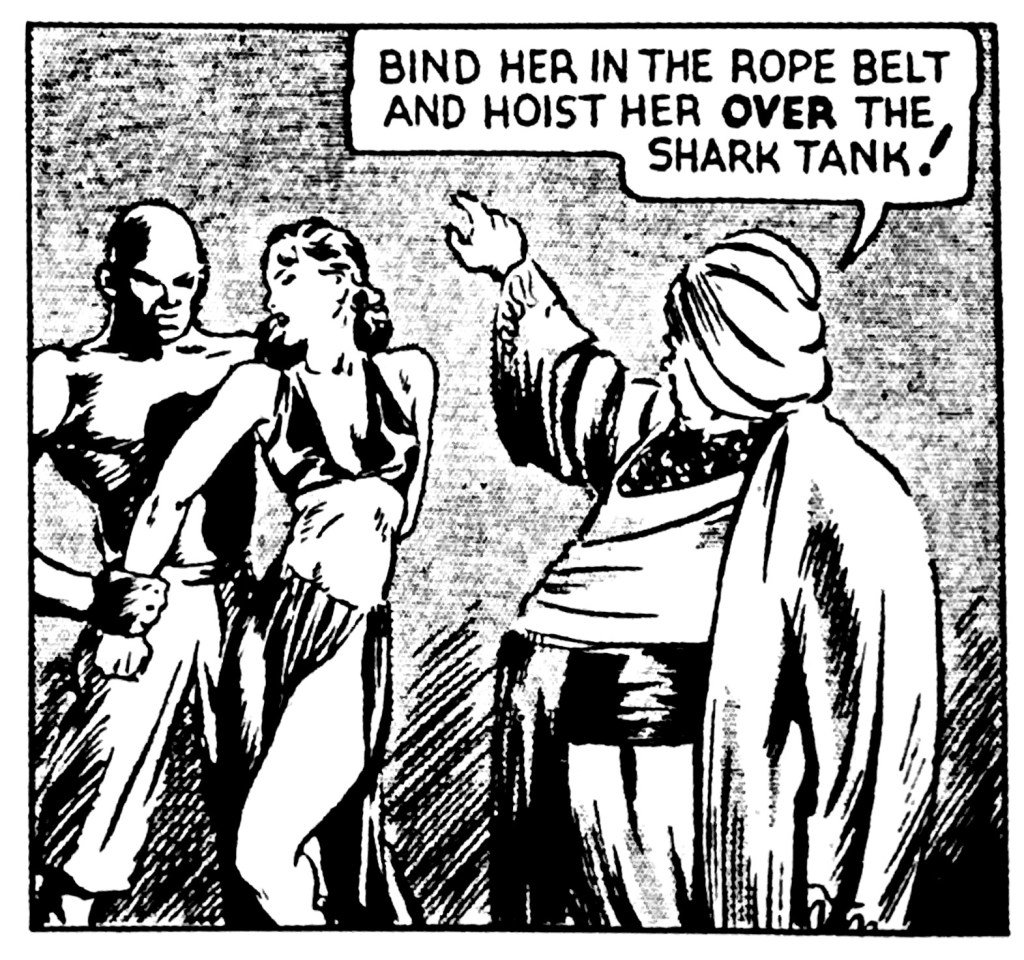
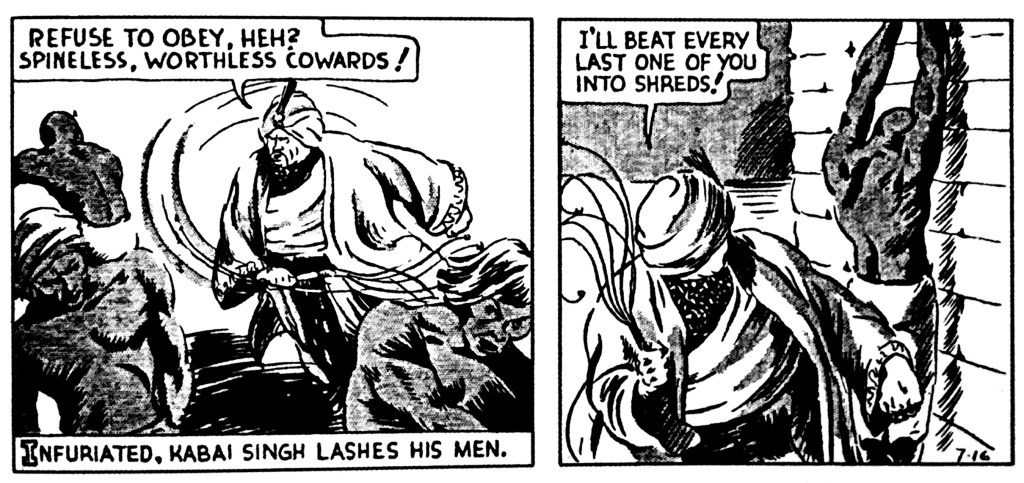
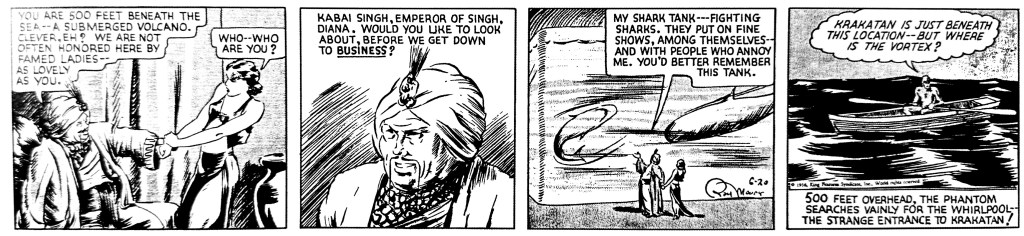
400 years of Phantoms and their progeny have fought against various members and rulers of a shadowy band of pirates, The Singh Brotherhood. Our current day Phantom descends from a 16th Century survivor of the Singh’s pillaging who vowed that he and subsequent generations would exact revenge. The Singhs are among the most competent comic strip baddies, as they actually succeeded in killing some of the Phantoms across the centuries. In the early stories during the 1930s, they are led by Kabai Singh, who is motivated by a deep hatred for Western culture. Like most 30s comics villains inspired by pulp adventure, Kabai is an ethnic other with undemocratic instincts. Also following pulp conventions, he is a physically repugnant figure lusting after our hero’s gal pal. Villainy and sexual rivalry are one and the same in the hyper-masculine adventure fantasies of the era. As he did with Mandrake’s nemesis The Cobra, author Lee Falk furnishes Kabai with a villain’s lair, an underwater hideout protected by man-eating sharks. Across decades of The Phantom strip, the Signh evolve from mere pirates to a worldwide crime network and finally to an incorporated entity, The Singh Corporation, that fronts for illegal activities.
The Head – Smilin’ Jack
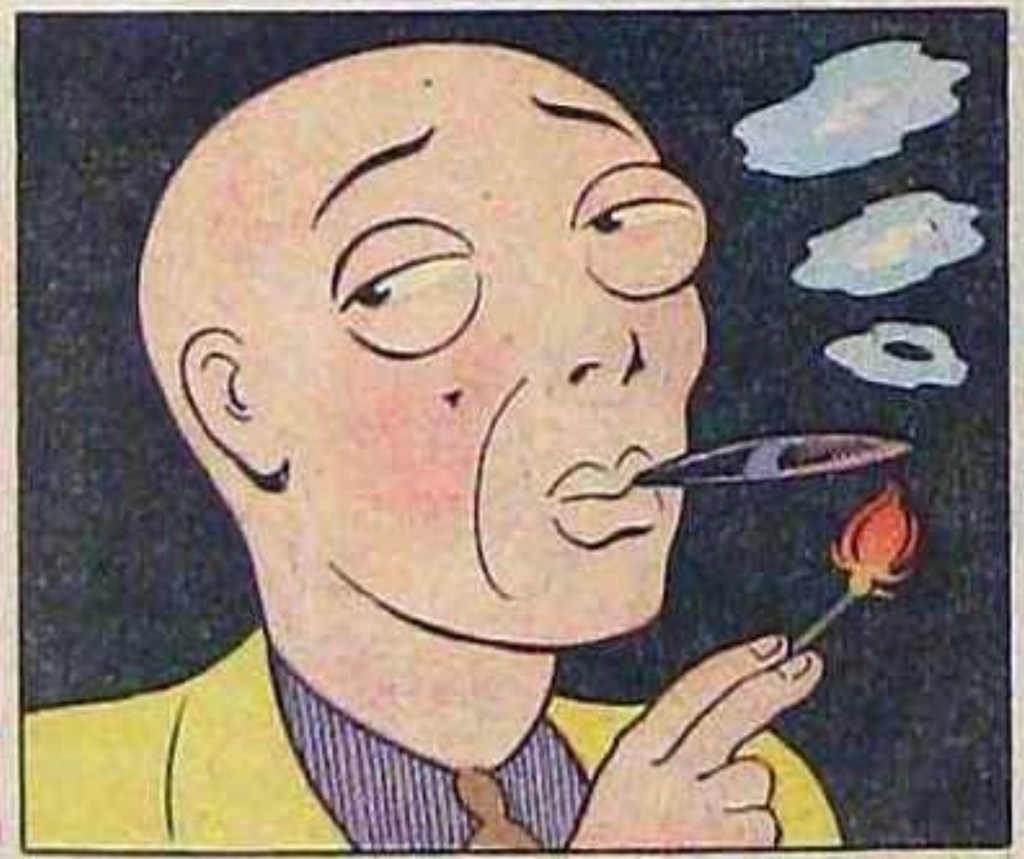
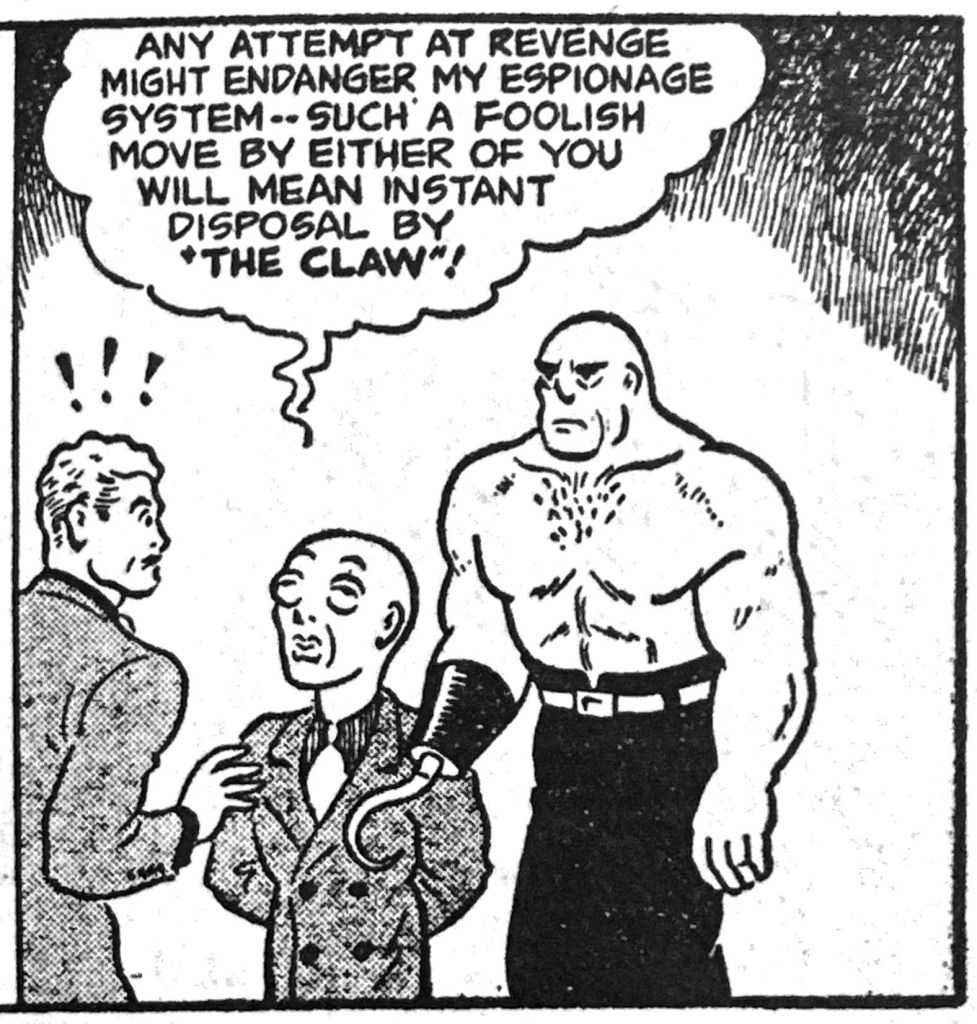
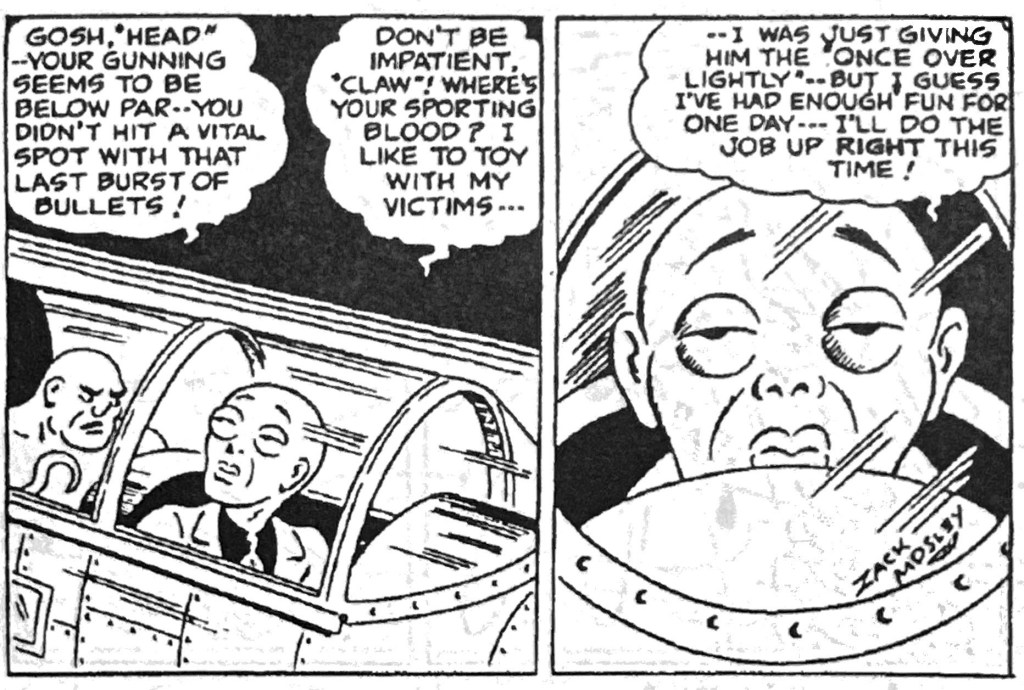
Zach Mosely’s aviation strip may have been the goofiest adventure that launched in the genre’s golden age. Often derided by critics as childishly drawn, Smilin’ Jack was hugely popular among readers, as it brimmed with outlandish villains, wildly improbable situations, and a tight cadence of cliffhangers and imaginative escapes. While the strip had grislier baddies, spy ring leader and criminal mastermind The Head was recurring and probably more meaningful than Jack’s other nemesis. Mosely was caricaturing familiar movie weasel Peter Lorre, but his pint size, bulbous head and natty suits looked like the big-brained mad scientist of the era dressed as a dandy. His ever-present henchman, Claw, is his comic opposite – massive, bare-chested, with a prosthetic hand hook. The Head commanded others to act on his behalf. And here he also marked a transition towards the cool and calculating executive villain. The Head tries to read Jack’s intentions, set traps, and generally manipulate characters to do his bidding. The cerebral, diffident, and often effeminate bad guy would flourish in popular culture especially after WWII, but The Head gave us an early glimpse.
The Phantom Blot – Mickey Mouse

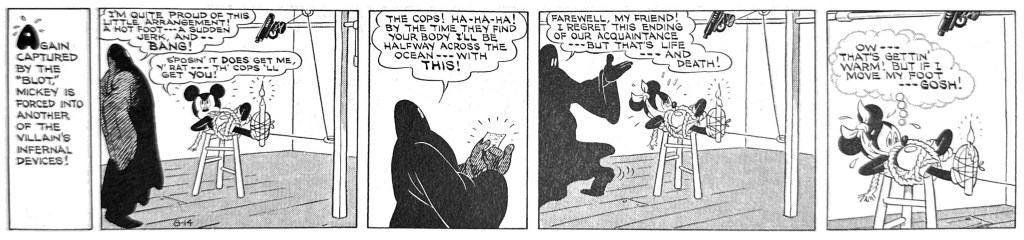
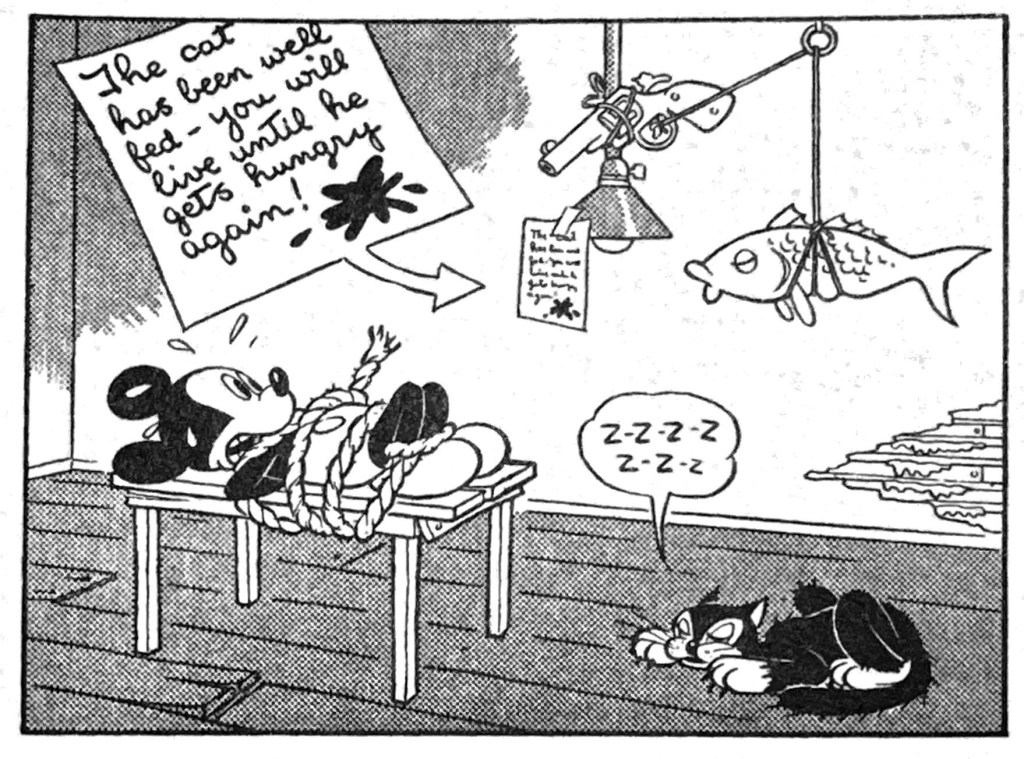
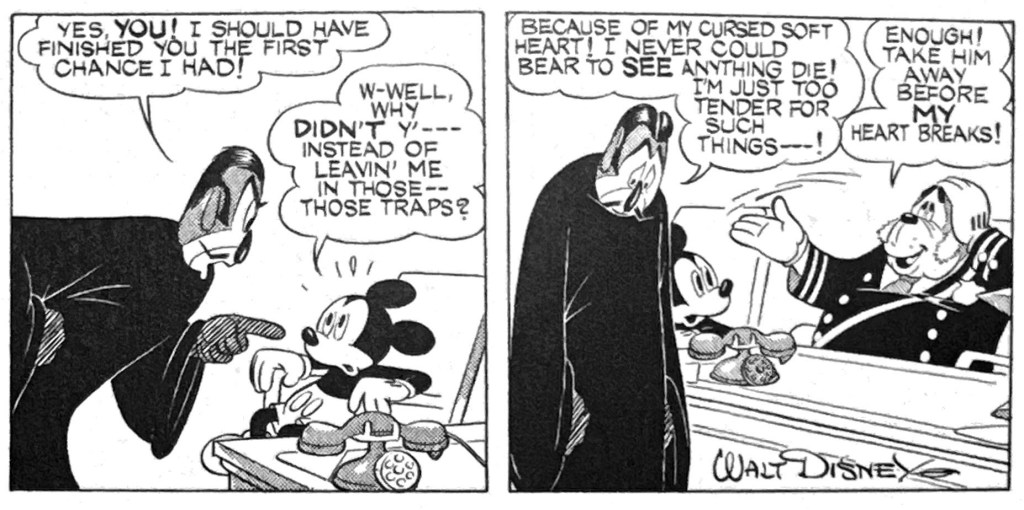
Like Popeye’s Bluto, Pegleg Pete is Mickey Mouse’s perennial antagonist, but he also functioned as more of a repertory actor as well as a carryover from the first film shorts. The Phantom Blot, however, was not only native to Floyd Gottredson’s daily strip, but even visually he was a singular creation of print – an inky blot. More to the point, he was just a better villain than Pete. Created by Gottfredson and mainstay Disney writer Merrill De Maris, the Blot’s comically creepy look and witty persona made him appealing enough to reappear in various Mickey iterations over the years. But his 1939 inaugural appearance marks a high point in the strip. The black-cloaked thief is on a baffling spree of stealing and destroying select cameras in search of a powerful “secret formula.” But he also captures and subjects our Mickey to a series of tortuous contraptions. These devices are delightful Rube Goldberg-style parodies of adventure genre deathtraps and cliffhangers. Along the way the Blot quips and teases Mickey relentlessly, and even cops to having too big a heart actually to kill the mouse. The Blot is both a satire and an inversion of the 30s adventure tropes.
The Brow: Dick Tracy
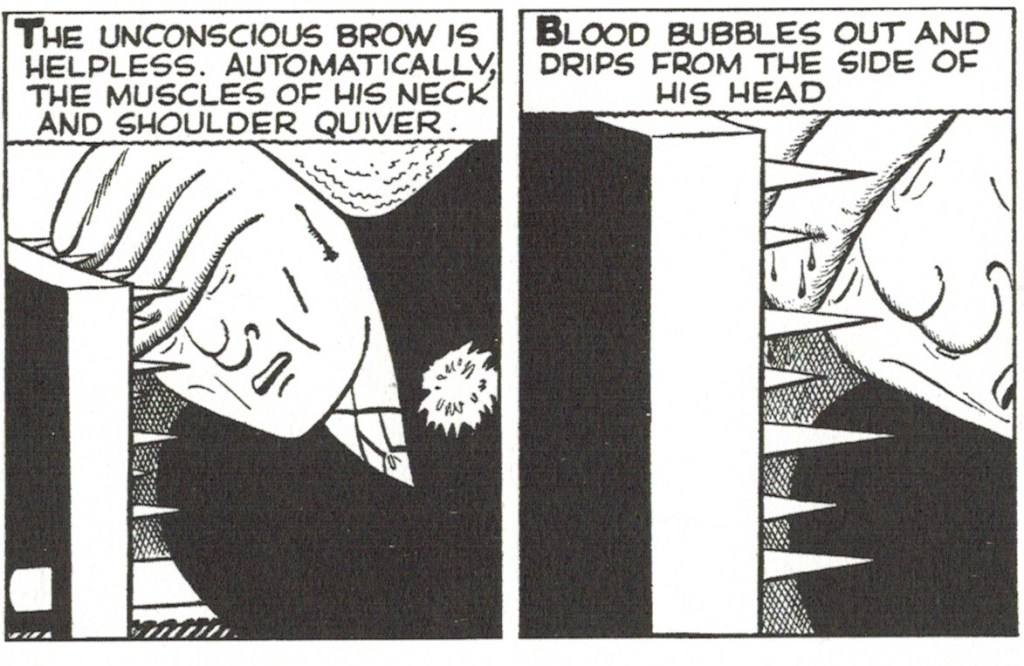
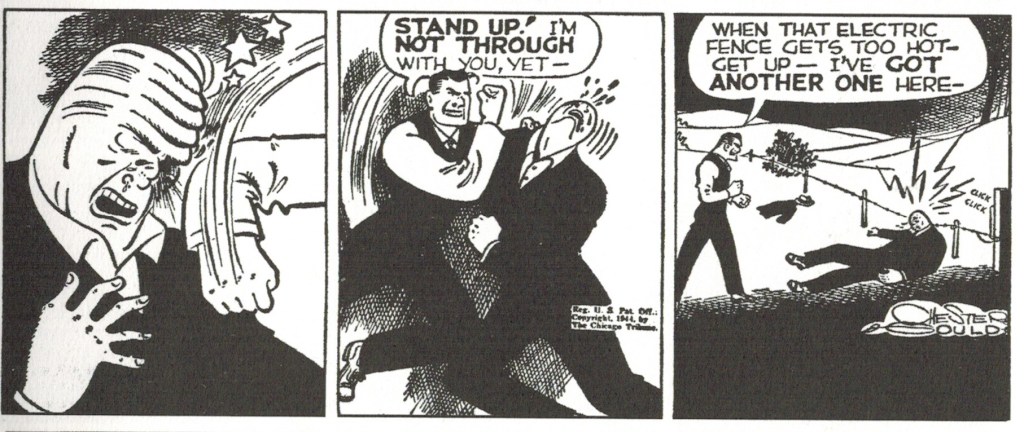
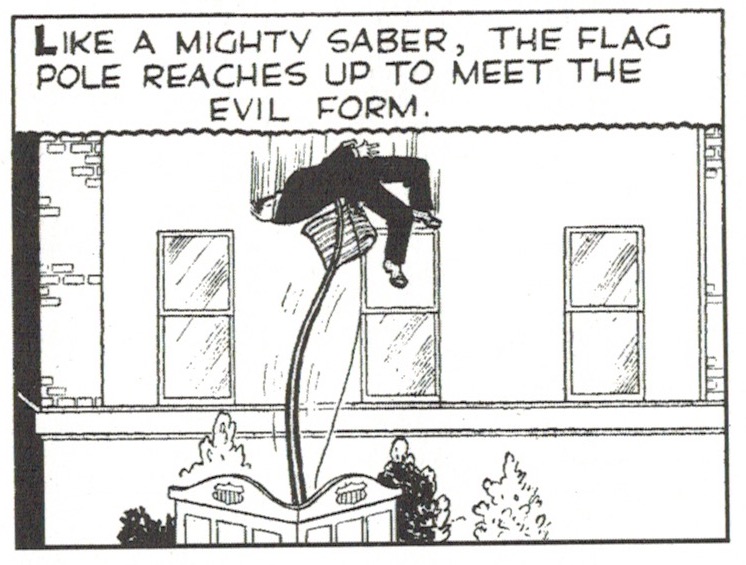
Picking a penultimate Tracy nemesis is a fool’s errand, since creative villainy was a signature of Chester Gould’s epic. The chilling assassin Flattop surely earns consideration, if only for being the most recognizable bad guy in the strip. We opt for The Brow, however, on several grounds. First, he was genuinely sadistic. The spike-lined leg torture is among the most grisly devices Gould ever imagined. Second, he is a Nazi saboteur. On the villainy scale, it is hard to beat a Nazi spy. And as such, his impaling by an American flagpole is a super-serving of the strip’s signature poetic justice. The Brow story arc also captures the strip at its most brutal. Suitably enough, The Brow suffers head traumas galore throughout the getaway sequence. His already mutated forehead gets lacerated in his own spike gadget. He falls headfirst onto live wires. And eventually he loses an ear. Apparently a flagpole impaling alone was not retribution enough for Gould.
P’Gell – The Spirit
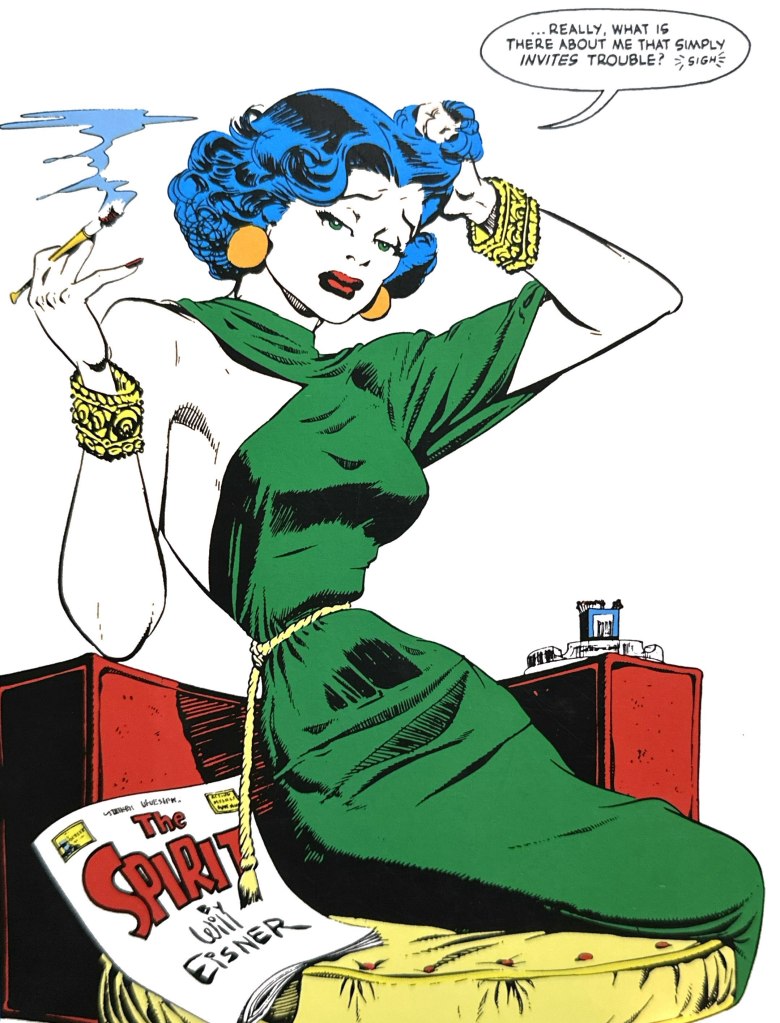
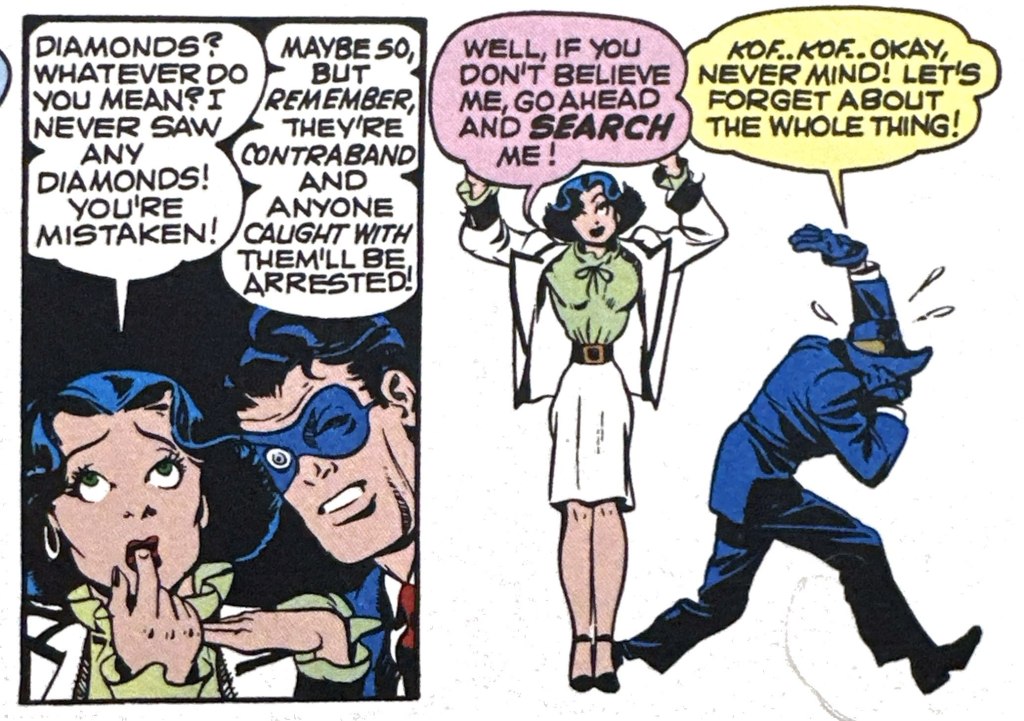
No one puts the Fatale in Femme like epic black widow, P’Gell. We meet her as a Nazi’s wife in wartime Turkey who goes on to betray countless husbands across multiple stories in Will Eisner’s masterpiece. She asks with mock innocence, “Really, what is there about me that simply invites trouble?” And, invites irony. We find her in impossibly unlikely circumstances like running a school for girls in one the best P’Gell stories. Her husbands fall like flies and she is always adjacent to thievery and international intrigue. The genius of this character is her unaccountability. She outwits the law, manipulates the sappy men around her and escapes in the end to wreak havoc another day. And she flirts shamelessly with The Spirit to court his help. While arguably, the nefarious Octopus is The Spirit’s more persistent and traditional criminal villain, P’Gell is so much more fun and complex. Eisner pours into her the full toolset of femme fatale wiles.
Discover more from Panels & Prose
Subscribe to get the latest posts sent to your email.


Pingback: Scoundrels, Cons and Dupes: 20 Favorite Comic Strip Villains – Part 4 – Panels & Prose