
We round out our survey of comic strip baddies steeped in post-WWII American culture. As are our choices for standout villains. The funny papers followed popular culture into new Cold War mythologies around both heroism and its counterparts. Main currents of a rapidly changing social, economic, and political environment are imprinted unmistakably on all of these villains.
For the first 15 members of our rogues’ gallery, click into Part 1, Part 2, and Part 3. And once again, credit also goes to the the comics hibbyists of Facebook who contributed many ideas that made this review of villainy broader.
Harry Sparrow: Buz Sawyer
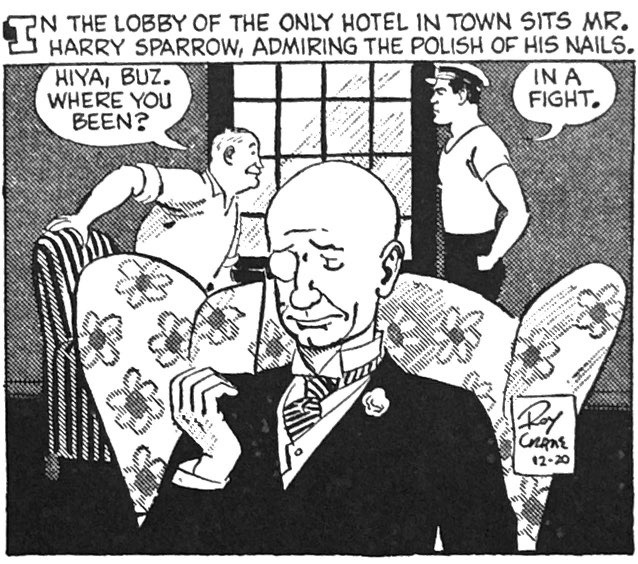
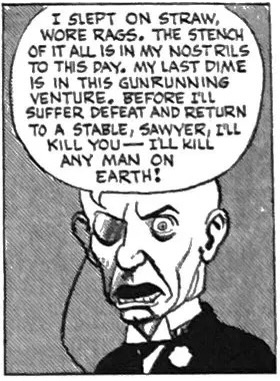
An arms dealer, effete dandy, and persistent pest, Harry Sparrow is the inverse of two-fisted flyer Buz. Buz Sawyer was Roy Crane’s second life as a cartoonist after leaving his pioneering adventure Wash Tubbs and Captain Easy. As we outlined at length a while back, Roy Crane built here a villain of his time. Sparrow is among the most flamboyantly queer-coded characters in a post-war era adventure genre that favored effeminate male foils. Also typical for an increasingly therapeutic milieu, Harry has a psychological back story explaining his villainous character. “Because, my dear boy, I’ve known the horrors of poverty…because I’ve inherited dreams of grandeur.” He is the son of a Prince and music hall dancer who was denied his birthright and raised in a tavern. And Crane has a field day drawing this embittered toad. That brain-heavy, bulbous head shrinks down to a pinched mouth and chin. It is a rich portrait of seething resentment, inner pain, compensatory superiority, funny foppery.
The Mangler – Rip Kirby
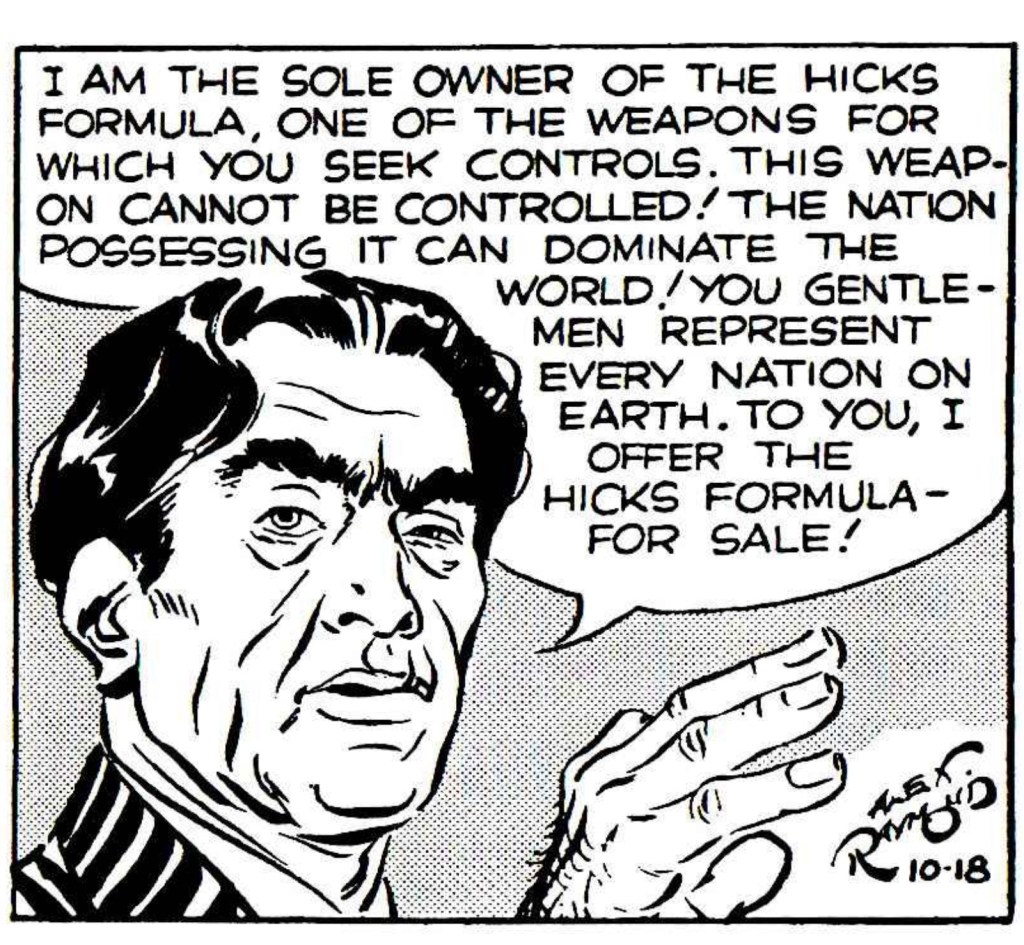
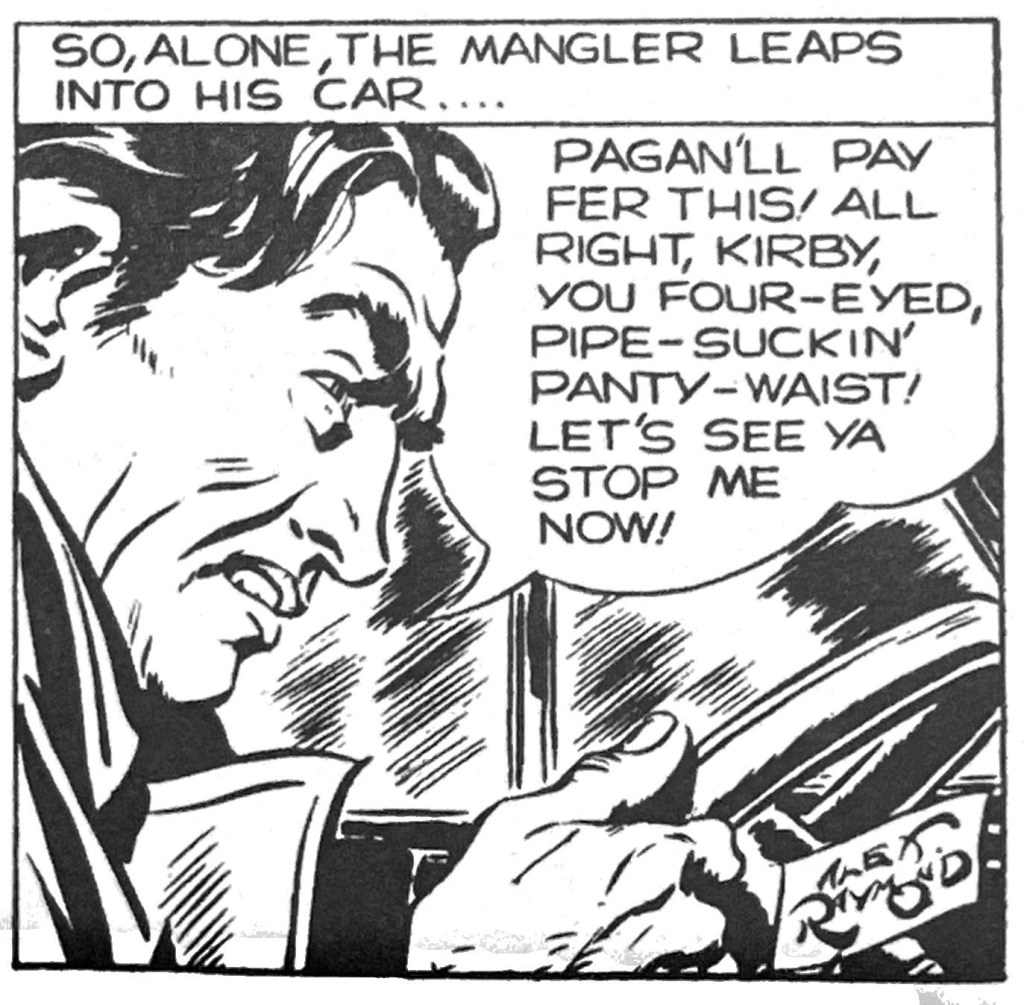
Alex Raymond’s gentleman sleuth Rip Kirby encounters Mangler only twice in the early years of the strip, but the Alcatraz-escapee is memorably malign. He is ruthless in torturing both Rip and his gal pal Honey Dorian, while he strongarms everyone around him to do his bidding. Reveling in his vicious reputation and media attention, swearing he has nothing to lose, Mangler is an anachronism. Swarthy and misshapen, he seems like a Dead End Kid who bullied his way up the criminal ladders, more like a Prohibition criminal kingpin than the cool arch-enemies of post-war pop culture. But when he hijacks a deadly formula more powerful than the atom bomb, he vaults into a super-villainy that befits the late 1940s. More importantly, he helps define the new style of adventure hero Kirby represents. Cerebral, mannered and sophisticated, Raymond and co-writer Ward Green created Kirby as a departure from the hyper-masculine 30s heroes like Raymond’s own Flash Gordon. The Mangler was a part of that past, so much so that we even catch him judging Kirby’s manhood as the thug races towards his fate. “Kirby – you four-eyed, pipe-suckin’ panty-waist,” he seethes. In fact, Mangler is signaling for us that transition into a post-WWII style of buttoned down hero: calmer, thinking men who value institutional order, expertise, scientific method, outsmarting rather than out-punching their foes.
The Professor – Rex Morgan, M.D.
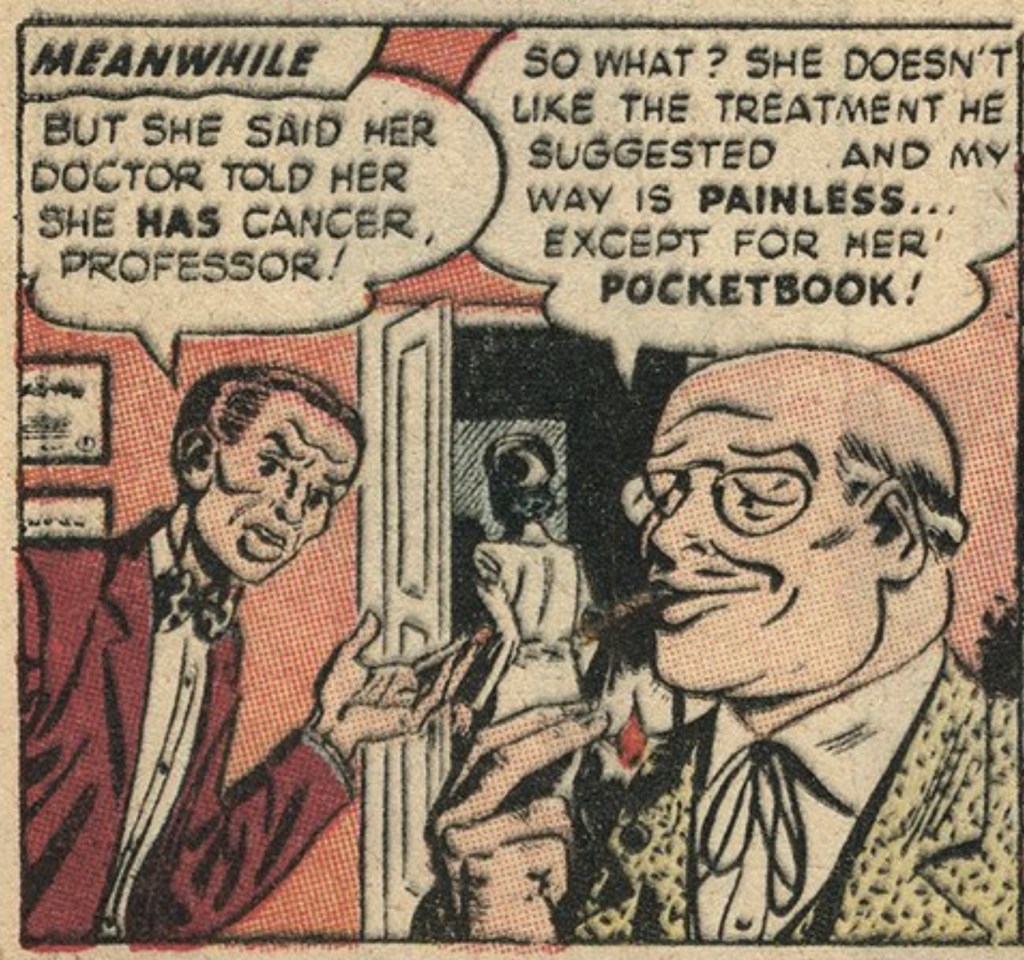
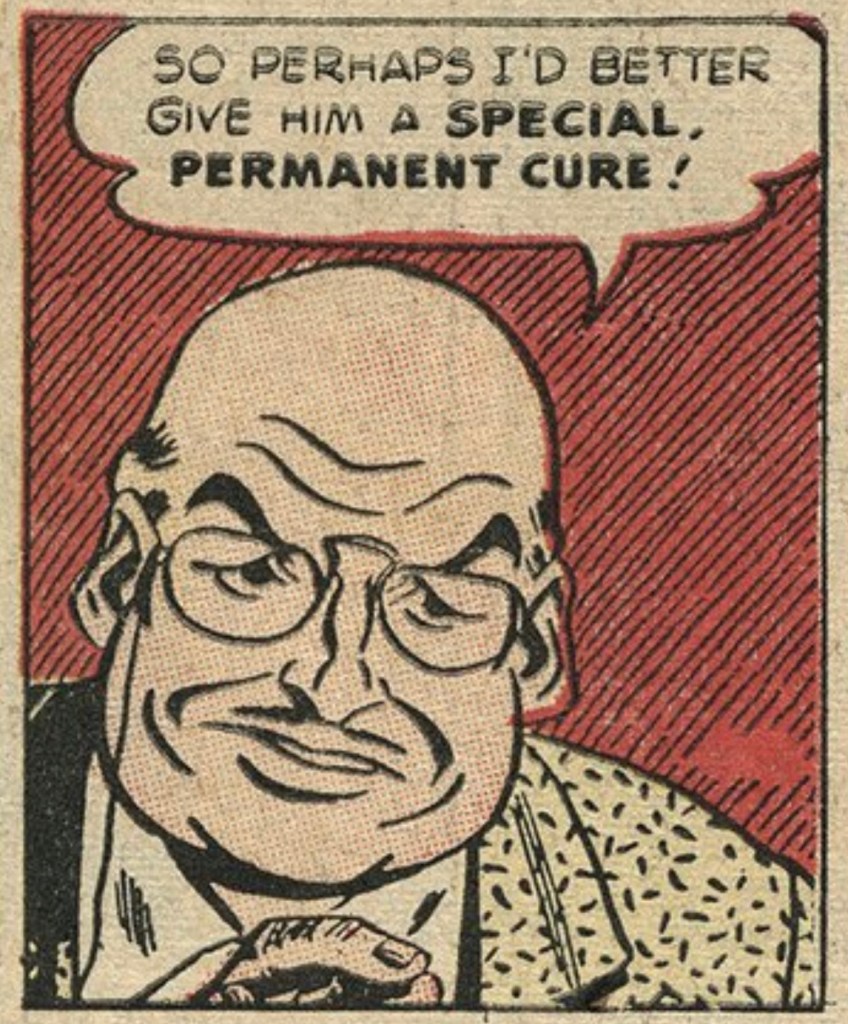
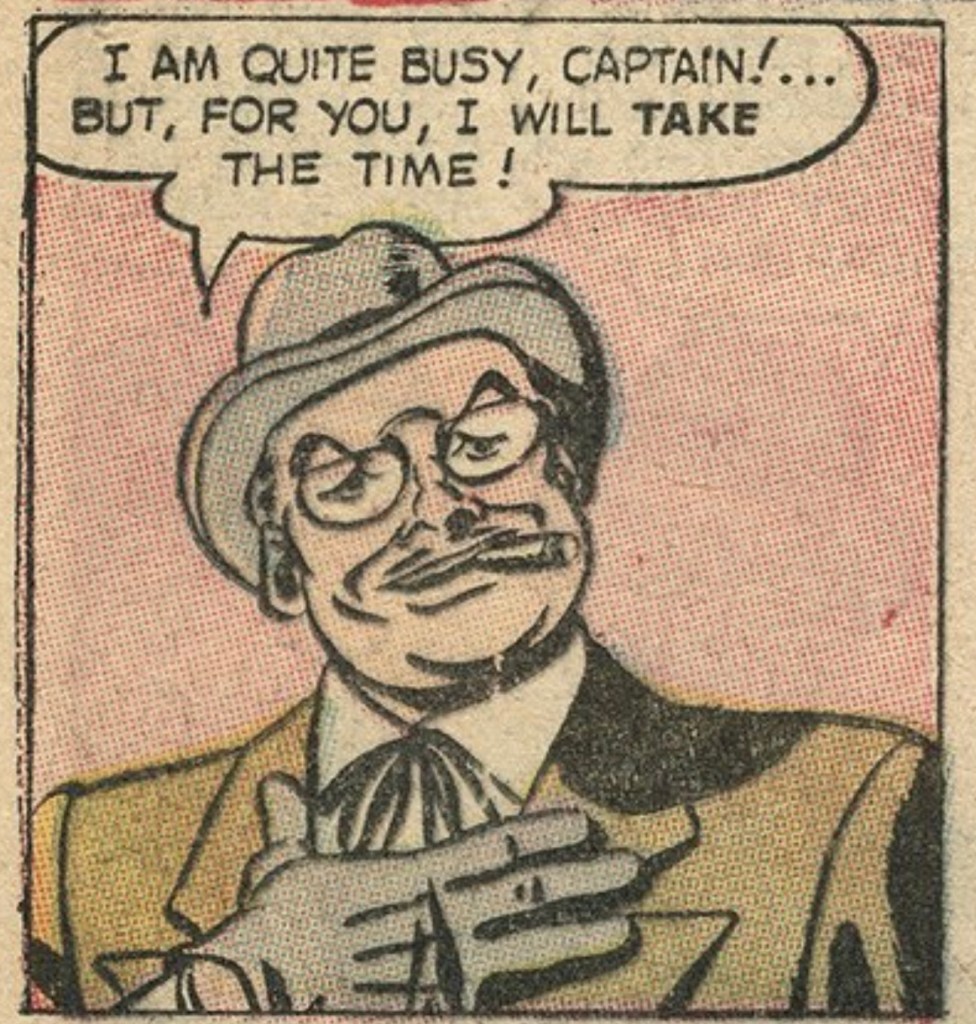
Speaking of the new institutional heroism, Nicholas Dallis’s Rex Morgan, M.D. is exhibit #1. The good doctor’s recurring nemesis is designed as the anthesis of Morgan’s professional authority and altruism. The Professor peddles alternative cancer cures in one scenario, and may be the world’s worst diagnostician. He is easily exposed by Doc Morgan’s blend of medical knowledge and sleuthing. But how the Professor continues to con and defraud the good people of Glenwood across multiple storylines is beyond us. This charlatan should have been sent away for a long prison stretch long ago. Still, he was a fitting villain for his time. Strips like Rex Morgan M.D. and Dallis’s other title, Judge Parker, embodied the post-war myths around institutional authority and professional credentials, science, and corporate benevolence. Characters like The Professor were necessary foils and object lessons in the dangers of straying from expert opinion. According to the post-war cultural mythos, a “modern” America had to reject 19th Century snake oil and folk remedies of the past and follow the science. Villainy was defined in this mythology as misusing or abusing one’s credentials and perhaps undermining public trust in the consensus wisdom they upheld. Artist Marvin Bradley drew The Professor as a relic, complete with kid gloves, anachronistic derby, even pince-nez eyeglasses. Little did they know that the great age of wellness hucksterism and institutional disenchantment actually was ahead of us, not behind us. Today the bottom-feeding Professor of the 1950s would be barking on Instagram, “what the pharmaceutical industry doesn’t want you to know,” boast a million followers, and link to his online supplements store.
Deacon Mushrat – Pogo
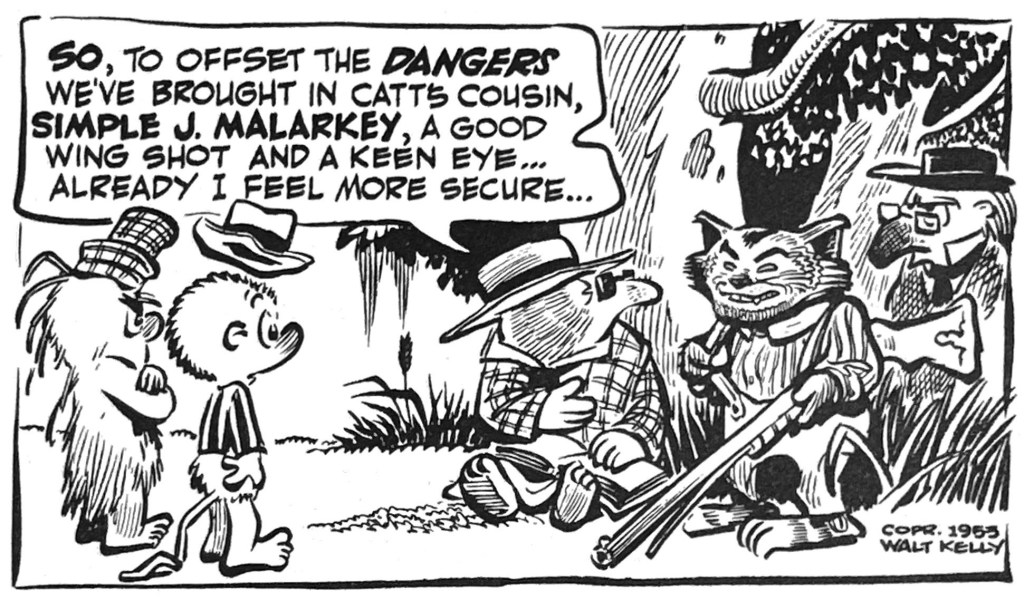
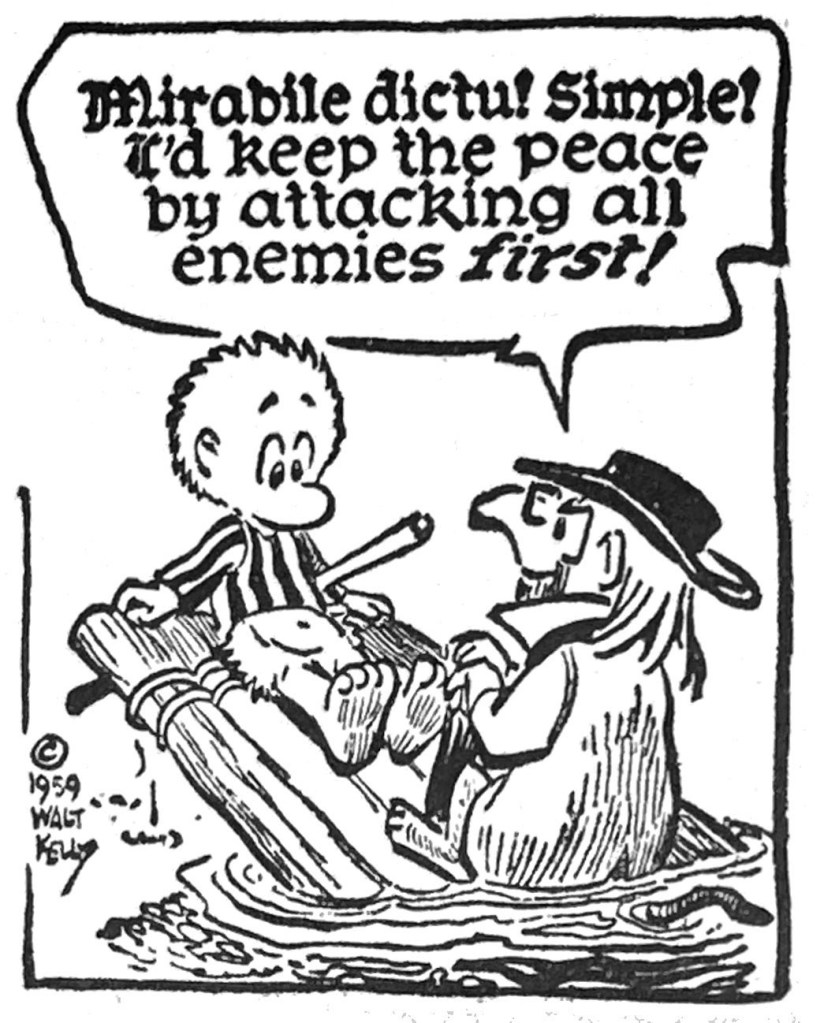
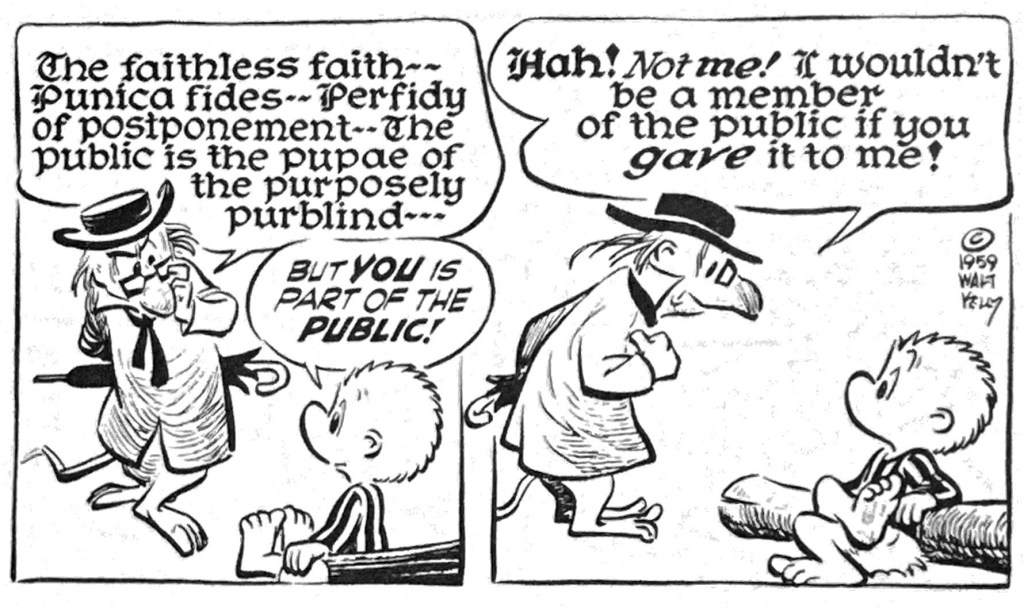
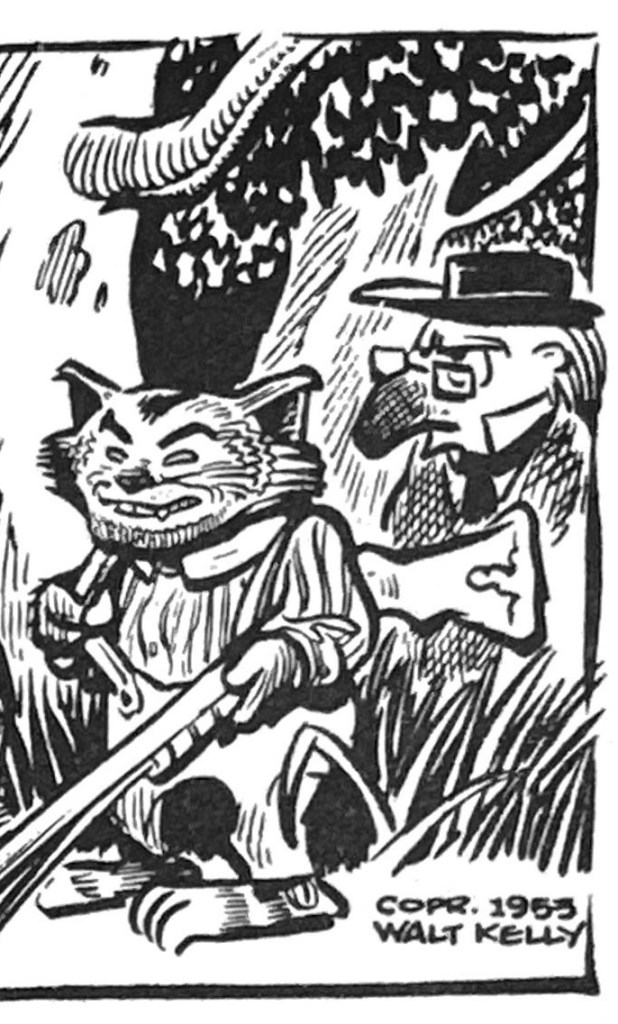
In Deacon Mushrat, Walt Kelly made villainy more familiar, commonplace, even a side-effect of righteousness. It was a daring move in a post-war America where authority figures generally enjoyed privileged treatment in much of popular culture. And in the Cold War with “godless Communism,” our Christian fealty was a critical distinction between “us and them.” But the puckish satirist delights in mocking every aspect of this preacher man, from his antiquated 19th Century dress to an even more outmoded Old English speech balloon typeface. If Mushrat isn’t himself a villain, he is evil-adjacent and a serial dupe of skullduggery. Most famously, he championed the introduction of Sen. Joe McCarthy stand-in Simple J. Malarkey to the swamp, which quickly backfires on him. The Deacon is a pompous doomsayer and frequent enemy of democracy itself. Eventually, this blend of piety and catastrophizing leads to his co-founding the xenophobic Jack Acid Society, a parody of the wingnut John Birch Society. More than a jab at conservatism, Deacon Mushrat let Kelly personalize politics, suggesting that ignorance, stupidity, mean spirits and intolerance often wore a righteous cloak.
The Kite-Eating Tree – Peanuts
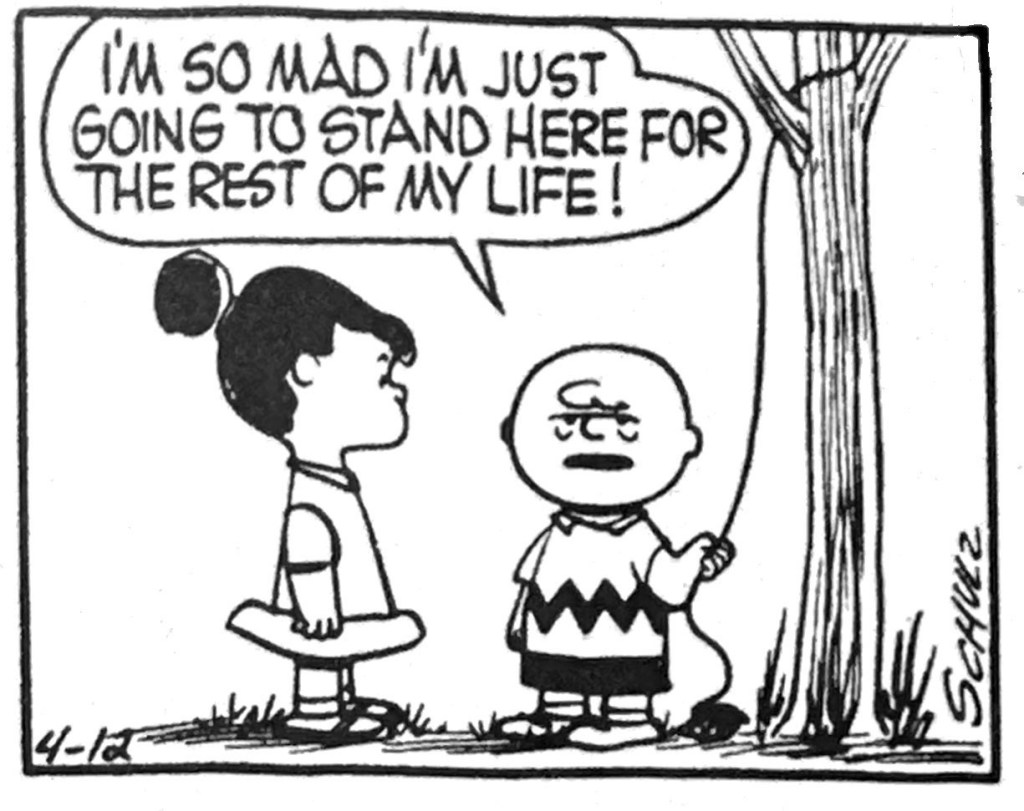
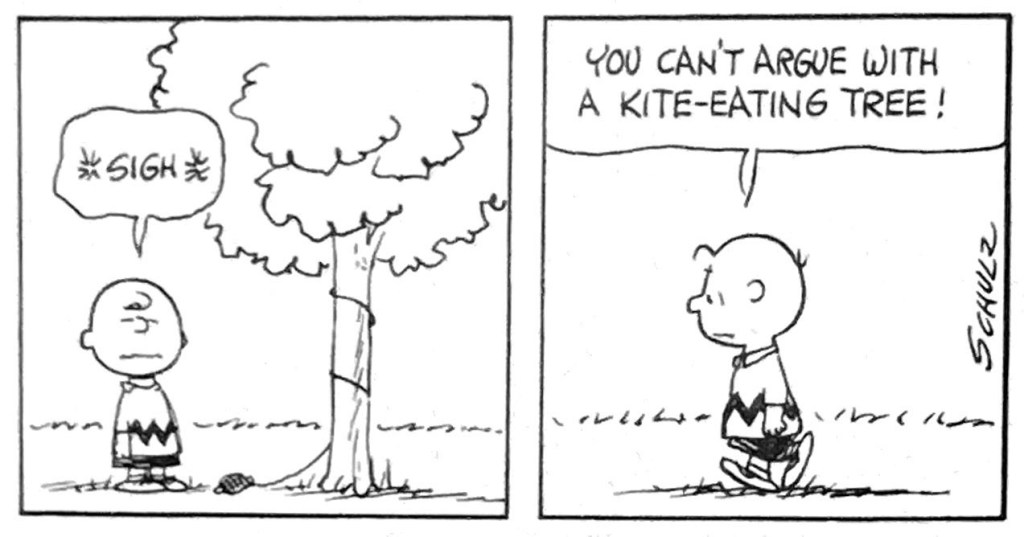
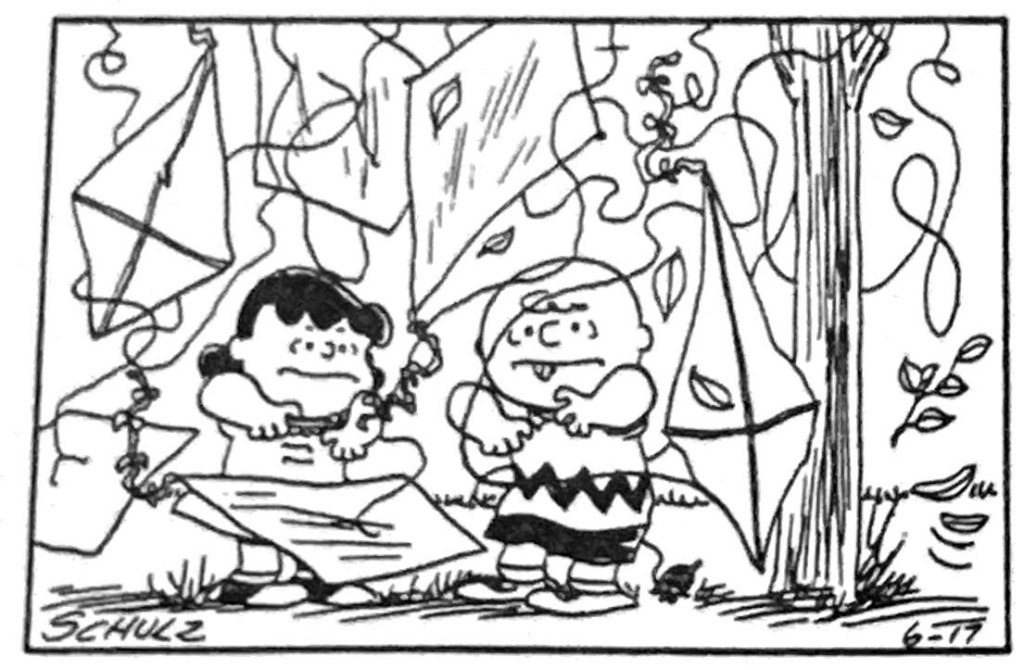
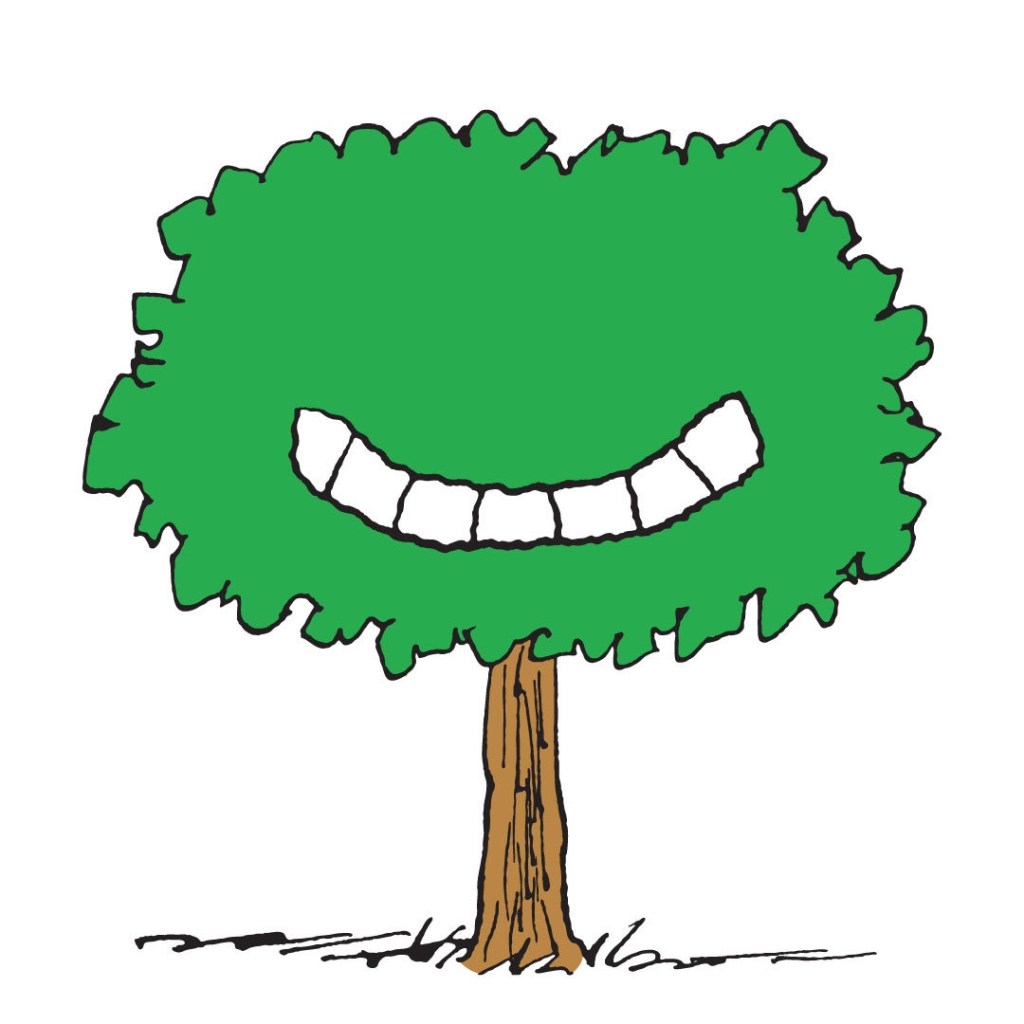
Perhaps the most chilling super-villain in all of comicdom, Charlie Brown’s nemesis represents the ultimate evil: breaking a child’s heart at a peak moment of joy. At first, in the mid-50s, it passively snagged Charlie Brown’s kites in its upper branches. But its cruelty only advanced as the tree actively, audibly chomped kites, and then even broke a vicious smile. The tree first appeared in a 1956 strip but quickly became a regular, especially in spring. And it took on existential dimension, a cartoon emblem of morally neutral and pitiless nature. It is a fitting final villain, as it marks the late 1950s transition into the next decades of comic strip at and sensibility. Peanuts represented a shift towards more abstracted and minimal figure art on the comics page and increased reliance on ironic banter, world-weary angst, even ennui. Charlie Brown’s anguished monologues and plaintive screaming at this wooden-hearted scoundrel surely stand among the most poignant in the history of comics. He, like all of us, is negotiating pointlessly with fate, randomness, maybe the inevitability of death itself. “AAUGH!”
Discover more from Panels & Prose
Subscribe to get the latest posts sent to your email.

