
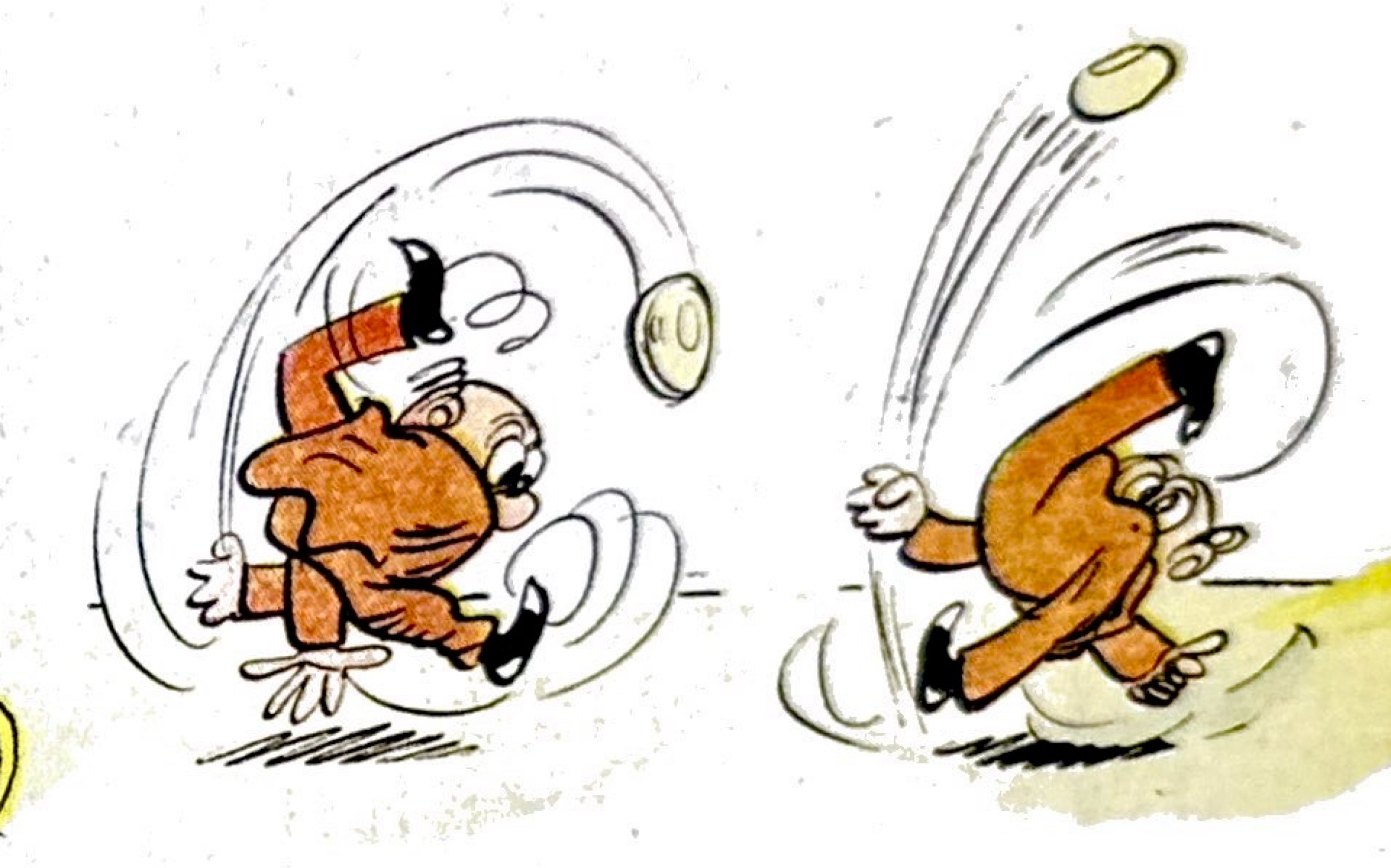
One of the basic joys of comics is every artist inventing their own physics. The distinctive cartoonists, at least, use line weight and figure shapes, action and reaction to create physical rules to govern their world, their own sense of gravity.
Milt Gross (1895-1953), the master of screwball motion, demonstrates this better than anyone. Across his magazine pantomimes, the raucous Nize Baby and Count Screwloose newspaper strips, and pioneering graphic novels like He Done Her Wrong, Gross practiced a kind of radical physics that was magnificent to watch. His genius was well documented by Sunday Press’s indispensable Gross Exaggerations: The Meshuga Comic Strips of Milt Gross. And comics historian Paul Tumey is in the process of reprinting much of Gross’s work at his Erratic Press. Paul also conducted a must-see talk on this research and Gross’s development for the New York Comics and Picture-story Symposium. Both of these sources lend more depth and insight into Milt Gross than I can muster here.
But I wanted to share a couple of Gross pieces that exemplify the larger idea of carton physics and especially how different artists redefine fundamental aspects of everyday reality – namely gravity and motion.
Gross had a background in animation, making several cartoon shorts at the Bray Studios in the 1920s. So it is not surprising that his comic strip work looks like animation storyboards, often capturing the extremes of motion and action, allowing the viewer to act as the “in-betweener” imagining the intervening action.
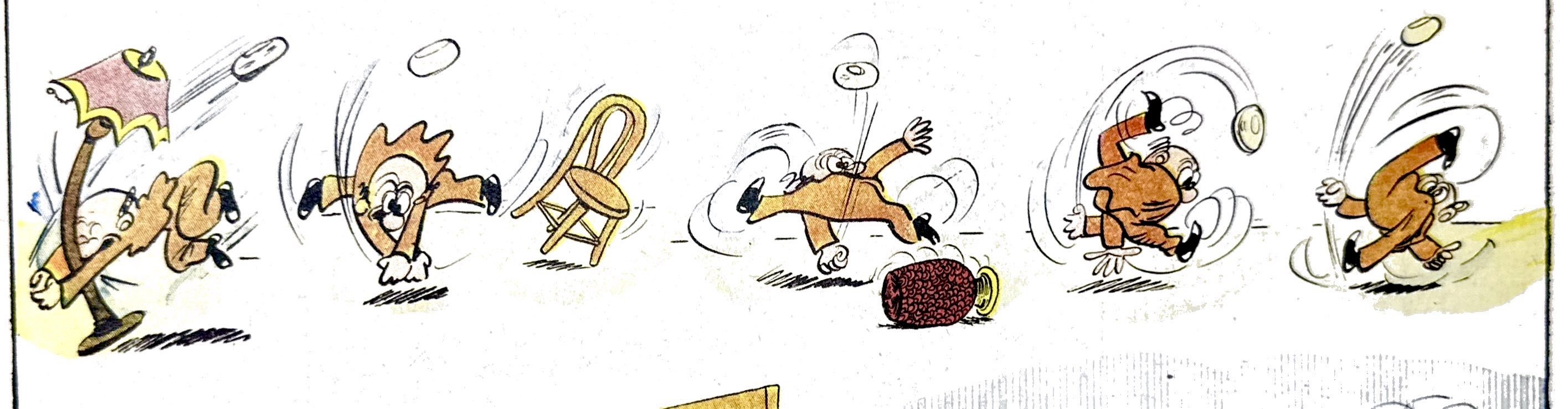
Even in his full page Sundays, Gross often divided his antic action into strips that isolated a segments of story. Above is a tier of panels from Nize Baby, June 3, 1928 in which Papa Feitelbaum is simply chasing a slippery bar of soap around the room. He ia airborne throughout. If there is any gravity here it is not suspended so much as irrelevant to the gag, which is really around Papa’s eyes, which are as frozen as his body is moving and in different modes of anger, amazement and confusion. The beauty is in the weightlessness of it all. Gross puts us into flight, even removes the floor from his drawing.
I would argue that the great comic artists, especially the screwballs, from Opper to Gross, Ahearn to Hoban, interpreted motion in their own ways that proved deeply satisfying to readers. Which is also to say, in a deeper, cultural sense, that cartoonists were reshaping some of the defining aspects of the modern world – speed, machinery, motion – into manageable, even comforting forms. In Gross’s case, he makes motion something liberating rather than limiting.
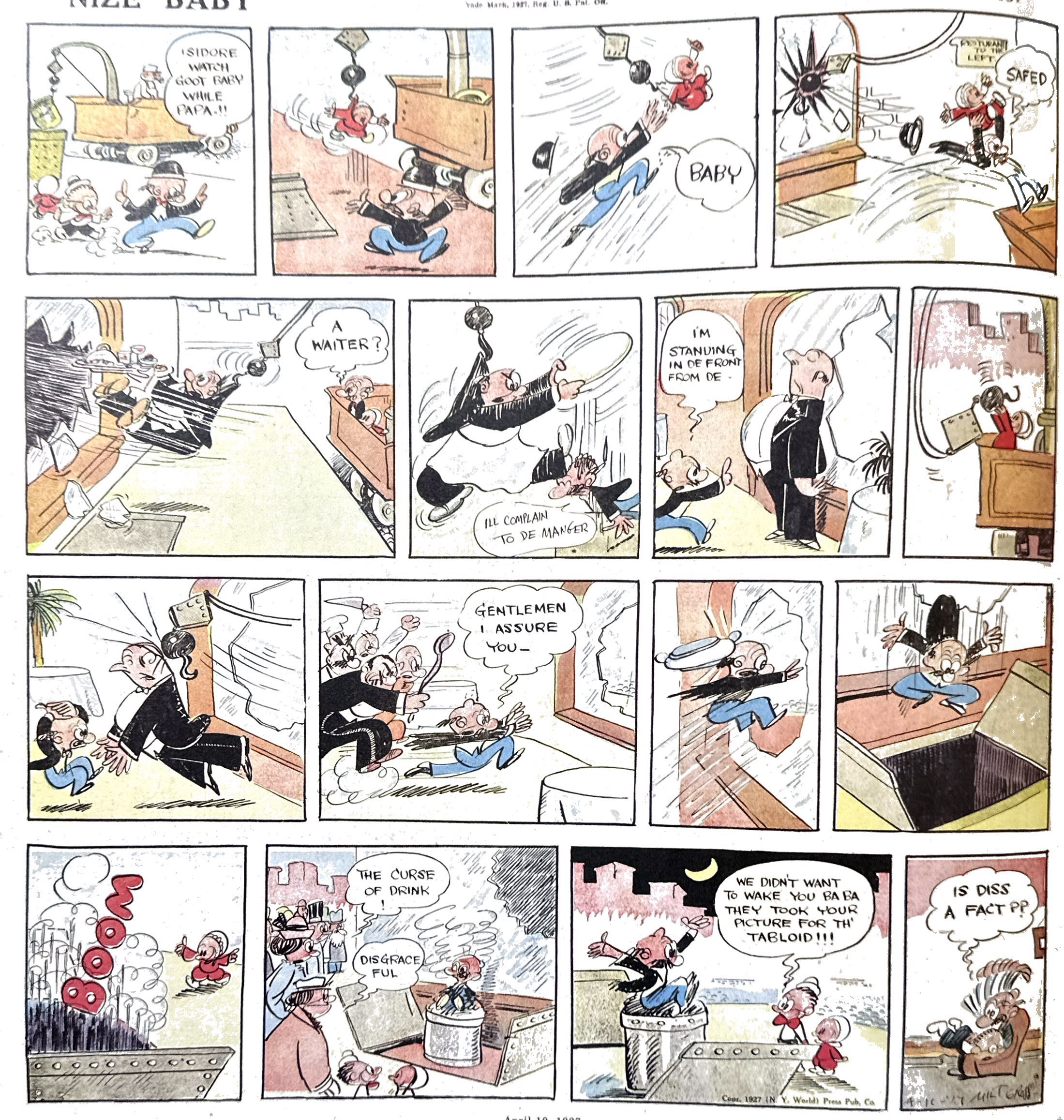
At the same time he turns another aspect of physics, cause and effect, into frenetic, uncontrollable epic spectacle. A full page Nize Baby (April 10, 1927, above) often looks like a pinball machine, with the momentum shifting radically from panel to panel. In many ways, Gross was moving may beyond film animation in the 1920s and anticipating the tempo and cadence of Tex Avery in the 30s and 40s. But even more to the point is the cause and effect saga that starts with a simple city walk and ends with Papa in the tabloids. Gross had such a gift for turning screwball motion into wildly involved and convoluted storytelling. And yet every element is grounded in some recognizable social reality – the dangers of the city streets, stuffy waiters, irate restaurant customers, gossipy onlookers, the tabloid press. It is the known world operating in all of the familiar ways, as causes and effects in Gross’s screwball physics.
So why go on about all of this? It seems to me that to understand the appeal of the comic arts across the last 200 years we need to get at the deeper aesthetic pleasures and cultural work this form has done for audiences. And we have to recognize that these two aspect of the art – its form and context – are linked. How artists like Gross (or Segar or McCay or Opper or Hoban) built discrete physical worlds in their daily panels, and the aesthetic pleasure we get from their individualized reinvention of the world we know, is key to creating a more mature criticism of the comic arts.
Discover more from Panels & Prose
Subscribe to get the latest posts sent to your email.

