
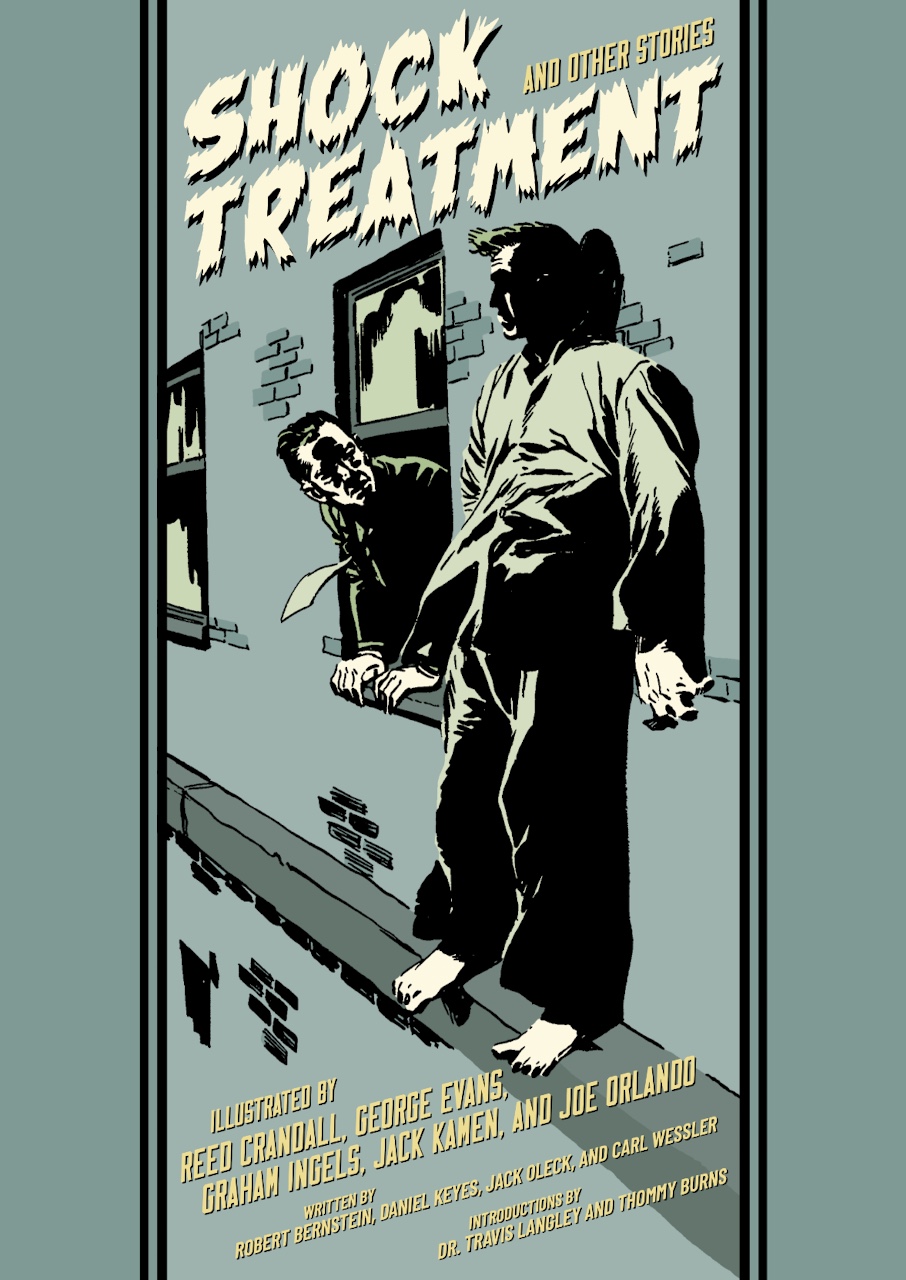
Unlike many previous reprints of EC Comics, Fantagraphics organized its “Artists’ Library” not by title but generally by artist. Better still, a black and white format highlights beautifully the line and ink work by legends like Jack Davis, Wally Wood, Graham Ingels, Johnny Craig, etc. And it shows these masters rendering some of the most suspenseful, violent, ghastly and otherworldly material across a range of stories so lurid and weird they attracted censorious government scrutiny. In other words, the Artists’ Library showcases the best cartoonists at the height of their powers and working on content that editor Al Feldstein deliberately matched to each one’s specific strengths. The project has been magnificent, especially in showing Davis, Wood, Kurtzman, Craig, Kamen and others evolve over time and respond to different material. It has been a thoughtfully designed series that makes even aficionados of EC think differently about what is in my mind the greatest run of comic book art ever. But the 40th volume in the Library, Shock Treatment, is unusual in many respects.
Shock Treatment is working in a different gear. In fact, you might argue it is running in reverse. This reprint embraces various artists, mostly Reed Crandall, Ingels, George Evans, Kamen, and Joe Orlando, executing EC at its least provocative and most circumspect. The M.D., Psychoanalysis and Shock Illustrated books constituted publisher William Gaines’s futile attempt to salvage his comic book business after the 1954 Comics Code targeted, and killed, EC’s most creative content. They were among a “New Direction” line of books designed to satisfy the Code without boring their loyal readers to tears. And there were some strong comics in the line, namely Aces High, Valor and Impact. But in many ways, the three titles in Shock Treatment represented a 180-degree opposite direction from classic EC. The best pages of Tales from the Crypt, Haunt of Fear, Crime Suspense Stories and the like were comics in extremis. Their gore and irreverence, frequent moral ambiguity and supernaturalism, were in their own way radical and transgressive of the social idealism that drove Cold War America. That made them so exciting to read, and no doubt so toothsome for their artists to draw.
This selection of New Direction titles? Maybe not so much. All three of these EC titles are paeons to institutional thinking, often turning doctors into demigods, science into totemic authority and enshrining “normality.” The square-jawed sawbones and shrinks are dashing and almost always right. Abnormality of body or mind, the marrow of class EC stories, are not sources of weird wonder. Now they are deviations from the mean that demand proper “diagnoses” and “cures.” The well-meaning intention was to upgrade the market with “adult” and informative titles about real world situations. In particular, making the still-mysterious field of psychiatry acceptable to a wider audience was in its own way noble for its time. But in execution, these stories feel more like an EC spirit and its stable of artists, buttoned down and cowed.
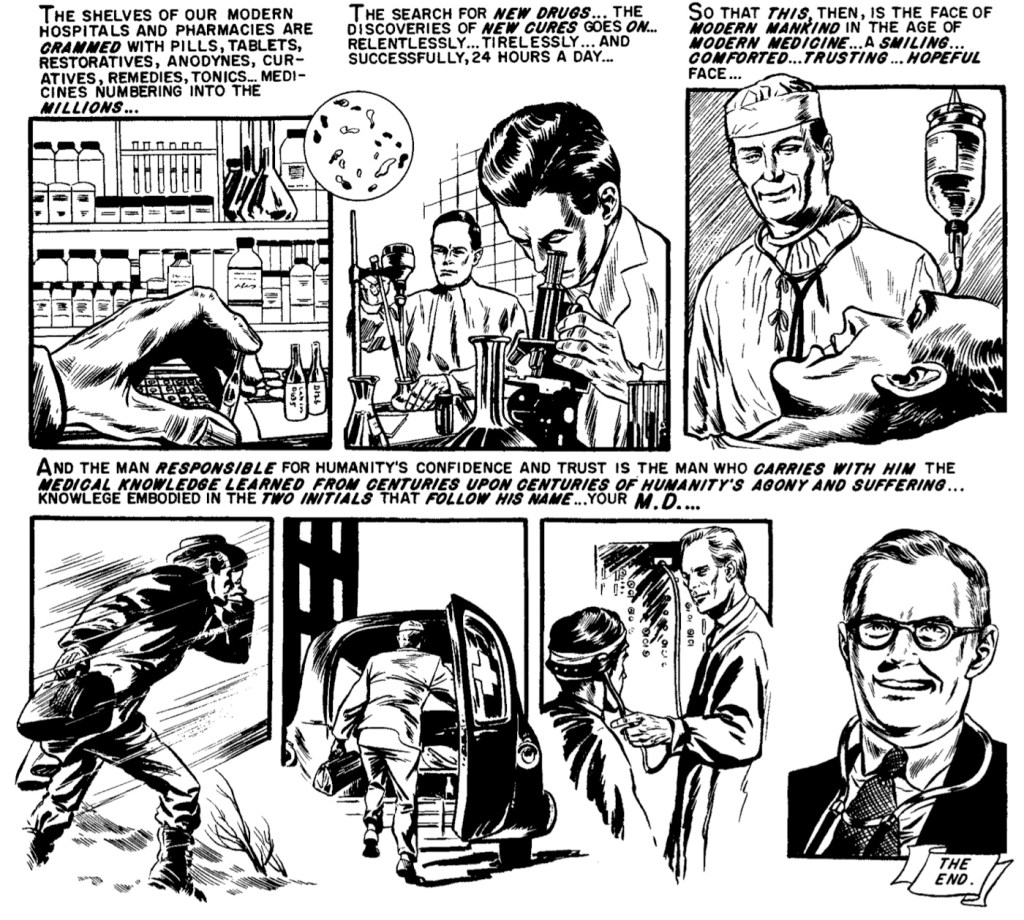
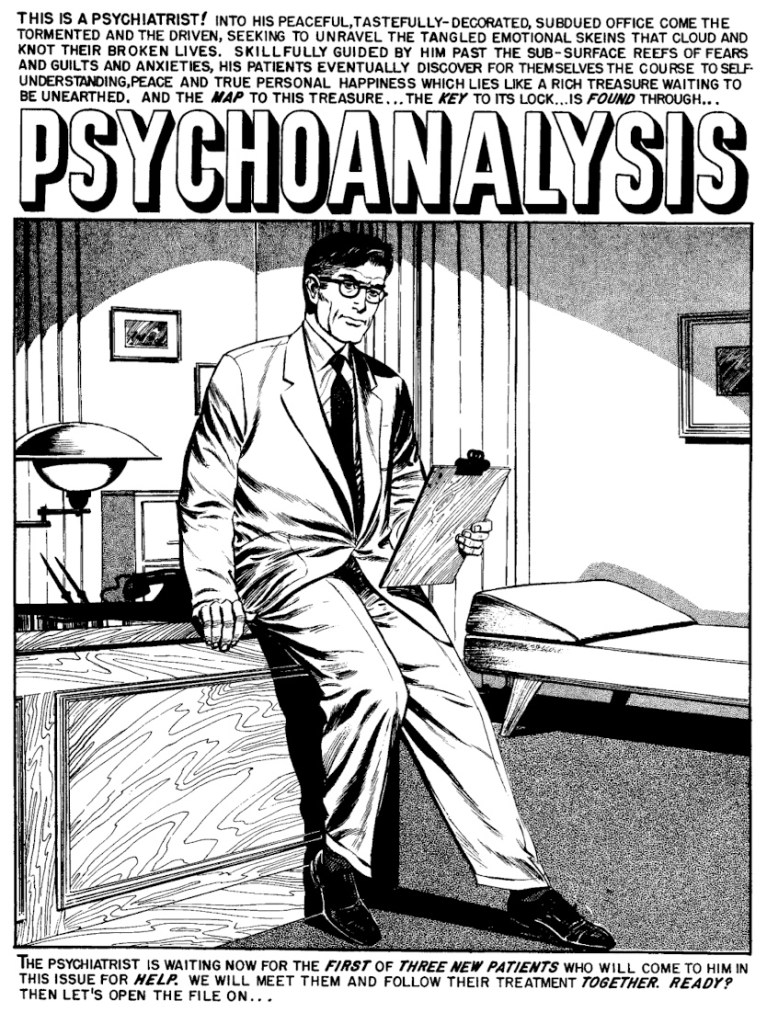
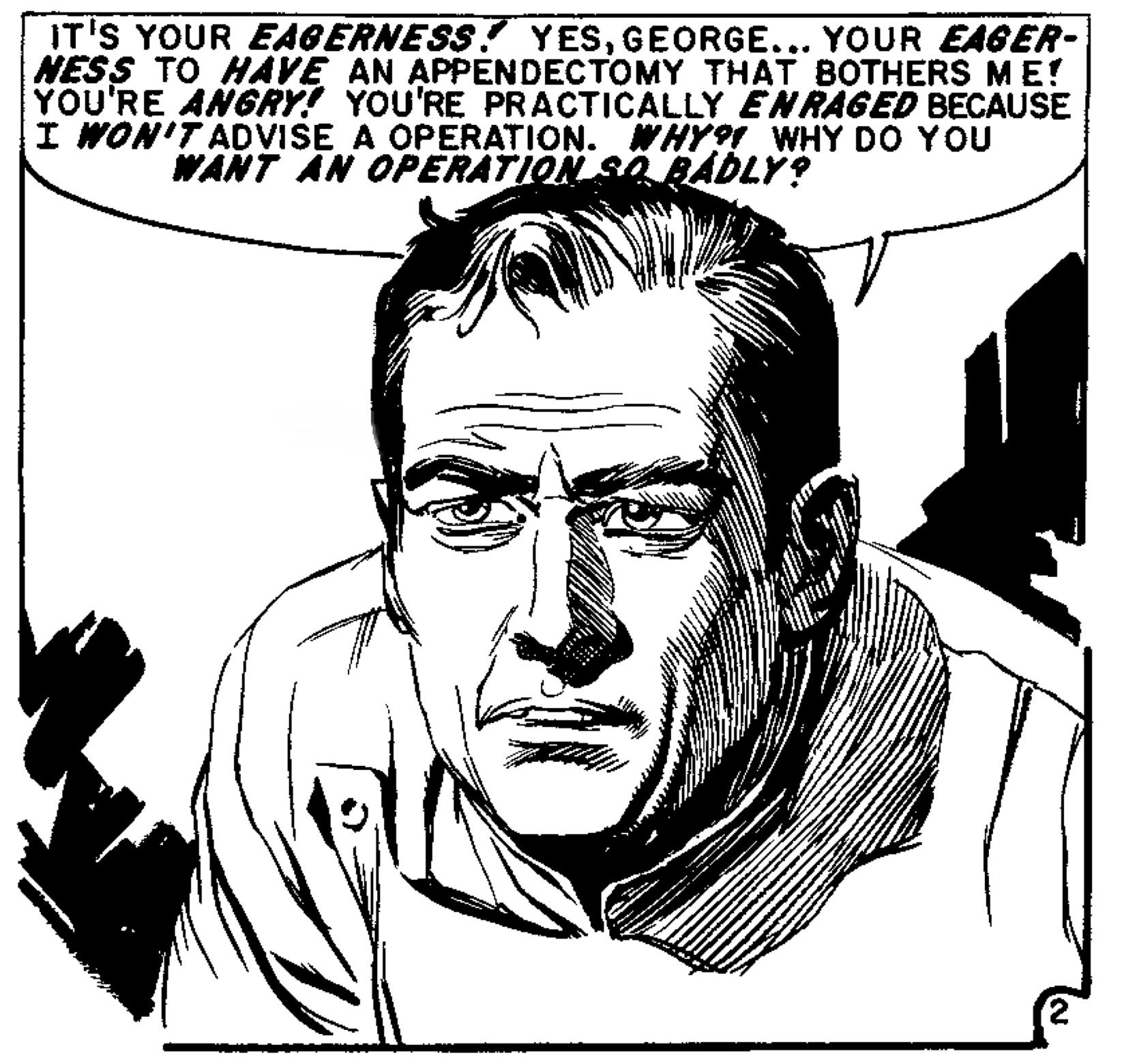
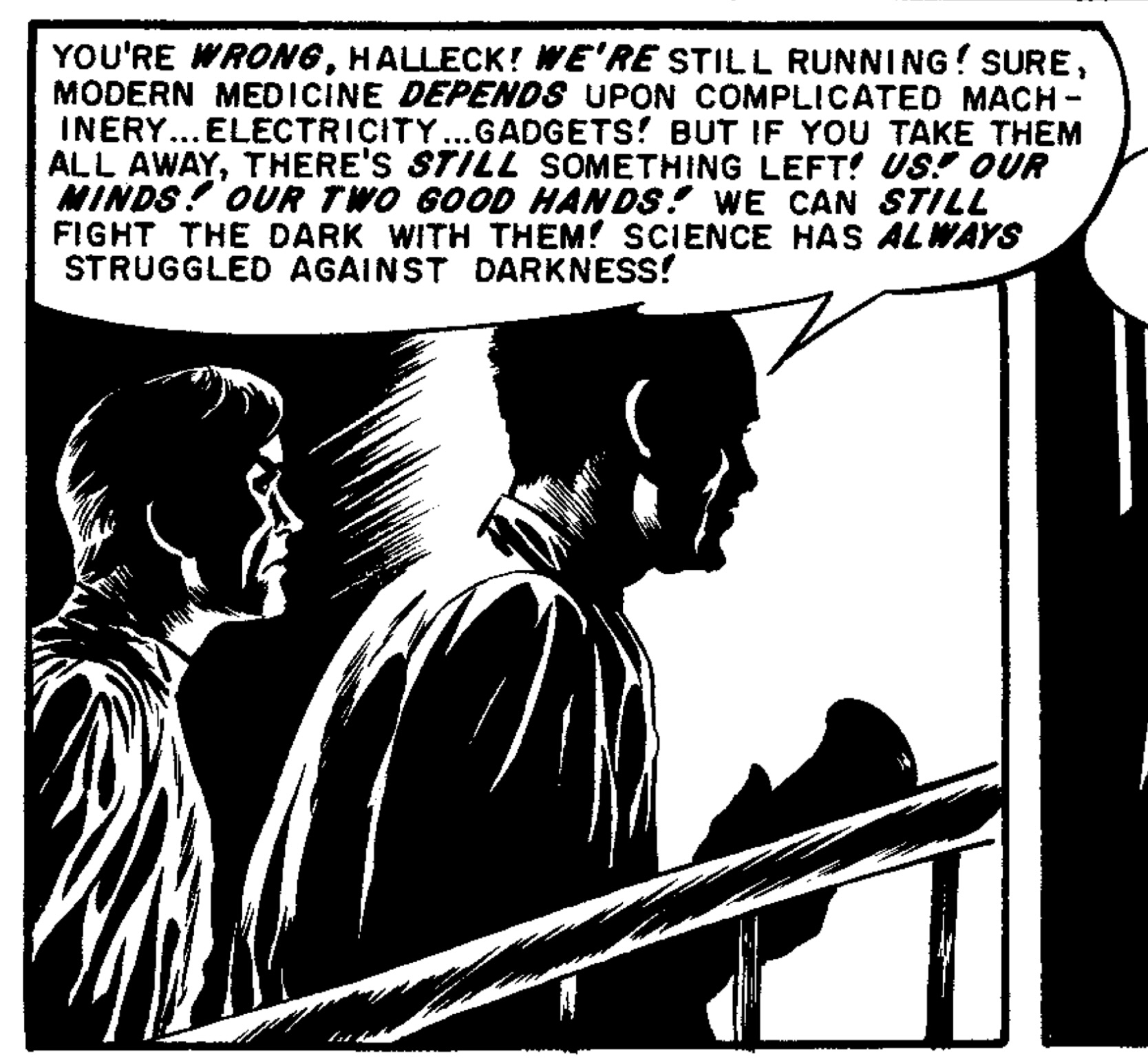
Both M.D. and Psychoanalysis start as medical procedurals – a lot of illustrated technical background and backstory narration. In fact, the stories come to us in the frame of case studies. Every M.D. tale is tagged with a specific “Diagnosis” and resulting “Procedure,” while the Psychoanalysis stories are titled by case numbers and patient names. They are gorged with text notes and chatter from office visits and professional consultations. Jargon and medical descriptions keep the mostly unattributed writing wholly dry and unimaginative.
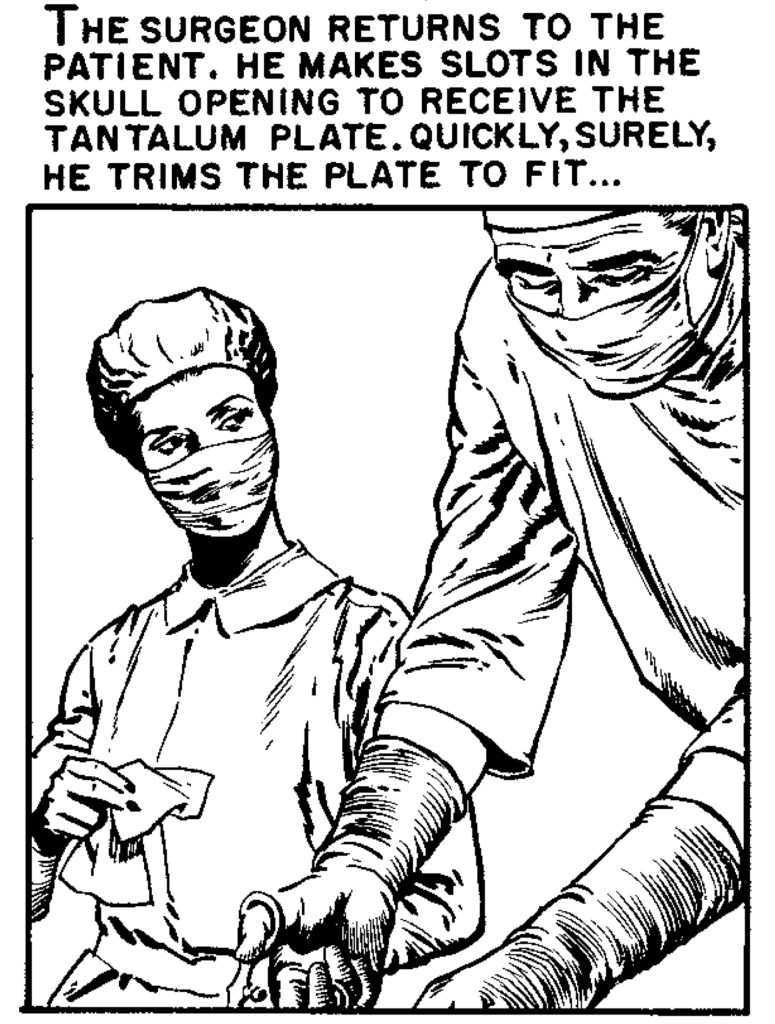
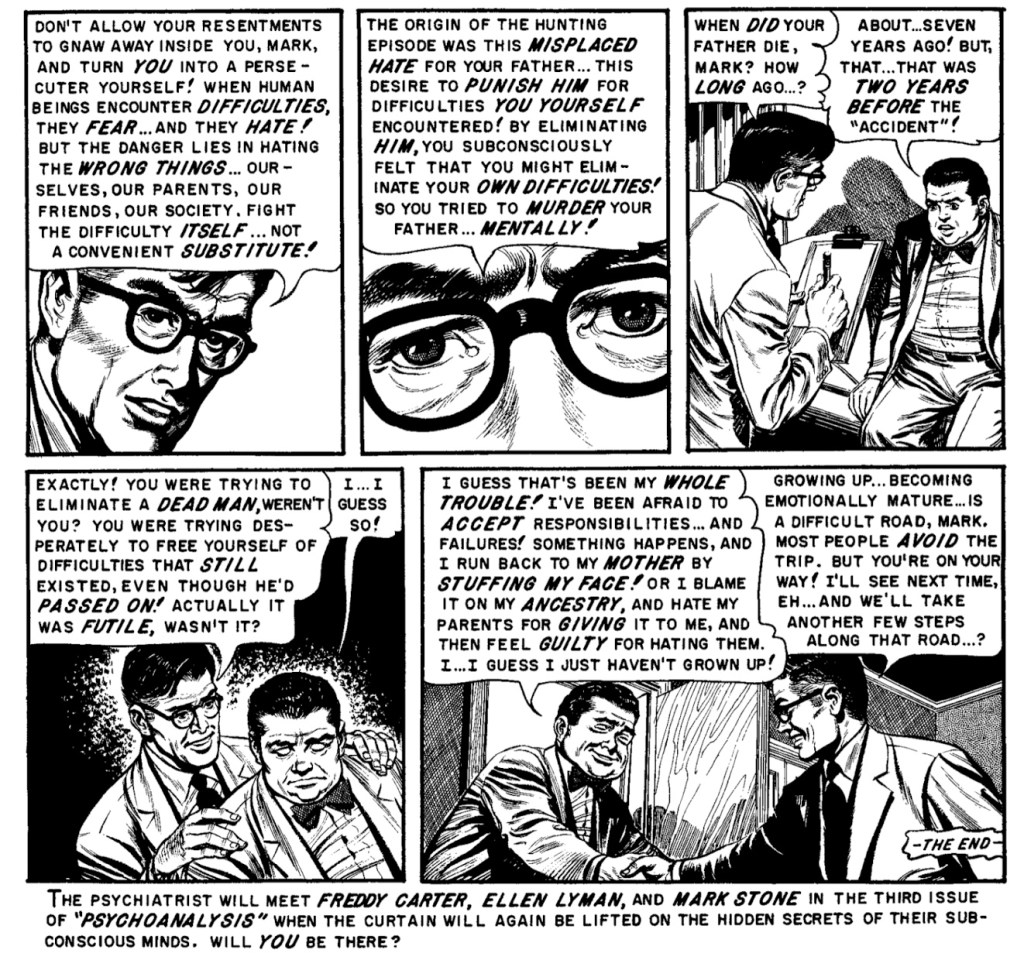
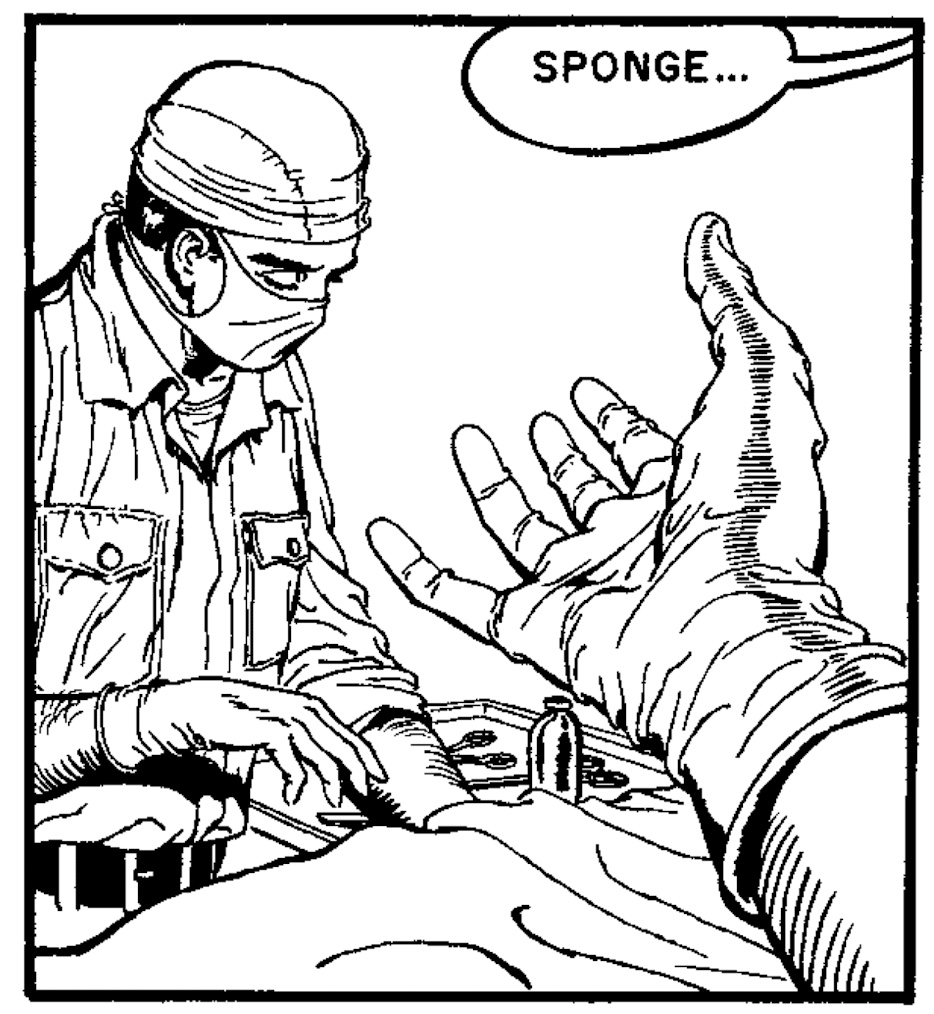
Aesthetically, it is interesting to watch EC’s pre-code artists Reed Crandall, George Evans, Joe Orlando and Graham Ingels make the most of some uneventful stories. In many cases, oblique angles on static scenes or artfully composed talking heads are all the tools available to them. How many ways can an artist depict nurse and doctor leaning over an anesthetized patient, or the back and forth of office consultations? As these titles progressed, EC editors themselves seemed to recognize the inherent lack of drama and so reframed the stories around more action-packed back story. Joe Orlando’s work is especially artful in mixing up compositions, leveraging foreground and background, and finding creative ways to dramatize mundane detail. An OR doc calls for “Sponge” with a gloved hand jutting out of our POV from the panel’s edge. Kinda cool, if unwittingly silly.
The title story of this selection, “Shock Treatment,” drawn by George Evans, stands out. This tale of a depressed teen prescribed electro-shock therapy is an opportunity for Evans to craft the fear and guilt of parents’ faces as well as the grisly procedure itself. The piece on duodenal ulcers (did I just say that out loud?) as well, “Worried Sick,” is convincing mainly from Evans’s compositions and expressions.
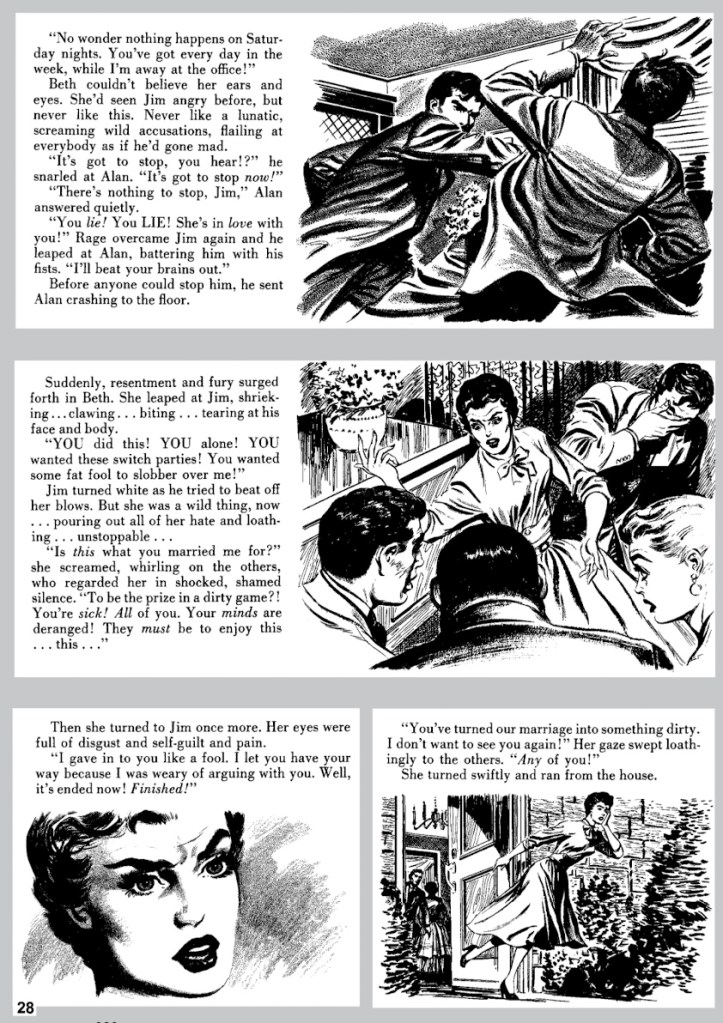
Shock Illustrated diminishes the EC legacy more in form than in content. The stories are more exciting, driven by deliberately “adult” themes: drug addiction, wife swapping and juvenile delinquency. And, again, each tale ends with a psychiatrist who unravels and resolves the emotional conflict. Normality of mind, and by proxy social order, is restored. These 20+ page short stories in text-heavy format are closer to illustrated novel than comics. They sacrifice the magic of sequential art. But let’s be fair. What EC called “picto-fiction” was a noble try. By mixing prose and generous imagery, they thought they were splitting the difference between comics and literature.
But more often than not the art across these three titles has all of the action and character of an elementary school Health class textbook. Its obeisance to institutional authority and expertise is stultifying. As an historical artifact, Shock Treatment illustrates the post-WWII rise of what came to be known as “therapeutic culture.” A coterie of experts, wielding scientific certainty, diagnoses anxiety and conflicts as symptoms of individual dysfunction, not social or political failure. The sickness is in you, not in us. This was precisely the kind of cultural rationalization, part of enshrining American “normality,” that the next decade’s counter-culture tried to deconstruct. We have discussed how this institutional turn played out in 50s comic strips here. But in fundamental ways, the latent worldview in these comics was also so not-EC.
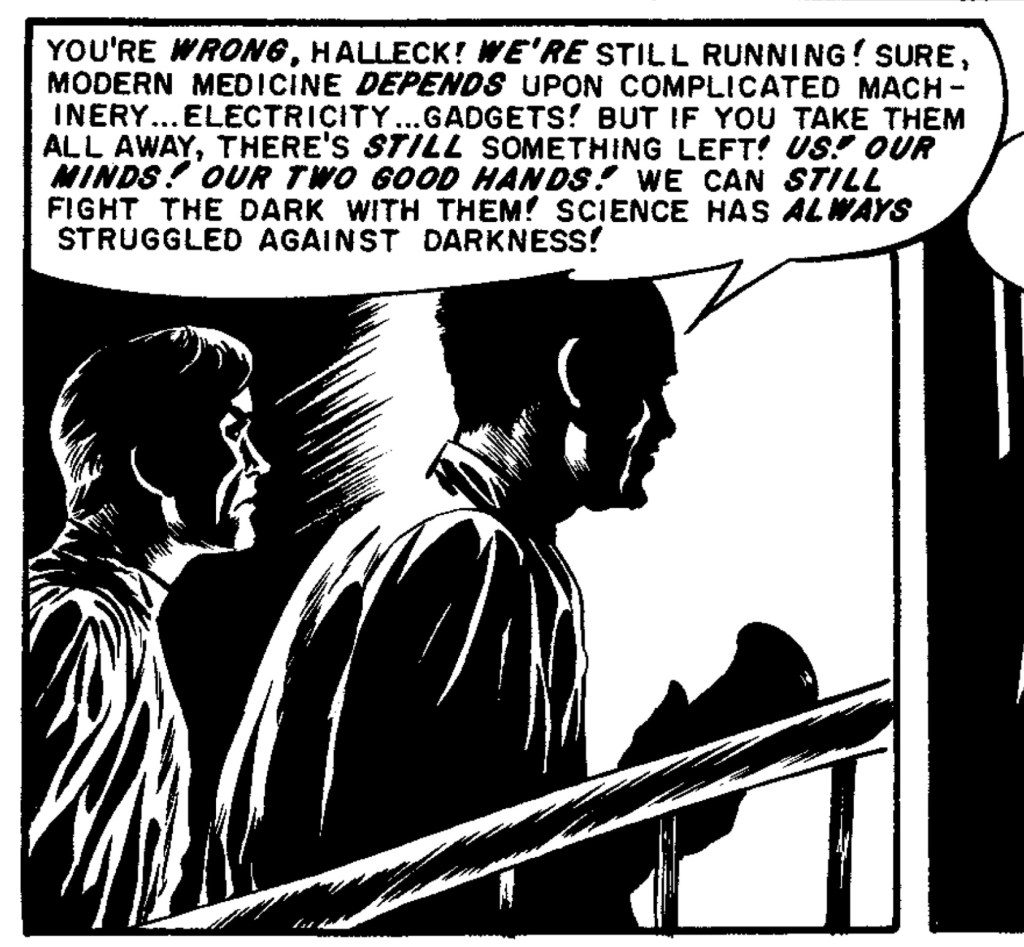
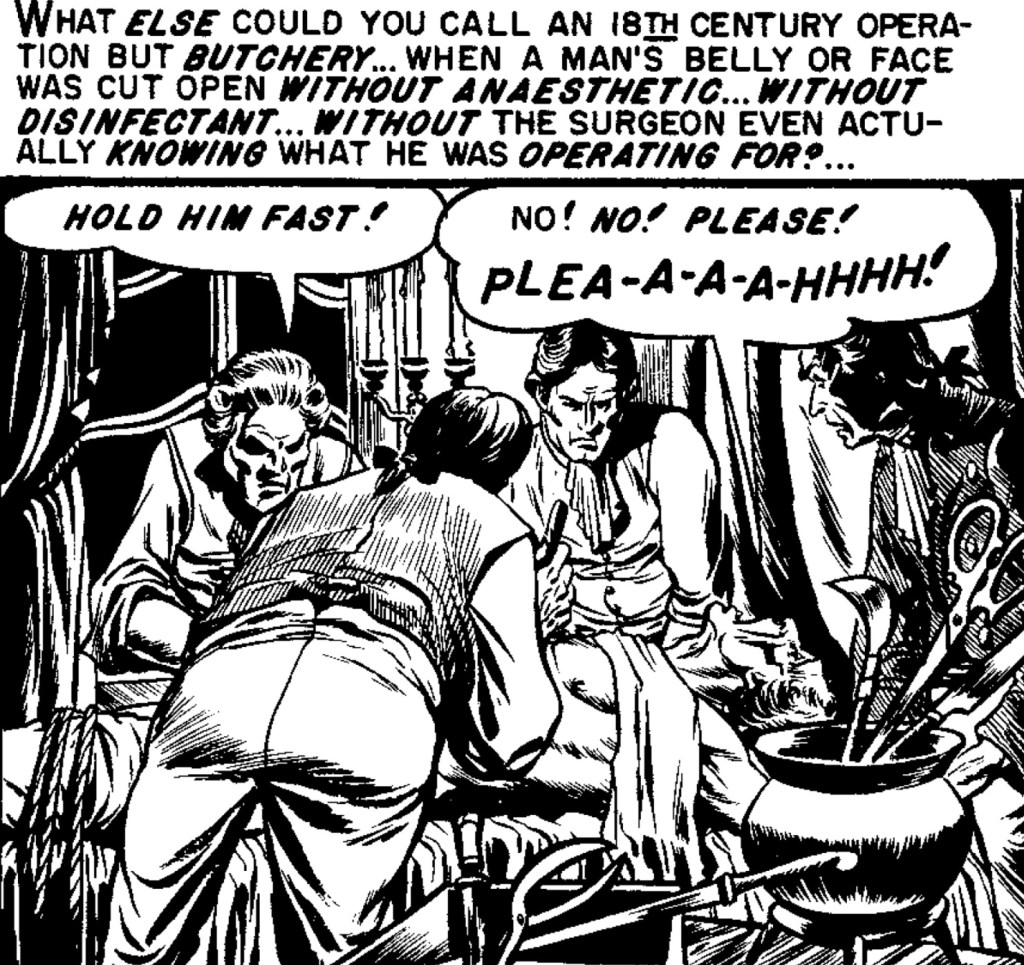
It ironic that the EC titles most directly concerned with modern science and psychiatry in particular were the least interesting, because the company’s leaders, Al Feldstein and William Gaines, both underwent psychoanalysis themselves during these years. In fact, it always seemed to me that EC historians overlook the fact that the both story men driving the most controversial, darkest comics on the market had been exposed to this very modern vision of the self. In many ways the crime, horror and suspense stories surfaced the human ID. They showed a sympathetic understanding of the rage, amoral fantasies and obsessions that can fester within any normal psyche. We celebrate these titles for their graphic depictions of extreme, transgressive behaviors, but they may have been so effective, and upsetting to some, because they expressed in extremis dark conflicts that we all find familiar. Consider how accurately Johnny Craig captured obsessive compulsive behavior in “Touch and Go” or Jack Davis rendered horrified faces in just about any story. Consider how EC tropes like the murderous spouse, the vindictive company peon, or the vampires in our midst gave eccentric shape to the repressed resentments of a post-war America struggling to enforce a shiny, happy new normal.
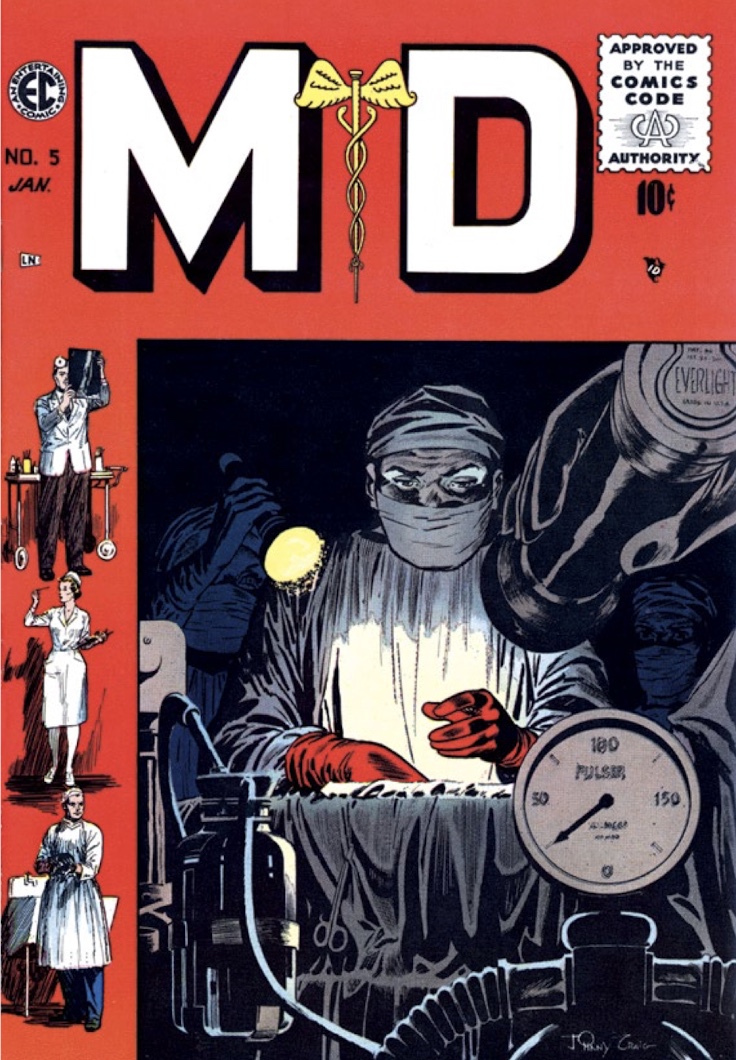
This volume in the Artists’ Library is exceptional in its size and contents as well. At 332 pages, it is larger than any of its predecessors I can recall. It includes some letter and editor pages and some of the text stories that EC included in order to qualify for cheaper second-class mailing rates. Best of all we get a color section of these comics’ covers. Johnny Craig’s M.D. covers were very good at infusing every bit of dramatic lighting and composition he could into doctors in scrubs. One wishes the story artists had picked up some of his cues. Jack Kamen’s Psychoanalysis covers are less compelling.
EC completists, and cultural historians like me, will find in Shock Treatment value beyond and beneath the mediocre storytelling.
Discover more from Panels & Prose
Subscribe to get the latest posts sent to your email.

