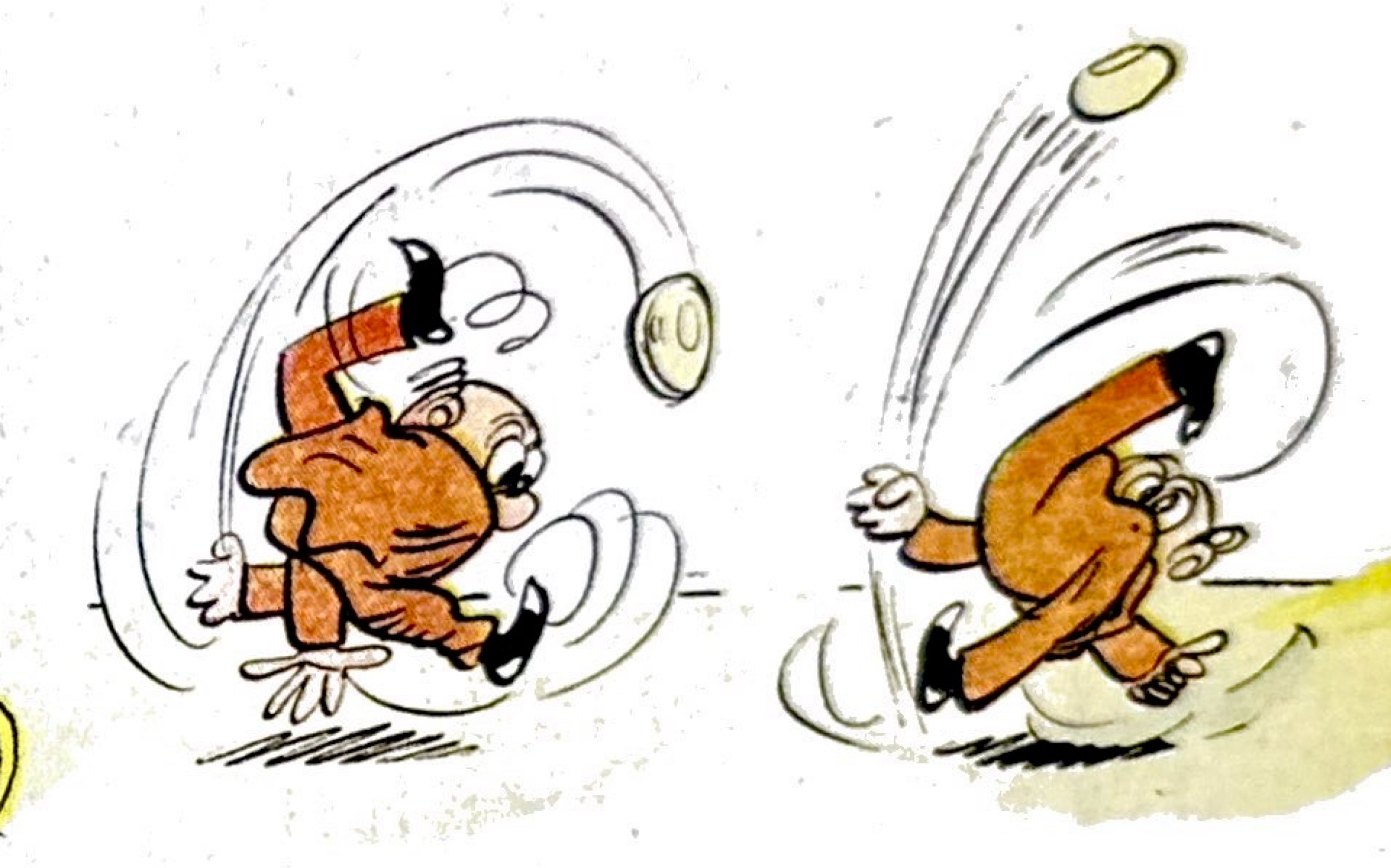
One of the basic joys of comics is every artist inventing their own physics. The distinctive cartoonists, at least, use line weight and figure shapes, action and reaction to create physical rules to govern their world, their own sense of gravity.
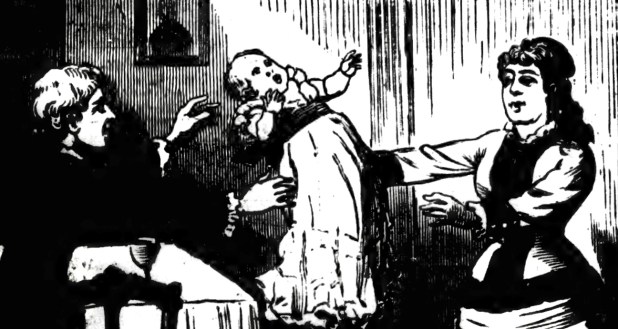
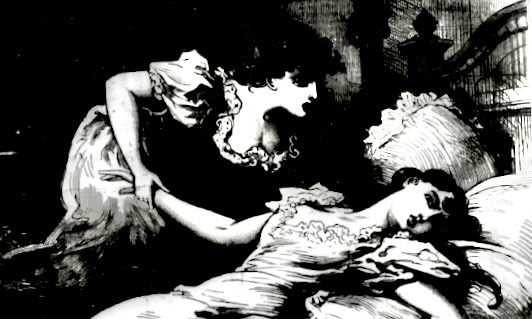
It was a kind of Victorian soft porn. For over a century, The National Police Gazette was ubiquitous at men’s clubs, barber shops, saloons, general store backrooms. The Gazette was the 19th Century forerunner of modern men’s magazines, the supermarket tabloids of my generation, and the viral news memes of today. It was also part of the changing visual culture of the late 19th Century that seeded the ground for the flowering of newspaper cartooning to come.
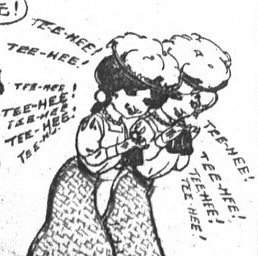
Early newspaper cartoonists had a fixation on fixations. From the relentless politeness of Alphonse and Gaston to the ravenous Hungry Henrietta to Mr. Jack’s apparent sex addiction, the comedy of dysfunction was central to the first decade of the medium. Rooted in caricature, and visual shorthand, cartooning has always been dominated by social typing of one kind or another. Racial stereotyping was rife, of course, in the first decade of strips especially. But they joined prankish kids, hapless husbands, befuddled cops, prissy socialites, country hayseeds, and wacky inventors in a kind of repertory cast of the comics pages in these years. But sometime after 1900, many cartoonists zoomed into specific characteristics, obsessions, and idiosyncratic tics to define a strip.
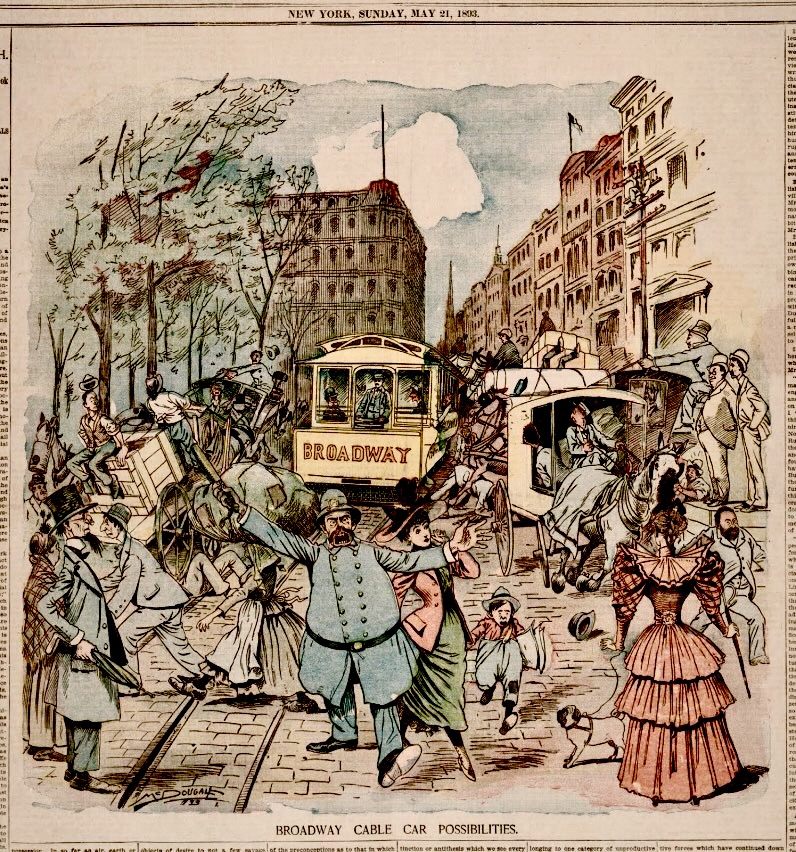
This Walt McDougall comic should be more famous than it seems to be. On May 21, 1893, Joseph Pulitzer’s New York World published the first true color comics supplement of the modern era.1 It was a landmark effort that soon placed cartooning at the center of newspaper circulation wars and sparked a new mass medium. It is beyond me why this inaugural comic supplement cover is not more widely studied. McDougall’s “Broadway Cable Car Possibilities” was more than an historical marker. It carries within it, much of what made newspaper comics so appealing so quickly.