Boy Wonder: Tailspin Tommy’s Machine Romance

“Boy!! That’s the life for me. Gosh…” The first of the major aviation-themed strips, Tailspin Tommy (1928-1942) embodied many of the essential qualities of the genre. From its start, the strip had an infectious, boyish wonder…about the air, about technology, about modern progress itself. Like most in the category, it was drawn by a pilot and flying enthusiast (Hal Forrest) in a rough style that fetishized planes and flight images yet fell flat in depicting characters and earthbound life.

Continue reading →

Like a Comet: Frazetta Races In

On Jan. 28, 1952, Frank Frazetta’s breathtaking talent for dramatically charged action and erotic, muscular figure drawing finally made its way into newspapers with one of the most gorgeous, if short-lived, strips of the decade, Johnny Comet. The eponymous adventure was set in the racing world, a theme that should have tapped naturally into the car customization craze of the 50s. It was ceonceived and distributed by the McNaught Syndicate, ghost-written by Earl Baldwin, but co-credited to Frazetta and 1925 Indianapolis 500 winner Peter DePaolo who served more as an advisor and was attached to the project to lend an air of authenticity. Hobbled perhaps by uninspired scripting, Johnny Comet failed to catch on despite its standout visual poetry.

Continue reading →

Secret Agent X-9: Watching Alex Raymond Mature

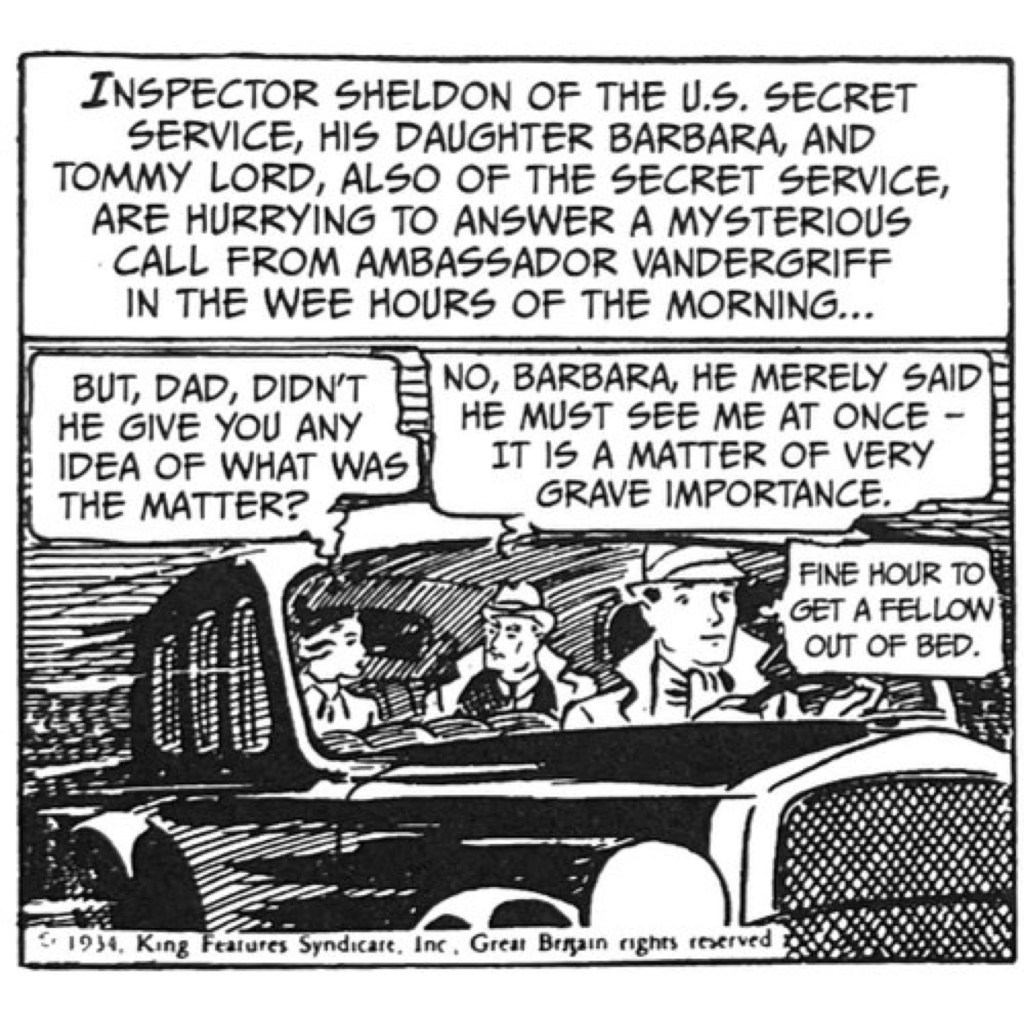
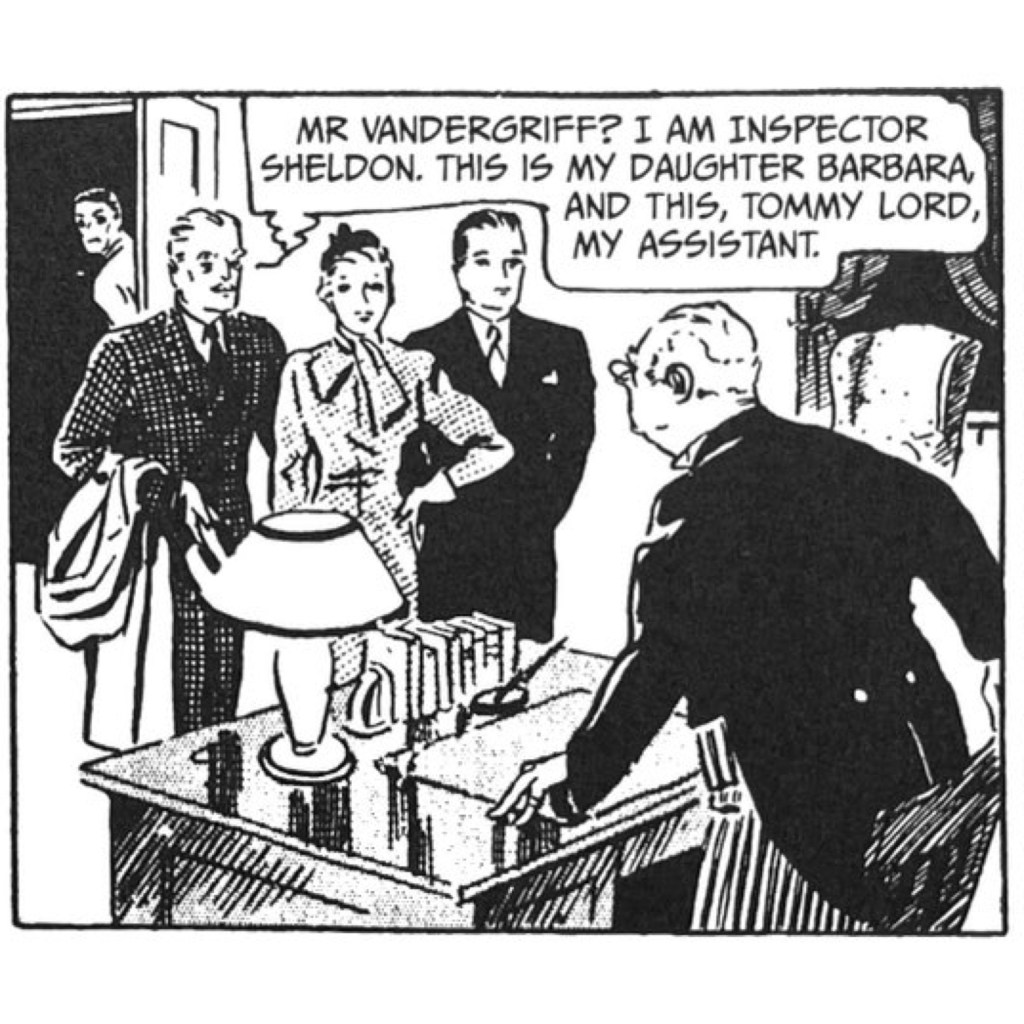
Nearly 90 years ago yesterday Jan. 22 1934, the collaboration between Dashiell Hammett and Alex Raymond launched as Secret Agent X-9. Designed to respond to Dick Tracy’s massive success with the literary cachet of Hammett and the rising talent of Raymond, X-9 looked better on paper perhaps than it did, well, on the actual page. The famous innovator of the hard-boiled style was at the tail end of his productive output and clearly did not give his best effort. After crafting just a few very uneven scenarios, Dash got canned.

Continue reading →

Dick Tracy Battles The JDs: Flattop Jr. and Joe Period

Chester Gould’s Dick Tracy was created in the 1930s as a response to the romanticization of gangsters and declining respect for law enforcement. And throughout its run under the notoriously conservative artist made no secret of his disdain for many modern trends. In the 1950s when mania around “juvenile delinquency” dominated popular culture, Gould added to his famous rogues gallery a few of these teen terrorists. Most notable for its outright weirdness (even for Gould) are the 1956 episodes spanning Joe Period and Flattop, Jr., the son of one of Tracy’s most famous nemeses of the prior decade.

Continue reading →

Napoleon: The Gentle Art of Everyday-ness

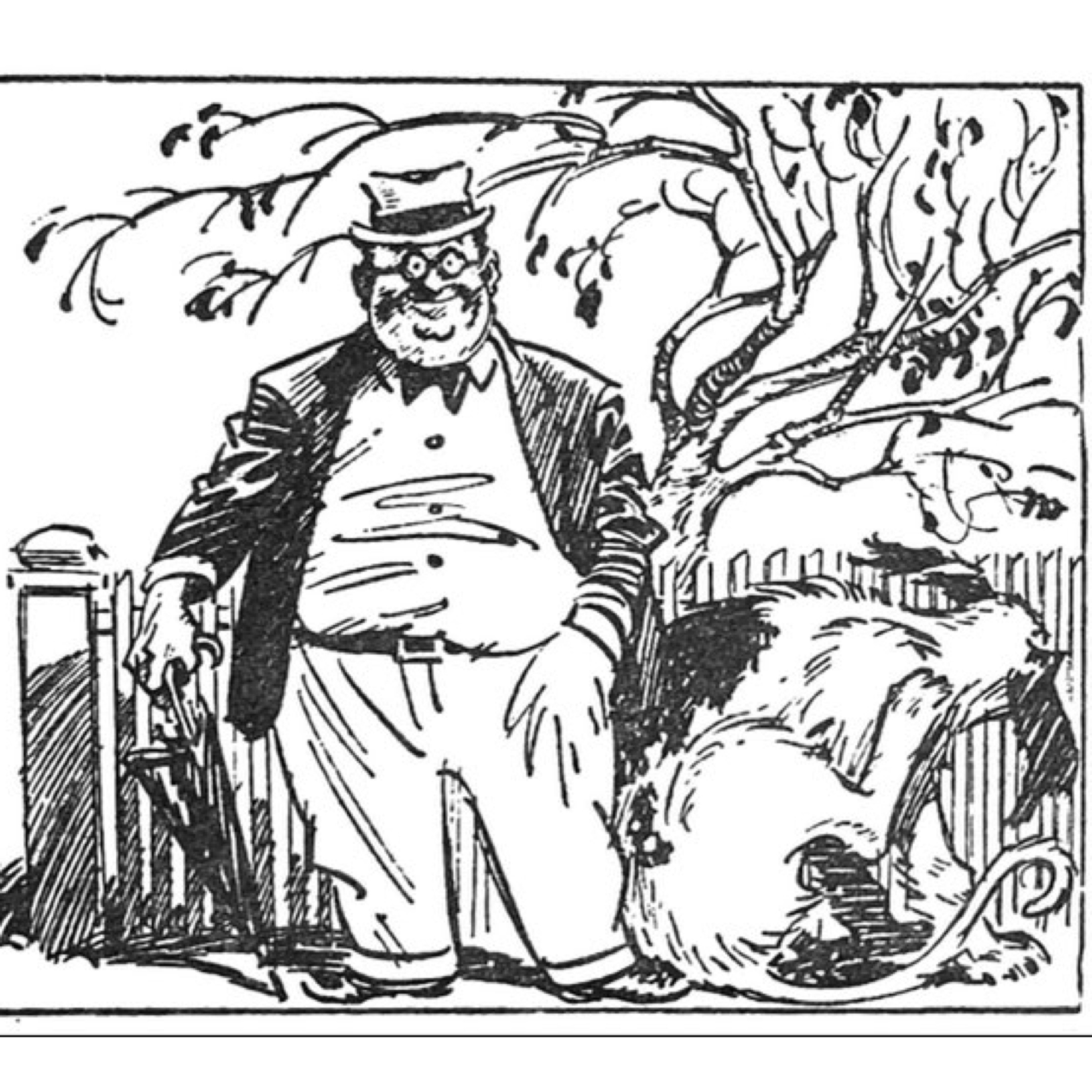
Clifford McBride’s portrait of the affable, accident-prone and corpulent Uncle Elby and his puckish oversized dog Napoleon is one of those great American comic strips that are about nothing. There is no adventure or much of an ongoing storyline to the Napoleon and Uncle Elby strip. Nor are there gags, verbal or physical, really. It is more a strip about everyday mishaps. Uncle Elby is proud of his new white suit, which an affectionate Napoleon meets at the the front door with muddy paws. Constructing a simple tent results in a tangled mess. Napoleon chases a fleeing rabbit, chicken,  cat or whatnot (it’s a frequent theme), only to be chased by his prey in the end. Elby mows over one of his dog’s hidden bones, which conks him on the bean. Elby gets out of his car to open the garage door only to have it slam shut before he can drive through.

No, really, the action in the Napoleon strip is that banal and trifling…relentlessly…and apparently by design.

Continue reading →

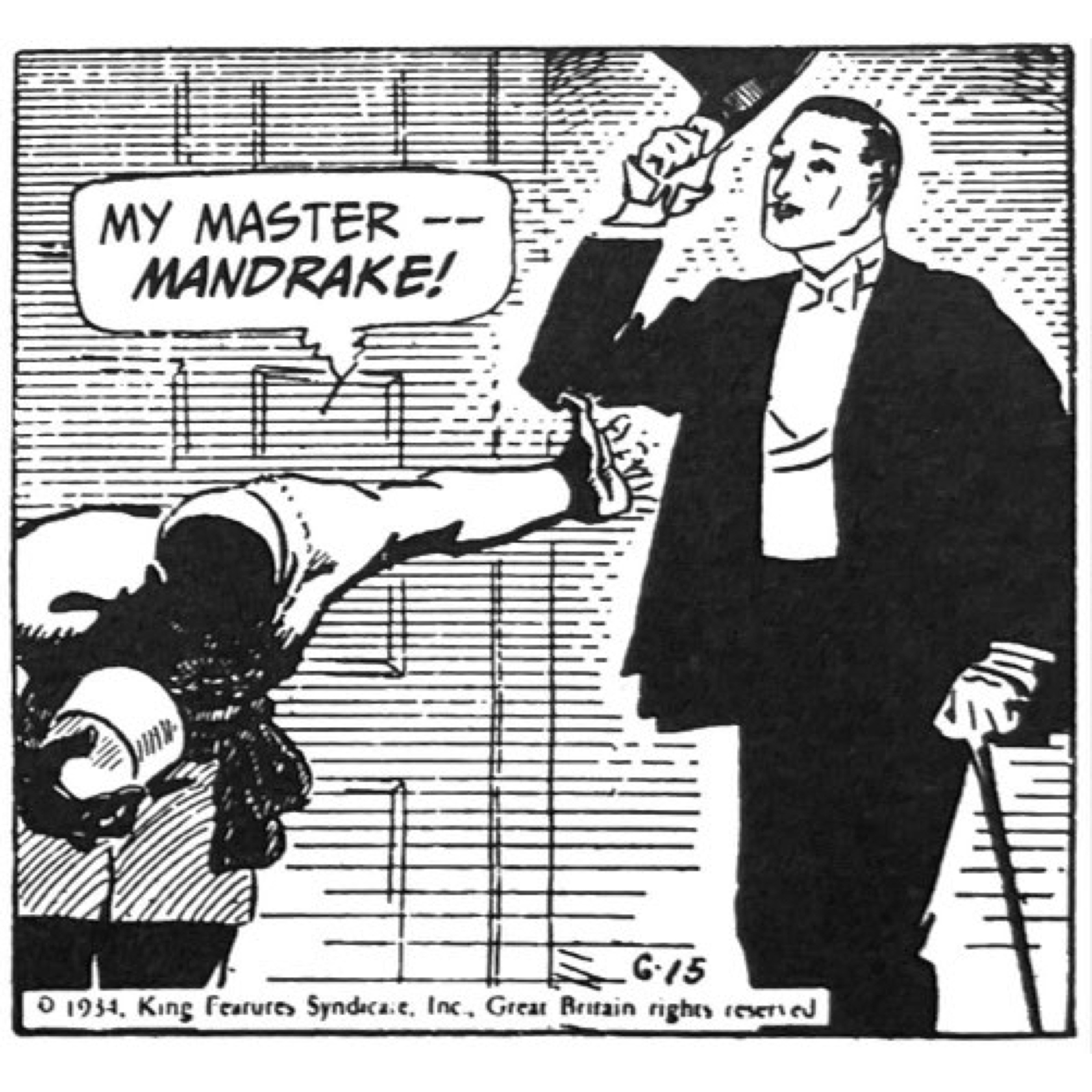
Premiere Panels: Mandrake Materializes…Eventually

It took a full week of strips for the eponymous hero of Lee Falk’s Mandrake the Magician strip to make his grand entrance. June 11, 1934 was the first strip, which evokes some of the feel of a classic mystery wind-up. But on June 15, in what has to stand as one of the most unambiguously racist intros in pop culture history, Mandrake’s “servant” Lothar heralds the coming of his “master.” One doesn’t even know where to start here. Falk’s full bore colonialism is more fully and relentlessly explored in his later The Phantom series whose origin we covered here and whose fetishes we covered here.

For all of its weaknesses, Mandrake remains important both to comic strip and comic book history in that his is the first strip to move towards a super-powered hero. Mandrake’s “magic” is only nominally super-natural, in that it is based on the power of suggestion and influence over others’ minds. But it precedes the appearance of Superman by 5 years and aldo nods towards costumed heroism, which would be more fully introduced in Falk’s The Phantom.

Krazy Philosophy: Herriman At His Best

I have to admit that I have always admired and appreciated George Herriman more than I enjoyed reading him. The gush of praise for his work among American intellectuals in the 1920s was deserved and an important piece of pop culture history. My own favorite pioneer of pop culture criticism Gilbert Seldes famously declared Krazy Kat among the most satisfying works of American art in the 1920s. But I always have had trouble really getting into him. I have to dip in and out of Herriman, sip him briefly, in order to appreciate the full effect of his offbeat sensibility, linguistic play, hit-and-miss humor. The characters and their world, while wonderfully abstract and even surreal, also create a distance for me.

All that is to say that there are also times when the abstraction and subtle philosophizing in Krazy Kat really pops through and reminds me what a rich mind was at work behind the strip. This daily from 1922 is one example of the ways in which Ignatz and Krazy really do represent fundamentally different sensibilities that were quite relevant to the America Herriman was experiencing in the inter-war years. Ignatz, the worldly, materialist, the jaded modern defender of “realism” is not only opposed to Krazy’s more ethereal, romantic approach to the universe, he is moved to violence at the very sight of it. That to me is the most interesting dynamic in their relationship. It is not the difference between the two world views they represent. It is how they react to one another, Ignatz’s frustration and intolerance of the very existence of a Krazy-eyed view of the world, that activates the strip for me and speaks to its age. Most Krazy Kat dailies don’t end with a brick to Kracy’s head but instead Ignatz reaching for a brick as a primitive response to Krazy’s musings or poor pun or nonsensical quip. Herriman calls attention to our own response. Who are you? Ignatz or Krazy?

Like Krazy her/himself, I find that I am appreciating Herriman by taking it slow through his dailies and Sundays. Others that caught my eye are here and of course the discussion of Krazy’s gender here.