
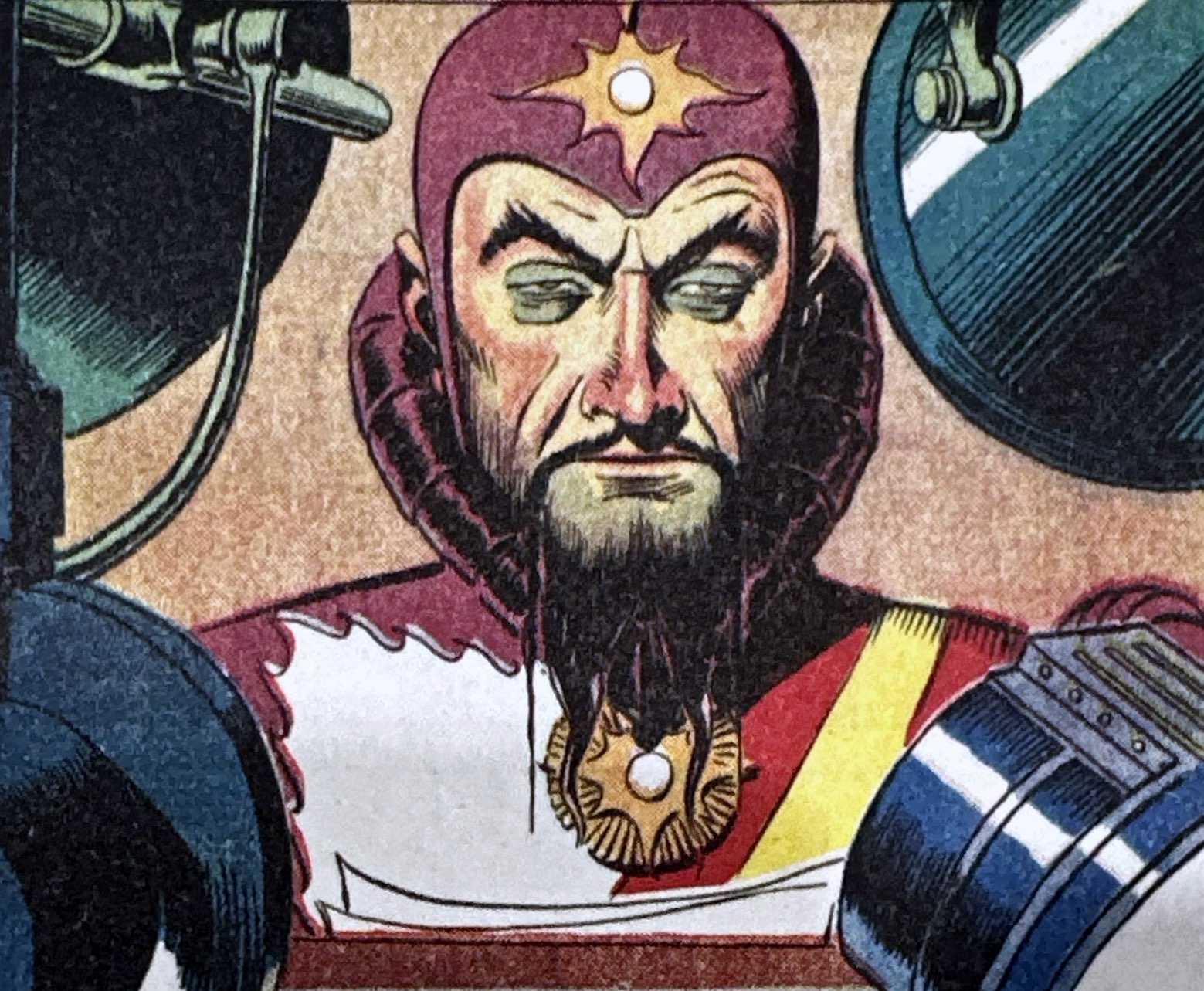
As we move more deeply into the 1930s and the peak years of comic strip adventure, some of the most recognizable and enduring cartoon fiends emerge. The villainy enlarges to suggest global criminal conspiracies and political power as it also becomes more sadistic. Newspaper comics are edging towards the outsized heroes and super-villains that formed the foundation of the comic books to come. [For the first installment of our valley of villains, refer to Part 1.
The Cobra – Mandrake the Magician
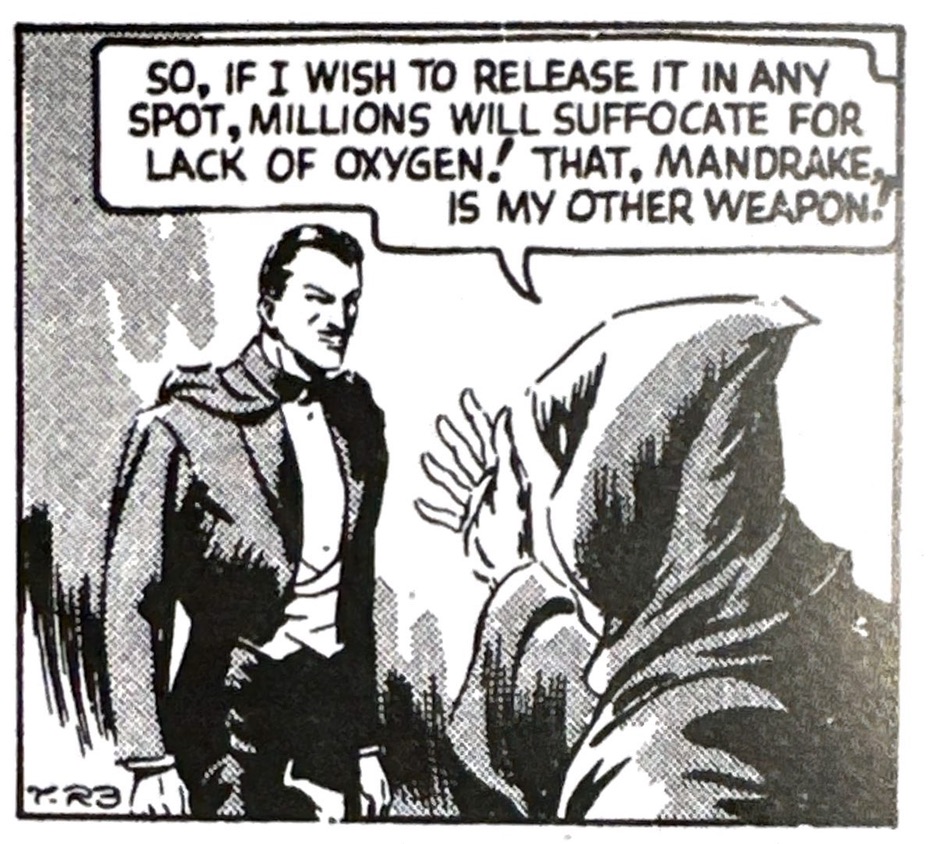
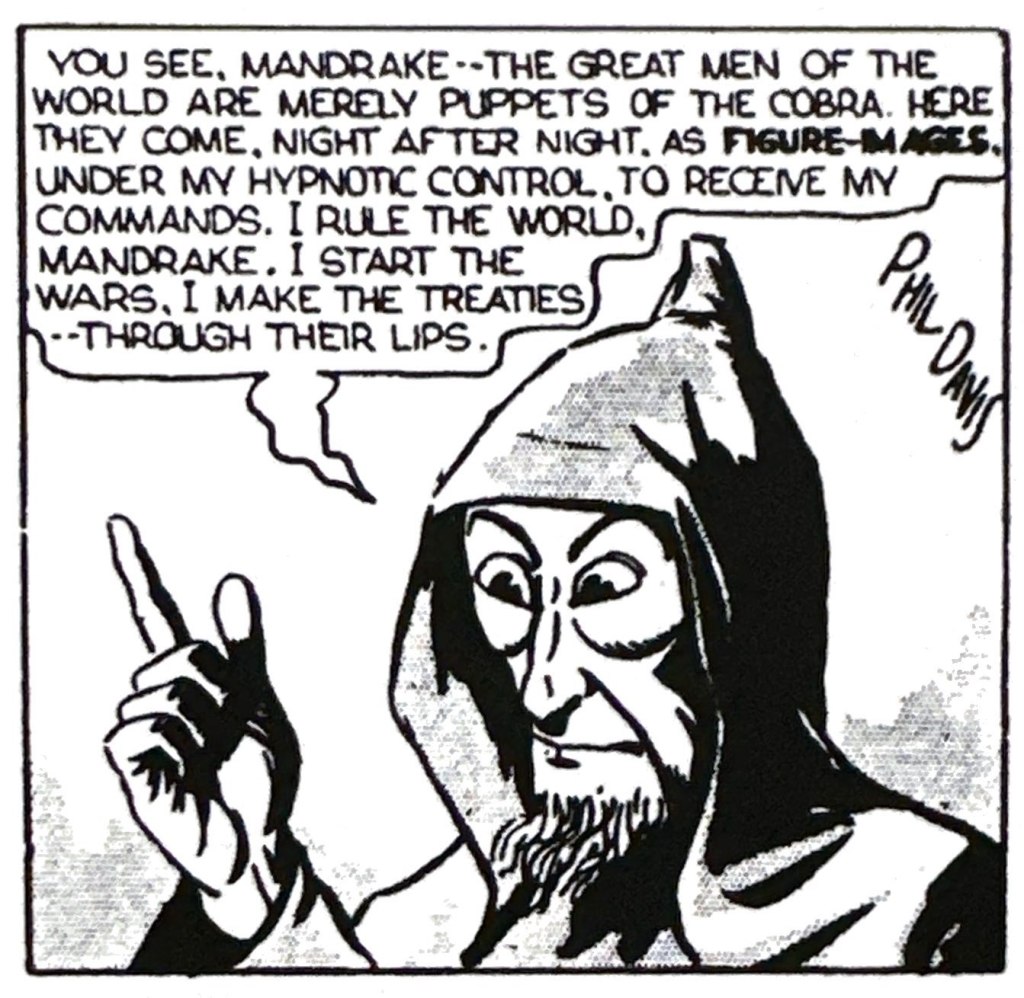

Mandrake’s arch-nemesis The Cobra followed a kitchen sink principle of villainy. Author/creator Lee Falk was generally unrestrained and unabashed in crafting outlandish situations and magical solutions for this strip. Fittingly, Cobra is a Mulligan’s Stew of villain tropes. He was a dark magician. He had a mad scientist castle lair with a laboratory of evil concoctions. Of course there were weapons of mass destruction. He had faceless (literally, faceless) slaves. He controlled the minds of world leaders. He had truly megalomaniacal dreams of ruling the world. And boy could this villain monologue all of these plans. Ultimately, across two major encounters in the 1930s, Cobra is trying to recruit Mandrake as a co-ruler of the world. Call it a Magigopoly? Artist Phil Davis’s rendering is just as weird as Falk’s scripting. The strange angles making up his face beneath that monkish garb are hard to resolve into a clear picture. Arguably, with his appearance in the first storyline of the first costumed adventure hero, and with such an assemblage of powers and ill-will, Cobra may qualify as our first super-villain.
Ming the Merciless: Flash Gordon
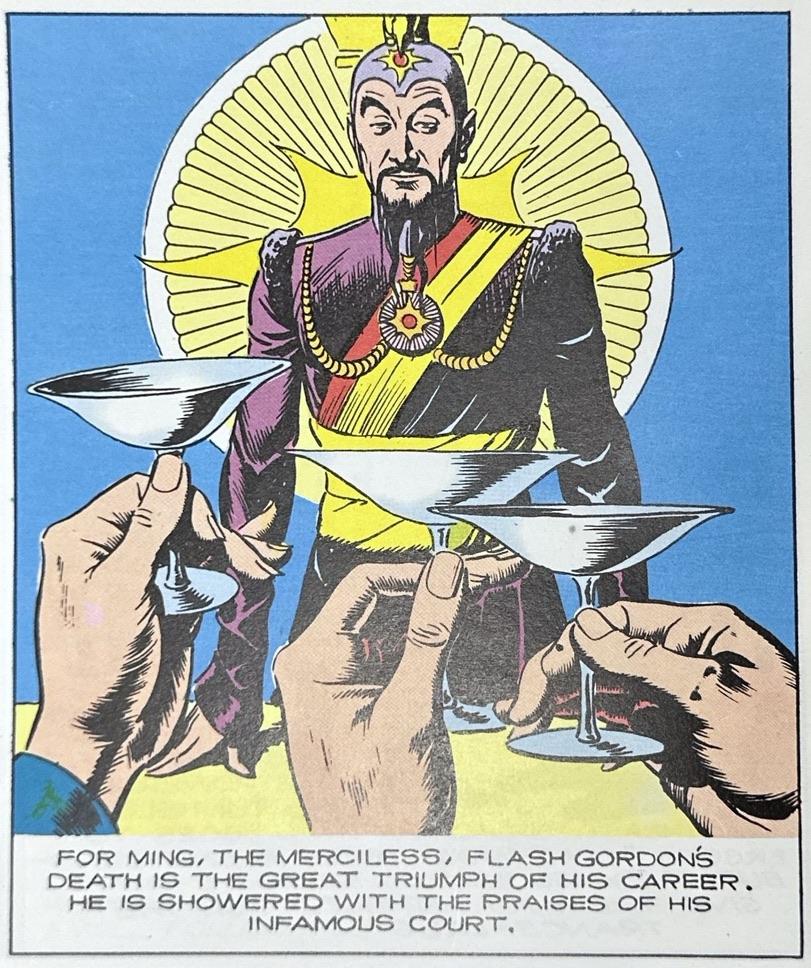
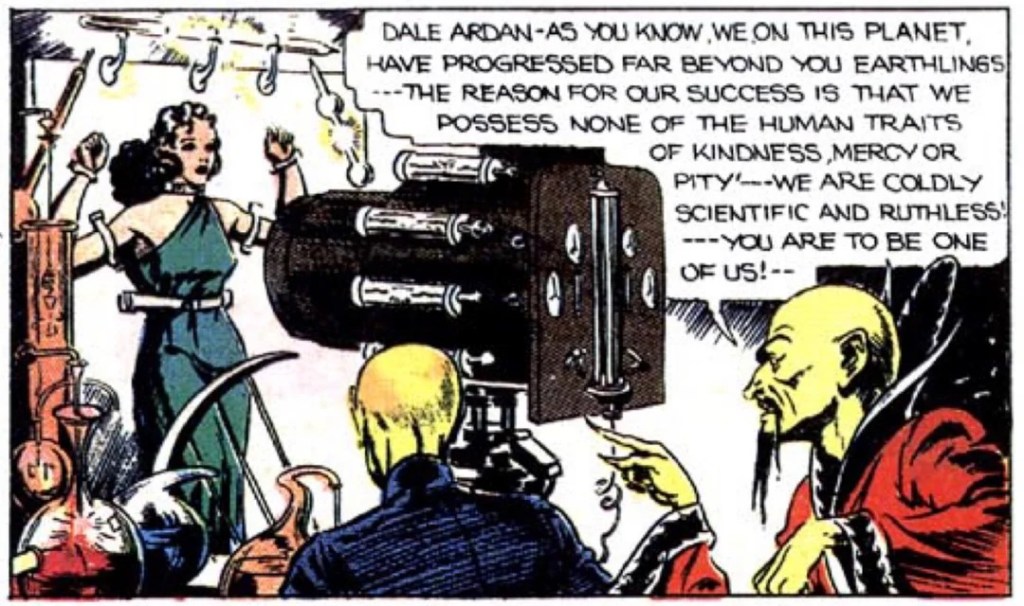
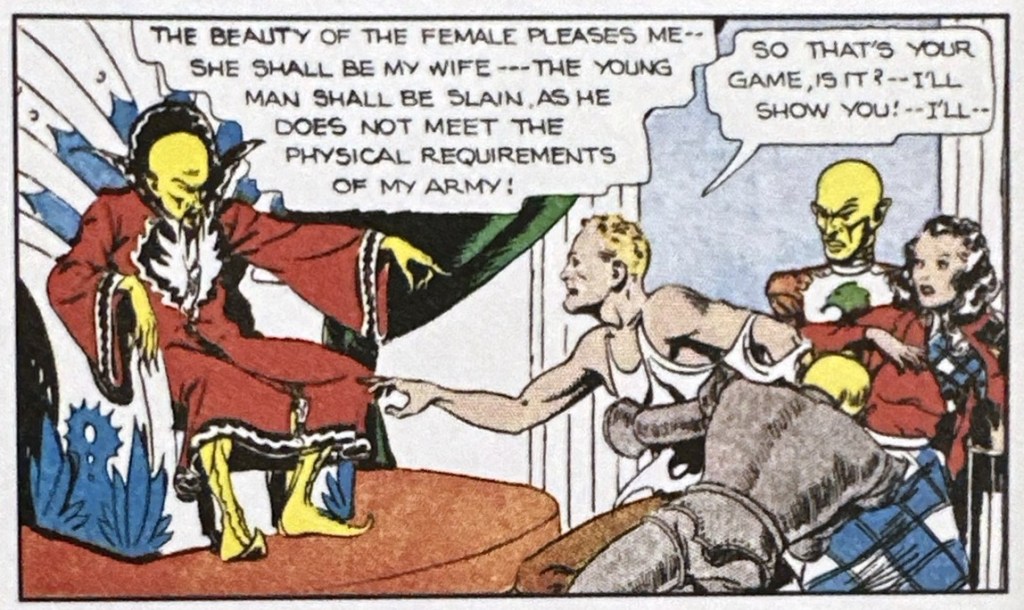
Now this is what we call a villain! The Emperor of Mongo brings together almost every humanist, democratic nightmare of 30s America in one bone-chilling figure. Total tyranny? Check. Ming’s is iron-fisted rule at its most comprehensive. Sadism? Check. He loves consigning people to torture…and watching. Pathological narcissism? Check. His minions are relentlessly obsequious and fawning. Capriciously violent? Check. Execution is just another disciplinary device to this dude. Racially stereotyped? Oh, my yes. He is the “yellow peril” personified. But even more to the point, all of this villainy is made flesh by the most talented and thoughtful artist of comic adventure, Alex Raymond. From the micro-wrinkled face to the blade-like neck-piece, the malevolent gaze to the physical outbursts, Ming is visualized as mannered rage. And Raymond’s skill for erotic inference infuses this creepy ugliness with lust that is deeply ikky.
The Scraggs – Li’l Abner
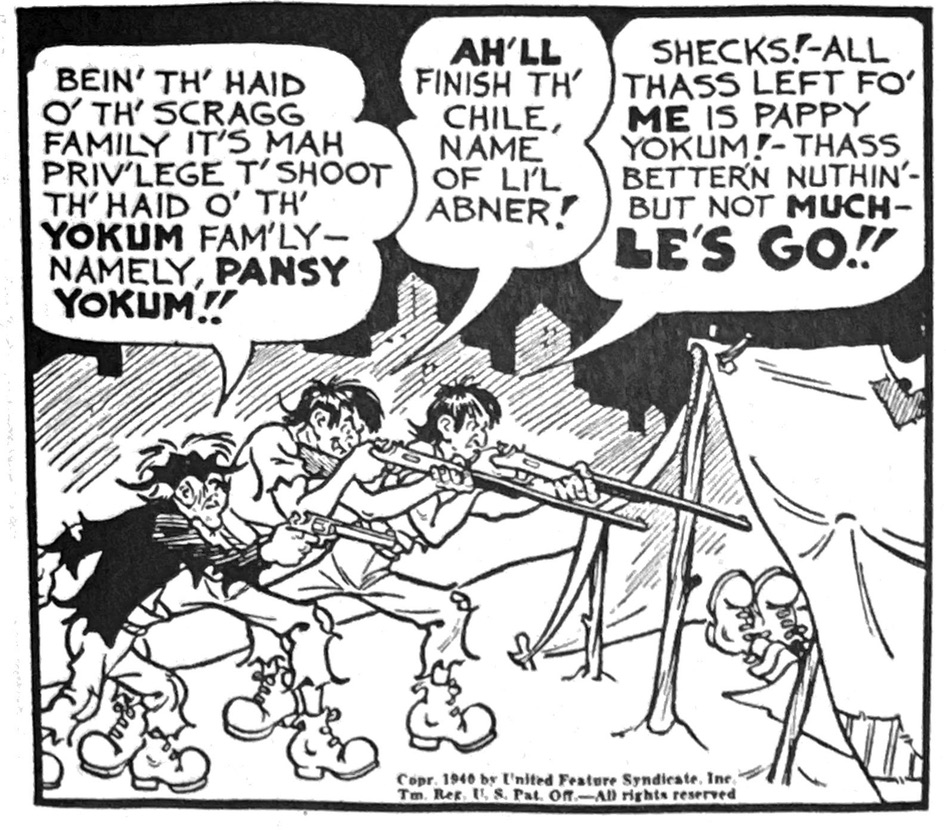
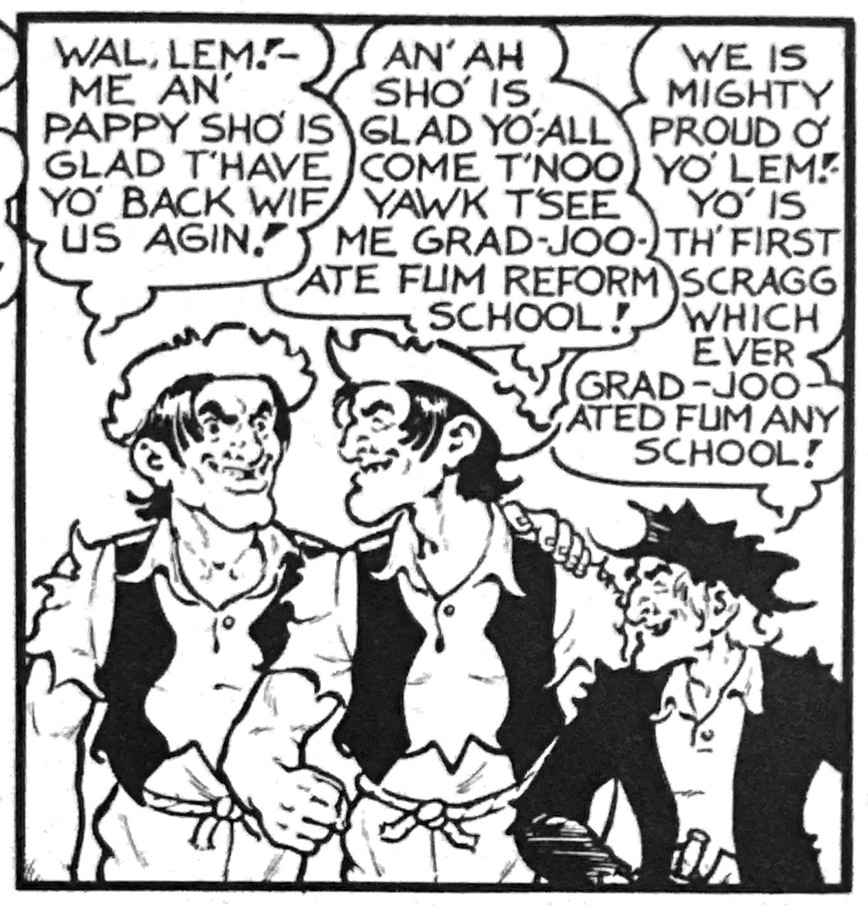
Impossibly vile in every way, the Scragg family has not only maintained a multi-generational blood feud with the Li’l Abner’s Yokum clan; they are the inverse of that heroic family in every way. Scraggs are widely known as murderous and contemptuous of all that is good in others, including their own kin, Daisy Mae (Abner’s love and eventual wife). The good citizens of Dogpatch recoil in fear at the sight of them. The Scraggs are so bad that Congress declared them “inhooman” in one story. Of course, they provide a convenient foil and ever-ready villain for the strip. But the Scraggs also let Capp play with every negative hillbilly stereotype he avoided in the Yokums: gap-toothed, inbred and likely incestuous, unclean, natively violent, lawless and sadistic. They are the dark side of a populism that animates the rest of the strip. To Capp’s credit, even within the context of an outlandish satire, he succeeds in making cartoon evil palpable. Visually, he contrasts them from other characters with a lot of sharp edges aand odd angles. The Scraggs are what an absence of personal morality or self-respect looks like.
The Dragon Lady: Terry and the Pirates
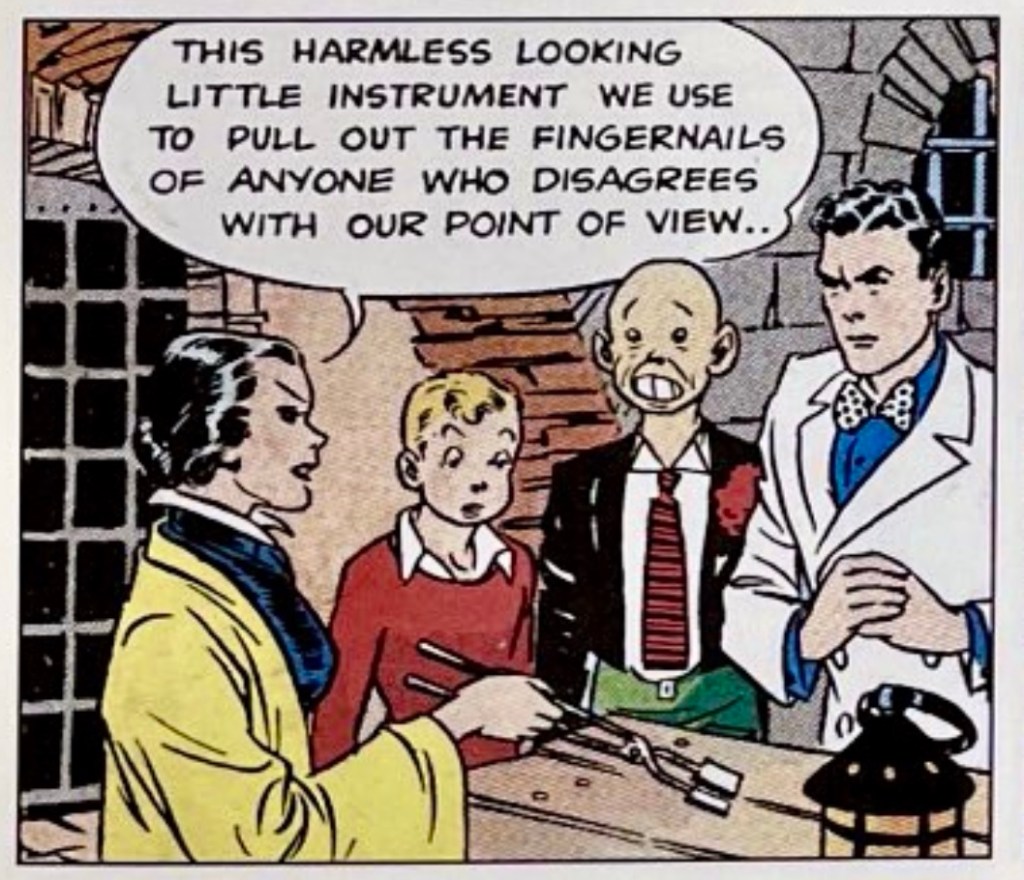
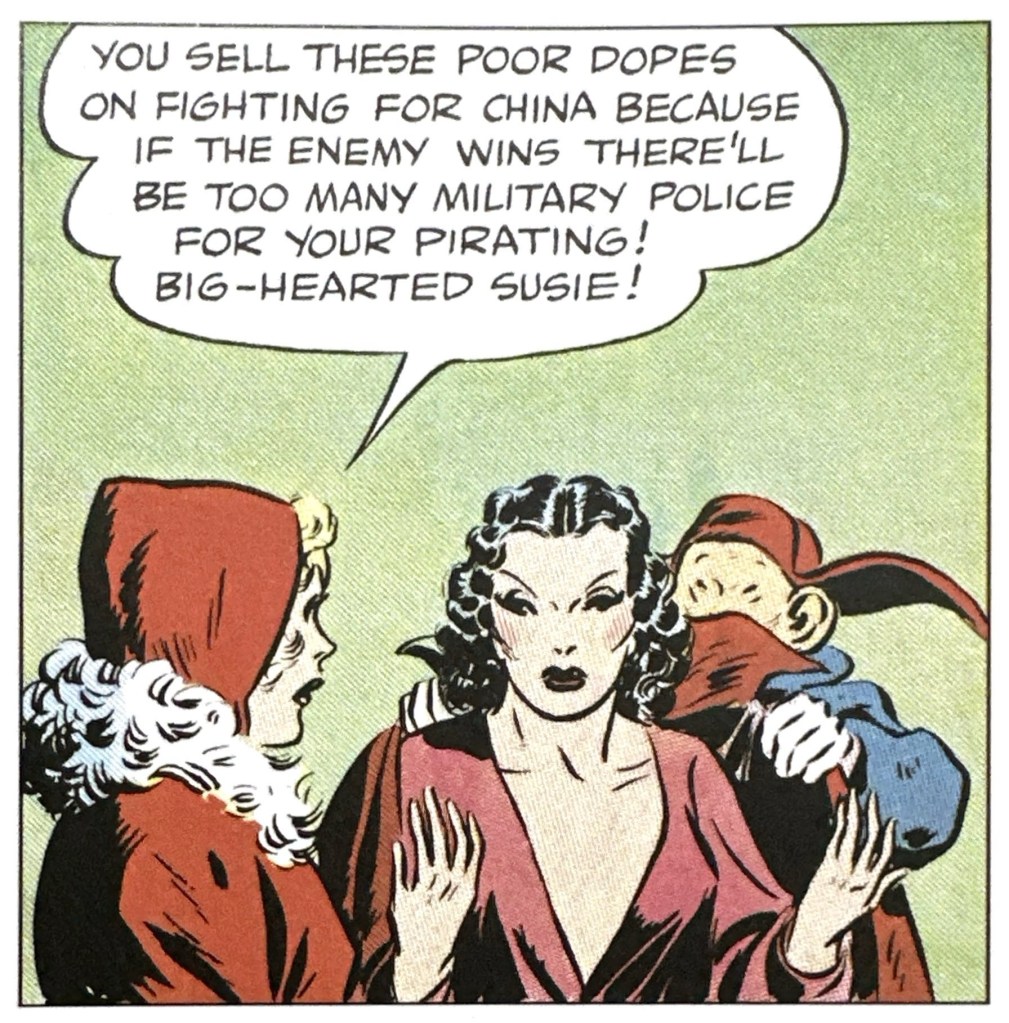
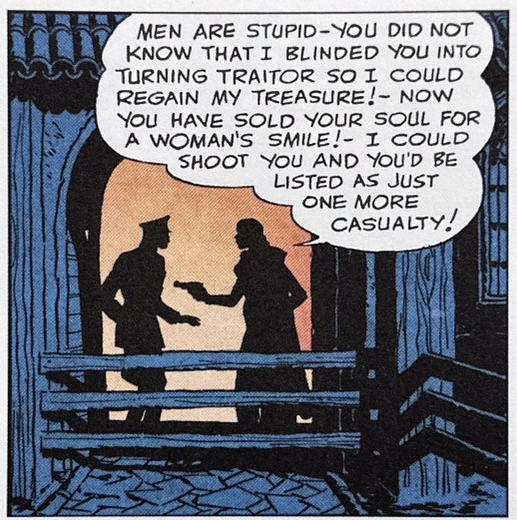
One of the epic maneaters of popular culture, Milton Caniff’s masterfully-wrought lady pirate stands alone among comic strip villains. Her name has transcended the strip to become a generalized tag for the hard-hearted and controlling female figure. She is part of the inaugural story arc when teen Terry and father figure Pat Ryan start their journey to the Far East. She is ruthless, conniving, man-hating, heartless. Yet somehow she evolves with the strip itself, becoming more psychologically nuanced and ambiguous. By the wartime strips, she has fallen for Pat Ryan and becomes an ally. But along the way, we see her villainy monologued across years of encounters. Arguably, Caniff’s is a deeply humanistic strip, in which characters enjoy psychological and emotional depth. In this world, villainy takes the form of rigidity, disloyalty, antipathy. Her contempt for all that is human and humane is delicious. “Men are stupid,” she reminds a military officer she has tricked into treachery. “You have sold your soul for a woman’s smile!” she chides. According to Caniff biographer R.C. Harvey, the character was drawn from a real life Asian pirate and drawn with Joan Crawford in mind. Rarely have so few angular brush lines and dagger-like brows been so sinister.
Boris Sirob – Little Orphan Annie
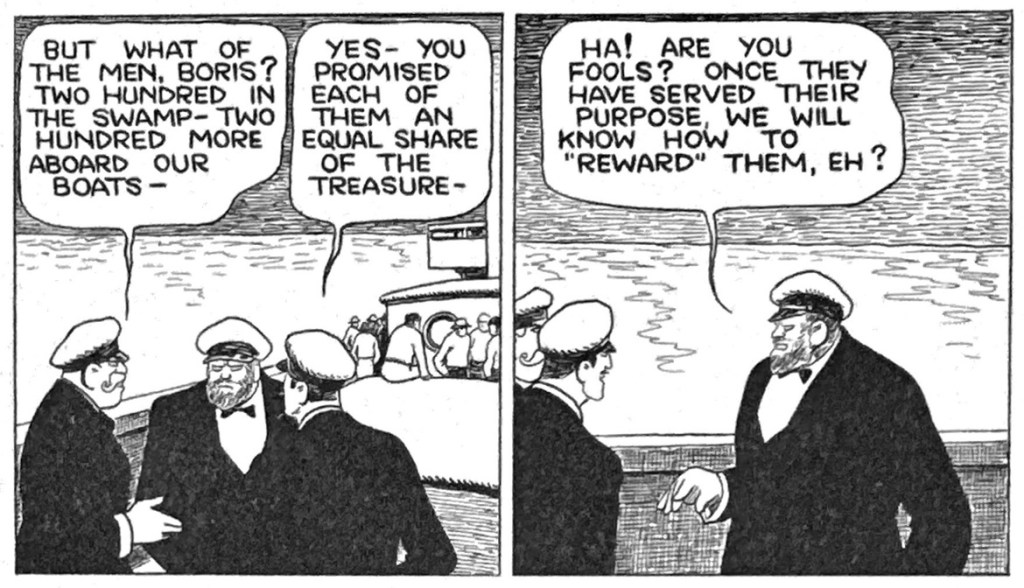
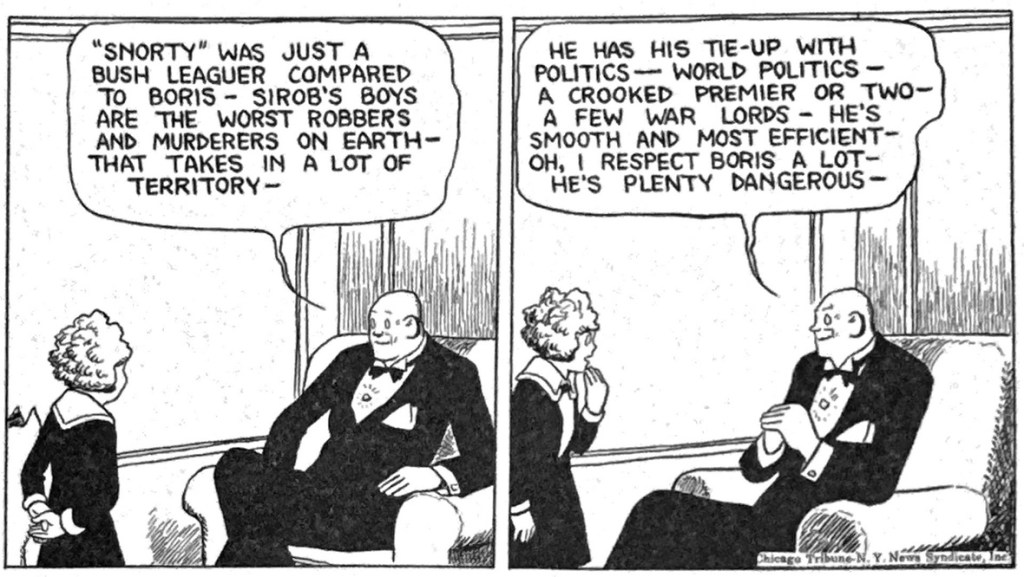
Harold Gray’s Little Orphan Annie was always about distinguishing good from bad character in people. And so, Annie accrued as many villains across the decades as did Dick Tracy. But the recurring 1930s-era baddie Boris Sirob was a truly world class villain. He and his gang have tried to rob and kill Daddy Warbucks across the globe and in one storyline seems to succeed. Swarthy, vaguely Slavic, he is at the center of a worldwide web of crime and political corruption. Gray appears to be melding the last decade’s gangster villain with the 30s pulp fiction nightmare of world domination. Sirob and his gang are not subtle. Daddy and Annie are often aware of them lurking in wait on the streets outside. They seem untouchable by the law and brazen in pursuing Warbucks. Even Daddy admits to admiring Boris’ “smooth and efficient” style. He is entirely ruthless, even killing hundreds of his own henchmen to cover his tracks. In Gray’s populist worldview, Sirob is more than a thug. He is an enemy of the people.
Discover more from Panels & Prose
Subscribe to get the latest posts sent to your email.


Pingback: Cool and Calculating: 20 Favorite Comic Strip Villains – Part 3 – Panels & Prose
Pingback: Scoundrels, Cons and Dupes: 20 Favorite Comic Strip Villains – Part 4 – Panels & Prose