
Villainy is, well, a necessary evil. At least so far as popular adventure is concerned. What is a hero without an antagonist, morality plays without sin? Whether it is the Satan of Genesis or of Milton, the slave-driving Simon Legree of Uncle Tom’s Cabin or Holmes’s worthy nemesis Moriarty, villainy is always a statement about evil itself that is somehow embedded in its time and its creator’s world view. That is what makes baddies so much fun to unravel. Paradise Lost is the original object lesson in our finding evil more intriguing than heroism. But the comic strip had particular roles in the evolution of popular scoundrels. Along with dime novels, pulp magazine fiction and film serials, it was among a cluster of turn-of-the-century mass media that relied on serialized heroes and stories. From these new modes of endless storytelling arose a popular sensation, the recurring villain. Moriarty (Conan Doyle), Fu Manchu (Rohmer), Fantômas (Allain and Souvestre) and a range of black-masked kidnappers of the chronically imperiled silent film heroine Pauline (Perils of Paulin) set the pattern. But the comic strip brought to evildoing its unique aesthetic strengths: believable absurduty, the light tone of caricature, and relentless irony. With some exceptions, this medium made evil unserious, fun, or at least safely farcical.
Which is not to say that comics villains were insubstantial or ineffective. In fact, they often were very much of their time and maker. And so here is our list that follows the Panels and Prose site’s focus on comics of the first half of the 20th Century through the lens of American cultural history. We present this rogues’ gallery in roughly chronological order and stop counting in the late 1950s. For the sake of breadth, however, we kept to one villain per strip. Otherwise, we could have filled the gallery with Chester Gould’s creations. Finally, we restricted the choices to native rogues, antagonists that were created for the strip rather than ported from versions of the strip in other media. While most listicles are designed as cheesy clickbait or barely veiled affiliate link gardens, this one is designed to tease discussion among fans about cartoon villainy. What made these scoundrels so entertaining or chilling, and what made the comic strip version of evil different from those we found in other media. And, of course, it is an opportunity to add more villains for us to upbraid and loathe. This list already benefited from suggestions by members of several Facebook groups we queried. Many thanks to all of them for helping us spread this web of evil. And since it has ballooned way past our original intentions, we are dividing it into four installments we will post across the next few weeks. Prepare to hiss!
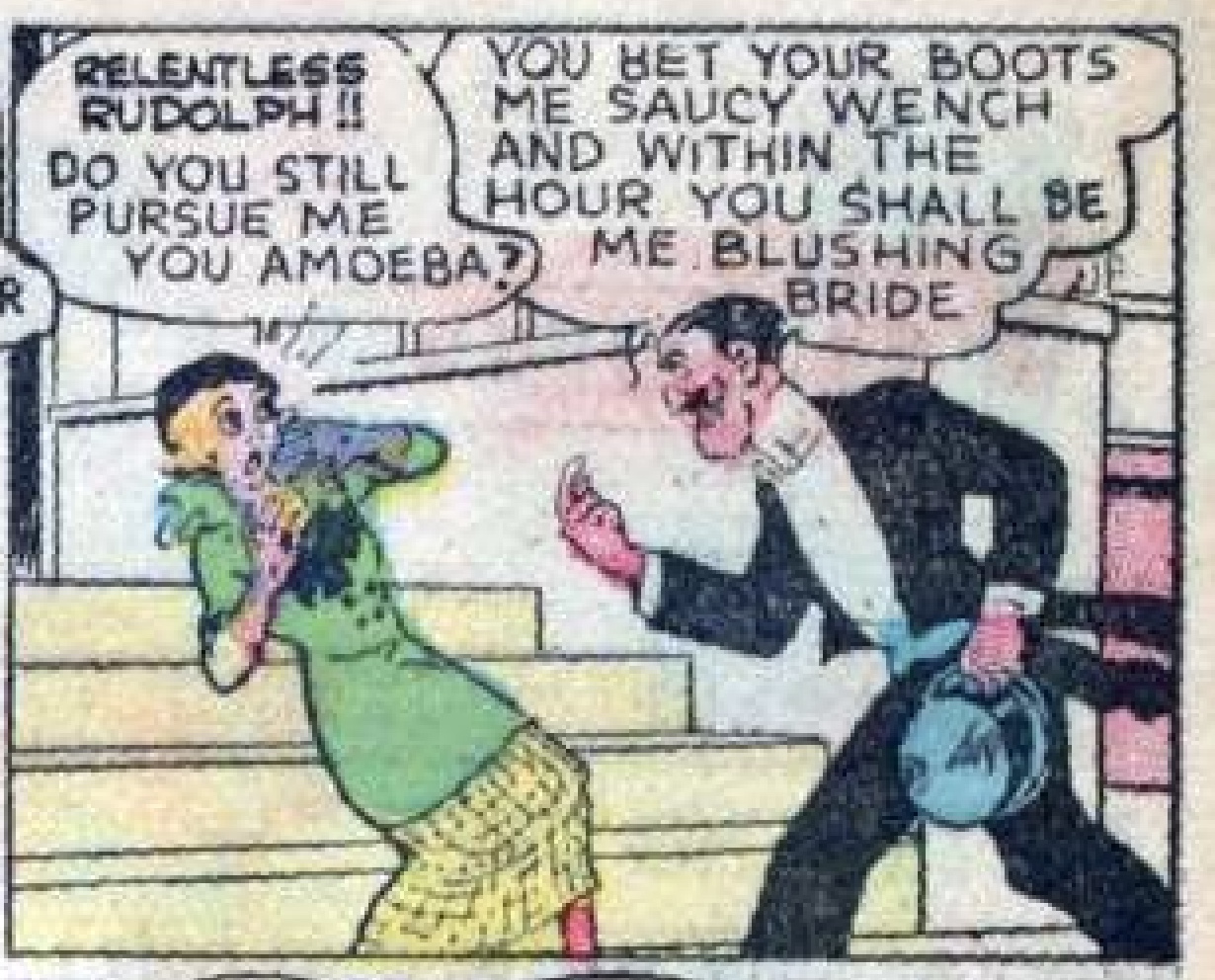
Relentless Rudolph Ruddigore – Hairbreadth Harry
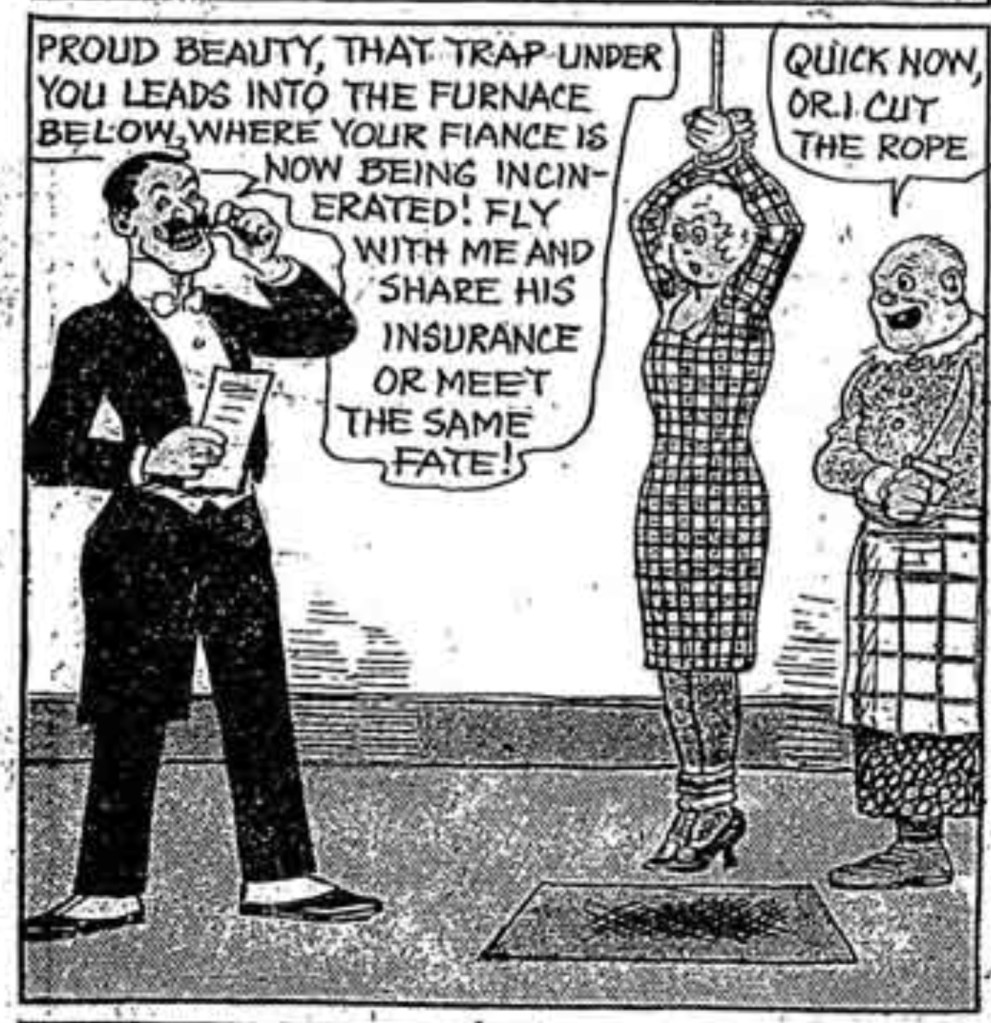
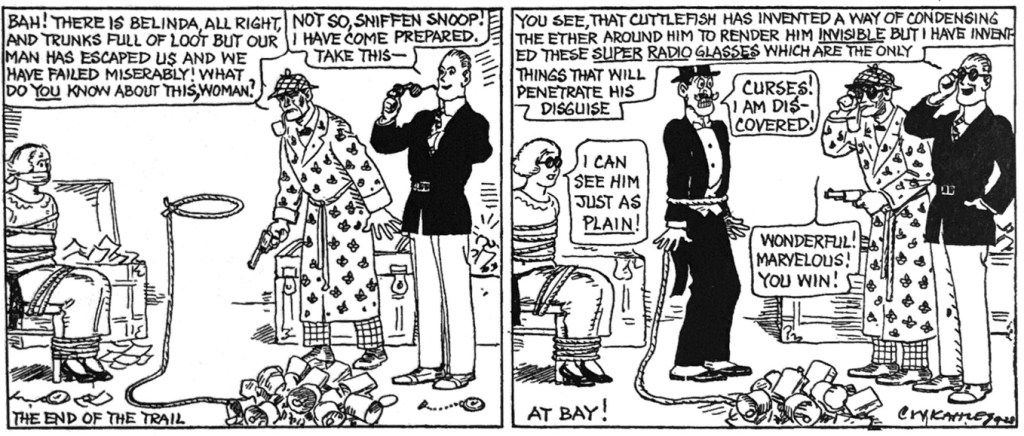
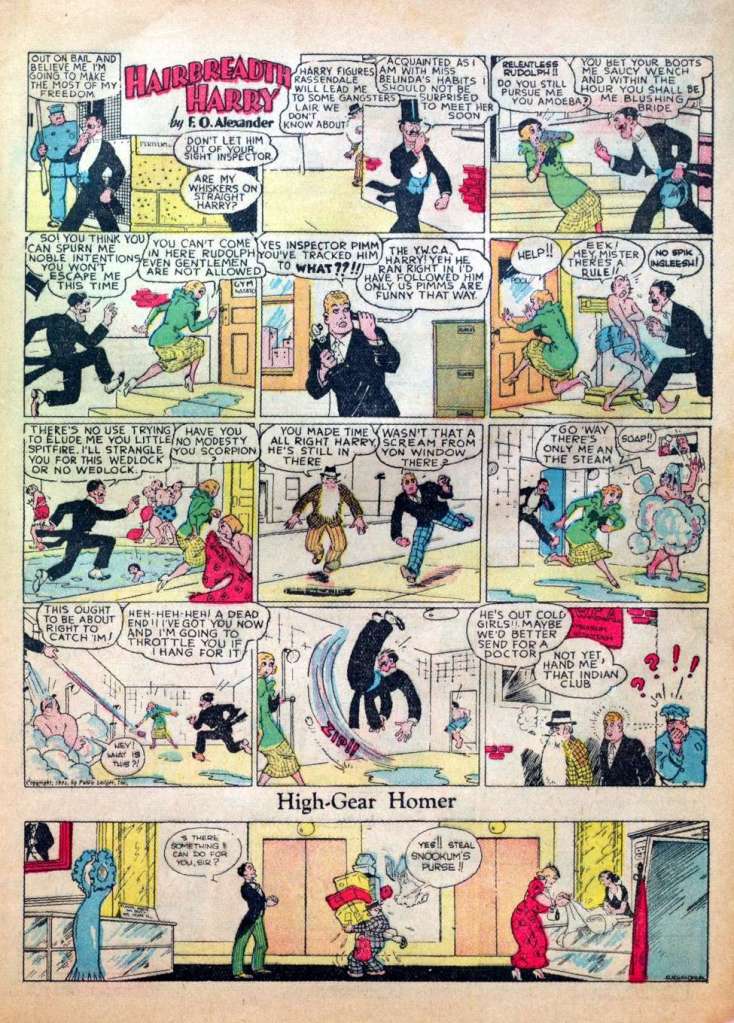
This lampoon of simplistic vaudeville melodrama in 1910s strips like Harry Herschfield (“Dauntless Durham“) and C.W. Kahles (“Hairbreadth Harry”) is often mischaracterized by comics historians as targeting an outmoded relic of 19th Century popular entertainment. But the mustachioed, tux and top-hatted villain like Relentless Rudolph remained remained familiar in a wave of serialized film cliffhangers like Perils of Pauline that hit theaters around this time. While Hairbreadth Harry far outlived the silent serials it parodied, it probably kept alive that icon of the bound damsel in distress and cliffhanger perils. But over three decades (1906-1940) the strip turned the trope into a kind of Spy vs. Spy set piece of relentless humiliation for Rudolph. Greed-fueled lust is the operative evil here, as Rudolph pursues Harry’s gal Belinda for her wealth. Ruddigore is the quintessential absurdist cartoon nemesis. His string of weekly kidnappings, murder attempts, torture, thievery are delightfully detached from any permanent consequence, let alone from common sense. It is radically unreal. And yet, over time Kahles widened the scopoe of Rudolph’s antagonists away from Harry and to a host of everyday indignities, mishaps and insults he sufferes from all quarters. As often as not, this villain starts to look like a hapless, cantankerous crank at war with the world. Sort of like us.
Ma Cinders and the Pill Sisters – Ella Cinders
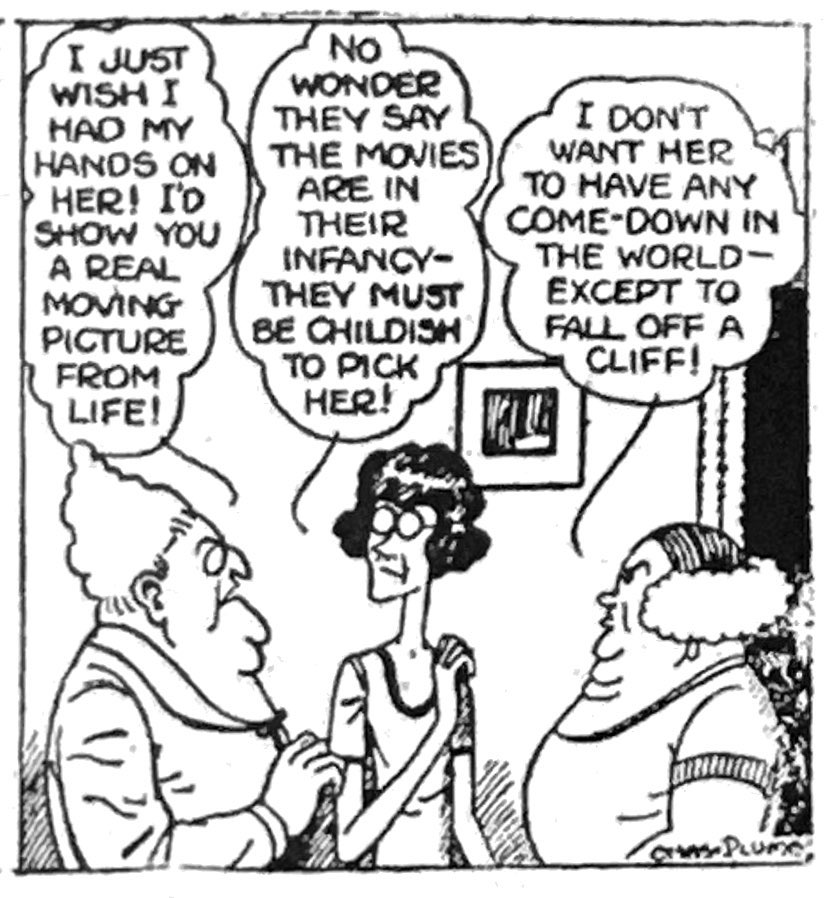
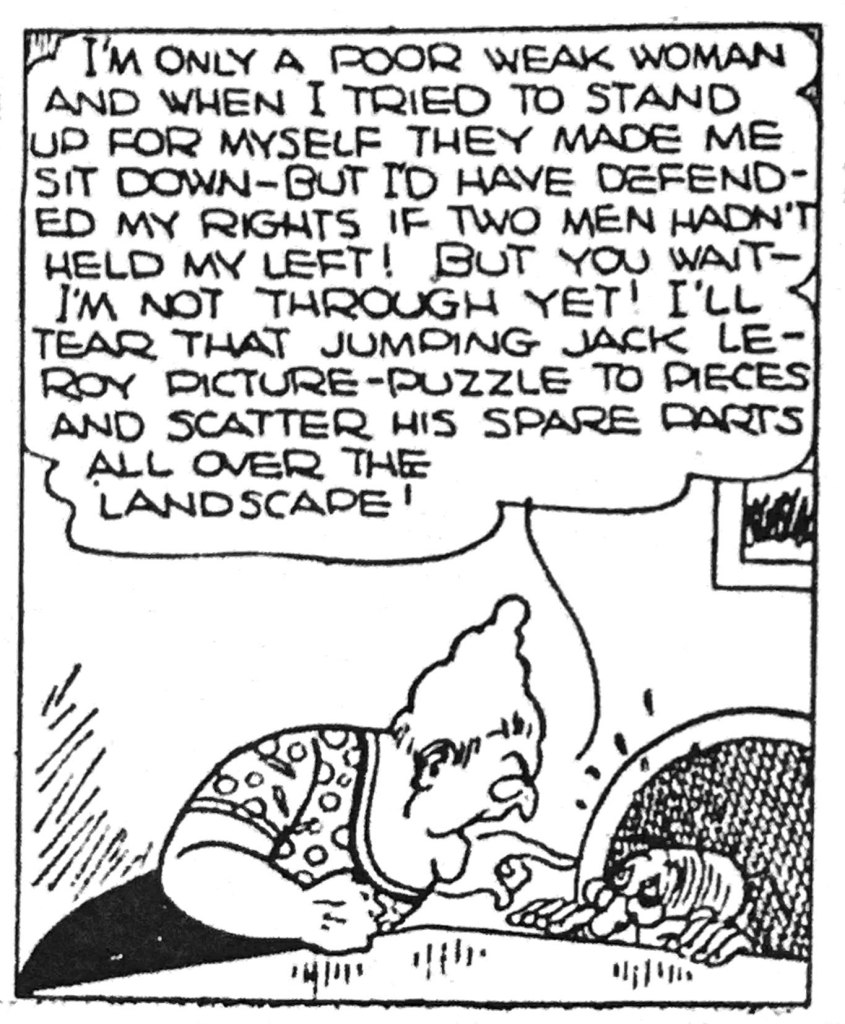
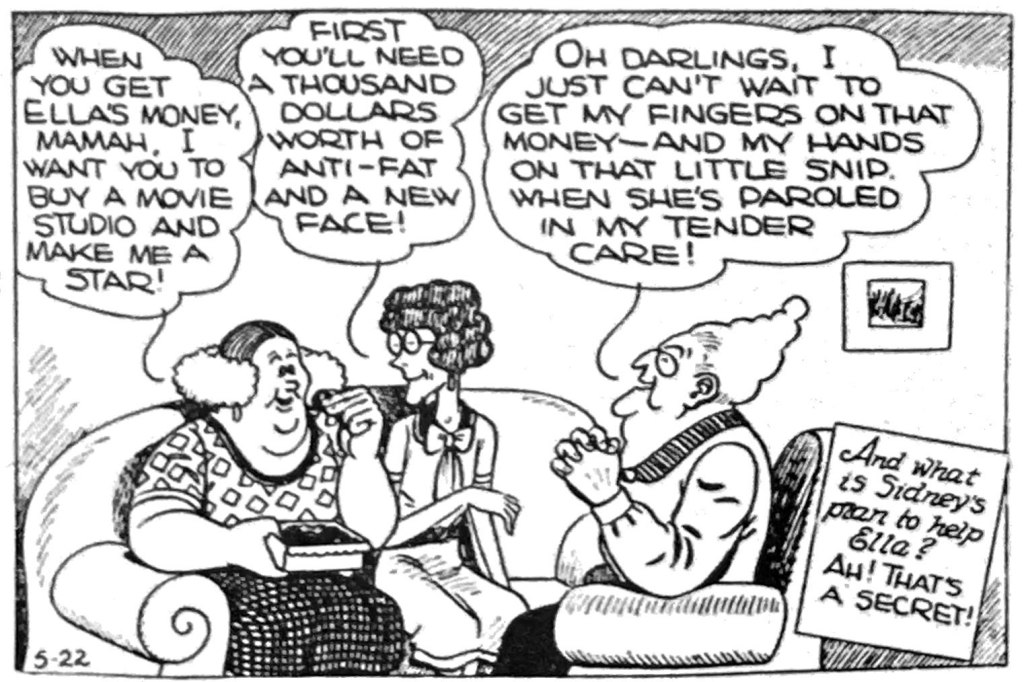
The evil stepmother and sisters of the original Cinderella fable are usually portrayed as merely shrewish. Ella Cinders’ comic strip revision refashions them into a vile family dynamic among Ma Cinders and daughters Prissie and Lotta Pill. As much as this trio despises our heroine, for some reason they keep plotting to get her back. It is an evil grounded in metastasized pettiness. Her escape from their enslavement and many subsequent triumphs is just too much to bear. They pursue her relentlessly in order to slander, trick and rob her in countless ways. Writer Bill Counselman crafts this tribe as seething and boundlessly spiteful. In her vindictive plots against Ella, Ma Cinders is a kind of criminal mastermind of the domestic sort. But artist Charles Plumb makes them especially loathsome. Ma is a pin-headed, fat-necked grotesque. Her nastiness is visually gelatinous. Prissie is rail-thin and as tightly wrapped as her judgmental barbs. Lotta is a talentless overeater deluded about her “beauty,” and appears as over-yeasted bread loaf. They are pathetically, selfishly detached from one another, united only by a shared hatred for Ella. In a decade of comic strip history when domestic comedy ruled, Ma Cinders and the Pill sisters were a sharp counterpoint – the family dynamic turned malignant.
Bull Dawson – Wash Tubbs and Captain Easy
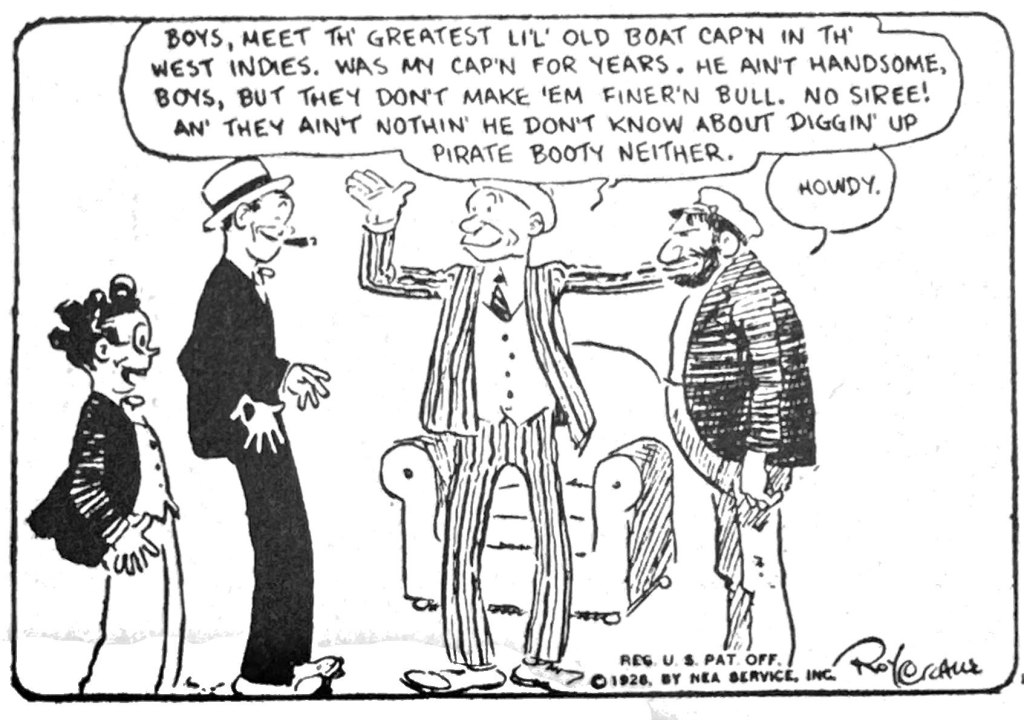
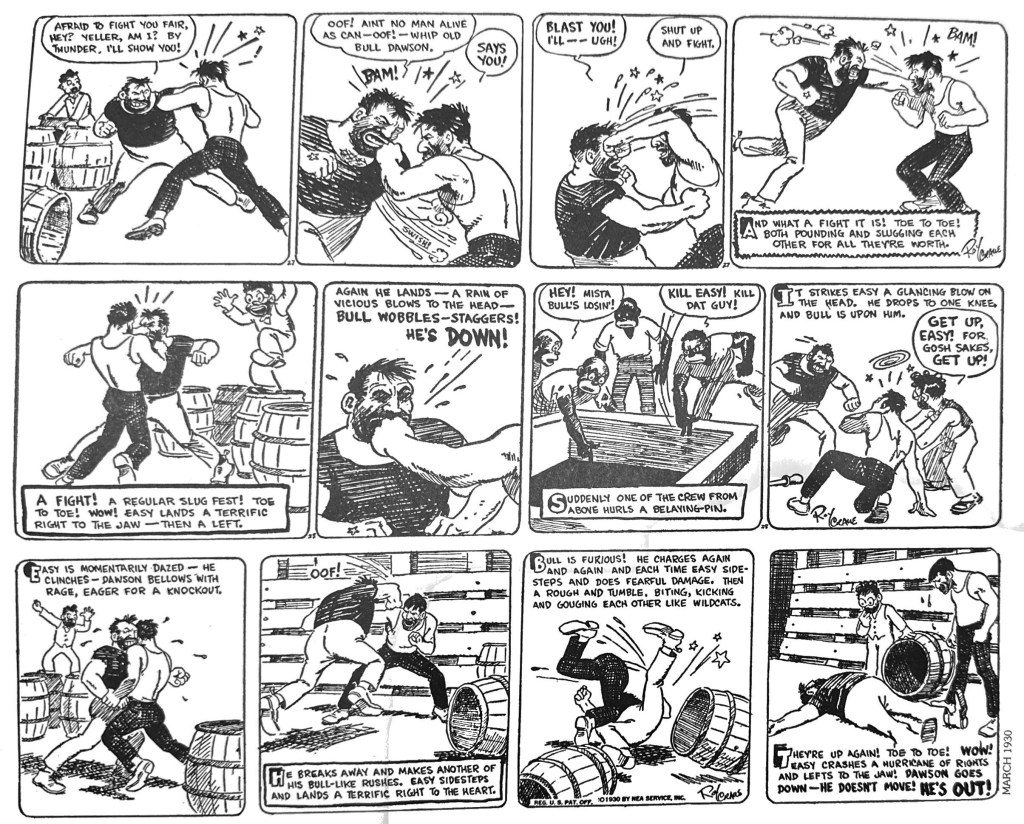
Introduced in the 1938 Hurricane Island story arc, this ultra-violent, scheming, thieving ship captain isn’t really smart enough to qualify as a super villain. But he is a world class bully, whomping underlings, island natives and just about anyone who crosses him. Roy Crane envisions him as a bearded, disheveled, top-heavy mess of a man. His mission appears to let Wash discover treasures that he can then hijack. Dawson finally meets his match after Captain Easy joins the strip in 1929. Their epic three day fisticuffs during the 1930 Desert Island story leaves the bully a puddle on the ground. Down but not out, however. According to comic historian Rick Norwood, Bull is the first non-comedic comic strip villain.
Killer Kane – Buck Rogers
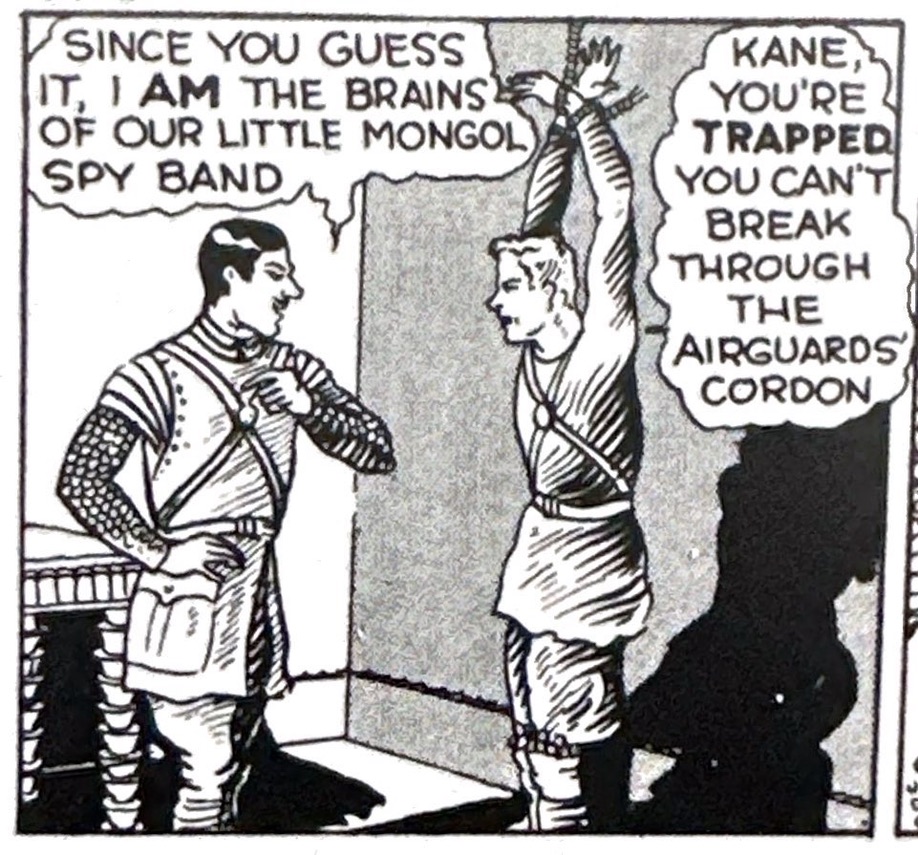
Buck’s romantic antagonist, Killer Kane makes the personal political. When our hero wakes up 500 years in the future, his eventual squeeze Wilma Deering is Killer’s girlfriend and among the Anti-Mongol rebels. When Wilma spurns him for Buck, Kane colludes with the Mongol empire and begins a life of crime, both of which makes him a perennial pest. Drawn by artist Dick Calkins as vaguely swarthy, black-haired and mustachioed, author Phil Nowlan constructs villainy as self-serving, unprincipled, detached from all allegiances. But Kane also continues the melodramatic tradition of conflating sexual lust, a threat to innocence, personal jealousy and power. The modern adventure hero requires more than a bad guy. He needs to defend white womanhood against a sexual predator and personal rival. Like their counterparts in pulp magazines, the adventure motif of 1930s comics were operatic fantasies of masculine prowess and well-veiled sexual potency in which villains needed to play their part. The gender soup of Depression-era culture would also produce a staggering number of counterpoint fantasies of “Amazon” civilizations.
The Sea Hag – Thimble Theatre
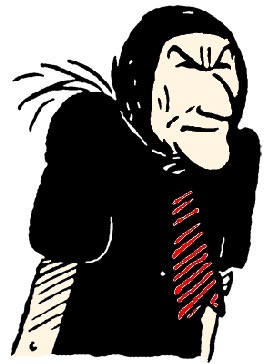
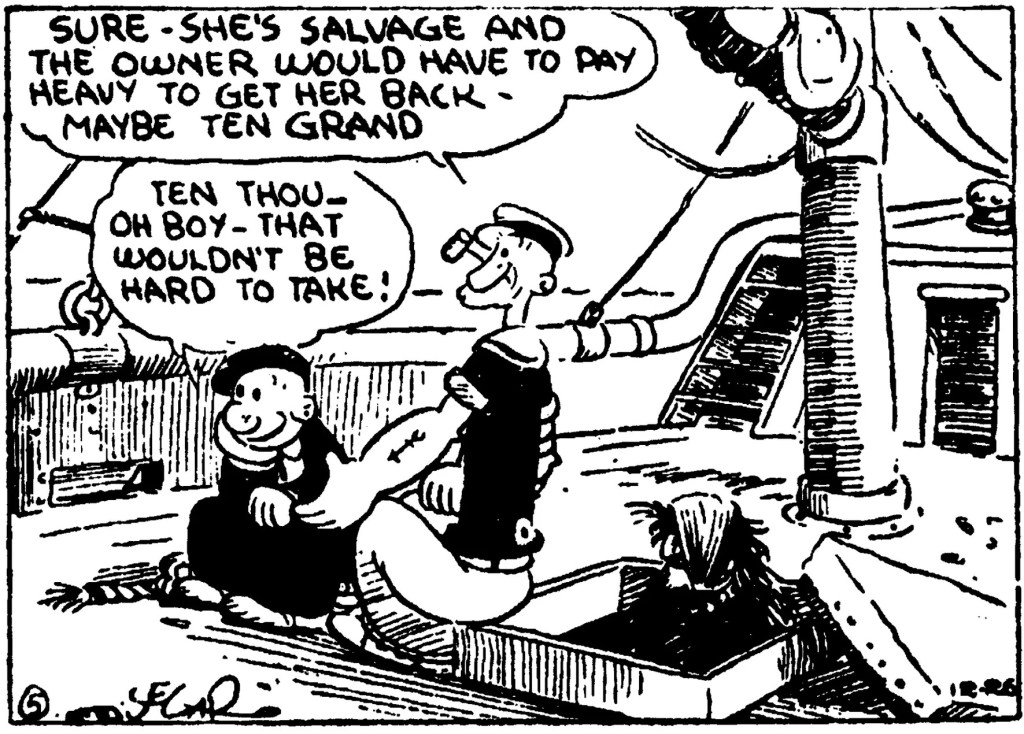
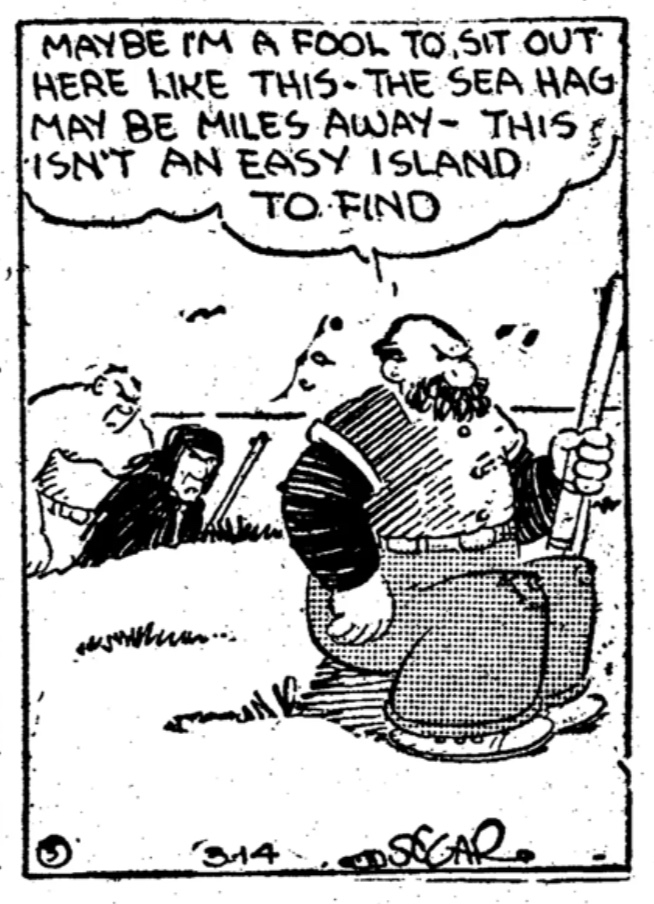
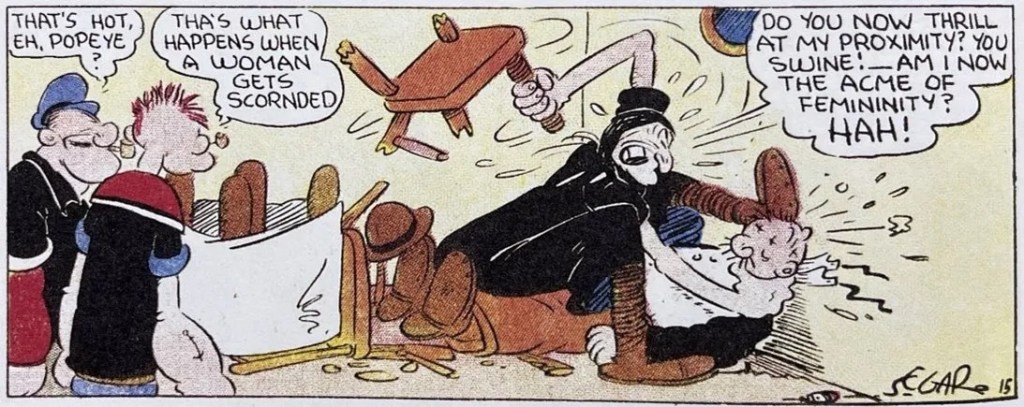
Cross-media Popeye fans might understandably claim Bluto as the Sailor Man’s chief antagonist, especially since he dominates the Fleischer/Paramount cartoons. In the comic strip, however, we would argue that the Sea Hag is not only more enduring, but also way creepier, more complex and altogether villainous than Thimble Theatre’s all-purpose repertory bully. She almost always arrives on the scene in a chilling, eerie creep and exerts a mysterious power over other characters she recruits to do her bidding. Her most famous henchman is Alice the Goon, who along with the Hag are central to E.C. Segar’s greatest story arc, Plunder Island. Here, the craggy, unfeminine mean-spirited villainess shows a broken heart when rebuked by Wimpy. Popeye even takes some pity on her by the story’s end. Segar, whose hero was himself far from perfect, just couldn’t make a world class villain without ambiguity. Her ugliness, murderous instincts and vulnerable heart flip femme fatale and Amazon typecasting on their heads in just the ways we cherish in this complex masterpiece of 30s cartooning.
In our next installment, the great age of adventure strips accelerates in the 1930s, producing some legendary badasses.
 Panels & Prose