
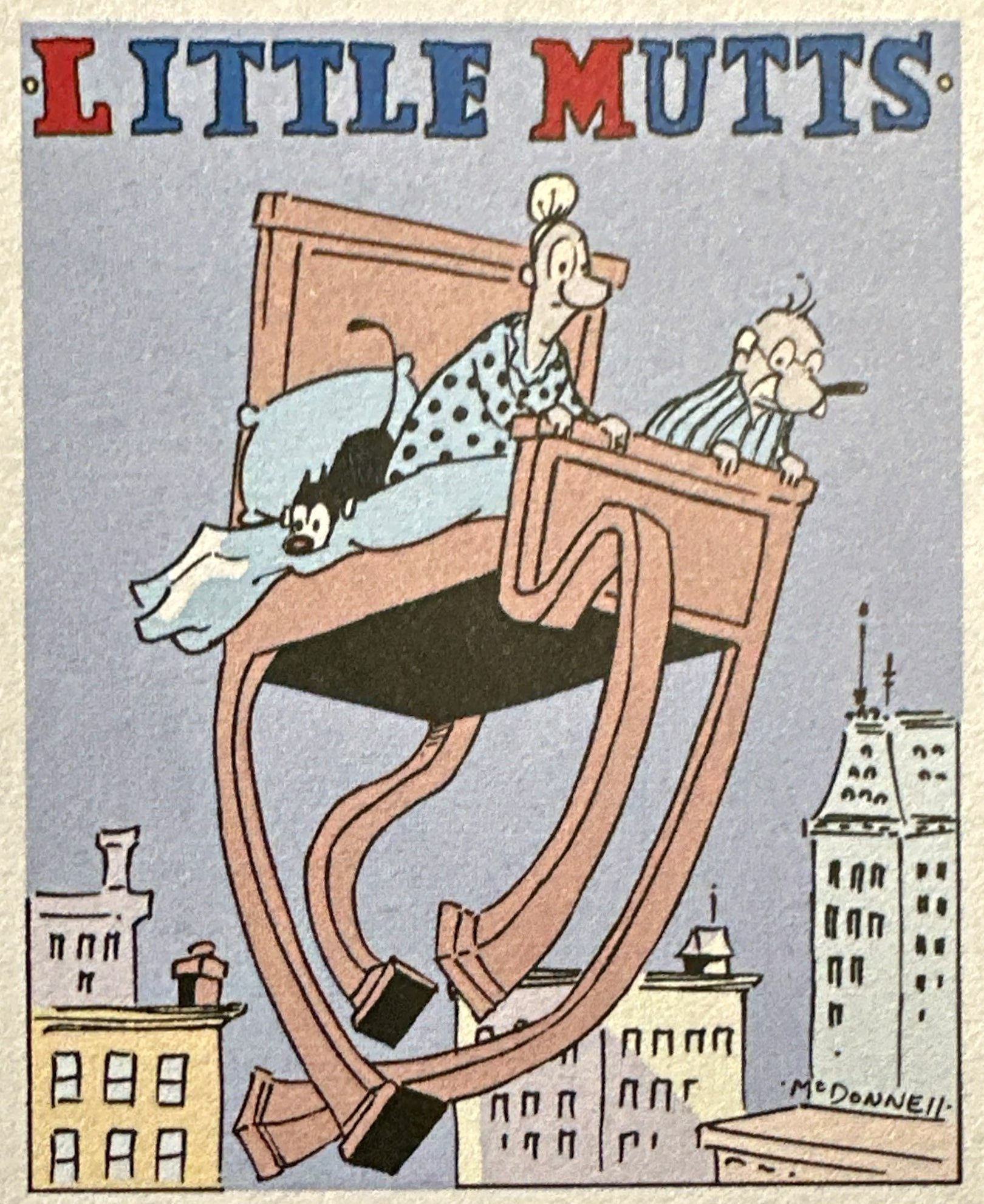
Patrick McDonnell’s Mutts certainly qualifies as one of the great strips of the latter stages of American newspaper comics history. As circulation sank, strip sizes shrank, and the cultural relevance of the medium receded, the spirit and art of Mutts successfully maintained the grand tradition of the funny pages that was in decline. The smart gags and interactions of dog Earl, cat Moch, humans Ozzie, Botchie and an expanding community never hid their debt to Krazy Kat and Peanuts especially but also the full breadth of comics’ past. In fact, when Calvin and Hobbes left the stage in 1995, McDonnell’s strip, which launched in 1994, seemed to extend many of Watterson’s sensibilities and his sense of history. And like Watterson, McDonnell really channeled that comics legacy into his color Sundays. Abrams ComicArts is reprinting The Complete Sunday Comic Strips in handy, affordable $19.99 volumes that contain three years each of beautifully colored, pin-sharp reproductions.
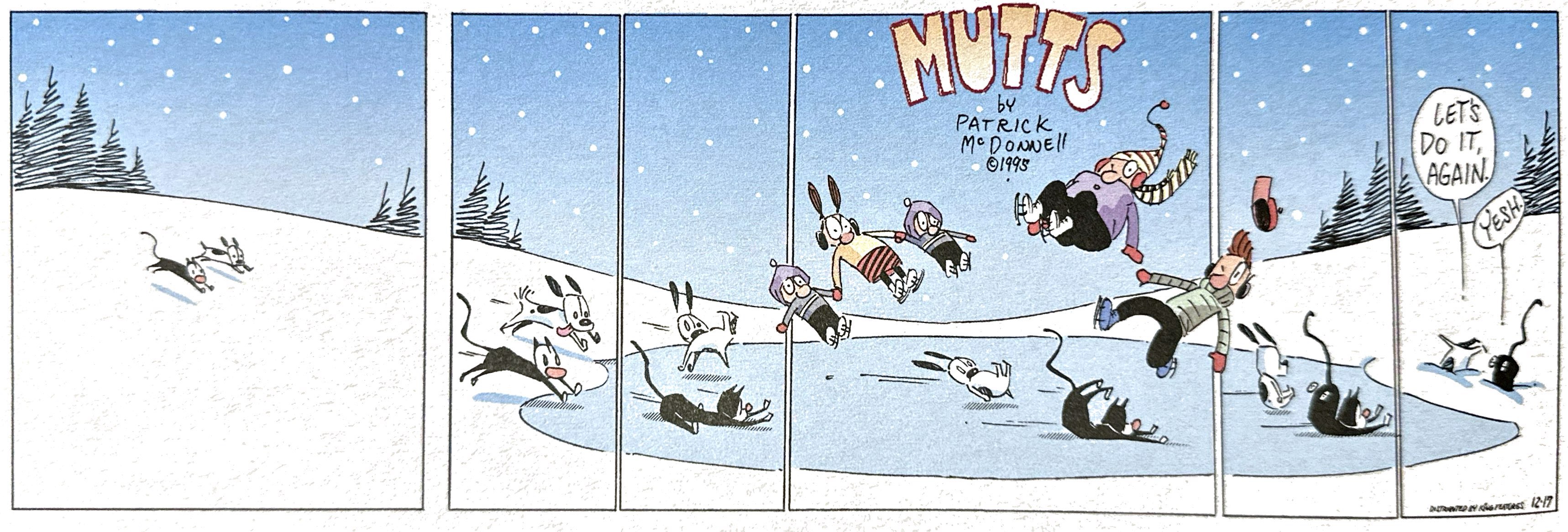
McDonnell’s guileless spirit was a welcome counterpoint to an increasingly jaded and material 1990s. There was nothing mean in these innocent interactions across animals and humans. It was all light-hearted takes on uncontrollable natures or circumstance. No real villains, no petty resentments, no vistims so much as fellow travelers. The strip had an empathy towards just about anything McDonnell depicted. And yet it had an underlying profundity, a firm sense that McDonnell was working from a compassionate vision of the human (and animal) condition. The artist himself reflects this open-heartedness in his introductions to these books. He admits to struggling to find his voice and especially to master the color palette in an era of diminished printing quality. As well, he acknowledges that the initial conceit of the strip, taking the animal’s eye view, developed into genuine animal rights activism over time. While much of American media and politics became coarser, more violent and intolerant during its run, Mutts maintained a blithe openness.
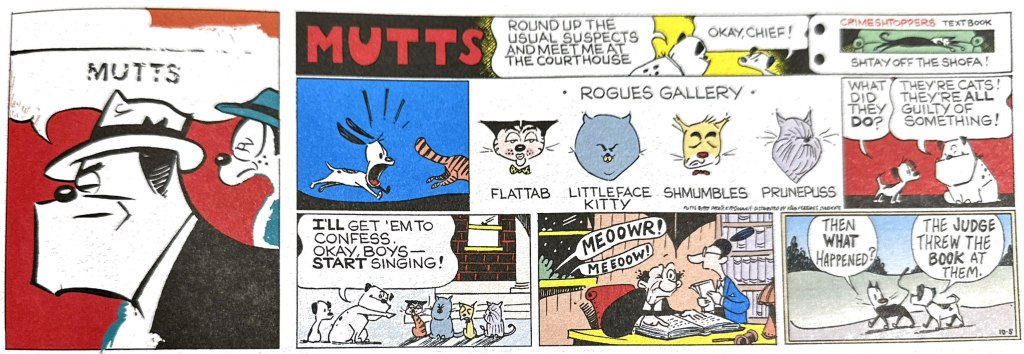
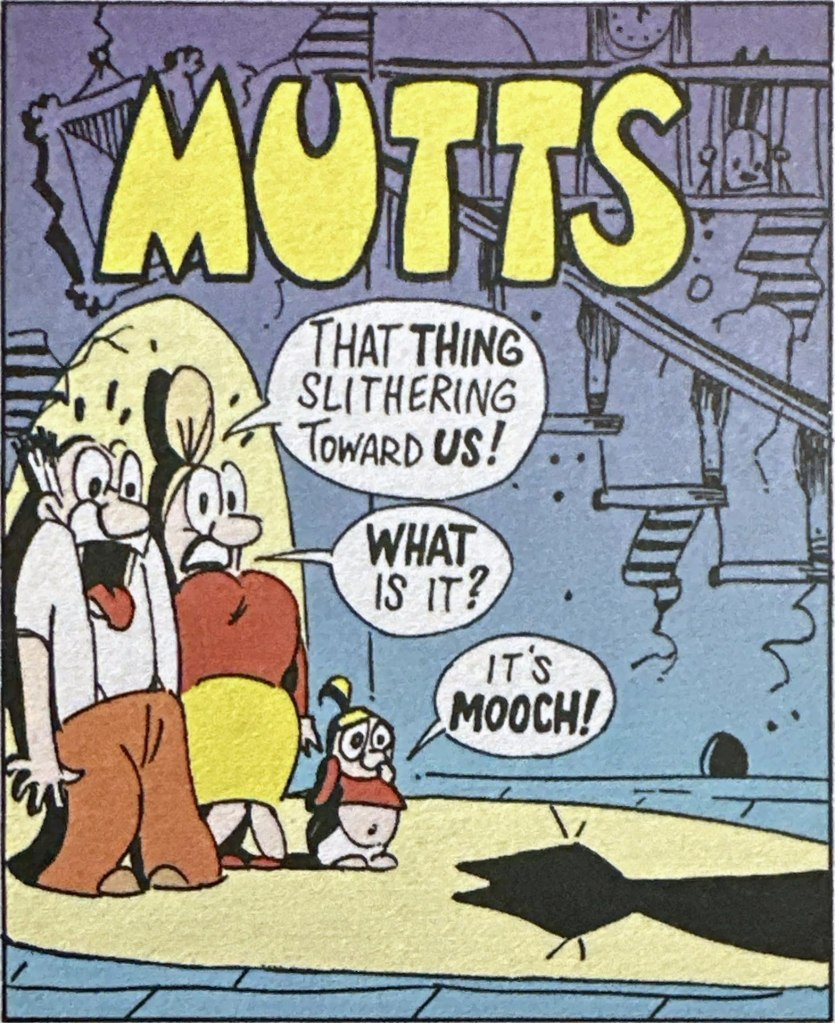
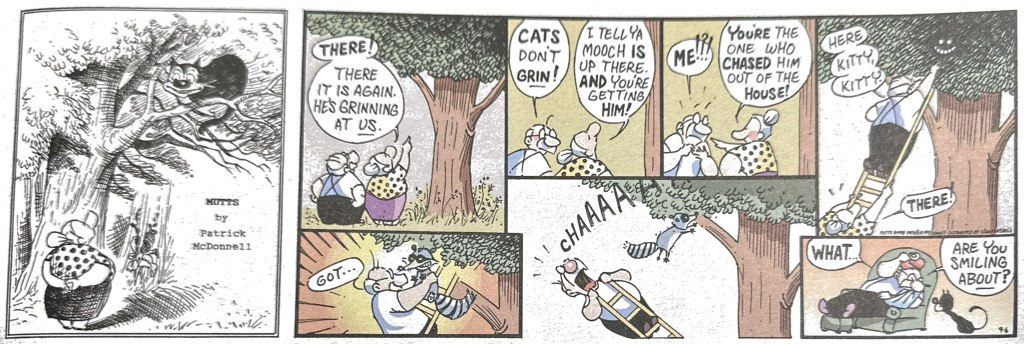
For many of us, however, the steady stream of comics and pop culture allusions is what made Mutts so habit-forming. As McDonnell recounts, his Oct. 1 1995 title panel mimicking the style of Michel Basquiat launched a tradition of art and cultural references that included Vermeer, Hopper, Frank Zappa album art, Disney’s Three Little Pigs, Playbill magazine covers, Little Orphan Annie, even deep cuts like George McManus’s The Newlyweds on the 1900s. And then there were the full comic takeovers, where he transformed a Sunday strip in to the style of a classic artist, especially Chester “Dick Tracy” Gould and George Krazy Kat” Herriman. And his helpful intros are just as explicit in crediting Will Eisner with teaching him the expressiveness of design, and Herriman inspiring him to rethink panel structures from week to week. While identifying all of these references is a cool parlor game for readers of these volumes, thankfully each book provides a key to every title page reference.
This package is up to Abrams usual standards. The printing captures the increasing subtlety of McDonnell’s mastery of color and design. There is no better time for a dose of this strip’s empathetic heart. At this price, for this quality, Mutts Sunday Funnies is a no-brainer.
Discover more from Panels & Prose
Subscribe to get the latest posts sent to your email.

