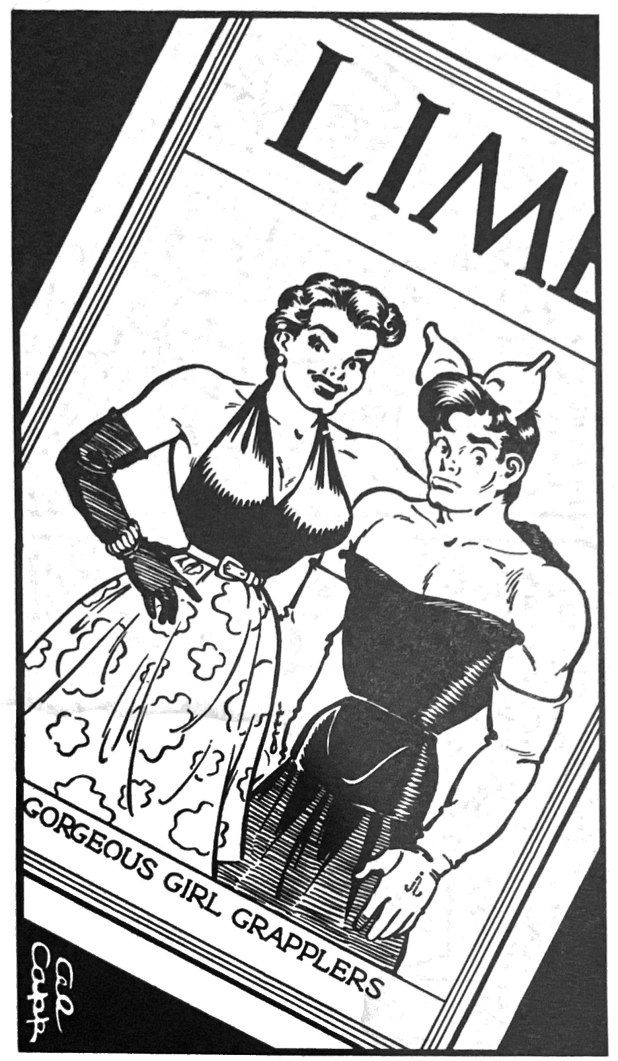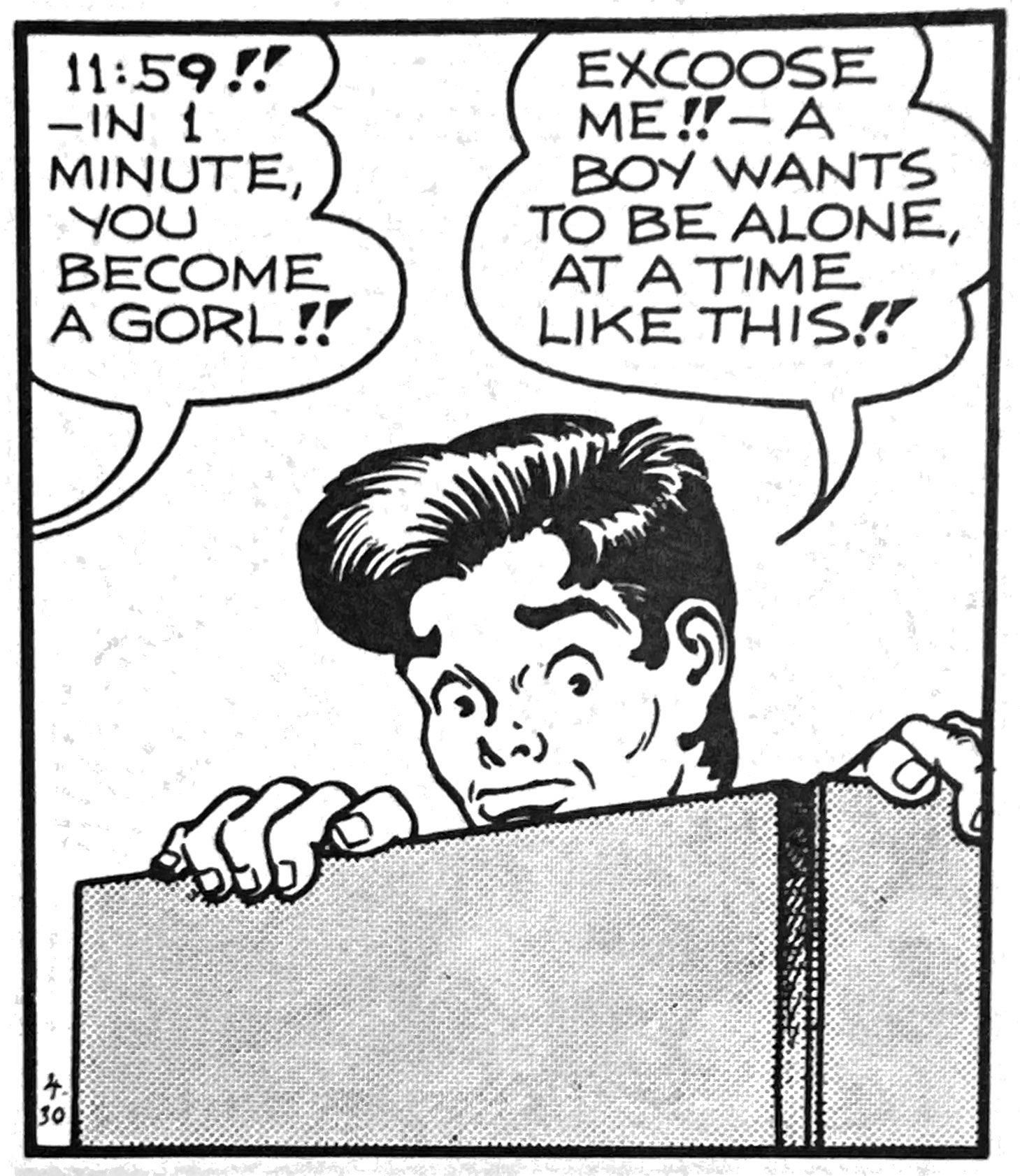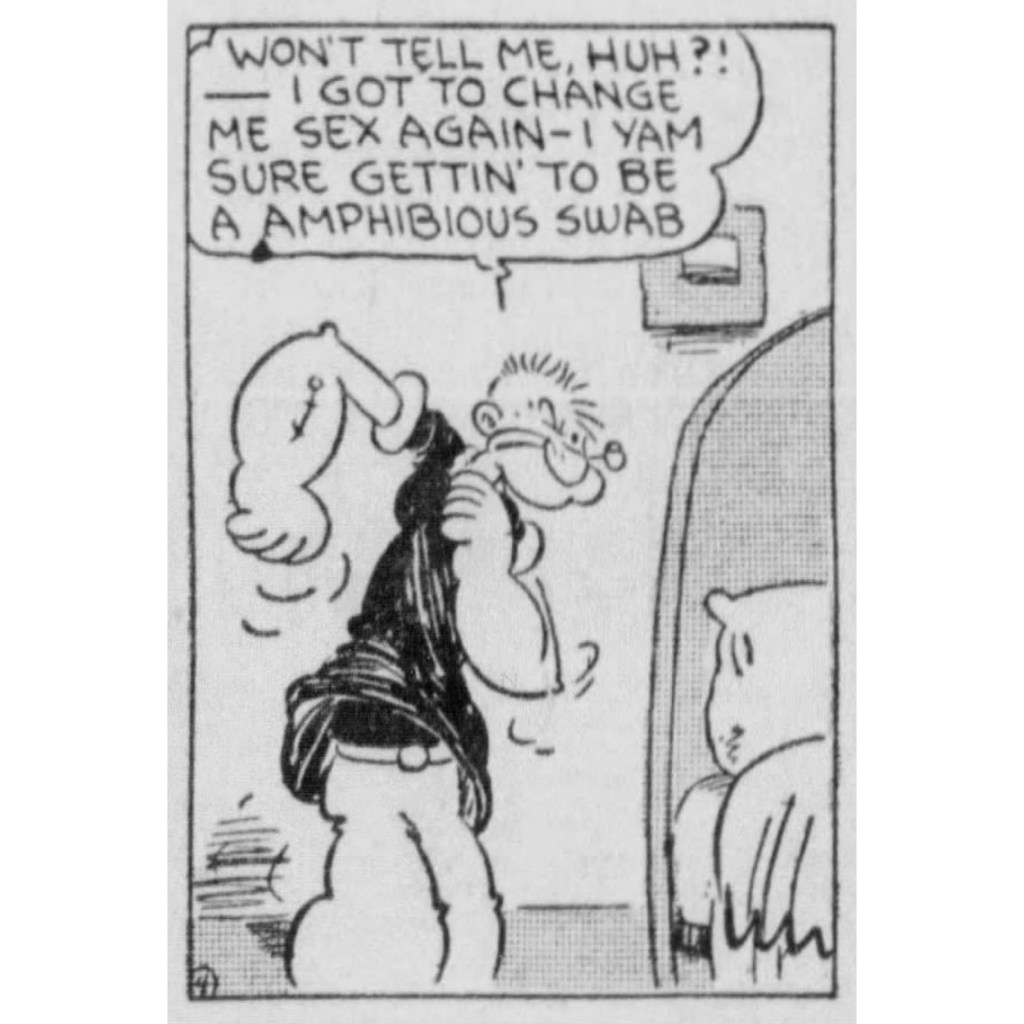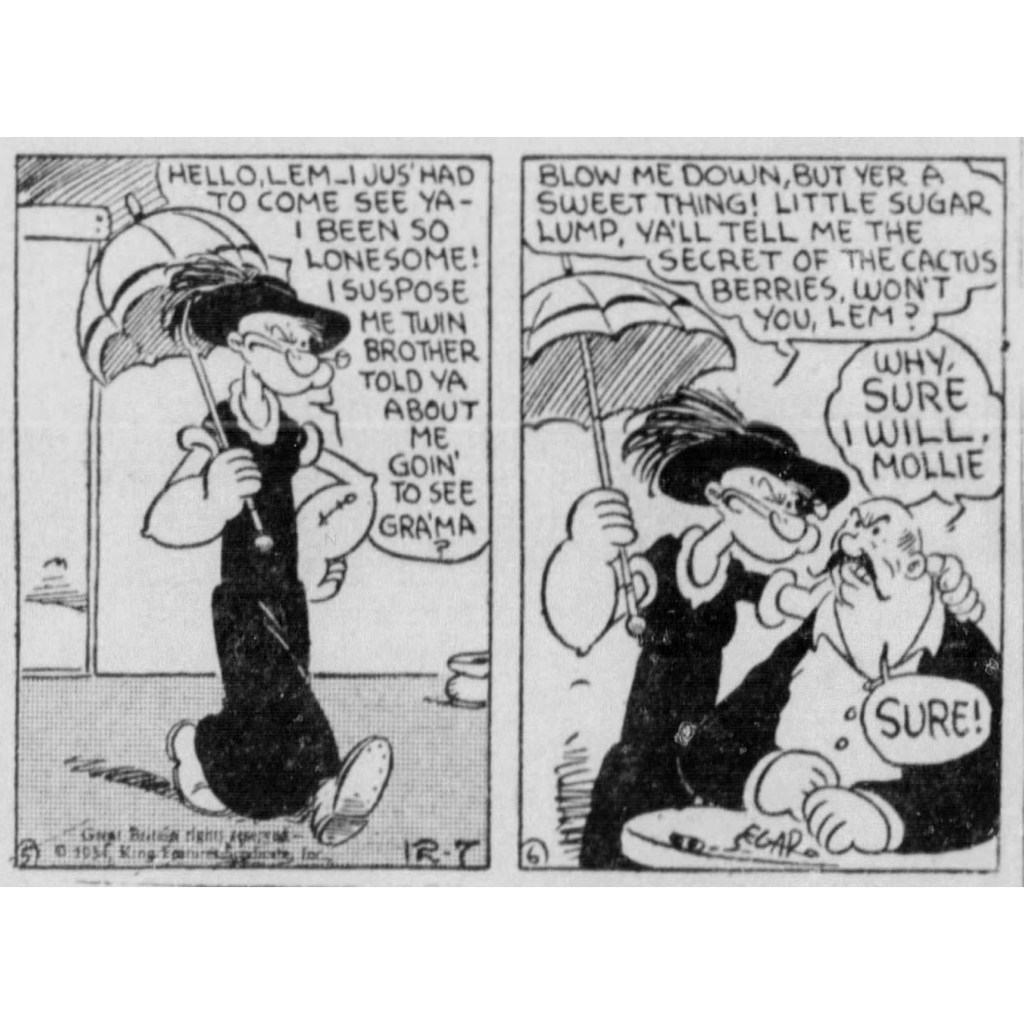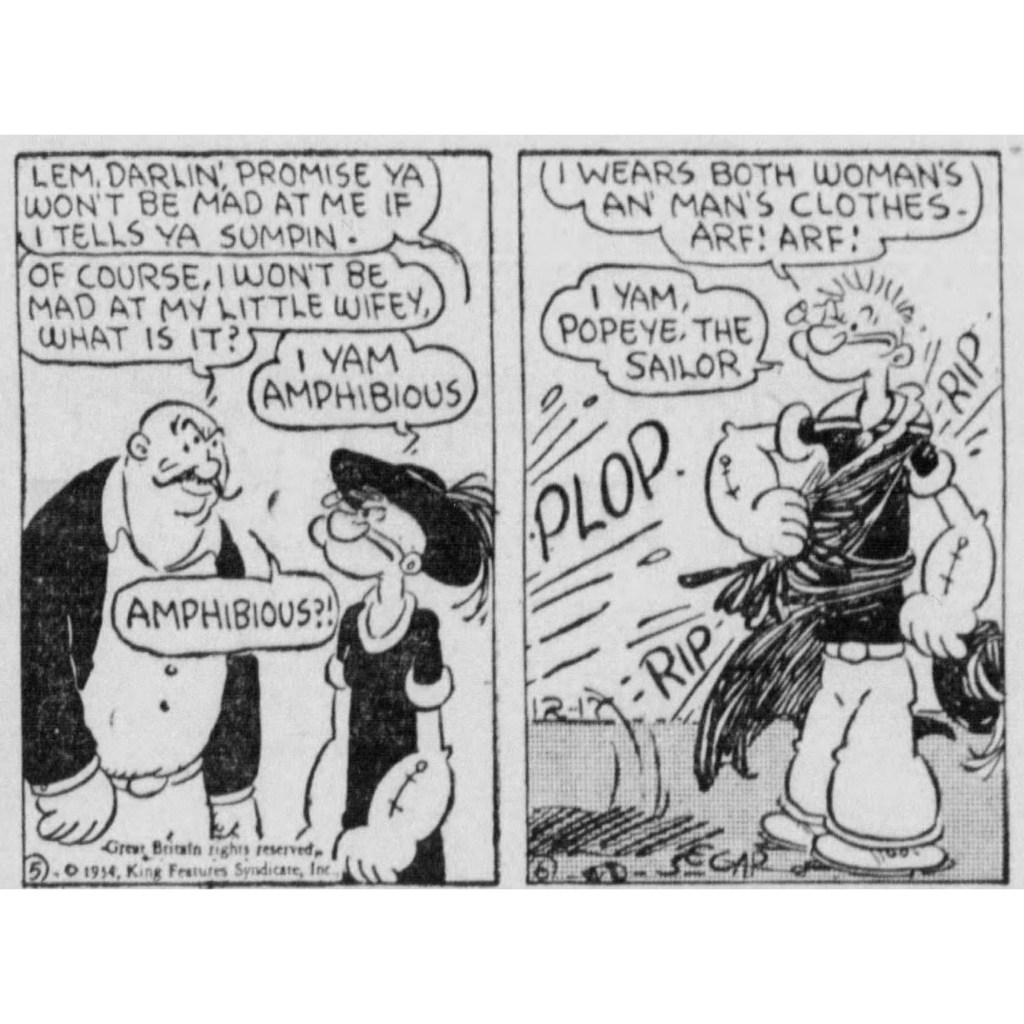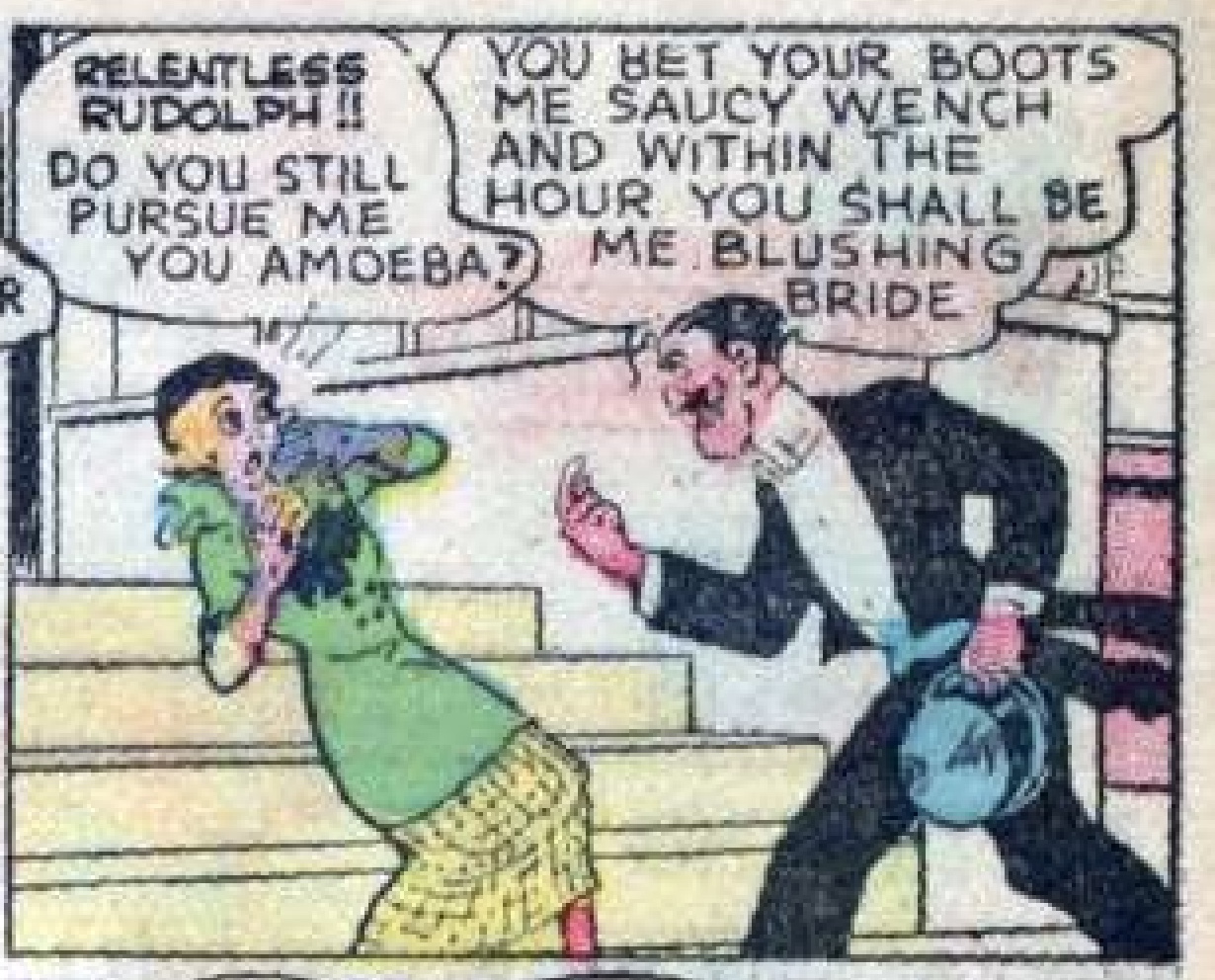
Weekly Weird. Cross-dress Tuesday with Popeye. In a lengthy 1930s story arc by Segar, the “amphibious” sailor infiltrates a criminal hideout by passing as Mollie.
Tag Archives: comics and culture
Fantagraphics at 50: Associate Publisher Eric Reynolds on Keeping Classic Comics Alive

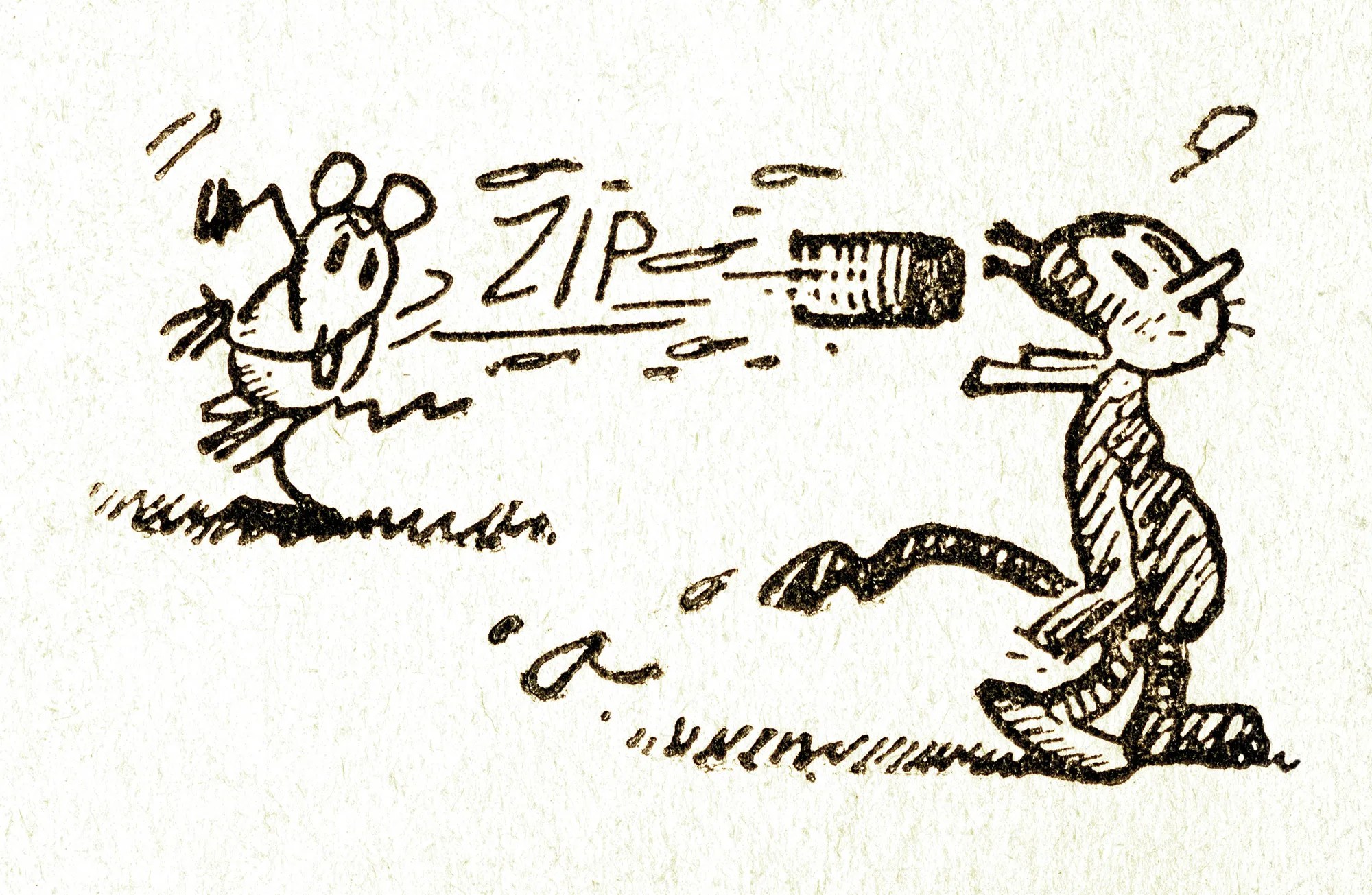
Fantagraphics celebrates its 50th anniversary this year and continues its mission to preserve and promote the comic arts. We spoke at length to the company’s longtime editorial fixture, From Popeye to Pogo, Krazy Kat to Charlie Brown, few companies have been such prolific archivists of the comic strip tradition. Anniversaries are a good time to check in. And so we visited with VP/Associate Publisher Eric Reynolds to explore preserving comics history and preview of the delicious releases they have planned for this milestone year.
Continue reading
Making Charles Dana Gibson Sexy Again
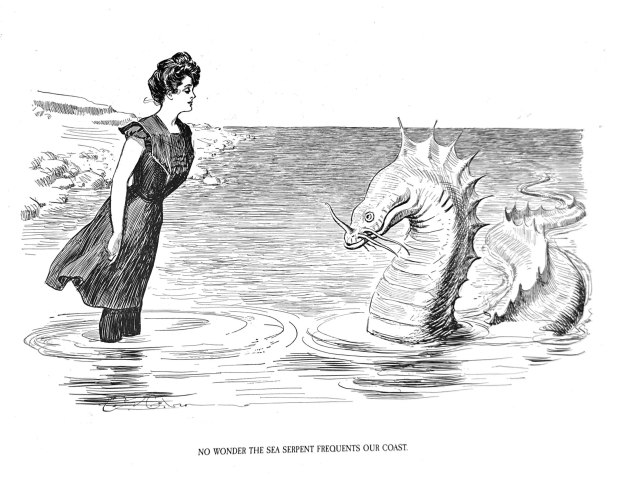
This is a good time for modern comic strip fans to recall Charles Dana Gibson’s role in late Victorian American culture. The most famous illustrator of his day had a calming, languid line and upscale focus that contrasted sharply with everything the early newspaper comic strip represented. Just as a tsunami of recent comic strip reprints celebrate the raucousness of 20th Century cartooning, Gibson’s epoch-defining artistry reminds us of what the “vulgar” new medium was disrupting. It also suggests why the scions of civility found the Sunday supplements so offensive and magazine illustrators like Gibson so engaging.
Continue reading
Penny Parties: Cartoon Sociology Meets the ‘Bobby-Soxers’
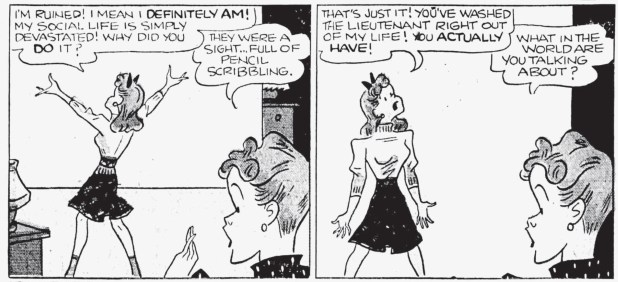
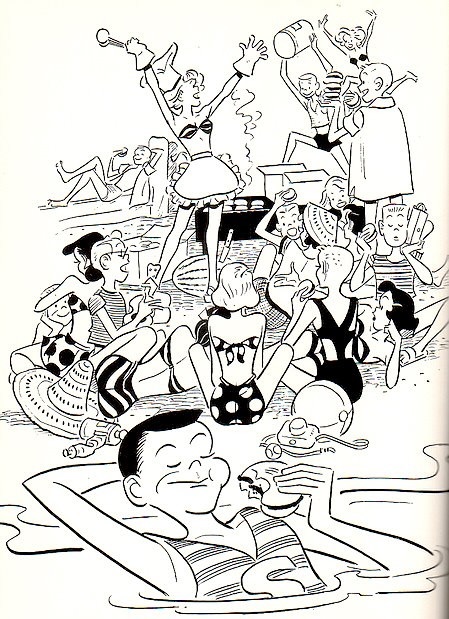
Like all American mass media of the last century, demographics and market forces provide the frame within which trends in comic strip content lived. Harry Haenigsen’s Penny launched in 1943 directly out of the intersection of two new social realities – gal power and the “invention of the teenager.” It is not surprising, then, that Haenigsen took an almost sociological approach to portraying two things he certainly was not – young nor a girl. Like any good cartoon anthropologist, he decided to go native. The Oct. 6 1946 Philadelphia Inquirer reports how the New Hope artist researched Penny by eavesdropping on soda shop conversations and even hosting cookouts for the local high schoolers.
Continue reading
Nemo’s Consumer Dystopia: The Man Who Owned Mars (1910)

Between April 24 and Aug 23 1910 Winsor McCay sent Little Nemo and his wise-ass sidekick Flip to Mars, making for one of the longest and most politically pointed of the Little Nemo in Slumberland adventures. Mars was a dystopia of cement canyons and urban overgrowth, clots of faceless worker bodies rushing to thankless jobs. The landscape, with endless skyscrapers and spherical flying cars was as technologically wondrous as its lived reality seemed dismal. Mars is overtly Dante-esque. As the archway to the main city declares, “Abandon Hope All Ye Who Try to Enter Here Without the Price.” Unlike the classic Inferno, there is only one main sin driving the despair – greed. Even as the modern age of consumer capitalism was just taking shape, McCay satirized its logical extreme. Everything, from air to words, comes at a cost.
Continue readingOur Shelves Runneth Over: POD Spews a Gusher of Reprints
The new generation of print-on-demand (POD) platforms, most notably Lulu, has inspired several ambitious strip aficionados to become one-man reprint publishers. And so, our cup runneth over. In just the last six months the zone is flooded with all manner of lost, obscure or woefully overlooked strips of old. I find it hard to keep up with what is available, let alone decide how much of this largesse I want, need or can afford. But in the video below I share just a taste from this ever-expanding buffet of cartoon treats.
Continue readingFrom Oaky Doaks to Bruce Gentry: Behind CSAG’s Reprint Rush
Among several self-publishers in the reprint space, Stefan Wood and his Comic Strip Appreciation Group are far and away the most prolific. His Lulu Bookstore boasts about 25 titles as of this writing. And judging from our conversation with him this week, that library will be growing weekly. Recently retired from the exhibit design team at the National Gallery in Washington D.C., Stefan brings to his comic strip mission a familial and professional background in the arts, digital skills and a penchant for tight deadlines. He keeps himself on a disciplined schedule, and has developed an efficient workflow that produces such a fast-growing library. But as we also discussed, there is also a method for selecting titles for reissue. Stefan is drawn to artists who used this medium to express personal experience, a unique perspective and exceptional artistic style. He is not only resurfacing old strips but also calling attention to an aspect of comics history often missed by standard histories and the familiar canon of “greats” they have established.