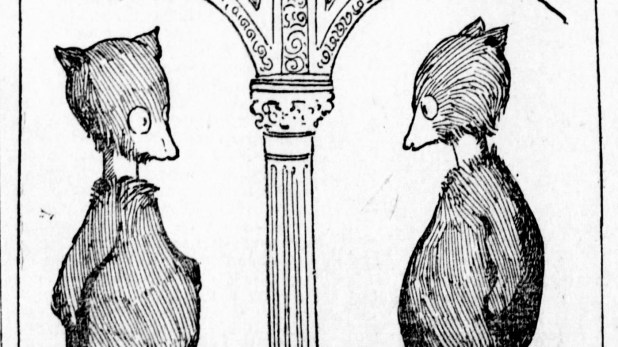
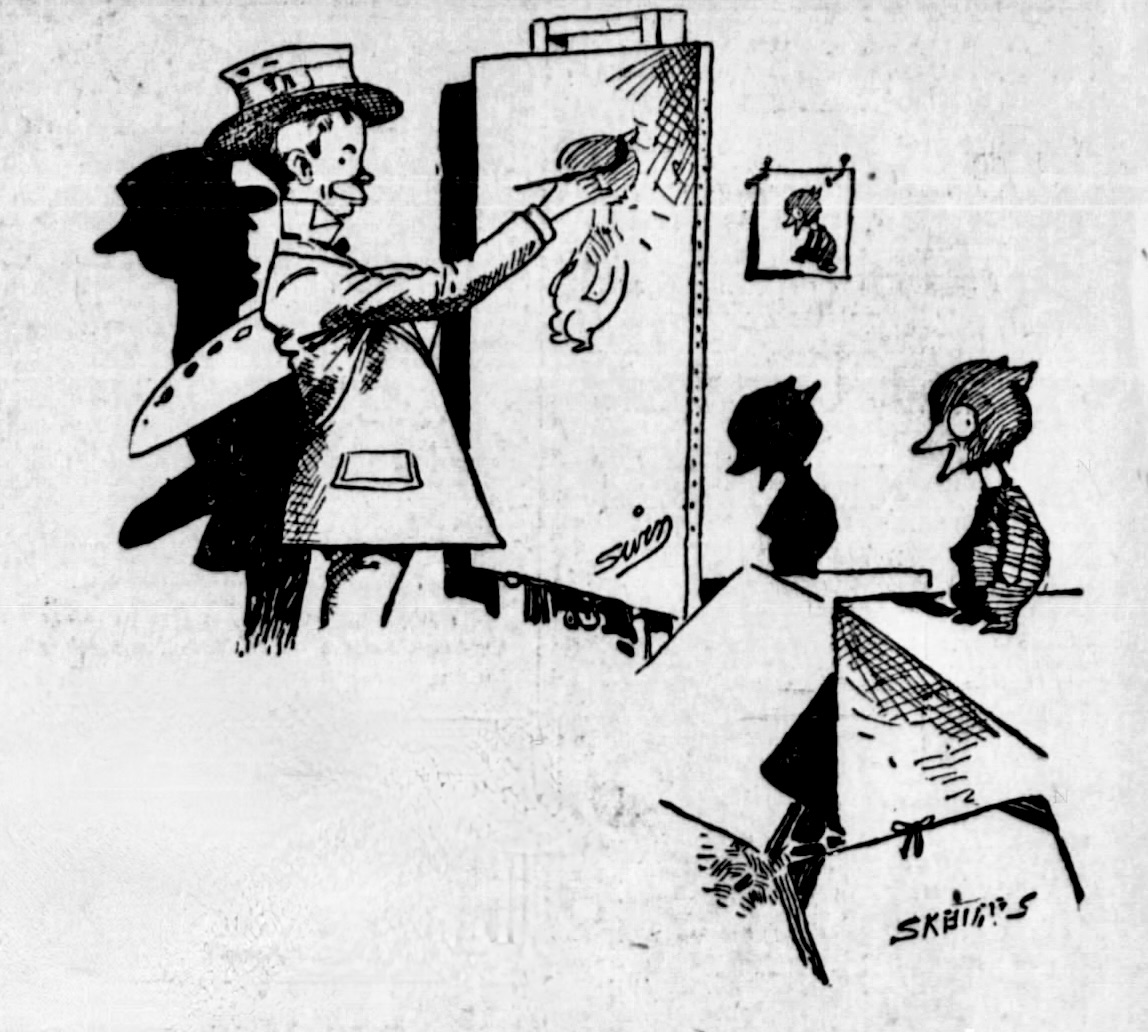
Jimmy Swinnerton’s adorable cartoon bears are generally considered the first recurring daily newspaper comic character. More than that, however, he may have been smarter than the average bear. He may also be an important bridge across traditional newspaper illustrated reporting and editorial cartooning that spawned the very different conventions of comic strips as we came to know them.
We round out our survey of comic strip baddies steeped in post-WWII American culture. As are our choices for standout villains. The funny papers followed popular culture into new Cold War mythologies around both heroism and its counterparts. Main currents of a rapidly changing social, economic, and political environment are imprinted unmistakably on all of these villains.
For the first 15 members of our rogues’ gallery, click into Part 1, Part 2, and Part 3. And once again, credit also goes to the the comics hibbyists of Facebook who contributed many ideas that made this review of villainy broader.
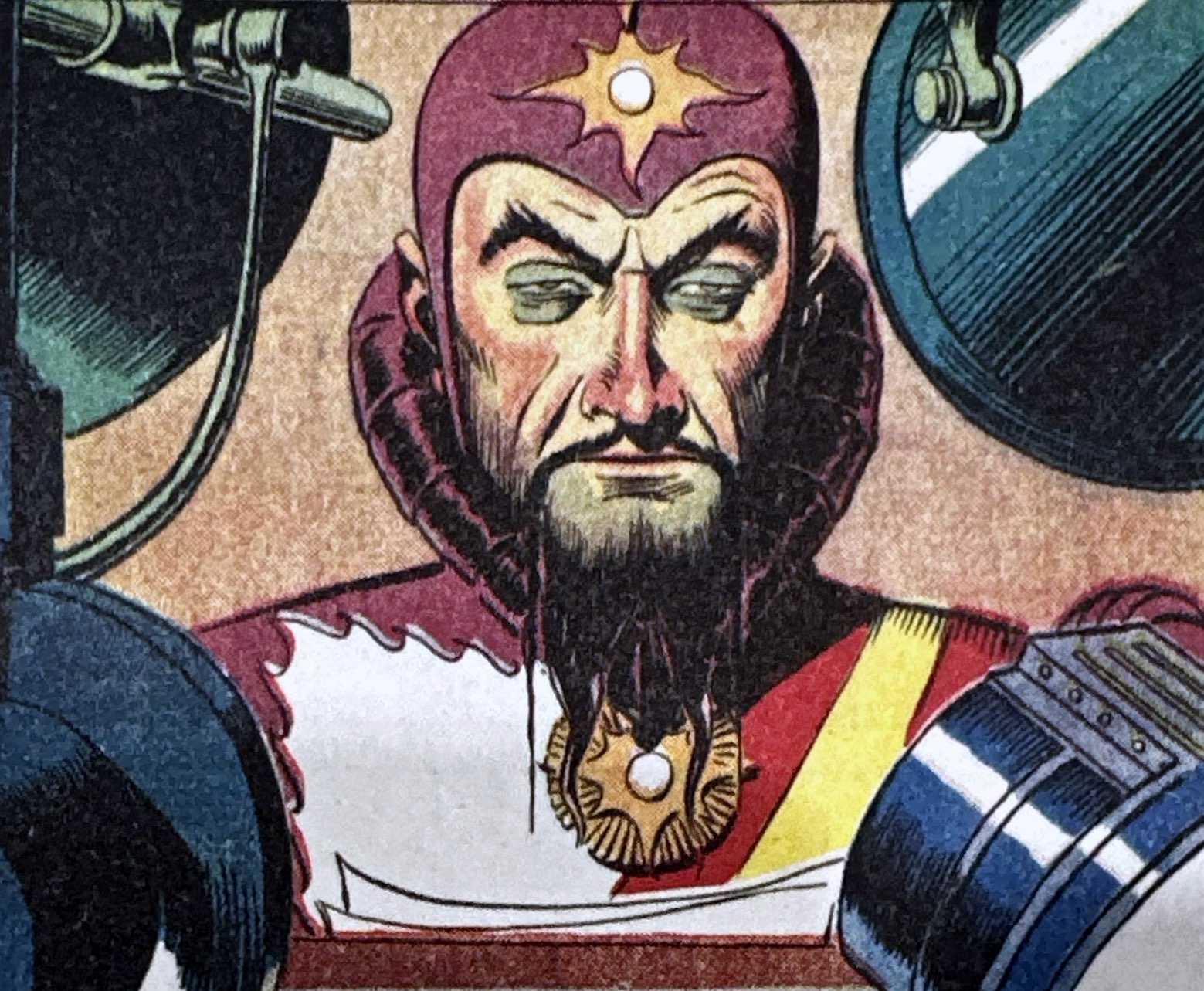
As the 1930s progressed, comic strip adventuring matured its visions of villainy. And the times were changing, as world war was becoming a reality rather than a distant rumble. As we saw in Part 1 and Part 2 of our favorite comic strip badasses, the thuggish, petty, and naturally mean antangonists of the 20s and early 30s (Bull Dawson, Sea Hag, etc.) had given way to the world-eating maniacs like Ming and The Cobra. By the late 30s, villainy becomes a bit more real and local – often focused on espionage or just personal greed. And the characters are evolving as well, more conniving and cerebral, less tied to gangsterism and power-madness than to cool demeanors and low-key malevolence. Evil was no longer wearing crowns, medieval cloaks or mustaches. They were well-dressed and brainy – the villain next door.
As we move more deeply into the 1930s and the peak years of comic strip adventure, some of the most recognizable and enduring cartoon fiends emerge. The villainy enlarges to suggest global criminal conspiracies and political power as it also becomes more sadistic. Newspaper comics are edging towards the outsized heroes and super-villains that formed the foundation of the comic books to come. [For the first installment of our valley of villains, refer to Part 1.
Villainy is, well, a necessary evil. At least so far as popular adventure is concerned. What is a hero without an antagonist, morality plays without sin? Whether it is the Satan of Genesis or of Milton, the slave-driving Simon Legree of Uncle Tom’s Cabin or Holmes’s worthy nemesis Moriarty, villainy is always a statement about evil itself that is somehow embedded in its time and its creator’s world view. That is what makes baddies so much fun to unravel. Paradise Lost is the original object lesson in our finding evil more intriguing than heroism. But the comic strip had particular roles in the evolution of popular scoundrels. Along with dime novels, pulp magazine fiction and film serials, it was among a cluster of turn-of-the-century mass media that relied on serialized heroes and stories. From these new modes of endless storytelling arose a popular sensation, the recurring villain. Moriarty (Conan Doyle), Fu Manchu (Rohmer), Fantômas (Allain and Souvestre) and a range of black-masked kidnappers of the chronically imperiled silent film heroine Pauline (Perils of Paulin) set the pattern. But the comic strip brought to evildoing its unique aesthetic strengths: believable absurduty, the light tone of caricature, and relentless irony. With some exceptions, this medium made evil unserious, fun, or at least safely farcical.
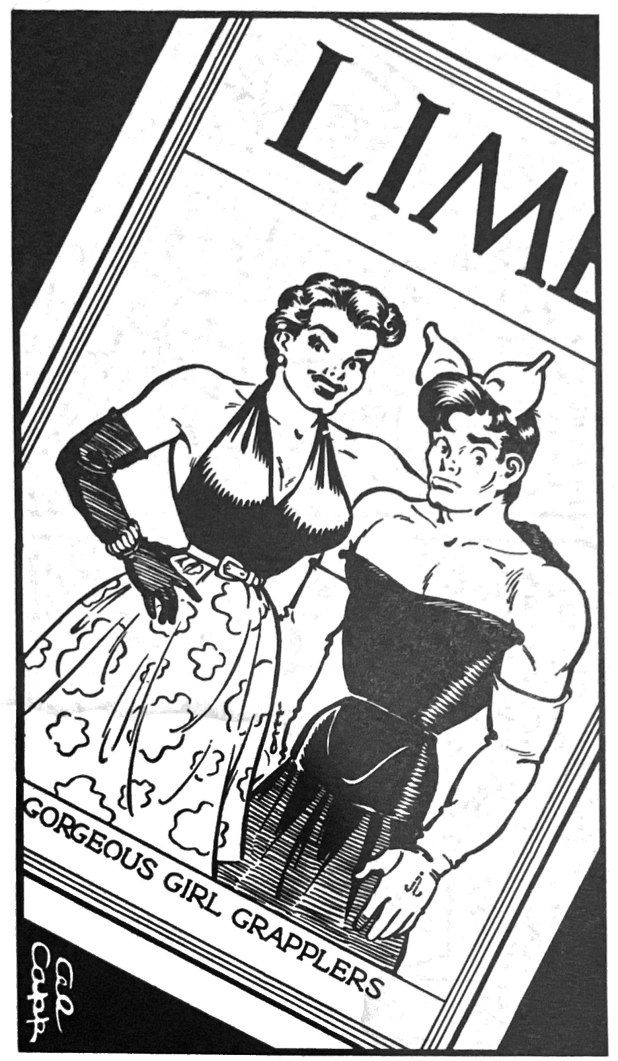
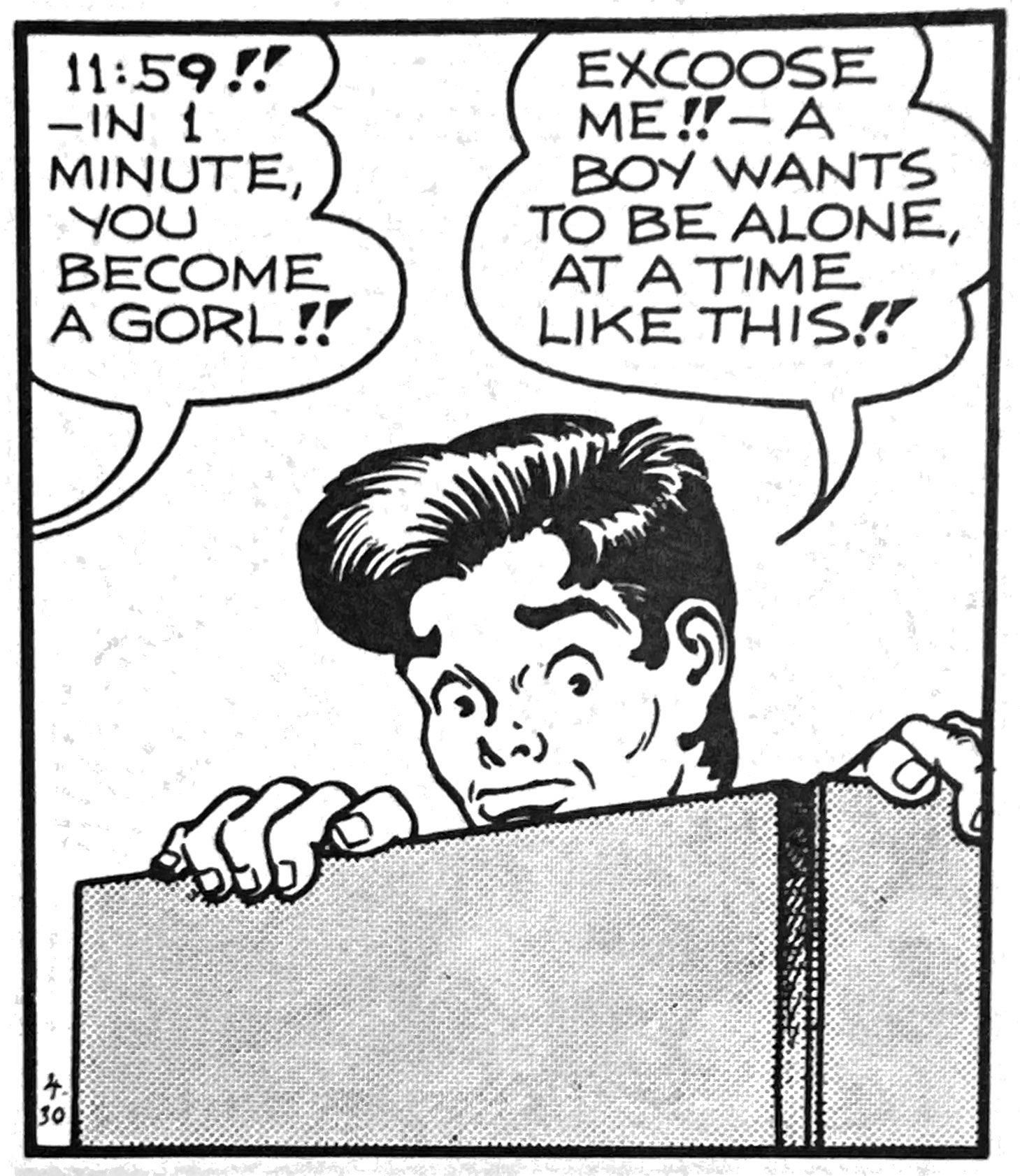
Alert the gender police! Recruit the culture warriors. Al Capp’s Li’l Abner strip was bending gender norms more than 70 years ago. In fact, this 1953 story arc weirdly foreshadowed current skirmishes over cross-dressing, drag performance, legal gender reassignment and even “men” playing in women’s sports.
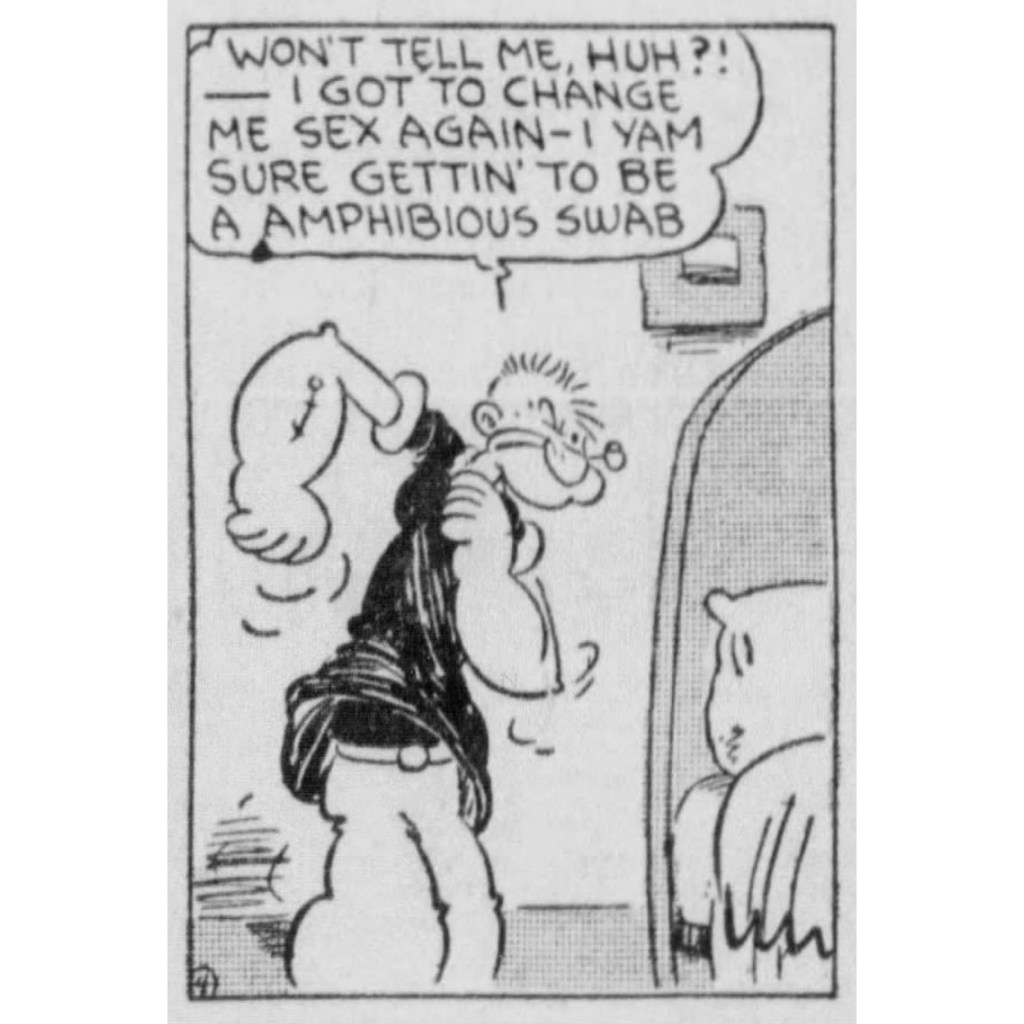
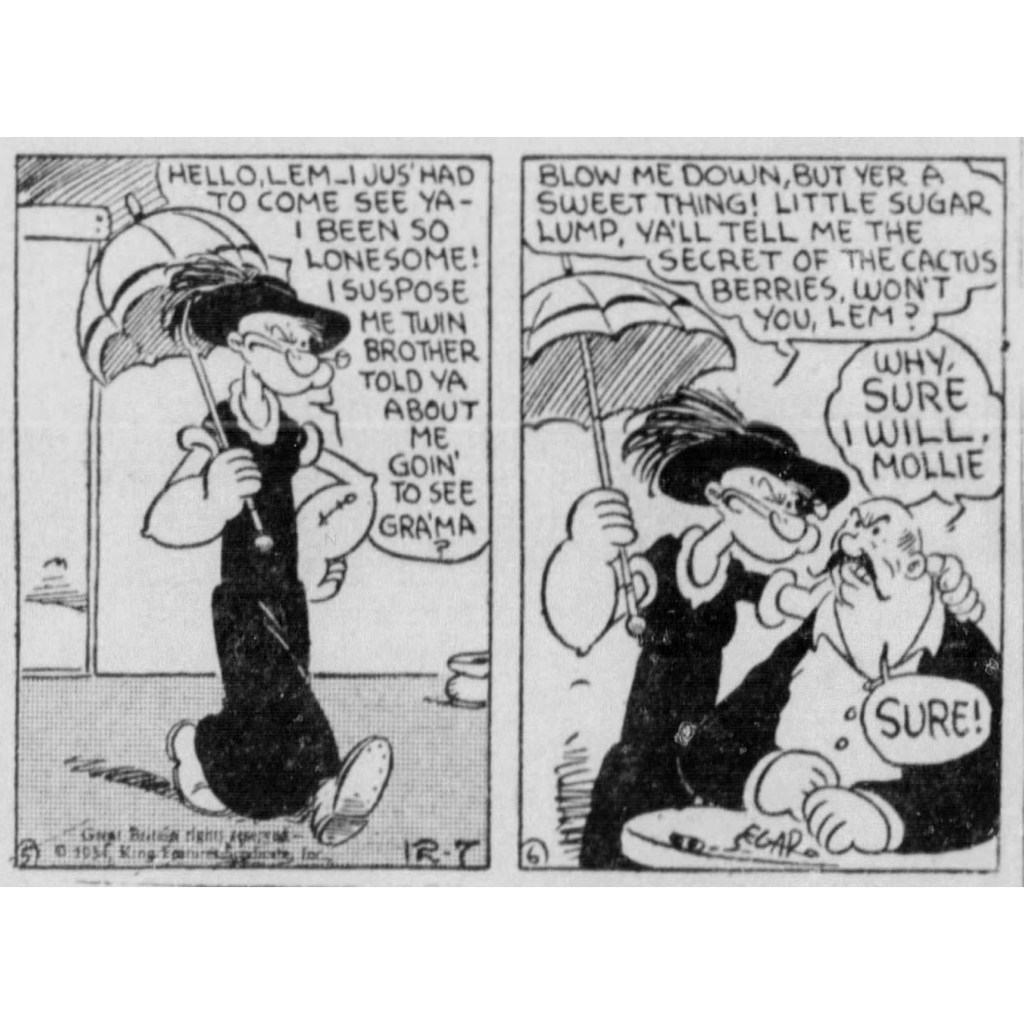
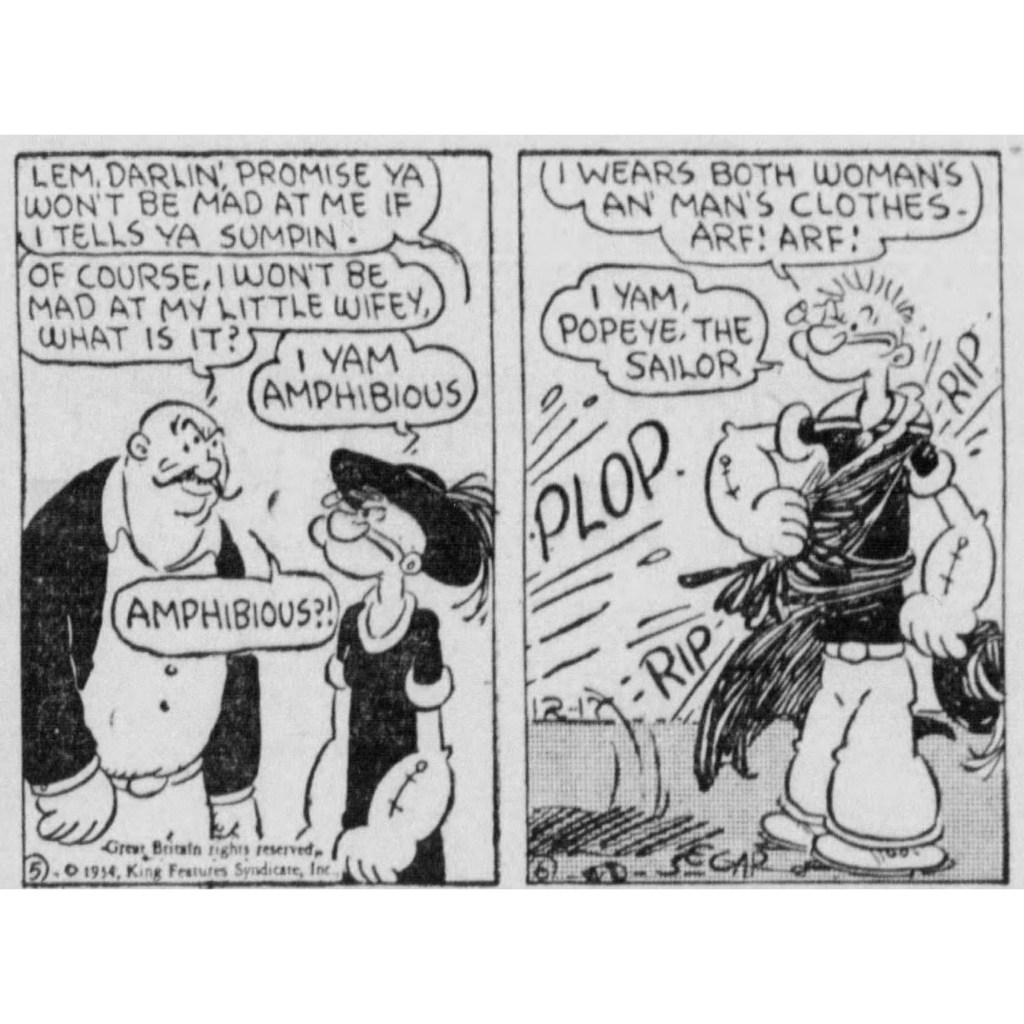
Weekly Weird. Cross-dress Tuesday with Popeye. In a lengthy 1930s story arc by Segar, the “amphibious” sailor infiltrates a criminal hideout by passing as Mollie.