
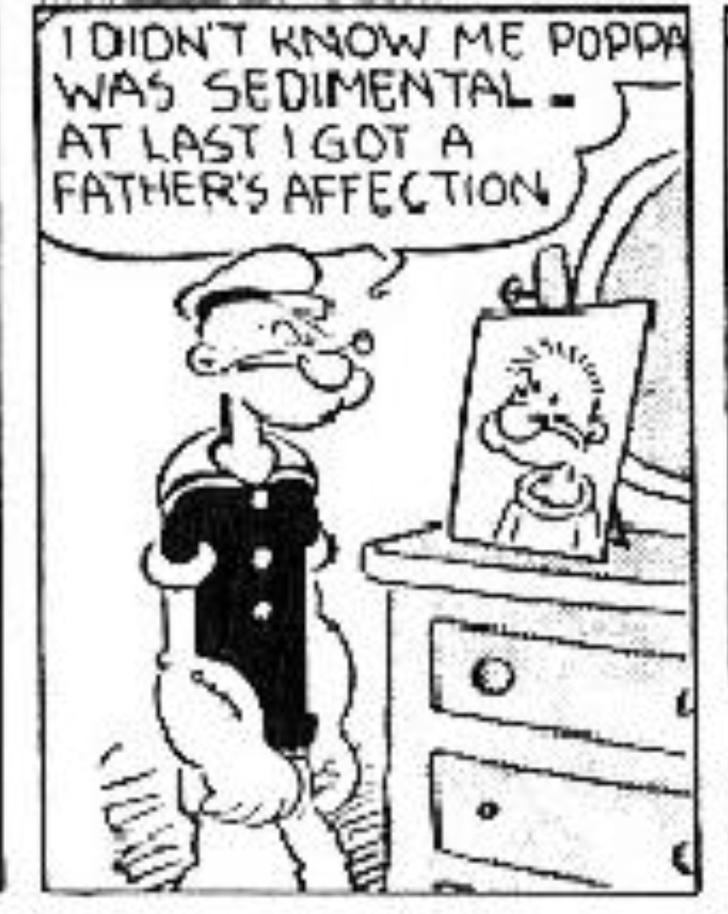
Do we really want to psychoanalyze Popeye? Sure, his anger management is pretty clear. His tendency to resolve all disagreements with a sock in the jaw is often considered a feature, not a bug. But why not leave this Depression-era icon as is? E.C. Segar perhaps unwittingly created a hero for his times. He straddled the conflicting impulses that occupied so much of 30s popular culture, a rage at the machine and a hunger for an organic folk renewal. He was part Hollywood gangster, part Tom Joad, the angry moralist who had had enough. But in the fateful story arc of 1936, when “orphink” Popeye catches up with the father that abandoned him, Poopdeck Pappy, Segar himself puts father and son on the couch. “But ain’t ya jus’a little glad to see yer son?” asks our hero? “NAW!” Poopdeck replies. Trauma, resentment, guilt, projection, repression, masculine insecurity – they all surface along the way. Segar creates a kind of vernacular psychology to unpack Popeye’s Pappy issues. And like much of what made this strip great, Segar manages to be at once screwball and serious.
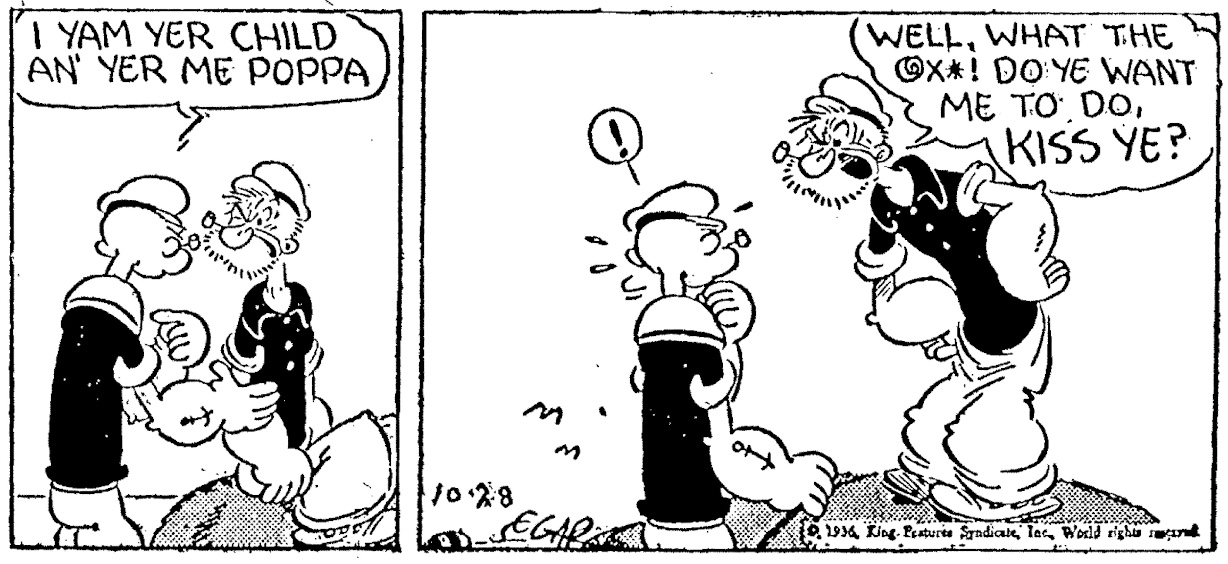
The late 1936 storyline begins when the magical Jeep reveals that Popeye’s father is indeed still alive and directs them on a sea journey in which the purported ghost in steerage turns out to be the long lost Poopdeck Pappy. But Pappy is in no rush to be found. He flees to his hideout Barnacle Island, where father and son finally come face to face.
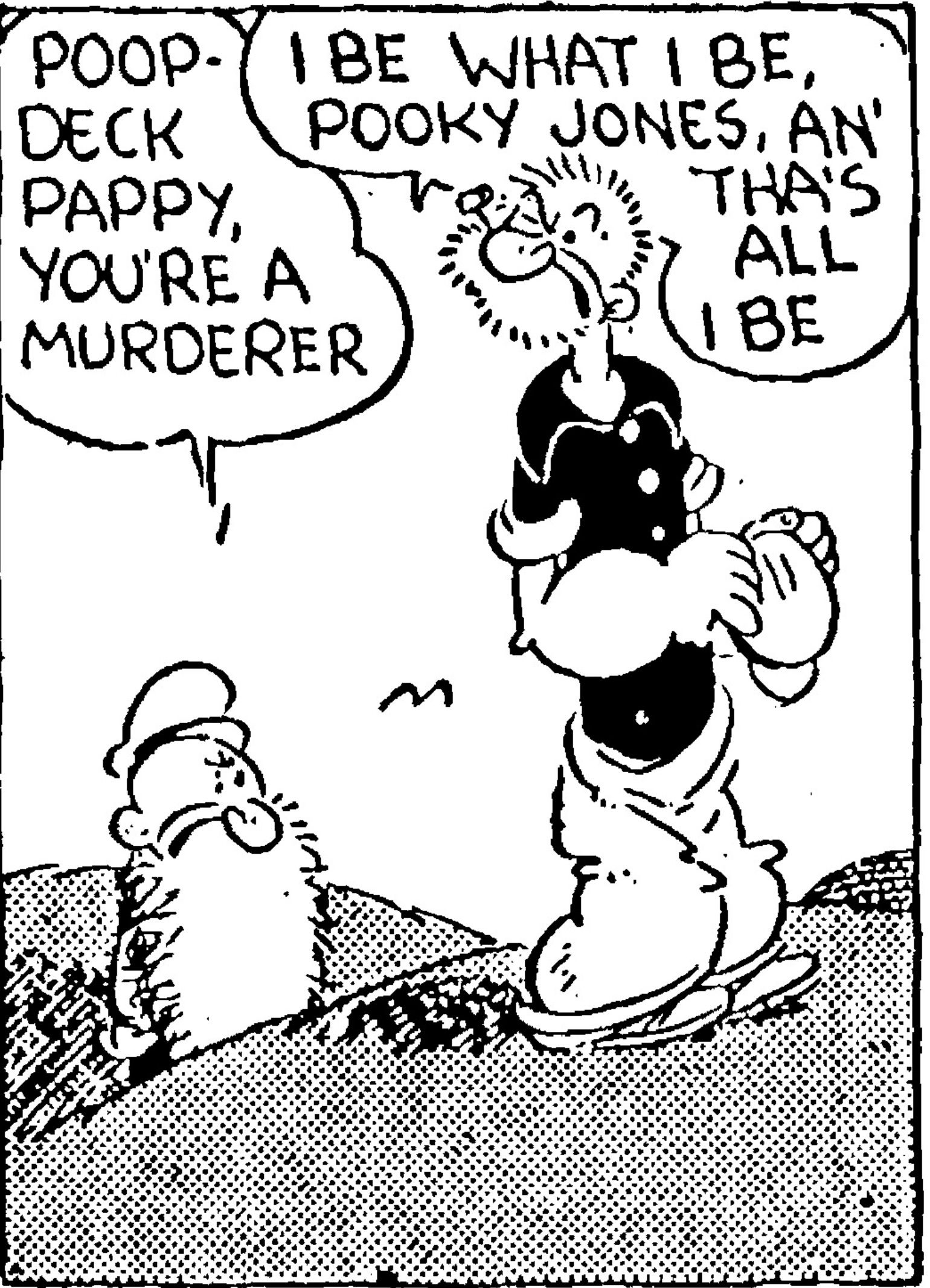
And when they do, they see the same face. Segar draws Poopdeck Pappy as Popeye’s older twin, and therein lies the genius of the tale. Pappy is an unrepentant, irascible cuss, in some ways like the early 30s Popeye character that Segar had to make more family friendly as the character became an animation and merchandising juggernaut. “I Be What I Be An’ Thas All I Be” Pappy barks in echo of that familiar Popeye refrain. Pappy socks everyone and anyone for no particular reason, including Olive Oyl, who takes quite a beating throughout this story. He is a misanthrope of the highest order, rejecting Popeye and just about everyone else except his sidekick Pooky Jones, and some fawning mermaids.
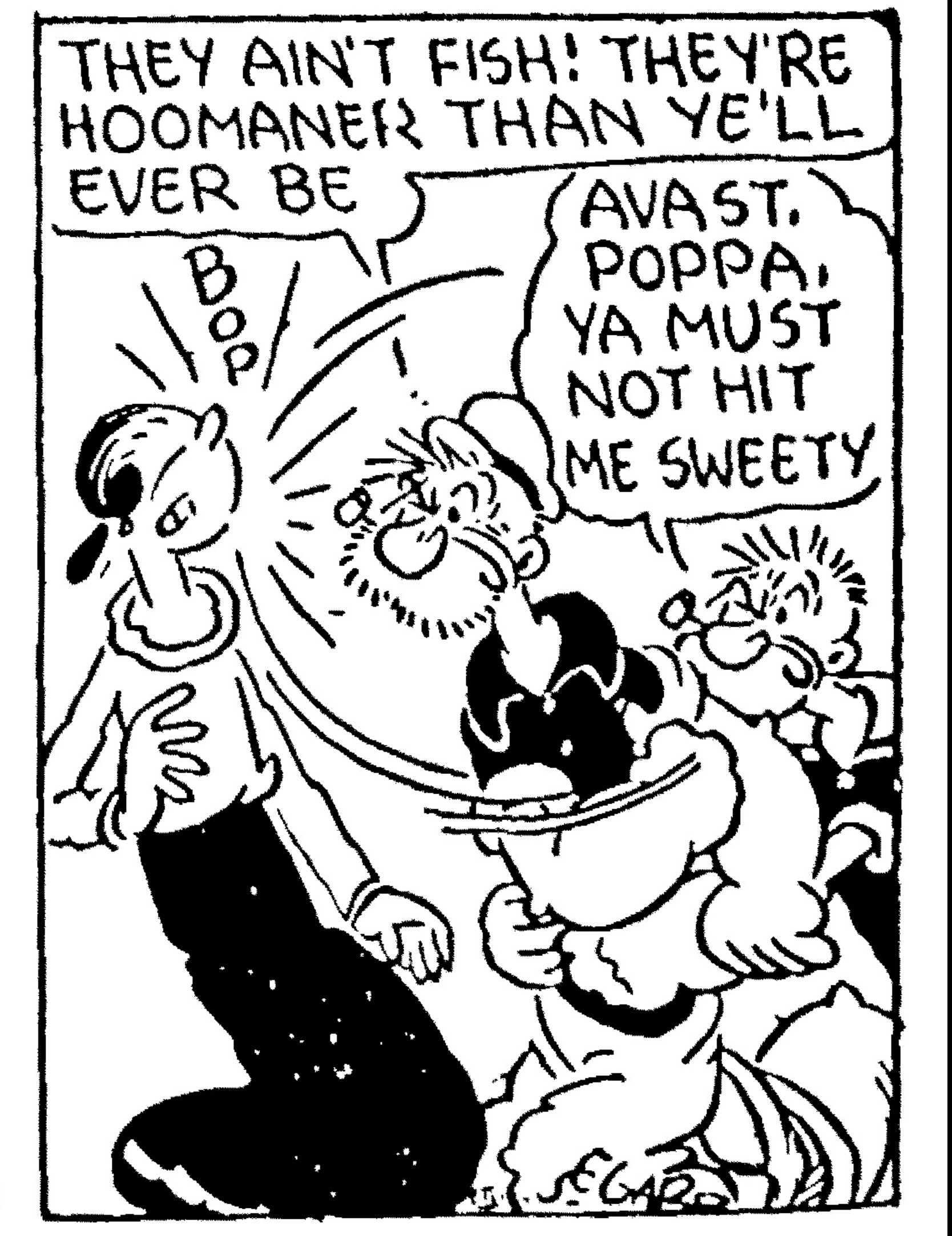
The great two-fisted pugilist of 30s pop culture is brought literally to tears by it all. Suddenly our Popeye is a needy child begging for a parent’s love. And Pappy’s response at first is withering. “Oh, so you’re a sissy huh?” Segar runs with this father/son dynamic in many madcap directions. Desperate to gain his father’s respect and restore the family, Popeye kidnaps Pappy from the Island to bring him home, and soon is wracked with guilt over it. We also get a bit of projection here, as Poopdeck seems addicted to socking Olive in the kisser. Popeye objects again and again, but somehow it feels as the father is acting out some of his son’s repressed hostility towards his ever-irksome girlfriend.
And in a heartfelt denouement to the reconciliation, Pappy admits that his hardness is a defense against a pitiless world. “I got a heart, but I ain’t used it much durin’ my life,” he admits when opening up to his son. The resolution is Pappy allowing a soft spot for Popeye without forsaking his tough façade. “Un’erstand this, the fack that I be a bit soft with ye, don’t mean I won’t be hard with other people.”
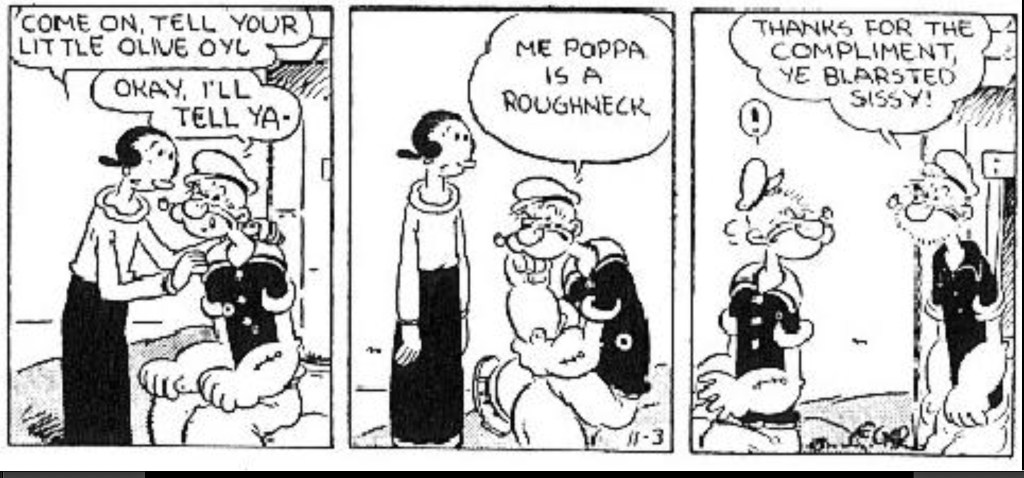
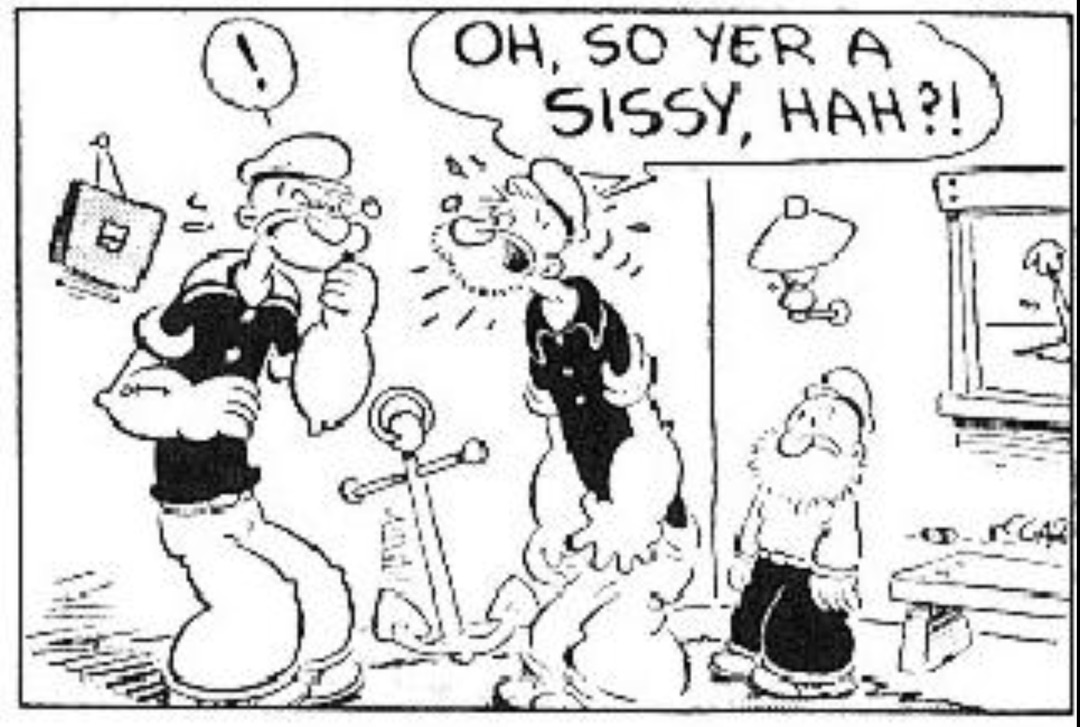
Segar isn’t kidding about all of this, either. In his own screwball fashion, he is exploring the complex dynamics of father/son love, performative masculinity, regret, guilt, and more. The relationship evolves across months of one-on-one exchanges between the two: approach, rejection, anger, admission, revelation, reconciliation. And there are times when the twin figures look like what may be underneath it all – Popeye talking to himself about himself.
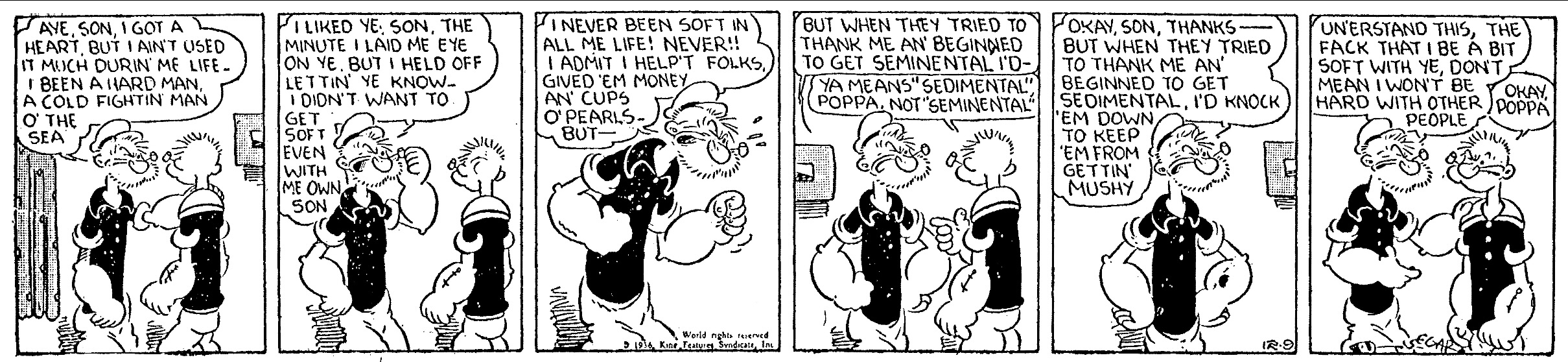
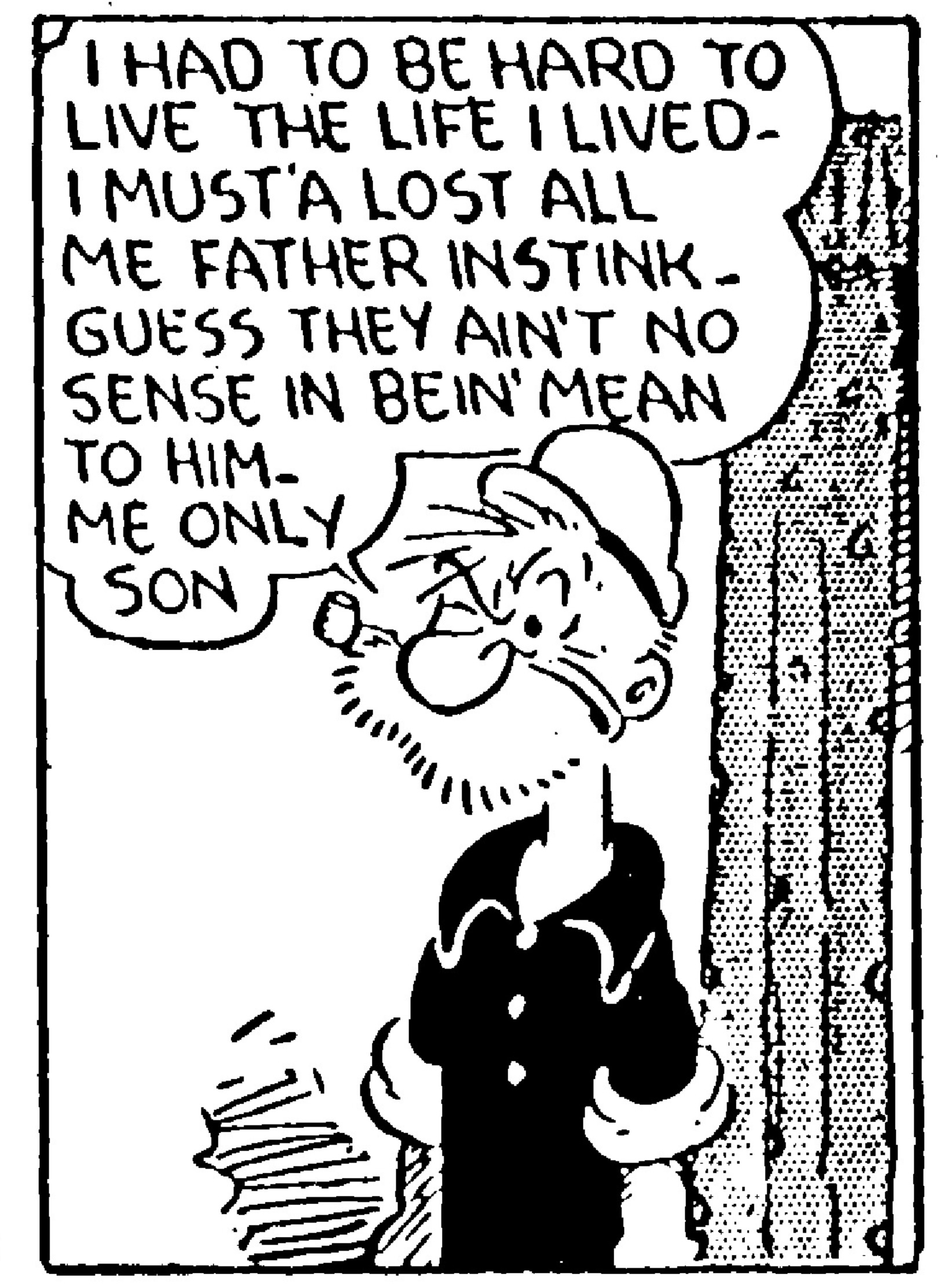
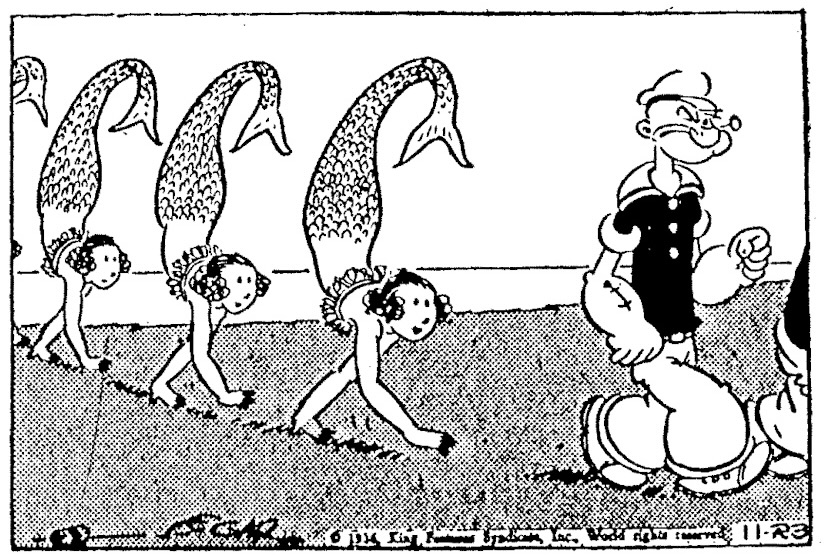
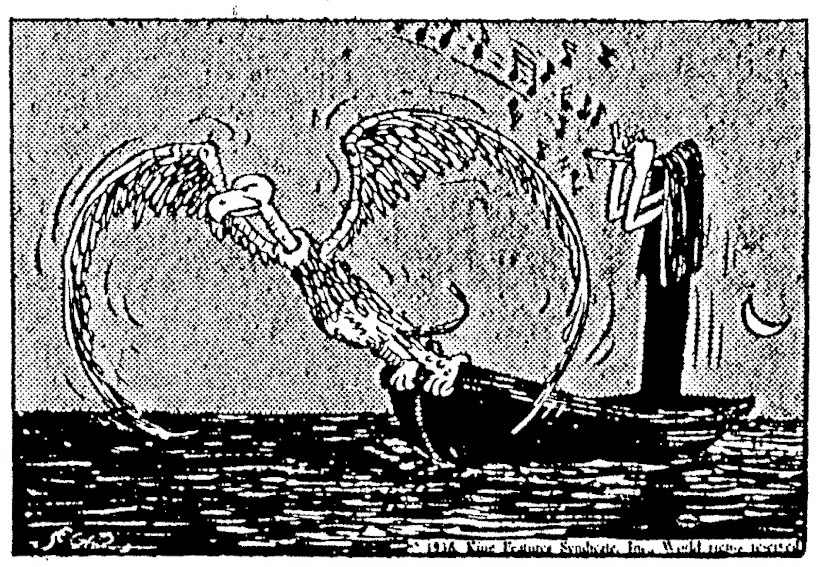
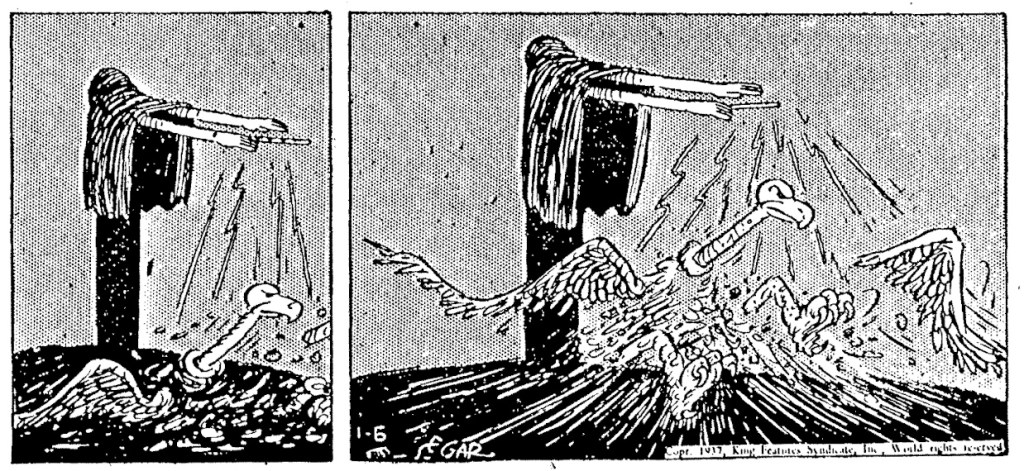
But, in truth, E.C. Segar was always a hard-boiled “sedimentalist,” endowing most of his cast with emotional depth that belied their goofy big-foot appearance. And as introspective and chatty as this 1936-37 arc is, the artist wraps around it some of his most compelling whimsy. A giant octopus swallows Popeye, which he punches to pieces from the inside. A pod of mermaids follow the kidnapped Pappy and take to land by walking on their hands. The Sea Hag of the great Plunder Island story reappears, this time with a massively-winged “witch-bird” that features some of Segar’s best art.
Ultimately, the stories encompassing Popeye’s reunion with Pappy remind us what a unique world Segar created here. He respected no genre boundaries – blending psychological realism with magical fancy, goofy screwball with earnestness, big heart with big fights. It was a comic epic for its time.
Discover more from Panels & Prose
Subscribe to get the latest posts sent to your email.

