Screwball 101: The Opper Spin

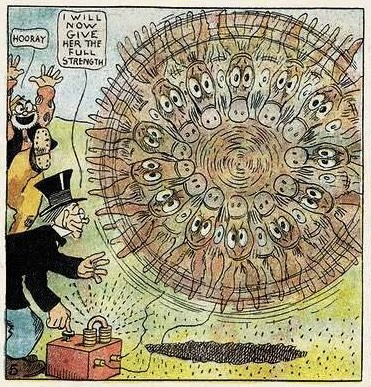
F.B. Opper was a founding father of newspaper comics generally and slapstick physics in particular. His wild spinning technique established a staple of screwball comics, Here from a 1904 episode of And Her Name Was Maude. More on Opper’s machine poetry here.

Peg-Leg Bates Gets a Cameo in Hank

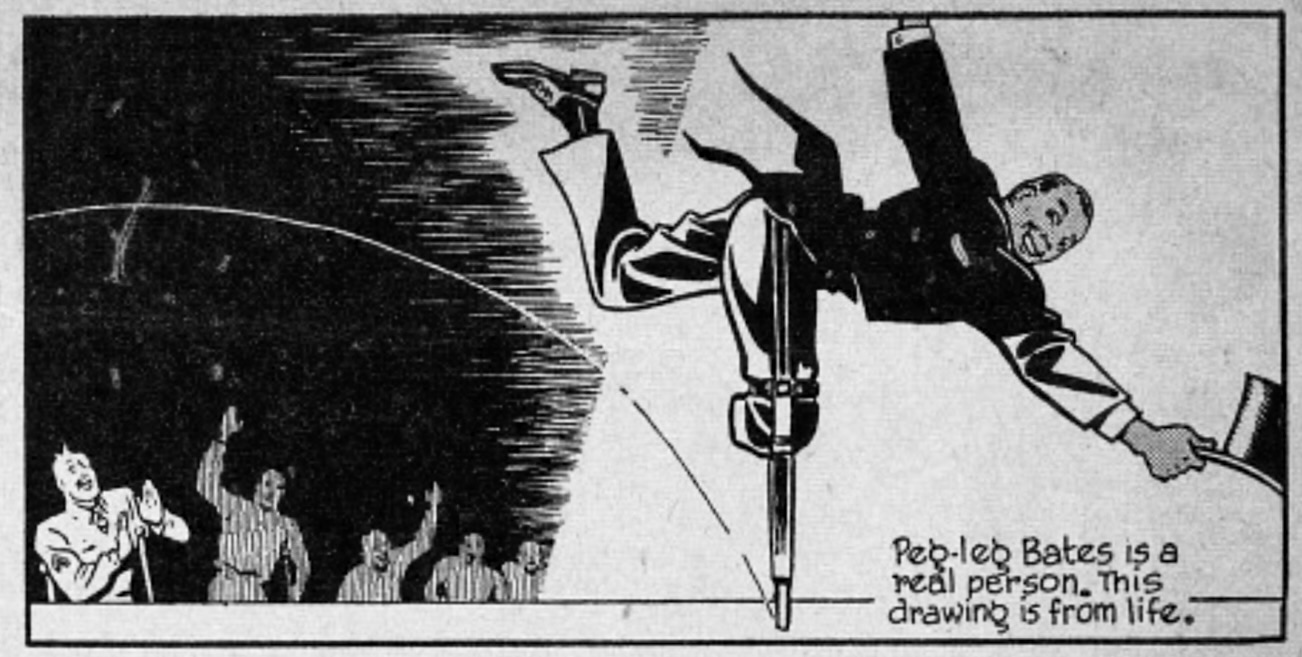
The Weekly Weird. Coulton Waugh’s experimental adventure hero Hank was the first disabled character to lead a comic strip. Shortly after losing his leg, the veteran Hank finds inspiration from real-life Broadway sensation, Peg-Leg Bates. Bates was a sensation on the stage show circuit around the country during the 30s and 40s on Broadway. The sharecropper’s son lost his leg in a cotton gun accident at the age of 12. He was determined to overcomethe disability and eventually turned it into a dance routine. More on Hank and Bates here.

The Impaling of The Brow

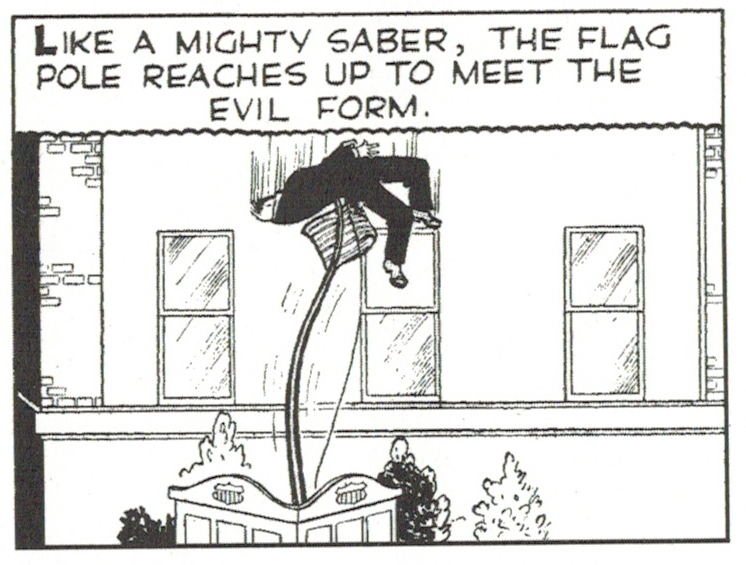
Yeah, that’s gonna leave a mark. Impaled on an American flagpole, sadistic WWII spy and Dick Tracy villain The Brow gets poked by poetic justice. More grisly villain deaths from Tracy creator Chester Gould here.

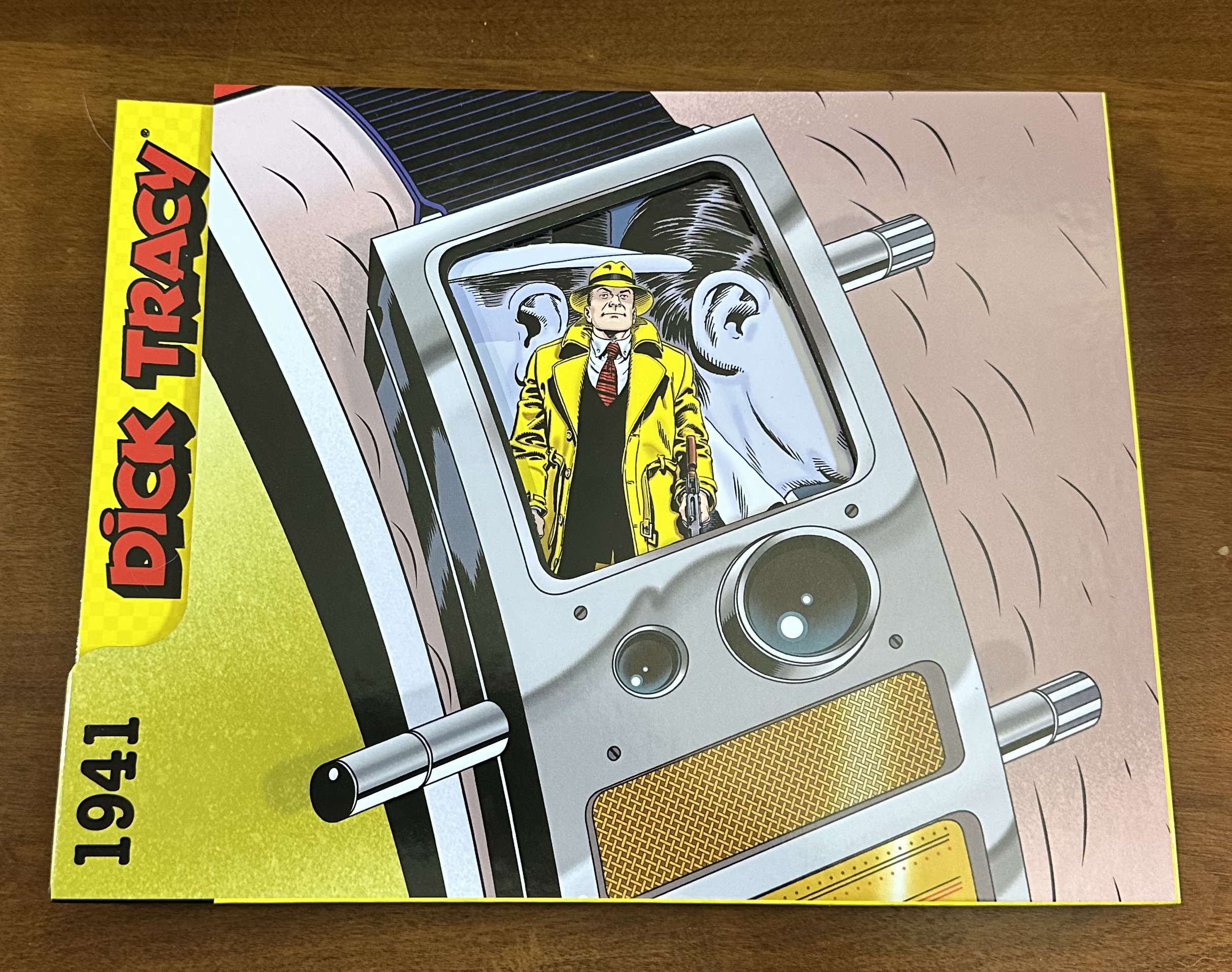
Gould’s Dick Tracy is my lifetime favorite strip, which I have already recounted in our About Panels and Prose section. I have covered Dick Tracy from many angles since starting this site years ago. You can find pieces on Flattop, Flattop Jr. the arch conservatism of Gould and his here, as well as assorted short takes on Tracy here.

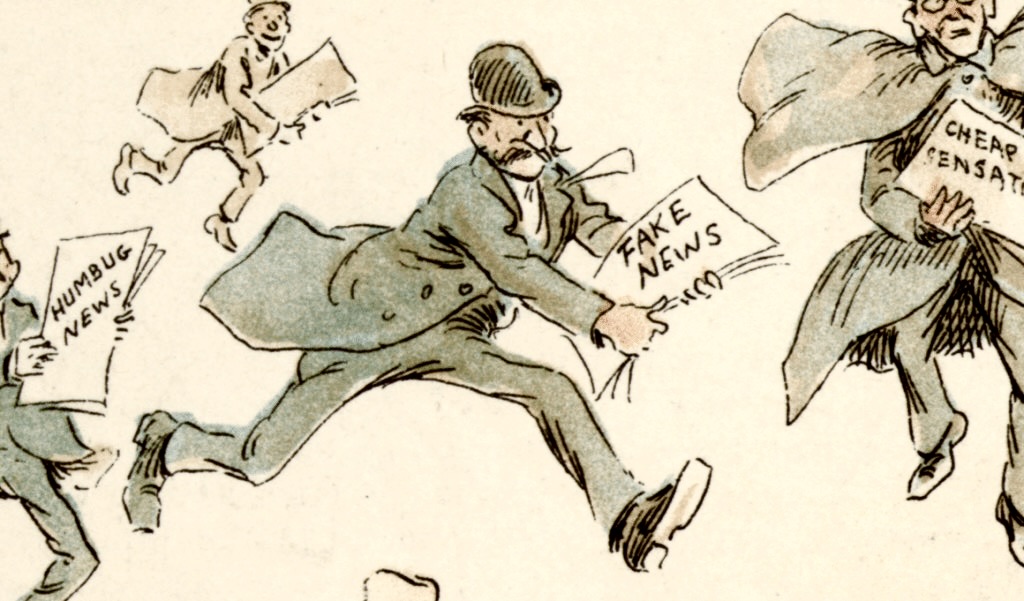
“Fake News” Hot Off the 1894 Presses

The Weekly Weird. In 1894, Puck magazine took aim at the rising influence of increasingly sensational and less costly city newspapers. Here, Frederick Burr Opper, who would go on to be one of newspaper comics’ founding fathers, called out Joseph Pulitzer in particular as a purveyor of “fake news.” More on the full cartoon here.

Elmo Gets Hairy

Force-fed a new brand of cereal by his kidnappers that grows hair uncontrollably, Cecil Jensen’s country rube Elmo is awash in a pool of his own tresses. More on this strange late 1940s satire here.

Recovering Hank: America’s Anti-Fascist Hero

Hank Hannigan was no Captain Easy or Jungle Jim or even Dickie Dare. In fact, he was designed by his creator, Coulton Waugh, as a deliberate antidote to the comic strip adventurer. He was a WWII veteran and amputee who didn’t want to journey (let alone, save) the world. Hank was proud to be a “plain guy,” a grease monkey who craved returning to the garage, marrying his sweetheart, and maybe making sense of the sacrifices he and his fellow soldiers just made. He was the unlikely hero of a short-lived 1945 comic strip that artist Coulton Waugh conceived as a populist corrective to the fantastic escapades of typical comic strip heroes. “To get a new character I go into the subways and actually draw them,” he told trade newspaper Editor and Publisher before Hank’s April launch. “I want the people of America to stream into the strip.”

Continue reading

Markets Booming, Bullets Flying, Booze Flowing – Happy 1926!

New Year’s Day in Chicago 1926 felt like peak 1920s. The common tropes of the “Jazz Age” congealed on the front page of Tribune: “Gay, Wet New Year’s: 11 Shot – Prosperous U.S, Forecast by 1925 Success” barked the headline. Front page stories reported that the manufacturing and consumption were driving demand-side growth to new levels. Meanwhile, casual gunplay celebrating New Year’s Eve resulted in one dead child and multiple woundings. And at the height of Prohibition, citizens and journalists openly mocked officials trying to enforce alcohol bans in the local nightclubs. According to The Trib, two barely guised Prohibition agents were assigned to each club, while revelers succeeded in hiding their hooch throughout the night. One club crowd had had enough and chased the agents out the door. The cops refused to intervene, claiming that they wanted to remain “neutral.”

Continue reading