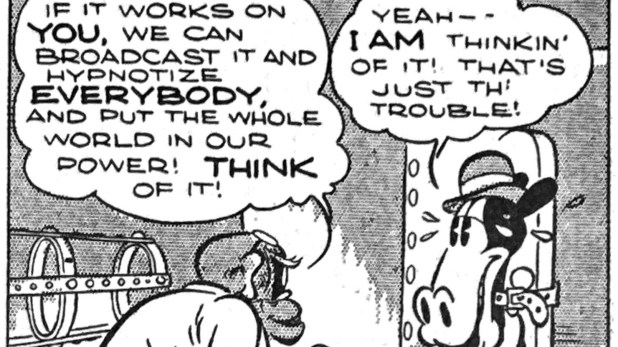
Getting nervous about the prospect of an AI oligarchy, a kind of anti-democratic sensibility that the Tech Bros finally say out loud? That they see in their own machines the prospects of a “post-human” future where rational engineers like themselves finally get the respect, authority and control they think they deserve? That compassion, democracy, maybe humanity itself are only for the weak willed? That this could be a better world if only pesky governments and, you know, people, would just leave them alone?
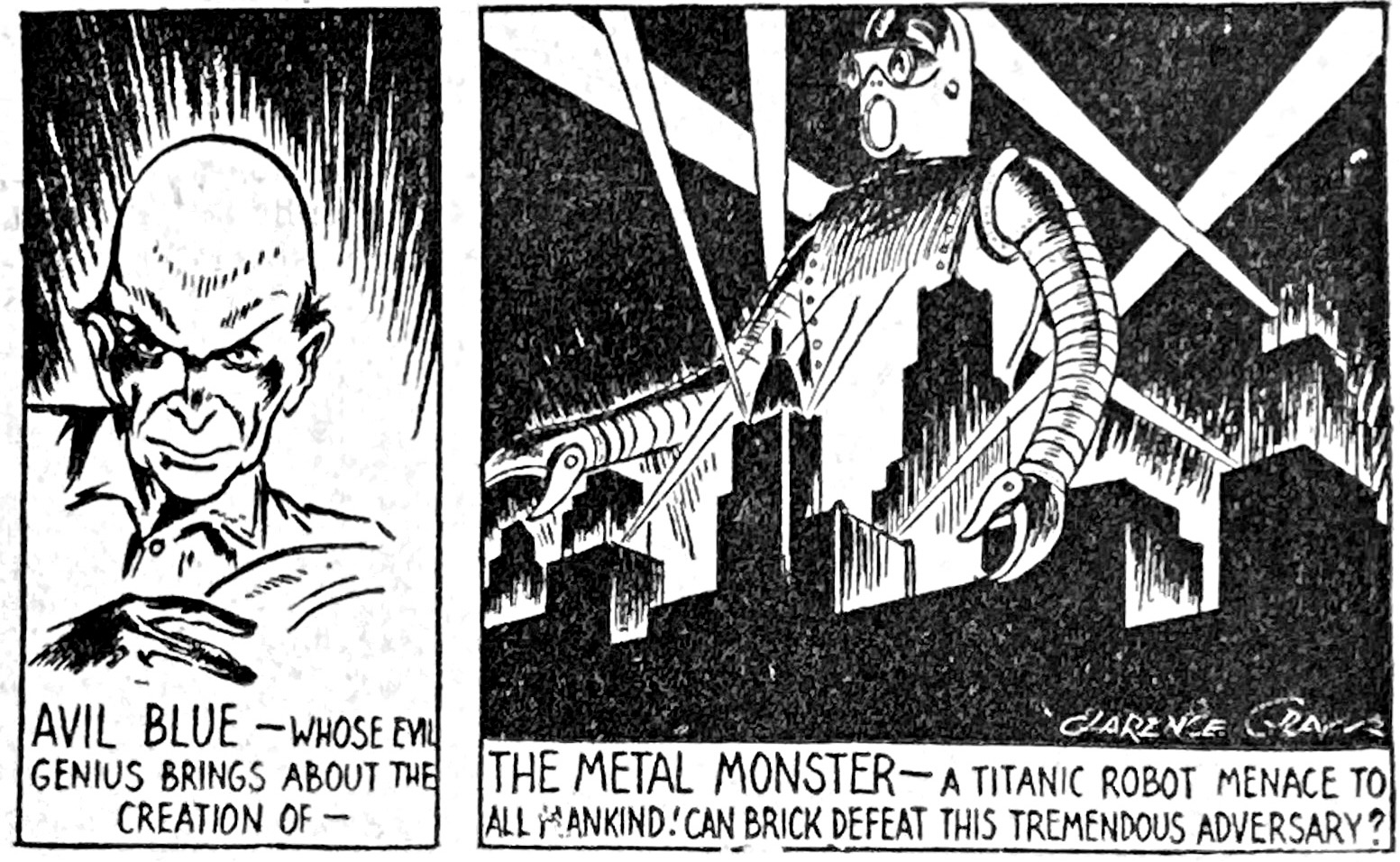
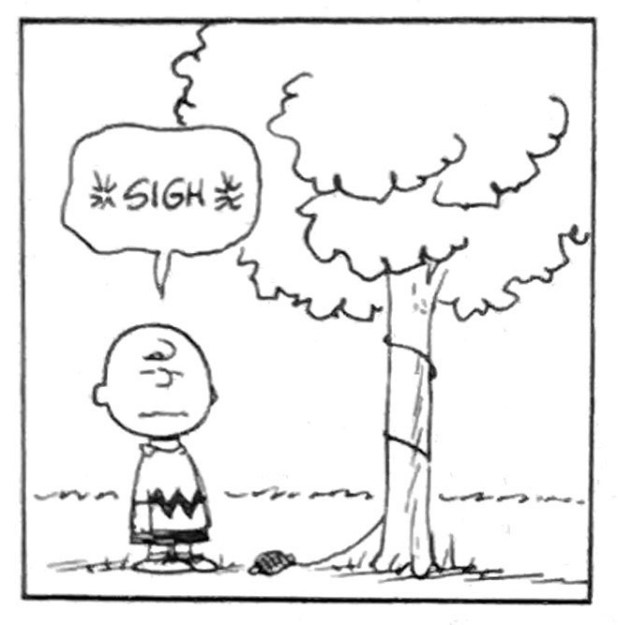
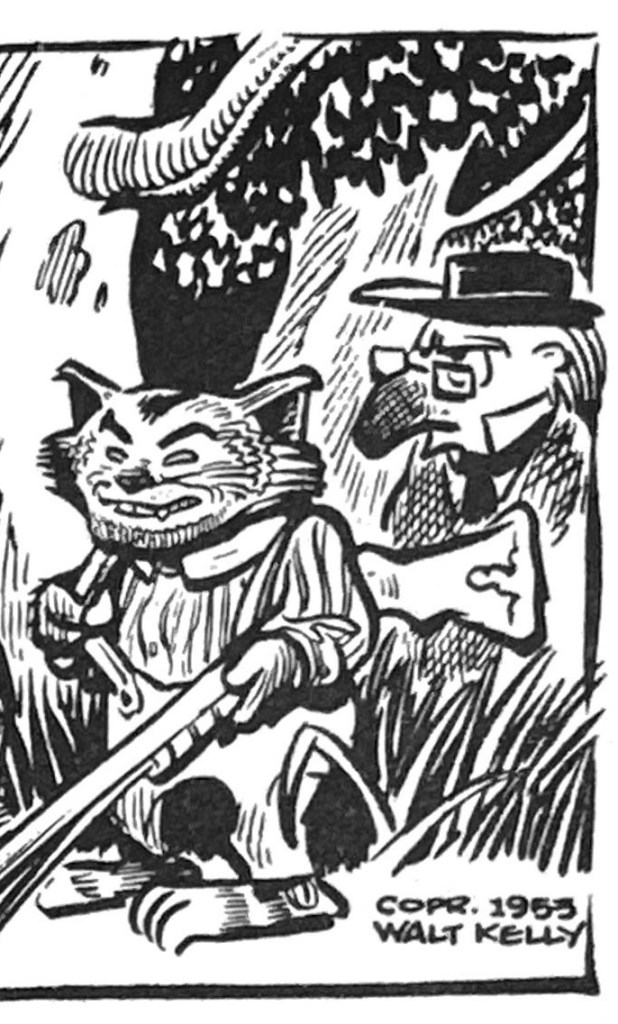
We round out our survey of comic strip baddies steeped in post-WWII American culture. As are our choices for standout villains. The funny papers followed popular culture into new Cold War mythologies around both heroism and its counterparts. Main currents of a rapidly changing social, economic, and political environment are imprinted unmistakably on all of these villains.
For the first 15 members of our rogues’ gallery, click into Part 1, Part 2, and Part 3. And once again, credit also goes to the the comics hibbyists of Facebook who contributed many ideas that made this review of villainy broader.
Villainy is, well, a necessary evil. At least so far as popular adventure is concerned. What is a hero without an antagonist, morality plays without sin? Whether it is the Satan of Genesis or of Milton, the slave-driving Simon Legree of Uncle Tom’s Cabin or Holmes’s worthy nemesis Moriarty, villainy is always a statement about evil itself that is somehow embedded in its time and its creator’s world view. That is what makes baddies so much fun to unravel. Paradise Lost is the original object lesson in our finding evil more intriguing than heroism. But the comic strip had particular roles in the evolution of popular scoundrels. Along with dime novels, pulp magazine fiction and film serials, it was among a cluster of turn-of-the-century mass media that relied on serialized heroes and stories. From these new modes of endless storytelling arose a popular sensation, the recurring villain. Moriarty (Conan Doyle), Fu Manchu (Rohmer), Fantômas (Allain and Souvestre) and a range of black-masked kidnappers of the chronically imperiled silent film heroine Pauline (Perils of Paulin) set the pattern. But the comic strip brought to evildoing its unique aesthetic strengths: believable absurduty, the light tone of caricature, and relentless irony. With some exceptions, this medium made evil unserious, fun, or at least safely farcical.