
The home front during World War II was a wonderful arena for gender reassignment. As we explored via E. Simms Campbell’s quick-witted and curvaceous “Cuties,” women adopted new roles with so many American men overseas, and this helped shake up, if for a while, a number of longstanding stereotypes across popular culture. Just as women were ready, willing and able to fill vacant jobs from the assembly line to management, they were just as ready to become adventure heroes.
And we’re not just talking Sheena (1938), Brenda Starr (1940) or Wonder Woman (1941). As the late great Tina Robbins chronicled in her book Babes in Arms, a remarkable number of women not only entered the nascent comic book field during the war, but they then crafted heroic tales of women leading the antifascist fight. In her The Spectacular Sisterhood of Superwomen, Hope Nicholson recounts how Sheena’s publisher Fiction House was so fully staffed by women that it was rare to spot a man in the New York office. Publishers were rethinking old categories and plugging women into more hard-boiled fictional roles. Robbins and Pater Maresca’s indispensable Dauntless Dames collects oft-forgotten examples of tough-talking women taking up crime-fighting during these years.
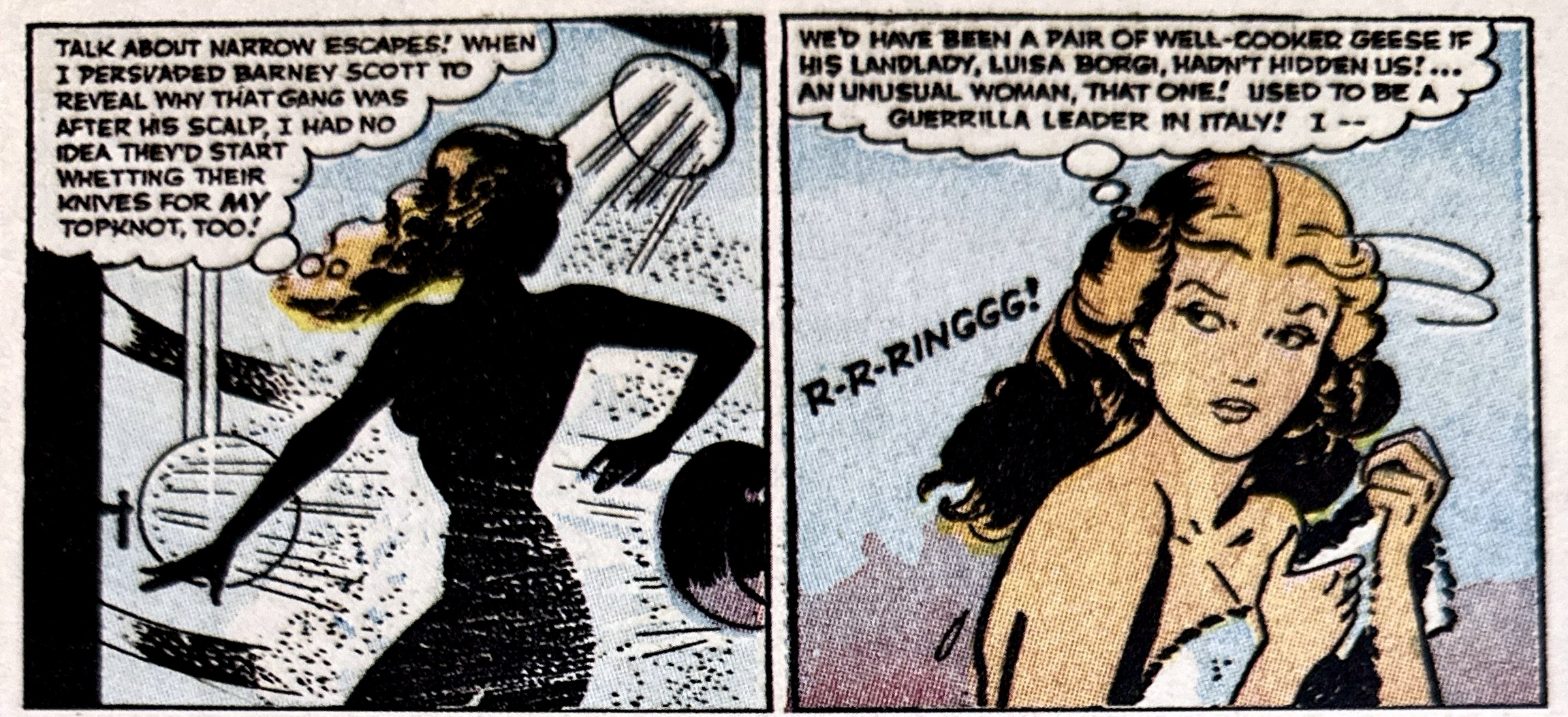
And yet, in the funhouse mirror that often is American popular culture, this new adventurous role for women also ratcheted up the level of cheesecake and lasciviousness from these very same heroines. With great empowerment comes great objectification, apparently.
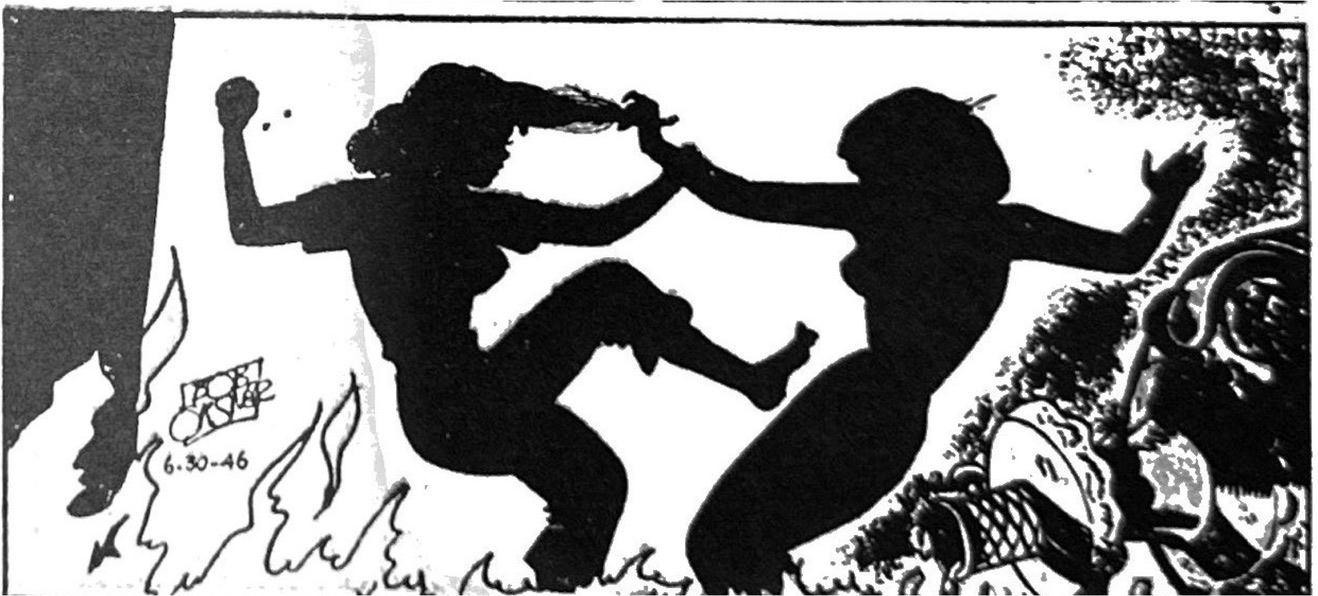
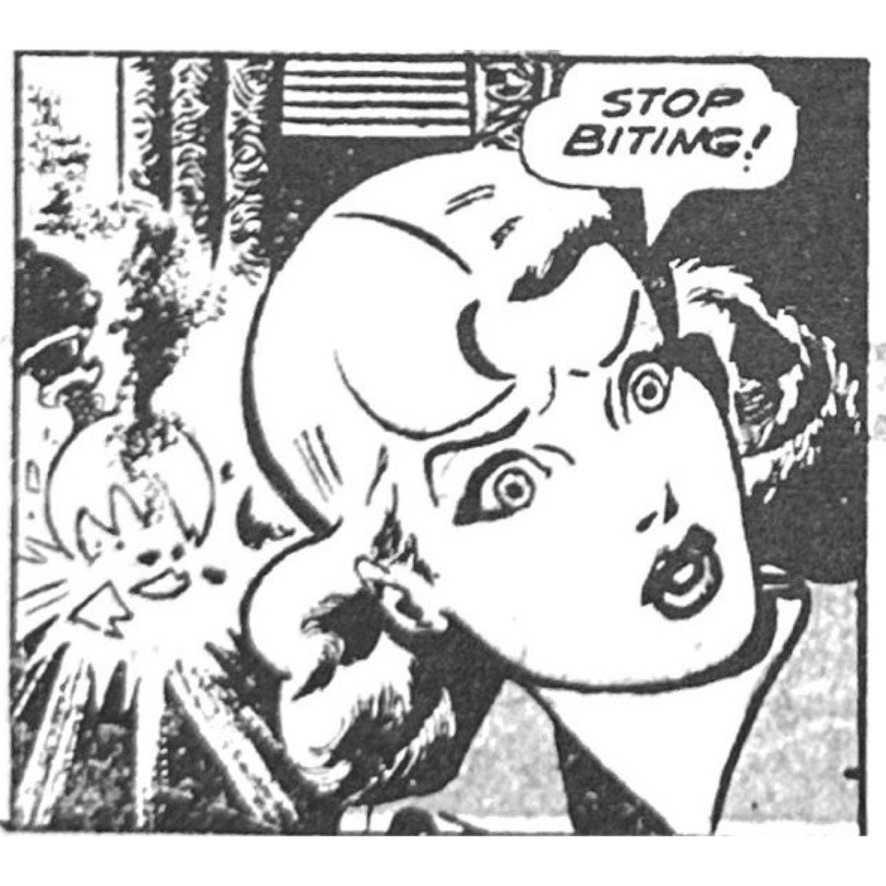
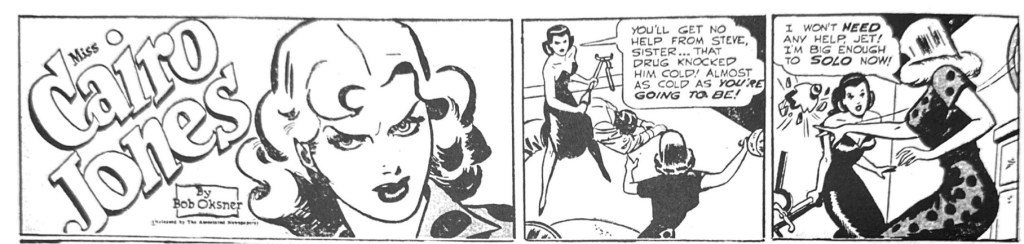
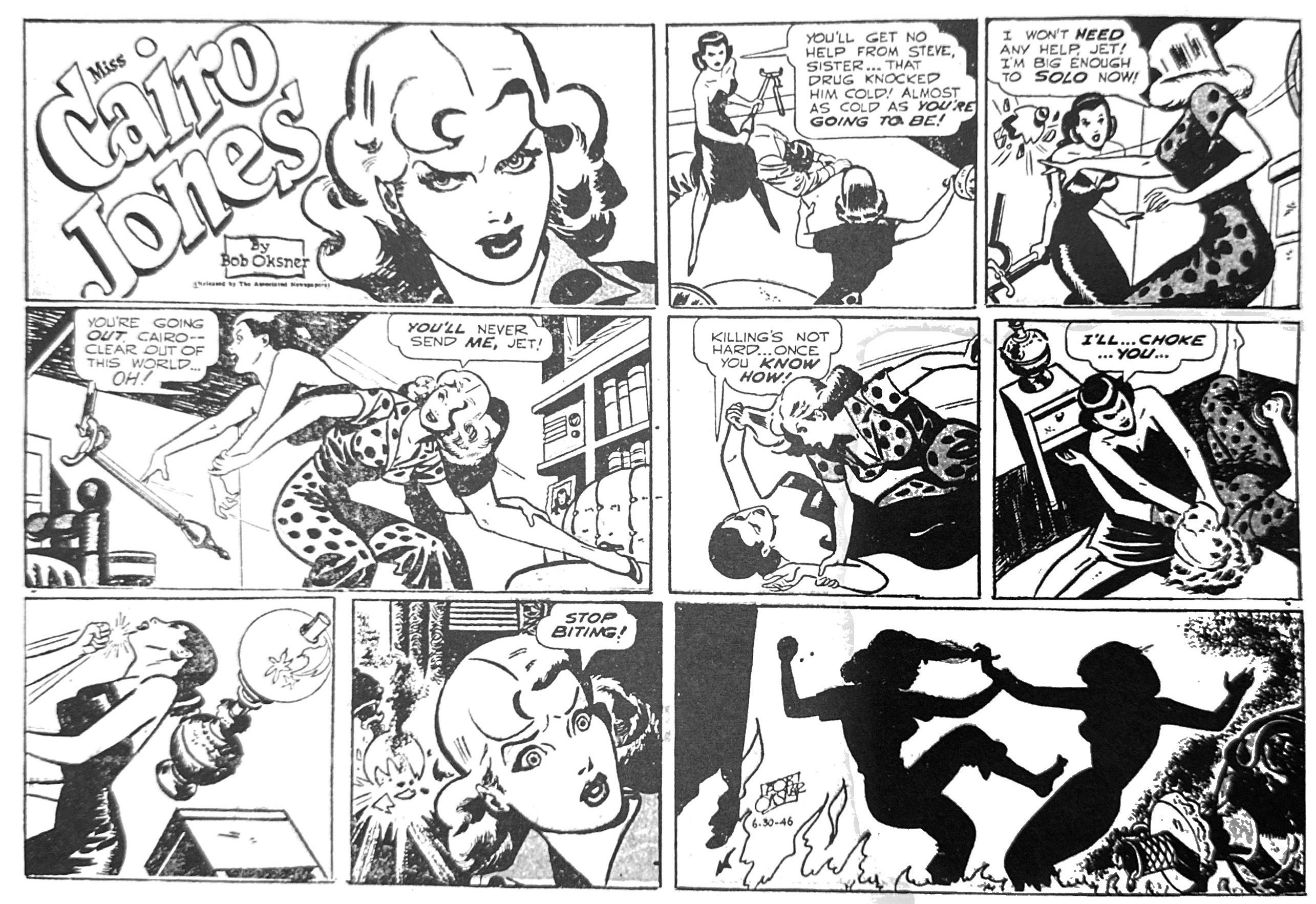
All of this came to mind as I was thumbing through the much overdue collection of Cairo Jones (1945-1947) and found the remarkable catfight sequence captured below. Cairo Jones was written in its first year by Jerry Albert and drawn by Bob Oksner, who went on to a long career in mainstream comic books. Dauntless Dames reprints a good sample of the early Sundays, and Maresca writes that Cairo was originally conceived by these pulp magazine veterans as a male adventurer. Cairo became a female crime and spy hunter when Bell Syndicate executive John Wheeler determined there were already enough men saving the world. After Oksner sketched his vision of Miss Cairo, Albert happened upon her spitting image in fashion model, Pat O’Neil, who they hired to pose for the strip.
And while Cairo may have represented a step forward in casting women in sharp-toungued action hero roles, the fetishistic gaze remained relentless. Hence this epic cat-fight from June 30, 1946. Hair-pulling, choking, biting – this bout has checks off all the major kinks.

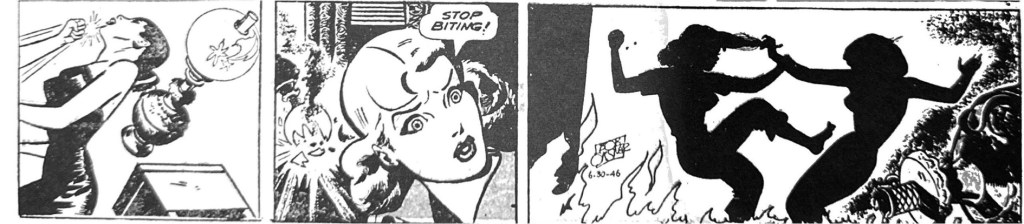
“Stop Biting!”
For the full run of Cairo Jones, Stefan Wood and the Comic Strip Appreciation Group has restored and collected all of the Sundays and dailies in a very affordable volume via Lulu.
Discover more from Panels & Prose
Subscribe to get the latest posts sent to your email.
 Panels & Prose
Pingback: Deep Cuts: Quick Takes on Our Golden Age of Comic Strip Curiosities – Panels & Prose