

Reviewing Atlas Comics Library No. 9: Adventures Into Weird Worlds and Atlas Creator Collection, No. 3: Bill Everett
The Fantagraphics project of reprinting extended runs and top creators from 1950s Atlas comics continues at a breakneck pace. I won’t bother arguing whether such a completist approach to non-EC pre-code comics is worthwhile. Clearly the effort found a hardcore market of fans for exceptionally well restored, presented and contextualized output from the pre-Marvel days of Marvel. Dr. Michael J. Vassallo provides dense intros that both situate the title at hand as well as add to his ongoing history of Atlas. In this case we get the first 10 issues of Adventures Into Weird Worlds (1952), one of the better efforts to cash in on the peaking horror/weird comics craze. Some of the greats of the pre-code genres are here: Russ Heath, Joe Maneely, Bill Everett, George Roussos, and even a Bernie Krigstein effort (albeit underwhelming). While all of these artists clearly are hacking it out here and working generally in second gear, there are joys to be found nevertheless.
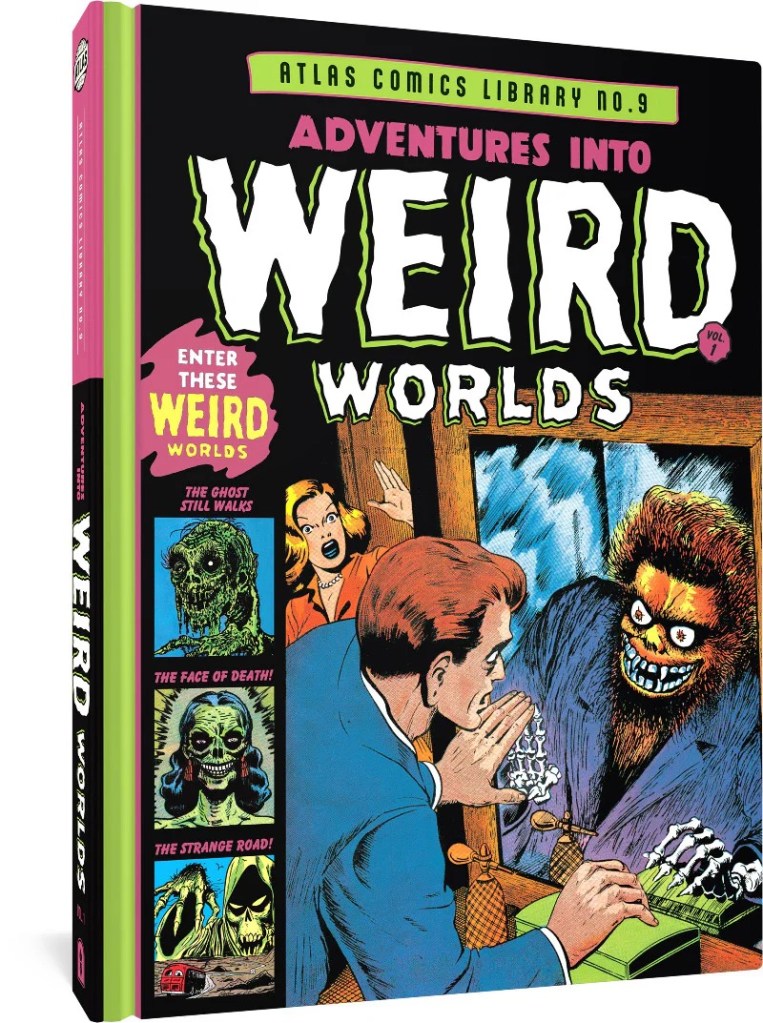

I am sure that many pre-code lovers regard this stuff as satisfying comfort food of a kind, which is fine. It’s just that I am not among them. After going through most of this series, it is clear to me that Atlas did not bring out the best even in some very talented people. The flat and unsurprising stories here rarely set up the artists to deliver the kind of inspired excess of solid campiness. Like most pre-code comics, this was hack work designed to exploit a flooded market. And so, the joys in a volume like this come both at a higher level, when otherwise mediocre stories effectively tap into the cultural zeitgeist, or in flashes of aesthetic inspiration.
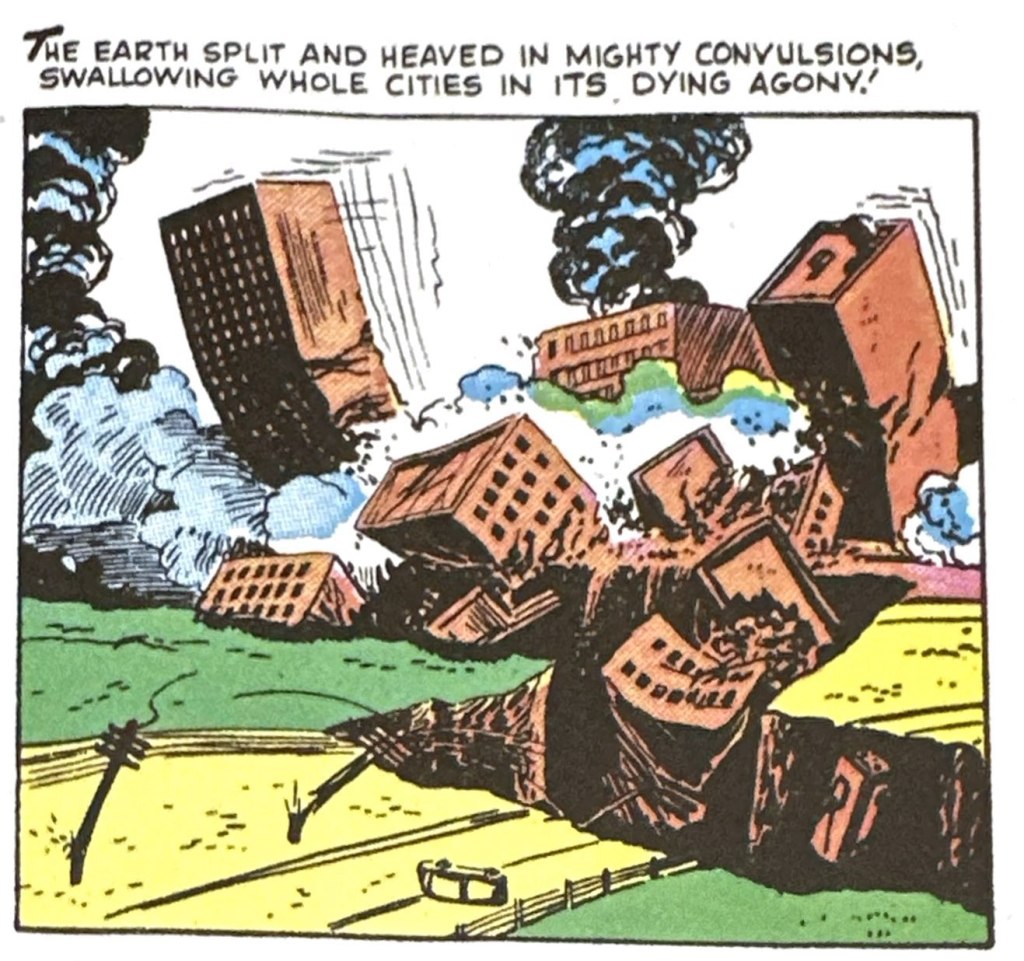
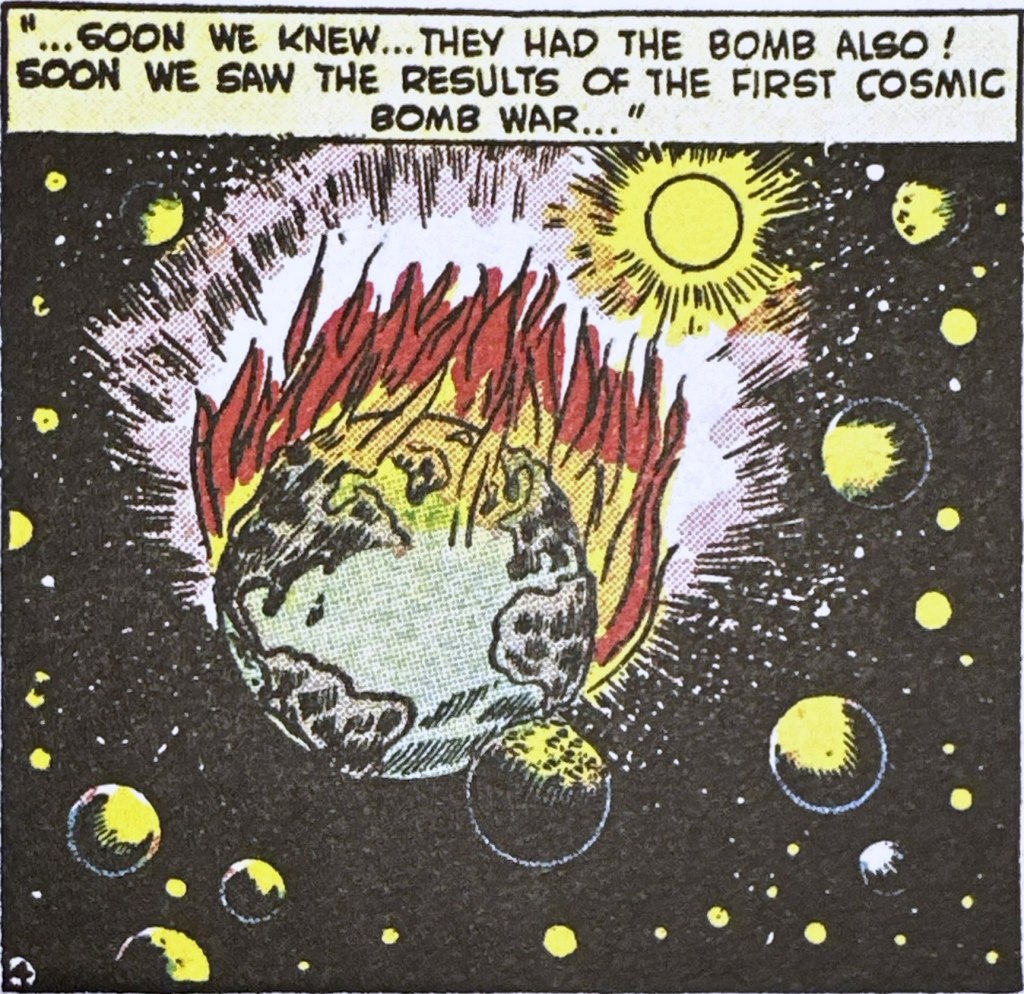
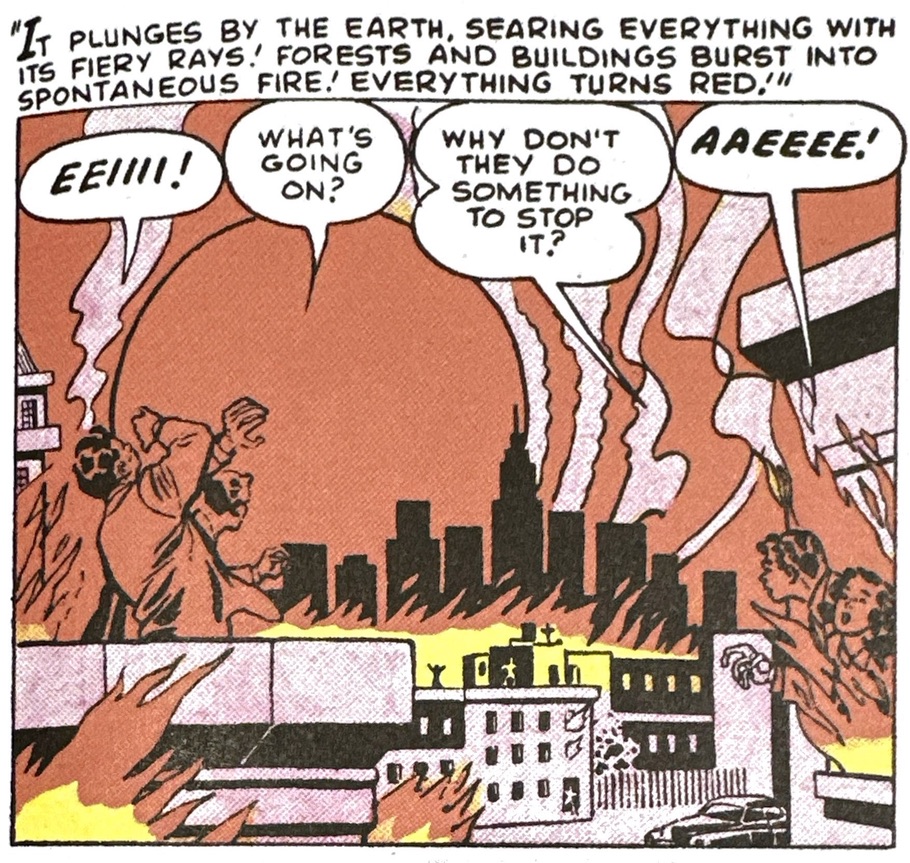
For instance, the early issues of Weird Worlds are awash in Cold War and nuclear anxiety. Apocalypse is a persistent threat in these stories, and you can cherry pick from them a catalog of panels depicting the American nightmare of Atomic destruction. The stories are hackneyed but the fears on which they draw are genuine. City skylines crumble, burn, even drown under tidal waves. Visions of mass death are effective because they come from broadly shared and real terrors of the day. In otherwise workmanlike six-pagers, these panels seem to have engaged the artists’ attention and stand out.


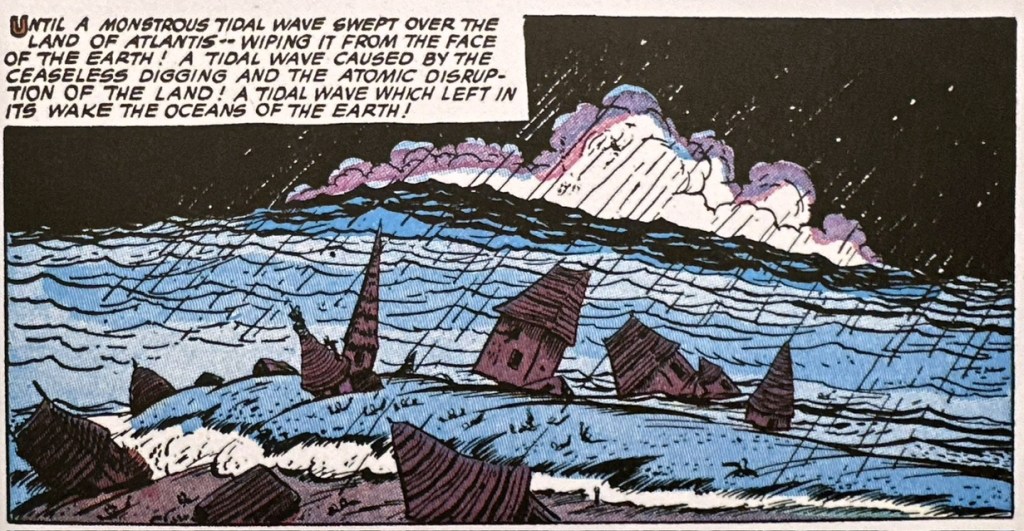
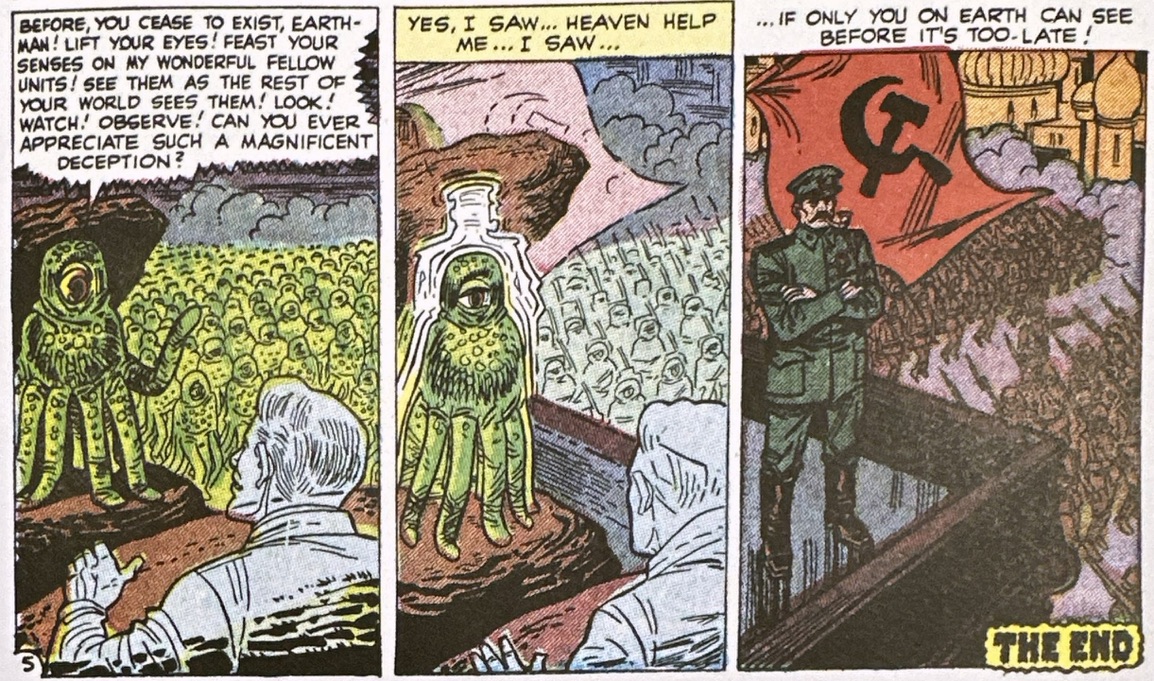
McCarthy-era fears around the enemy within get projected into a number of stories about beasts who come from beyond or below to live secretly among us. In one bonkers tale, the aliens finally reveal themselves to be the force behind Stalin and the march of Soviet Communism. Yikes. Paint our little green men Marxist red!
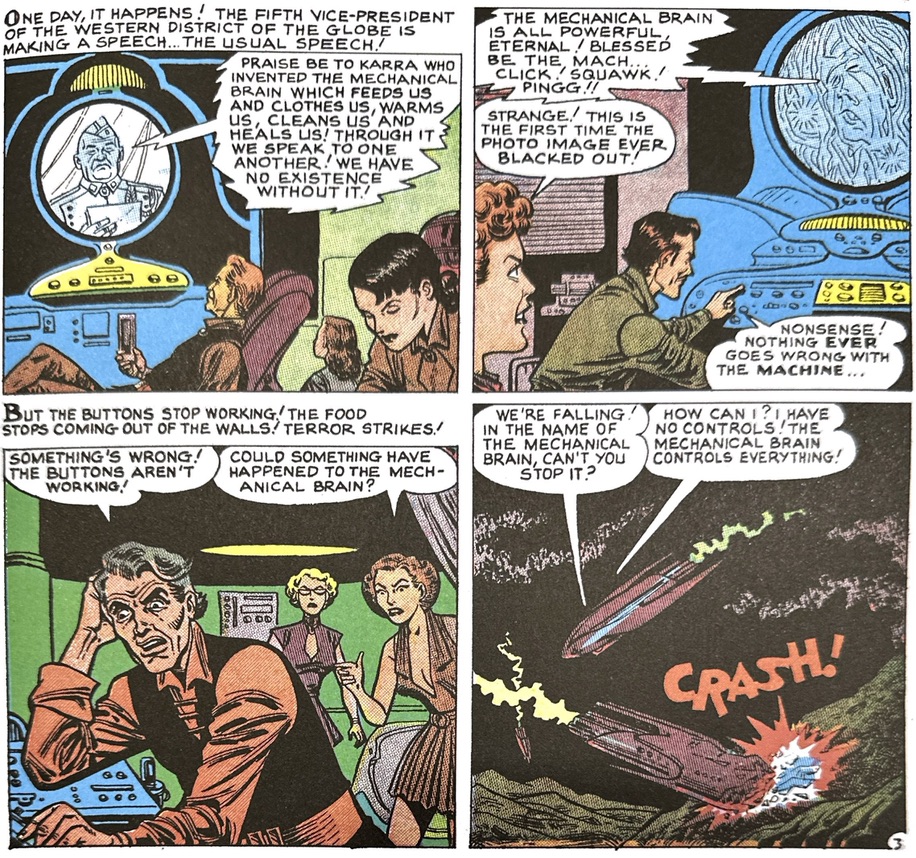
Post-Holocaust ambivalence about the excesses of science also creep into several tales. One eerily prescient story anticipates out current AI anxiety by imagining a future run by a single big brain that gets buggy.
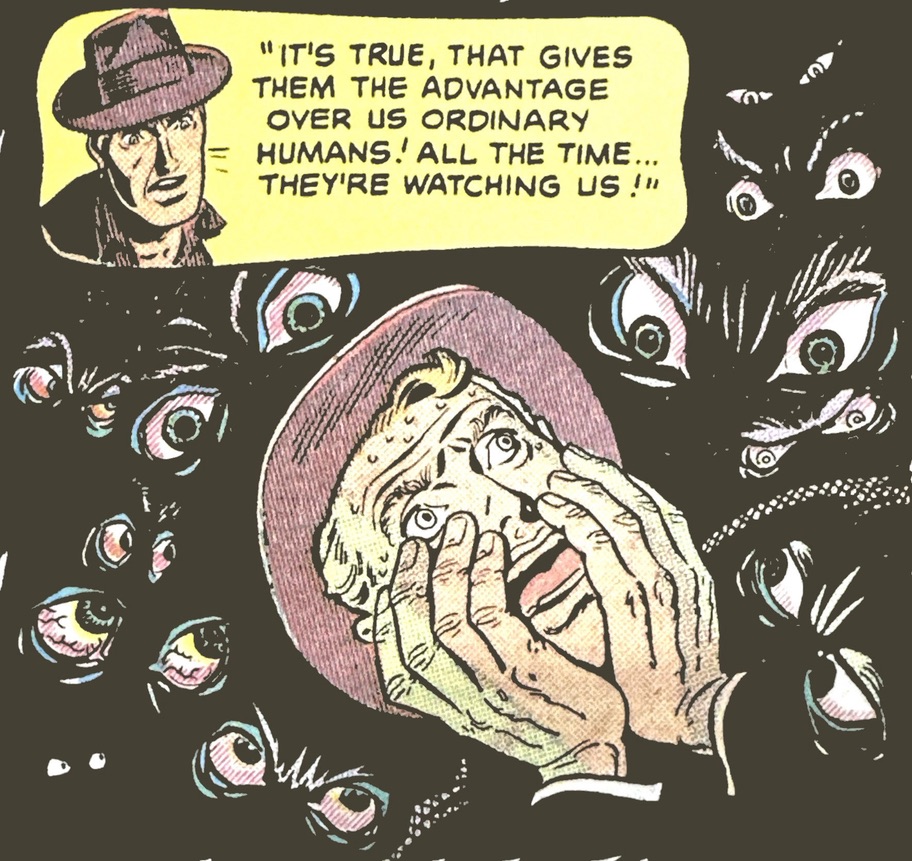
An interesting subtext to reading most pre-code comics is how they demonstrate the principle that talent will out, even in comics mills that put quantity above quality. A number of stories pop when good artists in bad stories cant help but do something interesting. In “Eyes” (#2), Werner Roth effectively uses film noir compositions and shadowing to mimic Johnny Craig’s style of psychological mania. In “The Ghost Still Walks” (#6), Joe Sinnott deploys varied panel dimensions and progressions to create real tension towards a cheap twist ending. “My Brother…the Ghoul” (#6) is an unlikely mistaken identity tale made interesting by George Roussos’s artful compositions and thick, inky outlines that render the muddiness of grave-robbing.
As Weird Worlds moved into body horror, vampires and werewolves after several issues we get a few interesting storylines. EC veteran Carl Wessler brought some of that publisher’s spirit into two scripts in issue #8 that explored psychological depths, jealousy and greed convincingly. An uncredited story with good Maneely art, “The Bad Boy” (#7) has a genuinely chilling twist. Among the best marriages of story and art comes in Carmine Infantino’s pencils for “Locked Up” (#9). From a monster splash depicting an exceptionally devilish devil to the tight panel progressions, action poses, and sophisticated compositions, this one anticipates the polish and dynamism Infantino brought to the 60s horror revival.
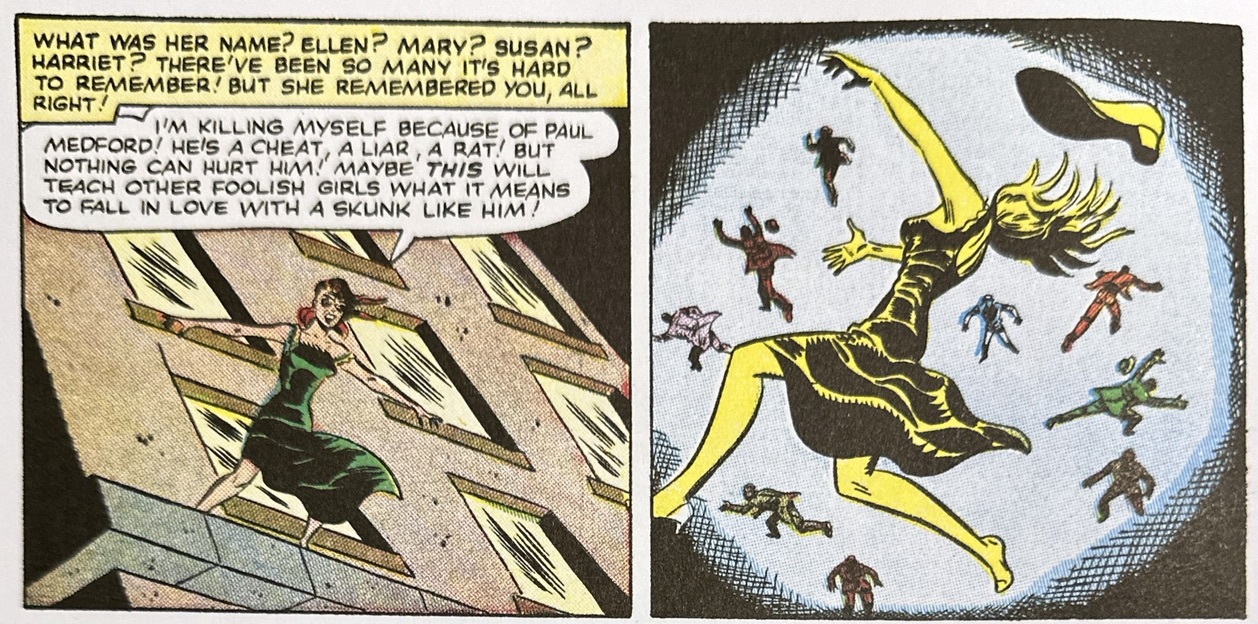
But even when the plots and characterization founder (more often than not), these kinds of comics can render individual panels that have special power apart from risible stories. In Hy Rosen’s rendering of “Sticks and Stones” (#8) his figure drawing is stilted at best throughout. But when a heartbroken woman throws herself from a building the wrenching, meaningful panel of her body hurtling into a crowd of fleeing men underscores the roots of her misery.
This first of several volumes reprinting the Weird Worlds run ends on a strong note. Written and drawn by Bill Everett, Vassallo dubs “The Pit of Horror” the “masterpiece” of the first ten issues. It is the most fun twist, as an efficiency expert comes to Hell to turn Satan’s lax imps into cogs of productivity. It is a good illustration of Everett’s strengths as a writer and unevenness as an artist. The imps are wonderfully plump and cartoonish, while the Devil himself is uninspired.
Which brings us to the dedicated, oversized Creator Collection highlighting Everett’s Atlas work. It includes about 38 Atlas stories spanning 1949 to 1955 as well as a gallery of his covers presented in full page format. We are seeing Everett working mainly in the horror/weird genres. Like all of these reprints, the restoration style is less about recreating that old yellowed comic bok feel than making the linework sharp and colors pop.
Vassallo says that at its peak in 1950, Timely/Atlas had more comic book titles on the racks than any other publisher. Well, it shows. Most of the uninspired writing is unattributed, and some of the later issues put the blame on Stan Lee. Generally, they are hacked and predictable genre standards. And Everett is up to their low bar. I confess that Bill Everett always underwhelmed me as a Golden Age comic artist with greater intentions than talent. His faces and figures often look wooden, misshapen, generally unengaging. Often unwittingly, his off-kilter faces mimic that creepy melted look Graham Ingels mastered at EC.
In my opinion, Everett works best at the extremes of cartooning and caricature rather than realism. His gooey monsters, decomposing and comically terrorized faces, his maniacally evil sneers and poignant close-ups are his strengths. In “Blackout at Midnight” he tells a maniac’s tale from a first-person POV with solid panel progression. The short item “Horror at Midnight” is another fine exercise in extremes – tight panel close-ups on cartoony faces. He seemed to enjoy drawing rotted gore in detail, even if it rarely horrifies.
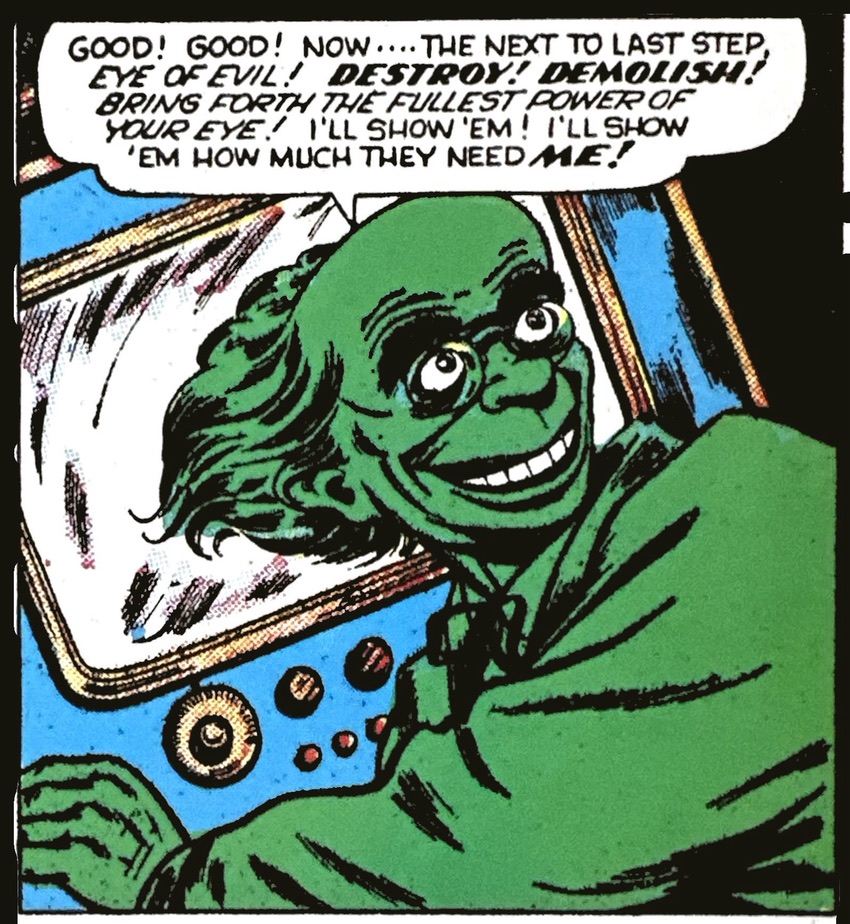
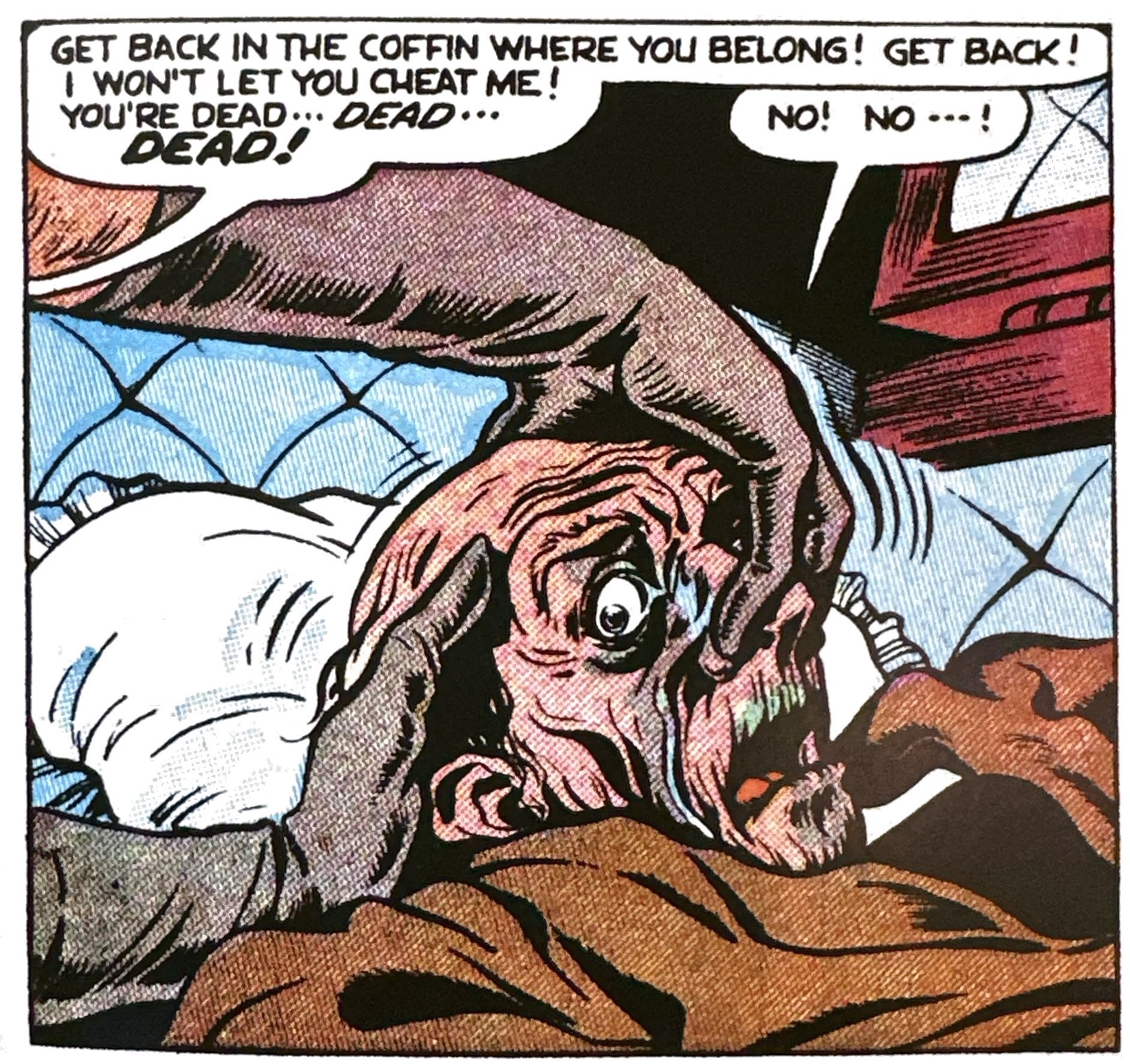
But one of the objects of these creator-focused volumes is to see an artist’s growth. By around 1952 we find Everett hitting a more confident stride. He seems to recognize that his strength lies in excess. Extreme angles, tighter close-ups, more cartoony faces help make his work more consistently good, if not great. “The Graymoor Ghost” (1953) stands out as one of the visually and narratively tighter pieces. A swindling antiques dealers gets his just desserts from in a beautifully-rendered castles and from richly imagined white swathes of ghosts. And like many comic artists of the day, he discovered the power of the middle tier of panels as a place to create a quick progression of quick, horrific action.


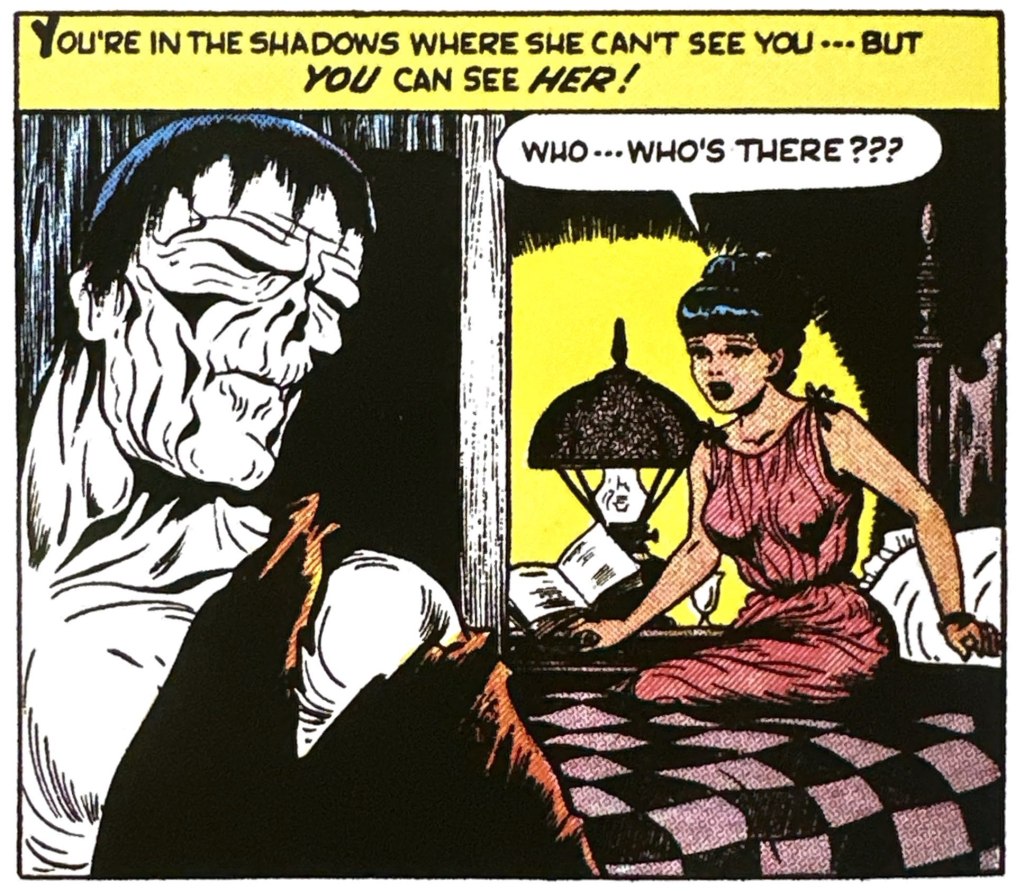
I am sure that many pre-code fans actually like the rough edges of these comics, their crude storytelling and rushed artwork. And, as I said, finding splashes of inspiration and talent within the limitations of hackwork carries its own special delights. Personally, however, I always found stylists like Lee Elias, Bob Powell and Rudy Palais more engaging draughtsman than Everett. They succeeded in elevating mediocre stories with believable figure work and engaging facial expressions, even splashes of ironic campiness, that Everett didn’t approach. Collectors will want all of these Atlas volumes, of course, and who am I to dull anyone’s guilty pleasure from this pre-code comfort food? For my money, however, The Joe Maneely and Al Williamson collections showed more interesting talents evolving into signature styles. And among the series reprints, “Shiver As You Read!” (Vol. 6) was more consistently creative.
Discover more from Panels & Prose
Subscribe to get the latest posts sent to your email.
 Panels & Prose