
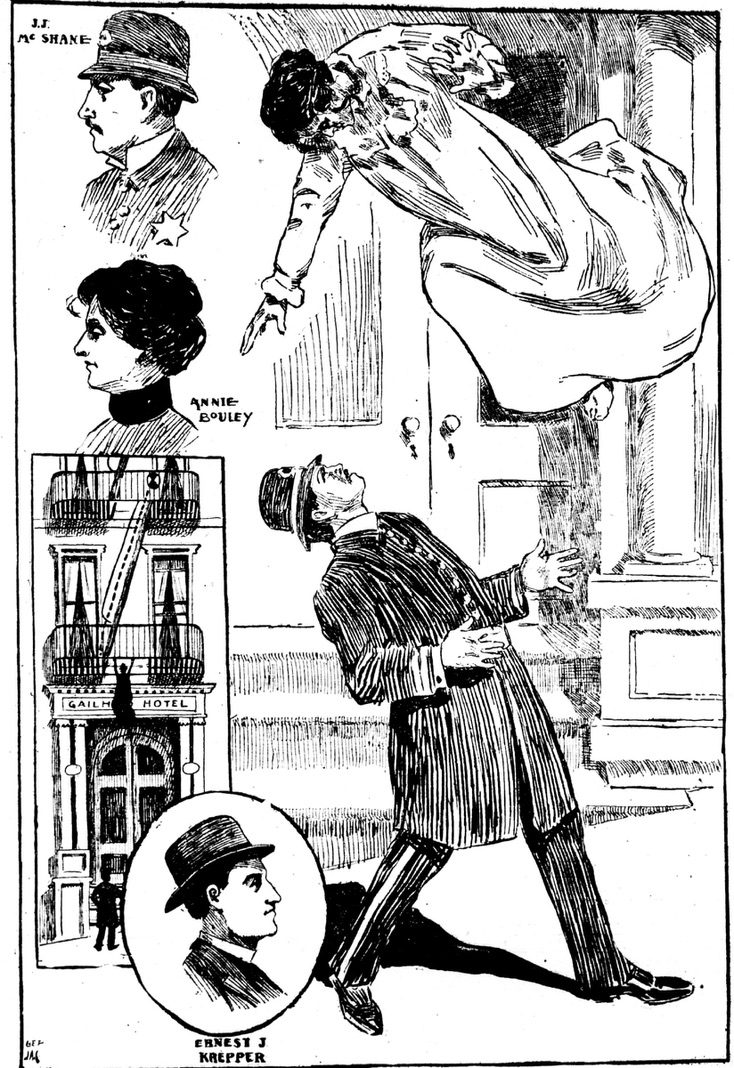
In the first decade of newspaper comics, the line between familiar illustrated journalism and the emerging styles of cartooning sometimes blurred. My favorite example of those two worlds commingling is this news drawing from The San Francisco Call (Jan. 30, 1901), “Demented Woman Drops Thirty Feet From Hotel Fire Escape and Lands on Policeman’s Head.”
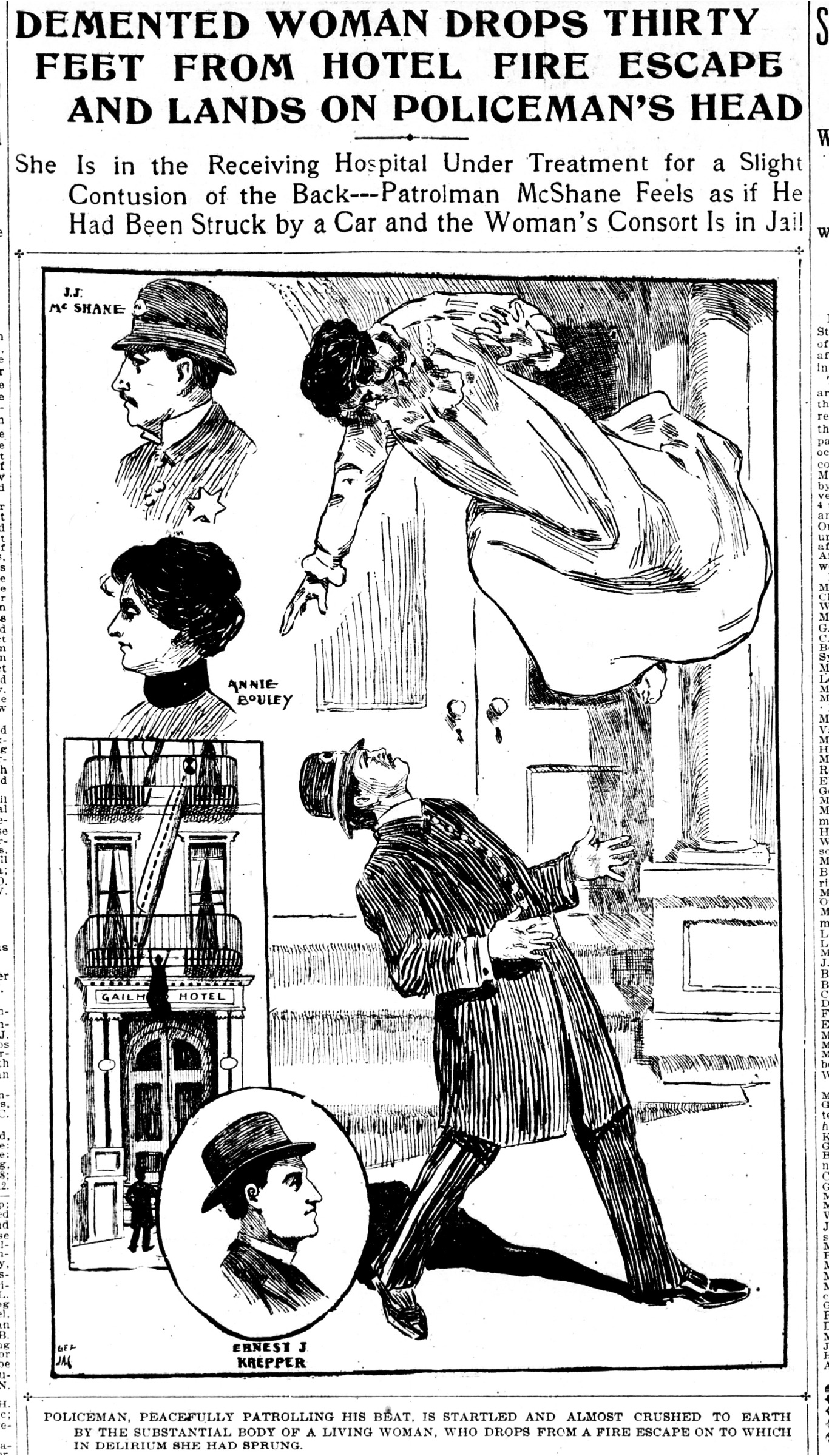
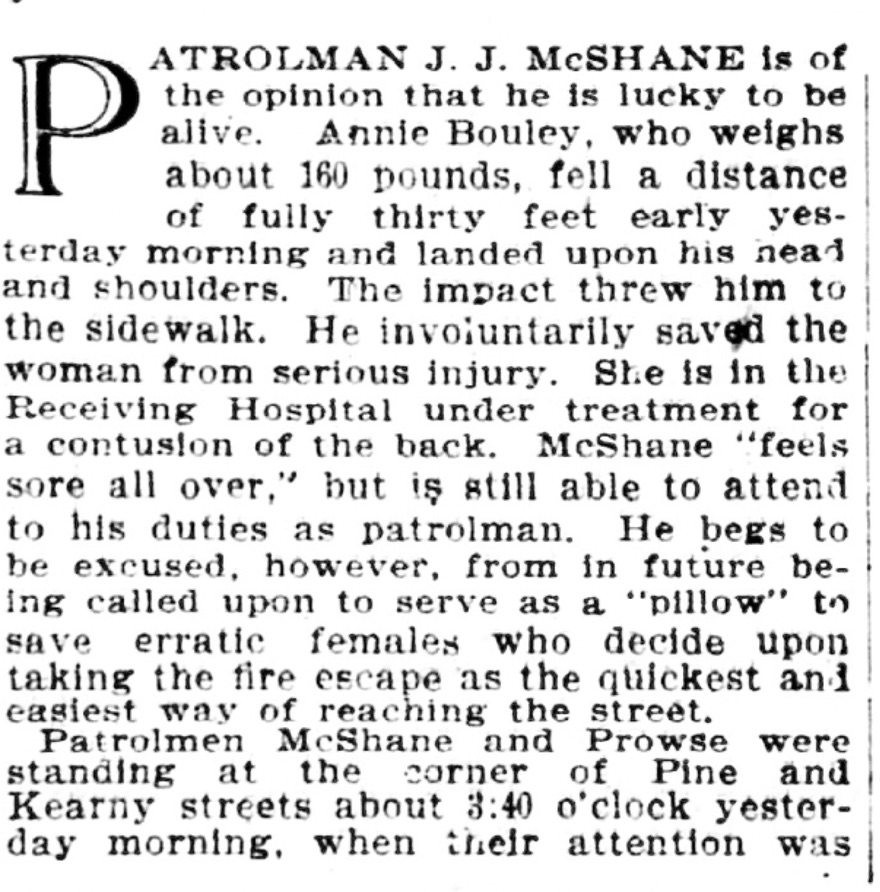
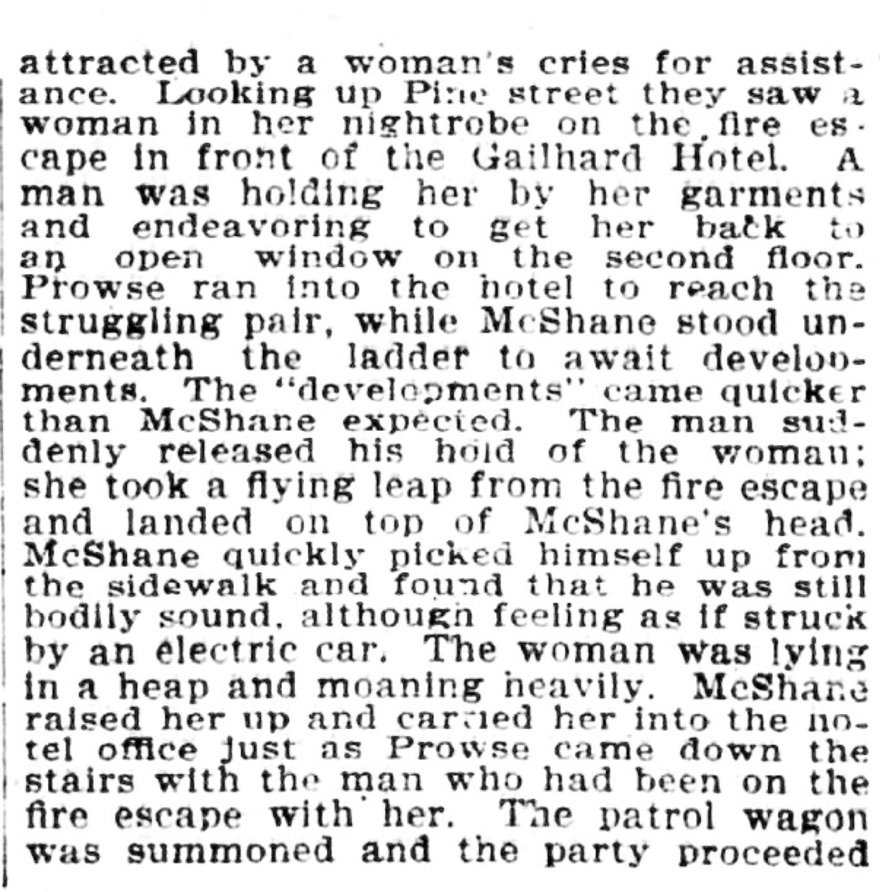
Illustrating a semi-serious news story, it captures the moment a crazed, dangling woman falls from a hotel fire escape onto a patrolling street cop trying to rescue her. The backstory itself is a bit madcap, and the staff seem to be having some fun in their straight reporting. As does the unnamed artist. With its elements of anarchic action and slapstick comedy, this news drawing feels like a missing link between cartooning and illustrated reporting. The artist includes all of the typical elements of visual reportage – pop-out portraits of the principals and a diagram of the scene to situate the viewer – all done in the rushed realist style of news drawing. But at the center of it is this comic surprise. It is hard to believe that the news artists weren’t channeling here some of the tropes of early newspaper comics.

The San Francisco Call would not add a Sunday comics supplement until 1904, but well before that we can see how the different genres of illustrated reporting, political editorial and comic strip art often crossed over. At the Call in particular, editors deployed cartoon comedy arts even more explicitly on light-hearted stories. Shortly after this Jan. 30 image, on Feb. 1, a slapstick cartoon is used to illustrate a real news story about a massive police brigade responding en masse to frantic call about a daylight robbery. A mob of cops rush to the sce3ne only to find that the APB was called on account of a pilfer set of false teeth.
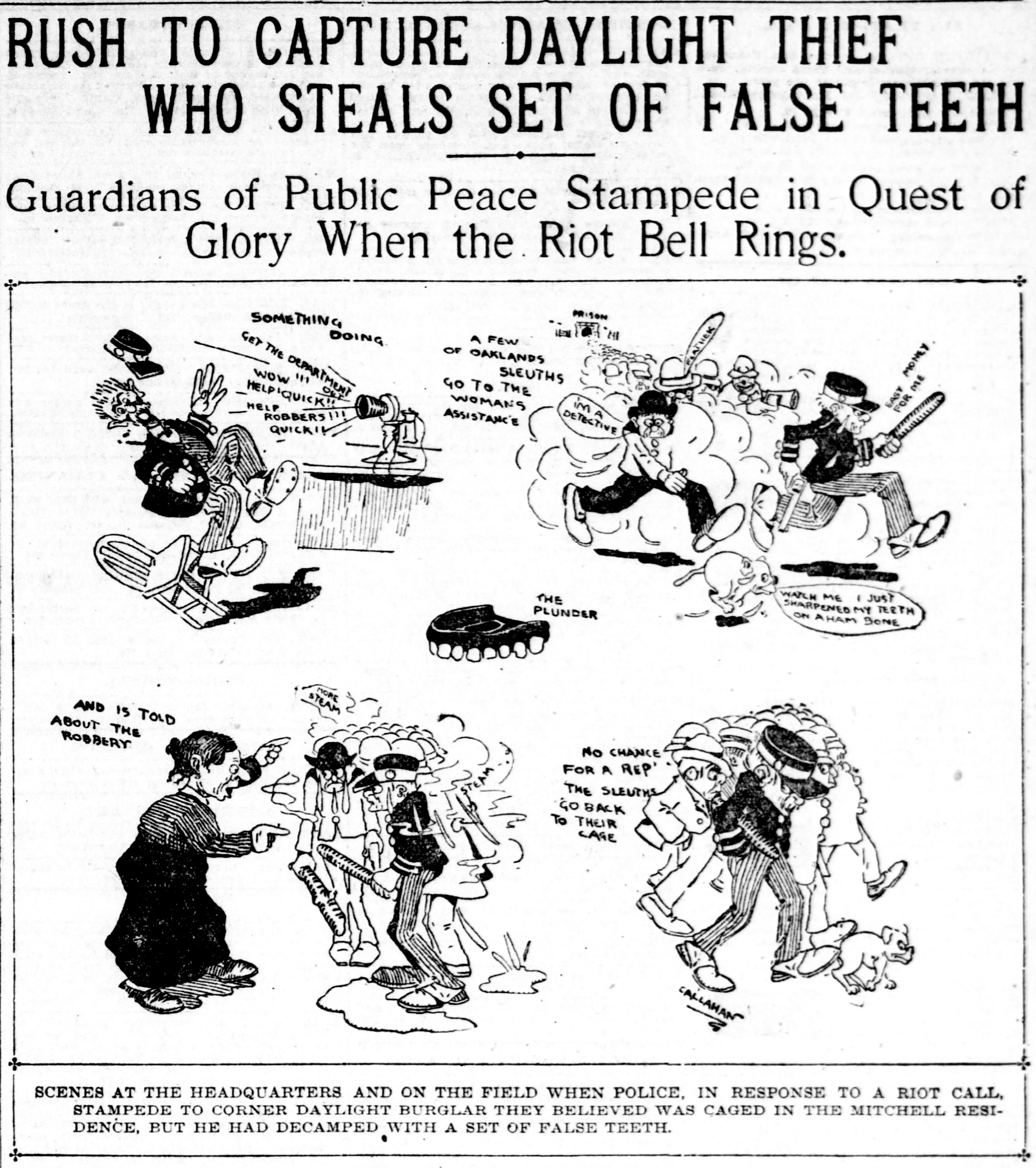
These images highlight how the evolving comic strip medium grew within a context of other visual genres. Comics historians often mention in passing that many of the first generation of newspaper cartoonists started in the bullpen of news illustrators, but few drill into this legacy for insights about how the comics developed along a related path. Eddie Campbell’s great book The Goat-Getters probably came closest by studying how West coast artists like Jimmy Swinnerton, Rube Goldberg, Tad Dorgan and George Herriman developed their comic art styles after extensive experience as sports cartoonists and illustrators. Some of the visual tropes of cartoon action germinated on these sports pages. As early as 1972, noted art historian and critic Albert Boimes argued in Art Journal that from the mid-1800s to the 1920s, the crossover of illustrated journalism, comics and even fine art can be seen from Winslow Homer in the mid 1800s to Thomas Hart Benton between the World Wars. “Comic strips are in fact the final manifestation of old-fashioned illustrated journalism, and their origin is thus related less to technological advances than is generally claimed,” Boimes says. “The relationship of graphic journalism to both the development of the comic strip and the Ash Can School is essentially based on their abiding concerns with the actual quality of American life.” Illustrated news refocused art away from the grand, the picturesque, the famous and onto the widely shared reality of immediate, everyday life. Arguably, the comics page extended that sensibility with a visual style that was a bit more abstracted but still representational of a flow of life. I tried to explore some of these ideas myself by connecting cartooning with an enduring realist strain of “American Scene” painting.
A proper history of the comic strip needs to consider the visual context in which the artists themselves carved a new genre of drawing. At the same time, historians need to consider how the readers experienced these comics in a newspaper that now boasted many kinds of imagery. The most rigorous historian of newspaper illustration, Joshua Brown, suggests this kind of interaction and reaction among the visual arts in this period in his 2002 study Beyond the Lines. He contends that the rise of photographic reporting in the late 19th Century forced news illustration to dampen its tendency to exaggerate and stereotype racial and ethnic features. In fact, this more realistic aesthetic in news drawing may well have encouraged cartooning to adopt ever more eccentric ethnic typecasting.
By the turn of the 20th Century, many newspapers included a range of visual representation: half-toned photographs, news illustrations, editorial caricature, and advertising. I tried to explore this graphic cacophony in detail in the evolution of Swinnerton’s Little Bears at The San Francisco Examiner in the 1890s. It strikes me that these visual styles must have been sorting themselves, reacting to each other to assign different kinds of drawing to these visual genres. The emerging cartoon conventions – those big feet, exaggerated heads, symbols for motion and emotion, were distinct from the styles used elsewhere in the paper. The comic strip was building visual styles and social perspectives with roots in previous forms but blossomed into new and distinct ways of visualizing American life.
Discover more from Panels & Prose
Subscribe to get the latest posts sent to your email.

