

About 10,000 different comic strip series emerged in American newspapers during the medium’s first 75 years, Jerry Robinson estimated in his 1974 history. I guess it all depends on what you count. Holtz’s magisterial 2012 “Encyclopedia” included just over 7,000 entries covering more than a century of strips. Whatever math you use, however, it is clear that a signature feature of the comics medium has been the sheer volume of creative variety. In fact, I would argue that among the competing commercialized mass media of the last century, the comic strip enjoyed a unique range of idiosyncratic, highly personal artistic visions.
This is something I suspect our comic strip histories miss. We critics and historians tend to categorize pop culture into genres and create canons of great works. Over the last few decades niche publishers like Kitchen Sink, Fantagraphics, IDW/LOAC, Hermes, etc. served that canon with extensive, expensive reprints of strips with enough enduring fans to make their projects barely profitable. Some deified work like Thimble Theatre, Terry and the Pirates and Krazy Kat have been reprinted multiple times. Meanwhile, the 99 out of of 100 comics launches that didn’t endure among historians, remain uncovered, even if they did engage audiences at the time.
The newer economics and production techniques of Print-on-Demand (POD) have changed the game. Like an underwater volcano this is surfacing deep sea life, the POD platforms, most notably Lulu, help publishers revive many obscure, short-lived or forgotten work. And in a number of cases, these platforms are allowing some established, older publishers to continue or reissue series that once were unsustainable. And so, we seem to be in a golden age of reprinting comic strip outliers.
New and old publishers like Classic Comics Press, Comic Strip Appreciation Group, About Comics, Gwandanaland, and Comic Book Restore have released a torrent of titles, particularly on Lulu. The best I can do here is grab wildly in this gusher and offer some quick takes on the resurfaced bits that caught my attention.
Recovering the Great Illustrators

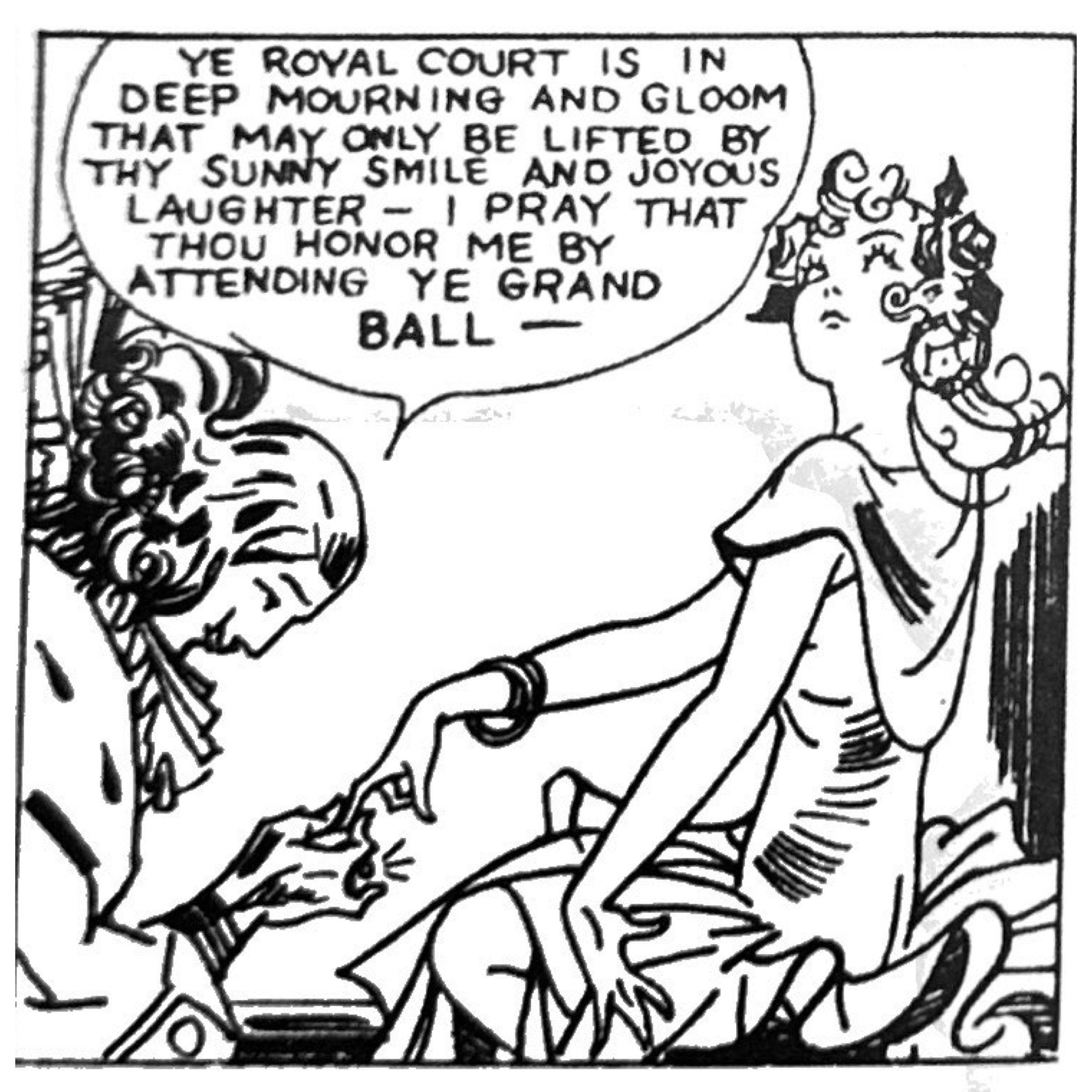
Cuddles by Charles H. Forbell, published by Nat Gertler’s About Comics, is among the most interesting finds, even though it only ran from March 1929 to Jan. 1930. As Nat makes clear in the subtitle of this reprint, the premise was as simple as “An American Flapper in King Arthur’s Court.” After a car accident, the young, stylish, wise-cracking Cuddles wakes up in the days of yore. The storylines and minor adventures are peripheral. The strip is really about linguistic jousting between faux-Middle English and 20s slang floating above highly engaging design. Aficionados may remember Forbush’s name, as he created the outstanding Naughty Pete Sunday strips for The New York Herald during a five month run in 1913. Peter Maresca highlighted these wildly innovative pages, which changed style, format, even typeface from week to week. In Cuddles, he sticks to one thin-line, detailed, Deco style, but that same superior design intelligence is evident here. Forbush dresses and poses the langorous Cuddles in so many attractive ways it is a treat just to view the panel progressions and leave behind the often ponderous banter. The linework and spotting are exquisite. Every panel resembles a full page magazine ad. It’s a pity that Forbush’s lettering feels messy on the same page. Our only wish is that the format were larger. Some of Forbush’s fine line designs actually get a little muddled and confounding at this volume’s 11×8.5-inch scale, with three strips per page. Still, at $25 at Lulu it is a steal.


Diehard fans of 1950s melodrama strips almost certainly have some if not all of the 15 volume On Stage reprint that Classic Comics Press published over a decade ago. But nabbing the full 1957 to 1979 run proved difficult and pricey over time. The good news is that Leonard Starr’s tour de force soap opera of backstage backstabbing and emotive, photorealistic close-ups is back. The sorta-bad news is that CCP’s Charles Pelto has made them better. Which means that those of us who invested in the first version are going to have a hard and costly decision to make about updating their collection. The new Lulu versions are larger hardcovers that, best of all, now have the Sundays in color. And let me tell you, these color pages will tempt you. Starr was legendary for his precise line and glamorous figures, of course. Personally, I always loved the way he heightened the melodrama with foreground and background character compositions. The sheer campiness of this strip and its outsized emotions made it so compelling. But the addition of color brings out Starr’s muted side. He uses a wide palette of subtle shades, which gives On Stage an adult, sophisticated tonal contrast from cartoony comics.


Long overdue for resurfacing is Raeburn Van Buren’s beautiful rendering of Al Capp’s Abbie an’Slats. This tale of the street-wise city kid Slats transplanted to the small town of spinster relative Abbie was deservedly beloved by millions. It was high-spirited dramedy. Van Buren brought a remarkable level of detail to the daily panels. Al Capp’s leggy ladies of Dogpatch were objects of lust. Van Buren’s women made you fall in love. But in mixing teen comedy, slapstick with high adventure and romance, Capp was blending genres in the late 30s and early 40s that foreshadowed 1950s comics.
Charles Pelto at CCP has also leveraged the Lulu platform to flesh out his library of other great illustrators working in the comic vein. The full run of Jose Luis Salinas’s Cisco Kid is complete and available on Lulu. We now have more volumes of Frank Godwin’s 1950s Rusty Riley series as well as his pioneering Connie. The volume of Sunday Connies is on its way, and what I have seen in advance is drop dead gorgeous.
Goofy Gals and Error-Prone Knights
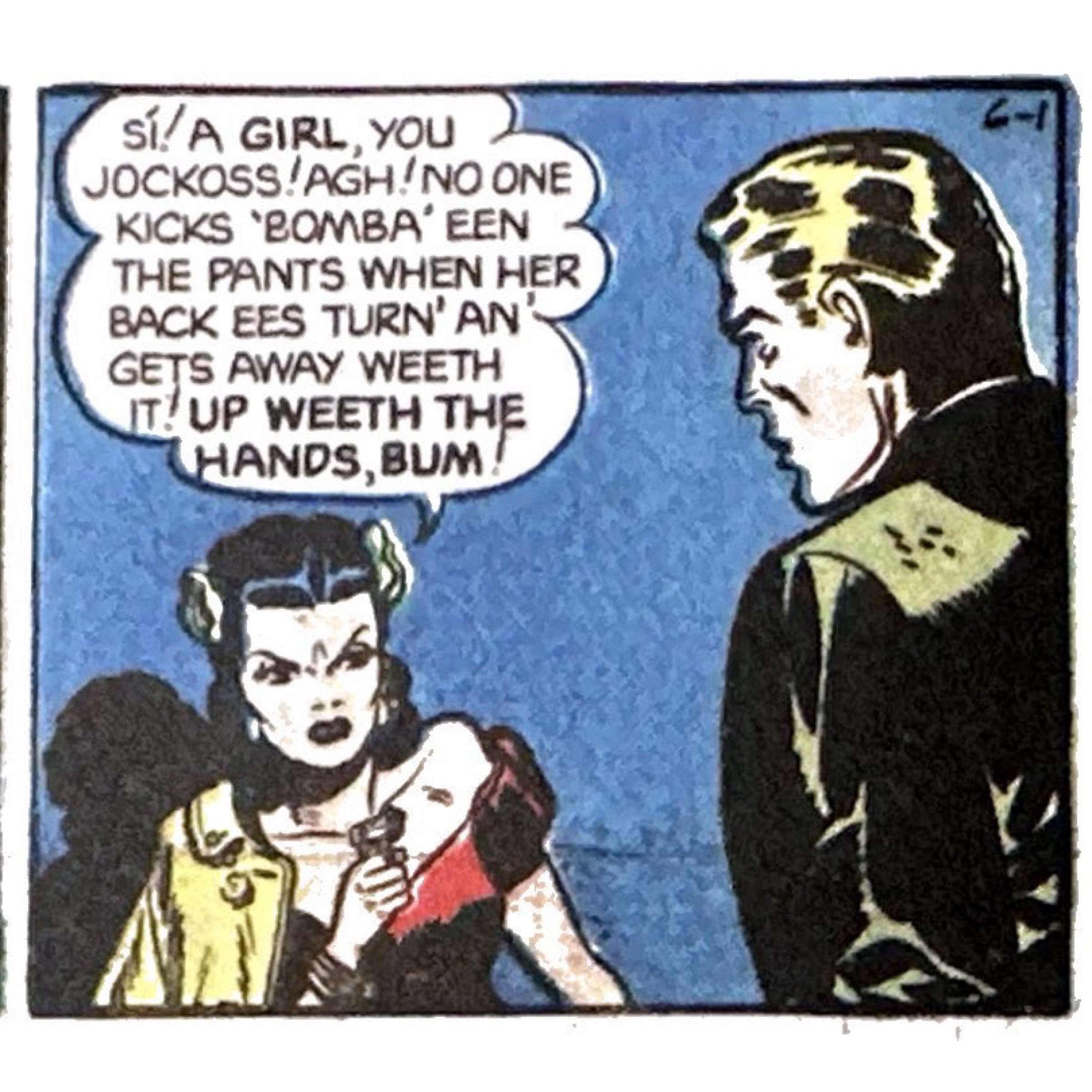
We have already mentioned in these pages Jerry Albert and Bob Oksner’s hard-boiled noir heroine Cairo Jones. She is for me a standout among the many comic strip obscurities our friend Stefan Wood has been resurfacing at his Comic Strip Appreciation Group imprint via Lulu. I can’t begin to cover the 50+ books Stefan has issued thus far, but he is doing God’s work by calling attention to many lost gems. Among them… .

Reprinting Ella Cinders by Bill Counselman and Charles Plumb fills a gaping hole in comics history. Full disclosure: I campaigned for years for this project and provided intros to a couple of these volumes. I have already written extensively about this modern recasting of the Cinderella tale. The first years of dailies are especially rich in social satire. But I was pleasantly surprised by the visual punch of the Sundays, which are forthcoming from CSAG. Stefan found the best sources for B&W versions that really bring out how Charles Plumb excelled on this larger canvas.

An even prettier but short-lived girl strip of the Depression was Julian Ollendorff’s Gloria (1930-31). Ollendorff tried to employ his experience teaching fashion art into the style and substance of this story about a small town girl who comes to New York to pursue a career in the fashion industry. While fashion itself always played some role in the appeal of the medium from its beginnings (see my dive into the Fluffy Ruffle phenom of 1907), that industry had never been a setting for comics. Ollendorff brought his domain expertise to bear here, especially in depicting the snark and competitiveness of the the dressing room battlefield. But the stories often feel like excuses for moving Gloria through a range of alluring postures and wrapping her in some insanely intricate frocks. Ollendorf was adept at fine line Deco styling, but he also lavishes some of his designs with incredible detail. Perhaps it is not surprising that a fashion illustrator would be notably weaker on faces and expression. But from the neck down, the dapper men and women of Gloria are lovely to look at.

Oakey Doaks: I confess that as zany as this strip can be, R.B. Fuller’s anachronistic knight’s tale never grabbed me. But Stefan at CSAG is a fan and has kept up reprinting the run. He assured me that the mid-40s represented the strip at artistic and provocative peak. And I have to say that things get hornier in this volume: mermaids, a comely sorceress, cross-dressing heroes infiltrating an Amazon village, and more. I am intrigued and it looks like this is a good volume to pick up even if the rest of the series didn’t grab you.


The truly curious Adventures of Patsy (1935) starts as a wildly imagined dreamscape in which the tyke Patsy pops into a zany cartoon land of giants, a silhouetted King Silhouette, and a masked superhero, the Phantom Magician. But the strip suddenly veers out of fantasy-land into a Depression-era tale with Orphan Annie vibes and Sickles/Caniff art style. Patsy becomes a savvier and a bit older figure, The Phantom Magician becomes her “Uncle Phil,” and they navigate intrigue, stardom, rising and falling fortunes in a hard-boiled way. Creator Mel Graff’s art moves fluidly from cartoony fantasy into a more gritty urban realism, with some smart use of shadows and tough guy faces, sharp banter and weird plot twists. It is an intriguing amalgam of several other strip styles.
Boys and Their Toys
Popular adventure formulas most often fetishize narrow fantasies of masculinity, usually involving some recipe of action, physical violence, sexuality, etc. But other heroic fables idealize different traditional male traits: expertise, technical mastery, competence. These are the adventures that immerse us in the details of a given profession or passion, most notably in aviation comics (“Tailspin Tommy”, “Smilin’ Jack” et. al.). But a number of the CSAG reprints demonstrate how some forgotten strips combined obscure details about discrete professions with high adventure. Railroad Red (1941), by David Marshall and Beaumont Fairbank lasted less than a year in only a few papers, but this tale of a railroad detective was promising. After all, train technology was the 19th Century’s high-tech, drenched in romance and national ambition. Some of that fascination with the engineering of railroads and the operations of the system come through in a strip that also tries to plumb the natural intrigue of a railroad yard.
Frank Borth brought to his sea adventure Ken Stuart (1947) his own experience as a boat pilot for hire. That strip was a lot like Tailspin Tommy and Skyroads, strips with wooden human characters but lively, accurate depictions of the machinery. Borth includes details about the hand-to-mouth existence of charter boat owners and tries to exploit the intrigue of the sea. Similarly, George Shadd’s brief experience with deep sea diving and salvage sparked his idea for the short-lived Marlin Keel in1953.

Perhaps the best and longest-lived of the boatman adventures was Keats Petree’s 1953-56 Nick Haliday. Nick is a fishing boat captain that has the look and feel of a Frazetta hero. Petree brought comic book experience to the strip, with a lot of clever angles and relentless action. His attempts to master the photo-realism of the period were uneven to my eye. But he was very good at capturing the peak moment of tension or emotion in a single panel. The big CSAG hardcover renders the full run of the strip and serves well all of Petree’s detailed linework.
The Return of the High Fliers
While all of these attempts to romanticize niche professions are interesting cul-de-sacs of comic strip history, the enduring techno-romance always circled around aviation. Tailspin Tommy by Glen Chafin and Hal Forest was the pioneer starting in the late 1920s. I have already written about how those early strips effectively capture the boyish wonder around flight. CSAG has reprinted the first four years of dailies and a larger B&W version of the Sundays. While Forrest was not an engaging artist overall, in the Sunday strips he does some enormous, detailed panoramas of exotic settings. His most famous, involving a lost Mayan civilization show him stretching his imaginative range.
Russell Keaton had honed his pencil on Skyroads and Buck Rogers before launching Flyin’ Jenny in 1939, but he also secured a pilot’s license. And he brought to Jenny some genuine airfield culture as well as a talent for good girl art lacking in most other airborne strips. CSAG both dailies and Sundays in two volumes covering 1939-42 so far. Keaton had a good fine line style as well as visual drama chops.

If not in story, certainly in art, Scorchy Smith became a milestone in comic strip history as the place Noel Sickles pioneered an action style that influenced generations of illustrators. When Sickles retreated from comics in the mid 1930s, several artists took the stick over the years, including a pre-Johnny Hazard Frank Robbins. The Sickles legend loomed so large for so long, it cast a shadow on the subsequent iterations of Scorchy…until now. Robbins’ wartime stories were especially notable for his mastery of setting and action. CSAG has multiple volumes coursing across dailies and some Sundays into the mid 40s. While Robbins’ artful and darker-hued coloring of the Sundays do not translate effectively in the oversized volume of 1941-47 Sundays, you can see clearly how he is developing the action-driven storytelling that made Johnny Hazard stand out.

The most interesting obscure aviator to resurface among recent reprints, however, is Ray Bailey’s Bruce Gentry (1945-51). While the premise is rote (another WWII flyboy finds intrigue and leggy ladies as a commercial/mercenary pilot) Bailey had stellar artistic pedigree: Fleischer animation studio and especially as Milton Caniff’s assistant on Terry and the Pirates. And Gentry sure does look like a fair Caniff knock-off. His framing and timing are there, as are the square jawed hero and sly femmes. The CSAG reprint includes color Sundays, which is where you see the influence of Caniff’s color sense and panel progressions, strong sense of depth and multi-plane action. He adopts his mentor’s gift for cartoony comic relief characters and subtle facial expressions, sentimental interludes, and those poignant, wordless final panels. While the strip was short-lived, Bruce Gentry definitely has a following, judging from the positive response to this book among the Facebook classic comics tribe. I have to admit, I can see why the strip only lasted six years. It feels like dialed down Caniff, as if the assistant learned all of the right moves but didn’t have the raw artistic chops to approach the master or veer off to his own style. Bailey’s action, figure modeling and scripting just feels stiff to me.
Reprinting the Reprints

Several older publishers are now offering their books through Lulu. Comic Book Restore likes to refresh old reprints of famous cartooning. Their version of F.B. Opper’s Our Antediluvian Ancestors resurrects a 1903 book compilation of the original Flintstones idea. Hand-chiseling the daily newspaper, rock-wheeled baby strollers, men co-existing with dinosaurs, anachronisms galore – they are all here. CSR also reprints some of the old Cupples and Leon Mutt & Jeff books as well as the woefully overlooked comic gem by Fontaine Fox, Toonerville Folks.

CSR has also restored two very important but otherwise lost contributions to graphic narrative. The great magazine illustrator James Montgomery Flagg’s 1906 series “Why They Married” is a send up of romance and manners. But it shows a visual wit and cartoony take on illustration style that we don’t associate with the artist made famous by his wartime “I Want You!” Uncle Sam poster and countless 20s magazine covers. Similarly, the reissue of John Held Jr’s 1931 collection may surprise those who know only his famous deco Jazz Age stylings. Instead, we get samples from Held’s old-timey linocut cut novels and images in the style of his incredible “The Saga of Frankie and Johnnie.” The Flagg and Held books are truly eye-opening to the range of their artists’ talents.
The Uneven Harvey Kurtzman


Also finding its way to Lulu is the prolific reprinter of old comic books Gwandanaland. Among the hundreds of books in their library, an unexpected 6-volume reprint of Harvey Kurtzman’s Help! magazine (1960-64) caught our eye. Basically this is a series of just decent photos of original, aged magazine pages. The quality here doesn’t approach the magnificent restorations of Kurtzman’s other post-MAD work, Trump, Humbug and Jungle Book. Still, this may be the closest we ever come to seeing his collaboration with Warren Publishing reprinted. Help! was a wildly uneven endeavor, with tons of mediocre photo-funny filler, old comic reprints interwoven with gems from some of the best cartoonists from the early 60s.
More than just a bonanza for the dwindling, aging classic comics fan base, the current tsunami of reprints should expand our understanding of the medium. It reminds us how intimate and often idiosyncratic the medium could be despite the censoriousness and institutional conservatism of syndication. Strips like Cuddles, Ella Cinders, Gloria or Oakey Doaks represented highly individual creative sensibilities and styles. They were offbeat worlds that were unlike anything else in American popular culture. And yet they poked into, if for a while, in a mass medium that was notoriously fearful of getting pushback from Peoria. And the art form itself offered such a personal and intimate perspective on routine life. Perhaps this is why it was well suited for depicting discrete insular worlds with their own technological fetishes and lingo: aviation, train engineering, fashion, boating, even deep see salvaging. It was an every day medium that found intrigue, drama, meaning in everyday experience.
Discover more from Panels & Prose
Subscribe to get the latest posts sent to your email.

