
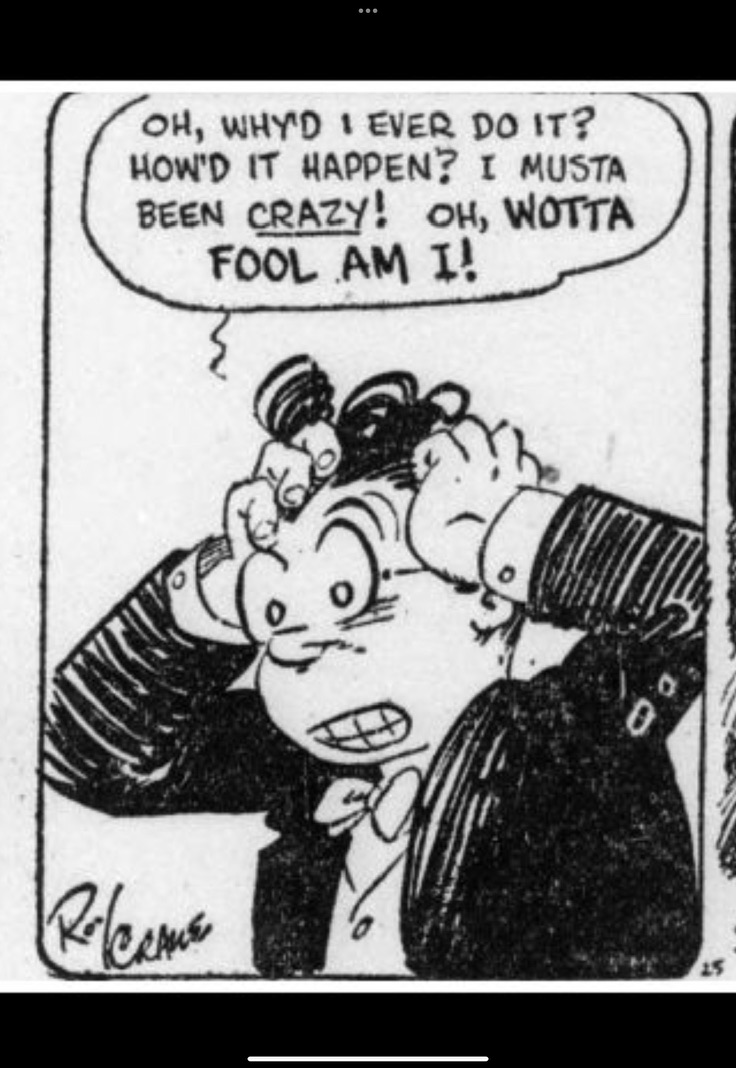
Roy Crane always seemed to me underappreciated in the pantheon of comic artists. True aficionados of the medium recognize his talent, of course. But in that larger gallery of cartoon notables, we tend to mention him more than study him. Too often, Crane is recognized off-handedly for originating the continuous story adventure strip with Wash Tubbs (1924), a genre that then reached its height in Alex Raymond’s detailed illustrative style, Milton Caniff’s chiaroscuro and cinematic effects or Chester Gould’s primitive Grand Guignol.
Unlike those perennial A-listers that graced most big city papers, Wash Tubbs was distributed by NEA Newspaper Enterprise Association), which focused successfully on the mid-tier papers, smaller markets and non-dailies. Other very worthy NEA strips like Out Our Way, Our Boarding House, Freckles and Friends, and even Alley Oop wove their way into millions of readers hearts but are not remembered so often and in such detail as strips that had better big city coverage. I also suspect that Crane’s cartoonish elements and plain line style somehow keep history from treating him as seriously as it does other adventure artists.
But in fact Crane’s cartoony realism forms the center of his brilliance and singularity as a comic great. He was an artist who painted in contrasts of many kinds. And he understood that comics were unique in suspending audiences between, caricature and realism, suspense and comedy, slapstick action and the stillness of being in awe of a breathtaking landscape panorama. He sensed that comics were large and could contain multitudes of aesthetic responses.

Famously, Wash Tubbs started as a gag-a-day strip with a familiarly google-eyed half-pint suspended somewhere between adolescence and manhood. Wash was goofy and accident-prone, subject to poor judgment and relentlessly horny, or, um, romantic. From the beginning, Crane seemed a bad fit for making him merely the center of gags, and the strip quickly took on the artist’s own interest in travel and exotic locations. Visually and personally, Wash himself remained in that big-foot world of dwarfish stature, rounded, google eyes, eccentric expressiveness, irrepressible libido. And yet he moved in a visual landscape of realistically drawn deserts, adobe villages, camel-mounted armies, jungle islands.
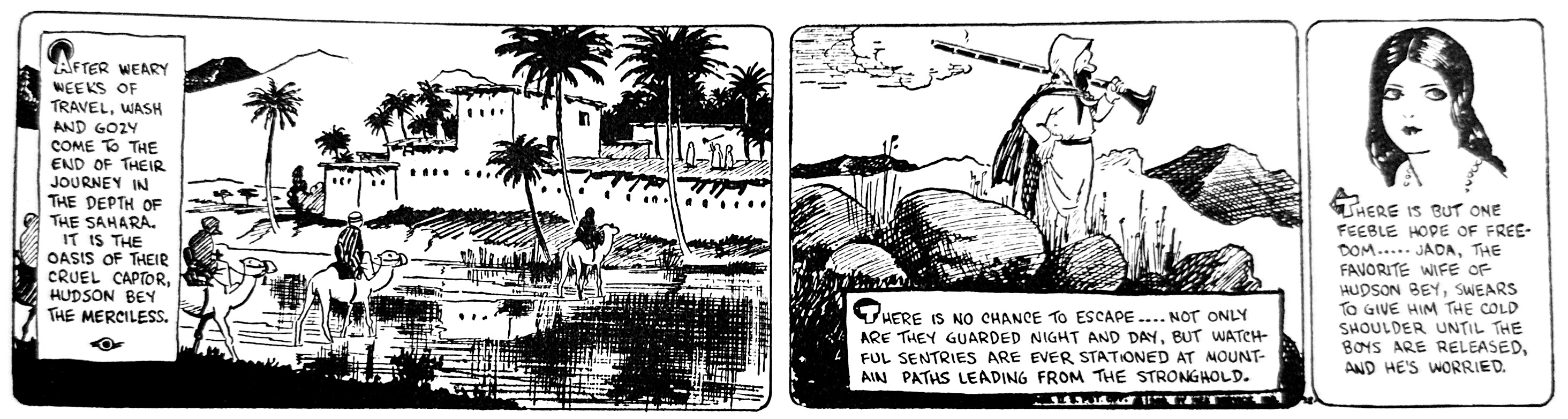
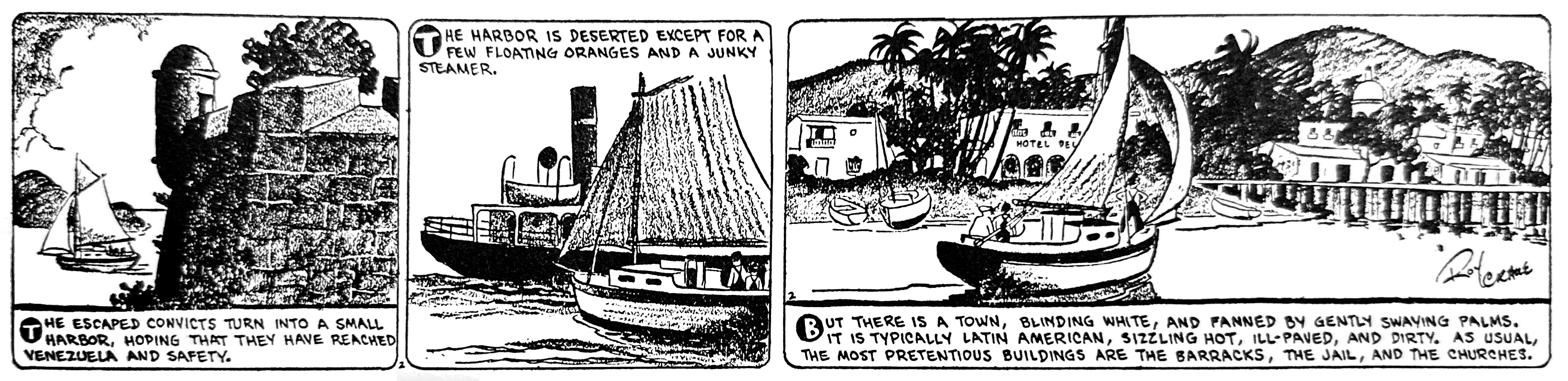
Unlike the later adventure cartoonists, Crane never seemed embarrassed about cartooniness. Raymond, Caniff and Gould maintained visually consistent styles and adventure worlds that were generally serious, dangerous but also humorless. Crane was not afraid to let the rounded edges of his caricatures leaven and soften the edges of his adventure. Yes, Wash and Easy were in genuine peril at every turn, but the overall roundedness of Crane’s world and the exaggerated action reassured us that death was not likely imminent, at least for them.
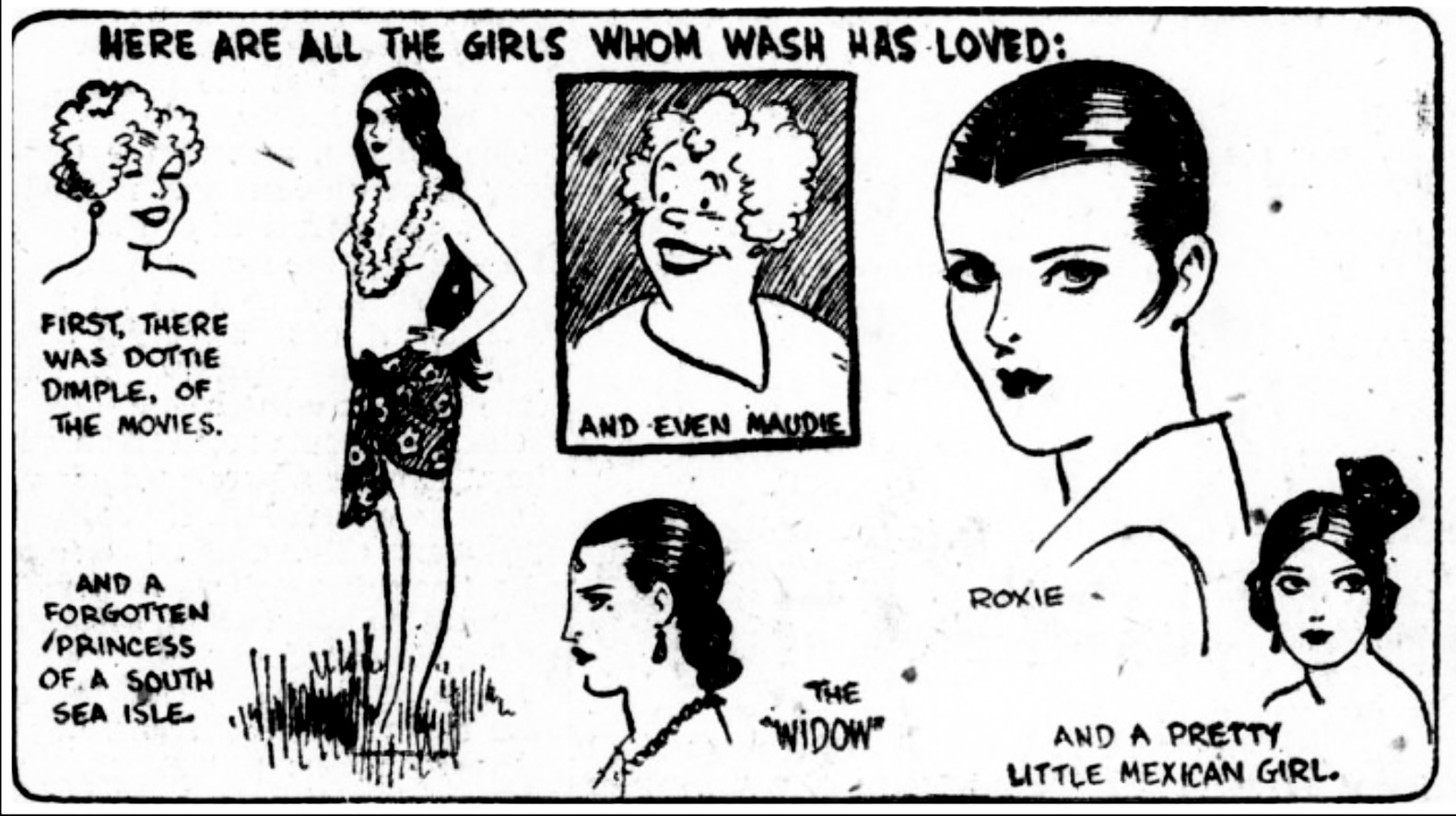
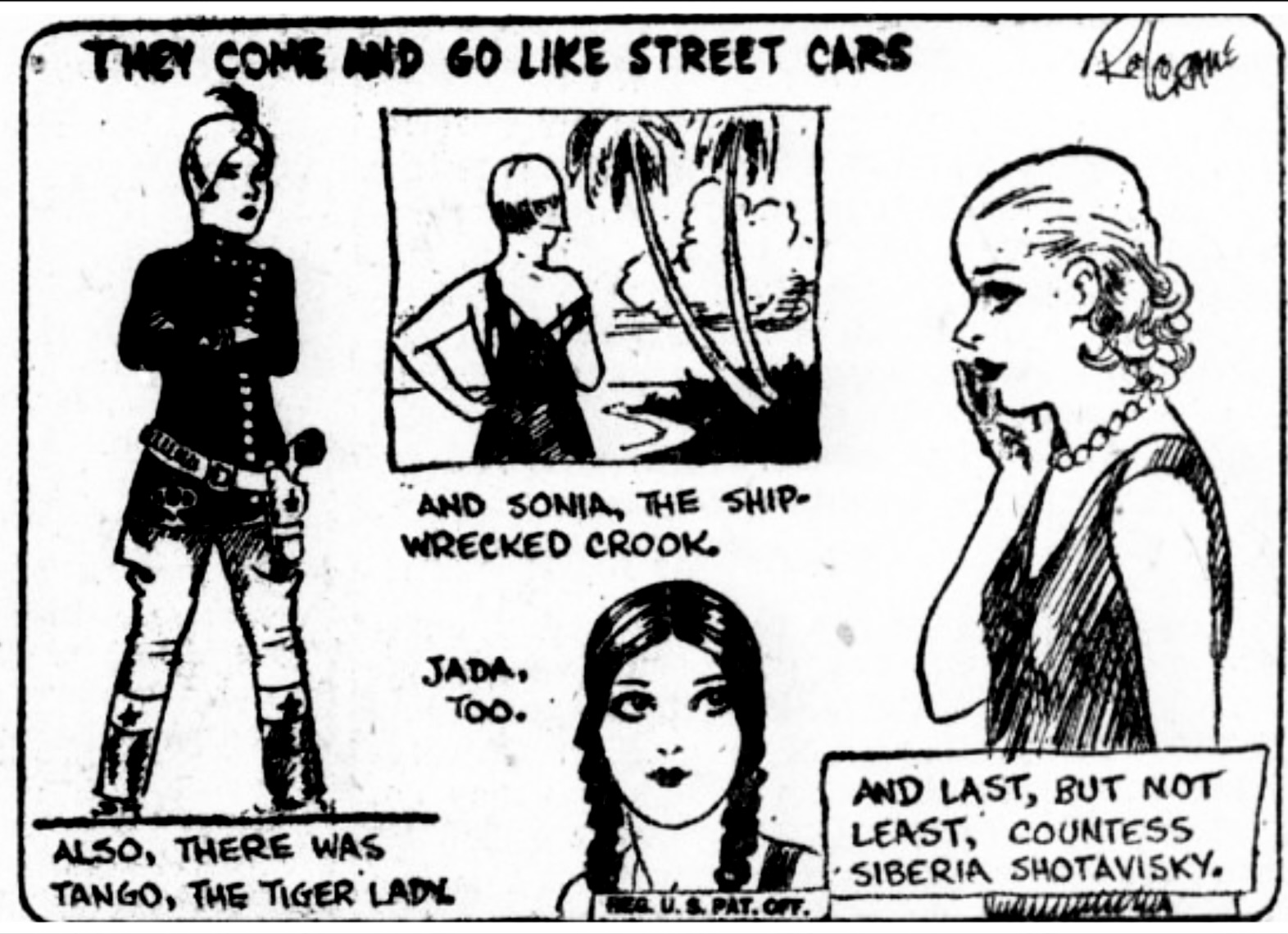
With this mixed style of cartoony realism, Crane gave himself the latitude to explore a wide range of comic and suspenseful tones within the adventure genre. In the 1929 introduction of Captain Easy, he adds another unlikely contrast. Easy is the lanky, sparsely-etched opposite of Wash. One is the nattily dressed half-pint, emotionally explosive and impulsive, irrationally desirous. On the other hand, Easy is lean and tall, a reserved but calculating journeyman with a genteel Southern bloodline. Their unlikely partnership allowed Crane to ratchet among many comic and adventure modes that were inaccessible to many other serious-minded strips. While many 30s strips seemed to channel the dark, imperiled world of the pulp magazines, Crane was more in tune with the swashbuckling silent films of Douglas Fairbanks.
This lighter tone freed Crane to make his adventures more thrilling than dangerous…but also more artful. Few artists exploited the full range of comic effects as wisely and effectively as Roy Crane. Every one of his dailies was a scene unto itself rather than simply story continuity to advance the plot or add suspense. Each day had a point to make or a scene to set or a sentiment or mood to establish. In order to do this, Crane would use narrative text panels to catch-up on the last day’s action rather than waste a panel of action reiterating yesterday’s story. Within each day’s strip he packed multiple framings and scene changes to pack a remarkable amount of story into just a few panels.
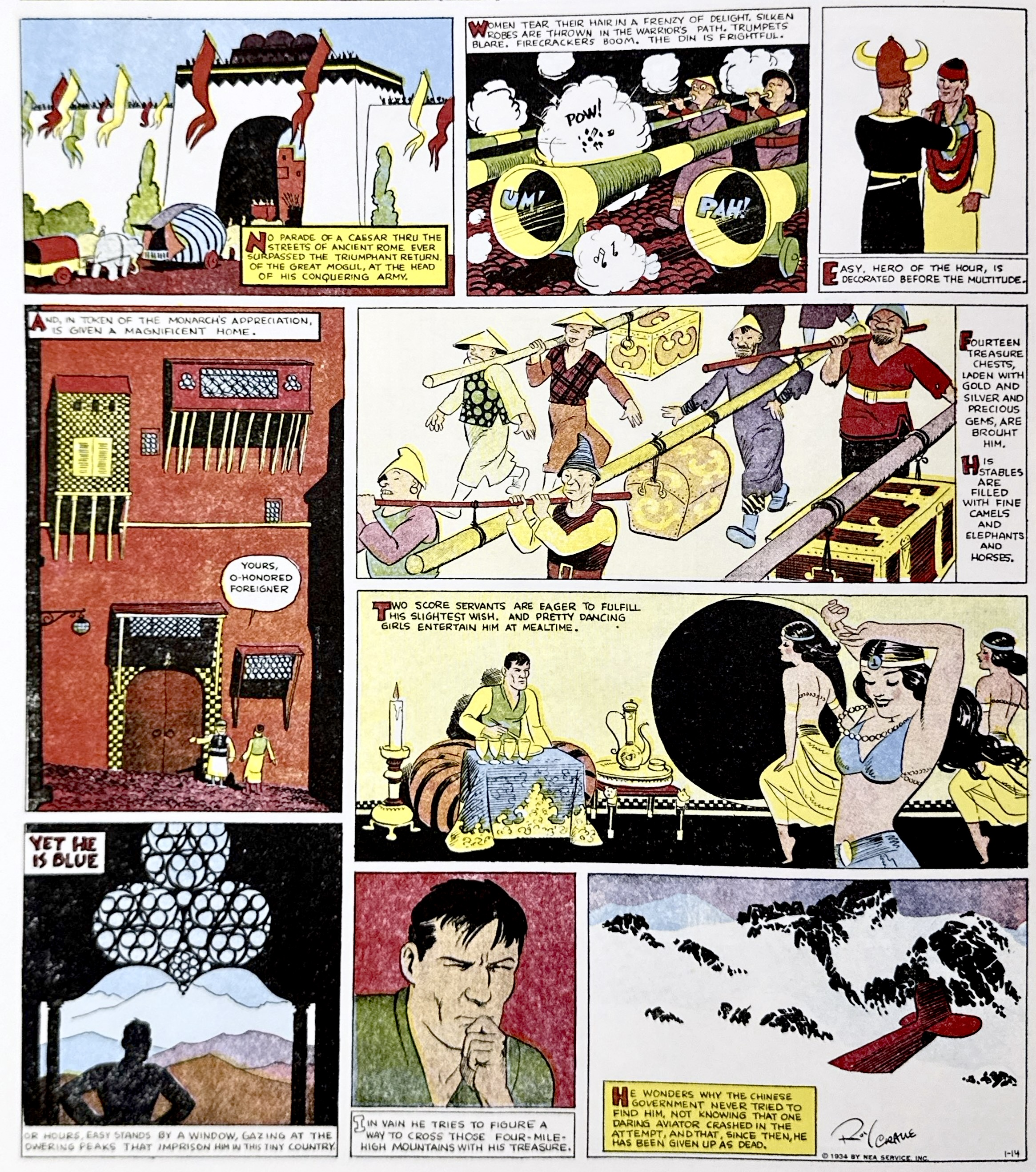
This remarkable intentionality to his work really comes through in the early years of the Captain Easy Sundays. Crane caught us up in the action with deliberate progressions across panels, shifting action, even panel dimensions. He seemed acutely aware of where the audience should be both visually and emotionally at each moment. Like Hitchcock, he carefully controlled where he situated his audience, what they likely were feeling after the last panel and what he wanted them to feel now. And he wasn’t afraid to let the logic of comics reading fill in the gaps between panels that often moved through or around a scene very quickly.
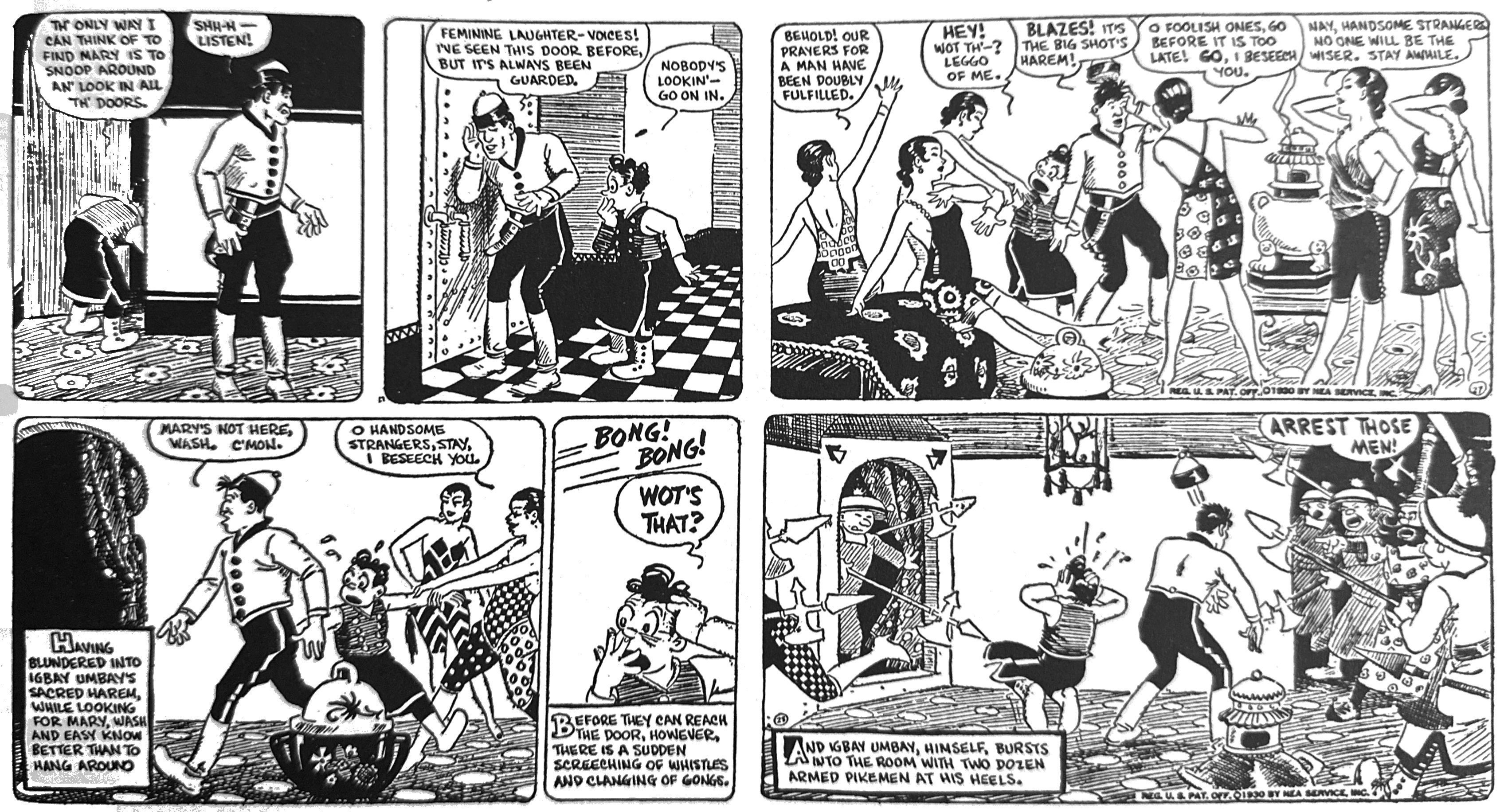
And so he also made the most of each panel. Many of his frames are filled with multiple planes of action and crowds of characters. More than most cartoonists on the page, Crane intended readers to dwell on, not dance across, his daily strip. There was a lot of detail to appreciate in this light line work. By the time he moved on to his next strip, Buz Sawyer, in the 1940s, Crane was exploiting every tool imaginable to create densely layered scenes with extraordinary depth even within the ever-smaller panels of post-war comics pages.
In many ways Crane was the purest of the adventure cartoonists in that he embraced the full range of comic strip aesthetics in ways his contemporaries did not. He was not trying to make comics more like magazine and book illustration nor film, nor pulp mystery. He was comfortable with its slapstick roots, its bombastic expressiveness, its improbable action, and how all of these elements kept tense situations more fun and engaging than dangerous. He understood comics on their own terms – as its own aesthetic realm that could create unique effects on readers.
Discover more from Panels & Prose
Subscribe to get the latest posts sent to your email.


Agreed. Crane is underappreciated even by hardcore strip aficionados and I find it surprising.
I find it surprising too. There was the awesome four volume set a few years back, but my intro to Tubbs was through the (NBM?) series in the early 80s. That was 35 or so years ago. We definitely need a new series of reprints. Crane’s virtuosity was also on display in Buz Sawyer, which is up to 5 volumes so far. Buz as a character didn’t thril me the way Easy did, but I think that was Crane’s trying for more realism with the new strip, and less of the lickety-whop of Easy. Buz Sawyer and Easy are a beautiful strips.
A new reprinting of Wash Tubbs is in the works, but it may be a while. Meanwhile Fantagraphics did put out a compilation of classic Wash Tubbs five or so years ago that is probably still available.