

Thomas Aloysius “Tad” Dorgan (1877-1929) was a master of the miniscule moment. His wildly popular Indoor Sports single panel strip (1913-1929) captured, and mercilessly chided, the small stuff: judging the new boyfriend, or the new suit, or the new office boy; impressing the boss by laughing (too hard) at his jokes; saving face when the least experienced poker player wins the big pot; evaluating the new stenographer; a barroom braggart. This was a kind of cartoon social realism that would become familiar in comics pages across the next decades, because Tad pioneered the format. These indoor landscapes typically foregrounded minor pretention with a surrounding “peanut gallery” of onlooking family, office workers, bar customers offering snide asides on the situation.
If this looks and sounds familiar, it is because Tad’s Indoor Sports echoed in J.R. Williams “Out Ouir Way,” Gene Ahern’s “Our Boarding House” and especially Jimmy Hatlo’s “They’ll Do It Every Time.” The idea that newspaper comics focused on the minor ironies and human foibles in everyday experience had been there from the start. And the single-panel spotlight on the minor moment had early masters in Clare Briggs (The Days of Real Sport) and T.E. Powers. But Dorgan crafted that focus into a specific genre of domestic social mockery in 1913 with Indoor sports. We finally get a deep dive into the seminal Indoor Sports from Stefan Wood and his Comic Strip Appreciation Group. CSAG intends to cover the full series through 1929, when the strip ended with Tad’s early death. Out now is the first volume of 1913-1914 strips, which reproduces each panel on a full page, which makes legible all of Tad’s dense slice-of-life detail and layers of downstage and upstage dialogue.
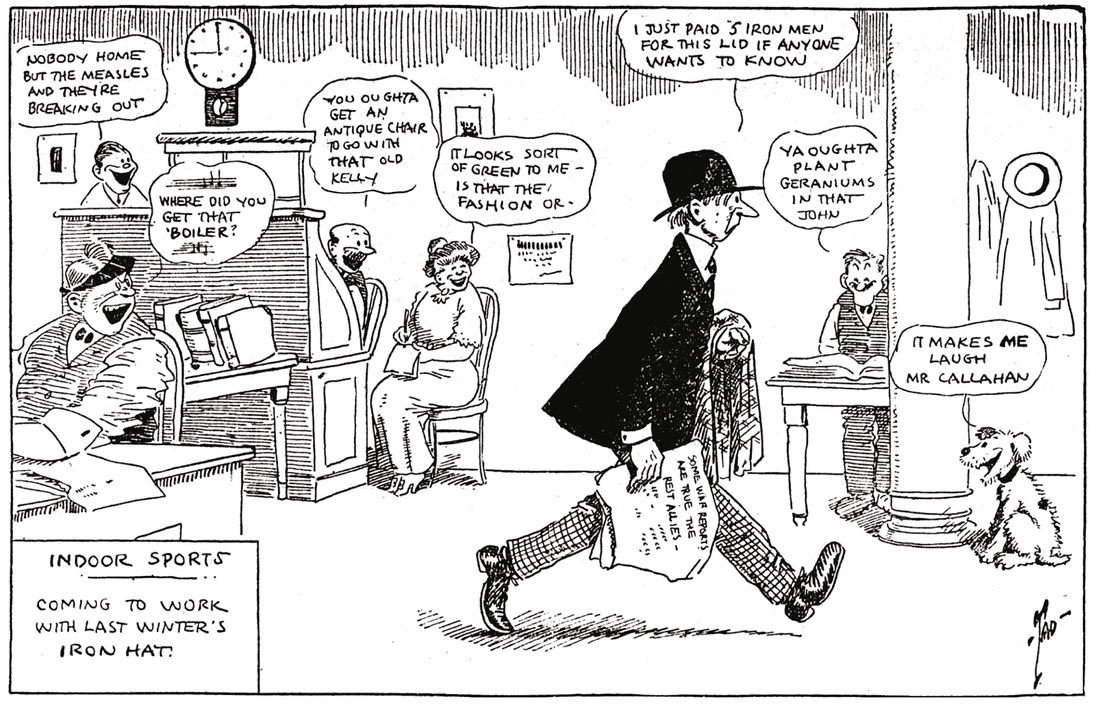
Unlike other forms of popular culture and even comics, which traded in melodrama, action, story arcs of consequence and heightened conflict, Indoor Sports highlighted no-stakes situations. At the center usually was minor social pretension, the everyday social niceties that get poked and mocked mercilessly by family and friends in the wings. As the first serious critic of the comic strip Gilbert Seldes noted of Indoor Sports in 1925, “It is extraordinarily unkind, yet without rancor, and is almost dispassionate in its cruelty.”
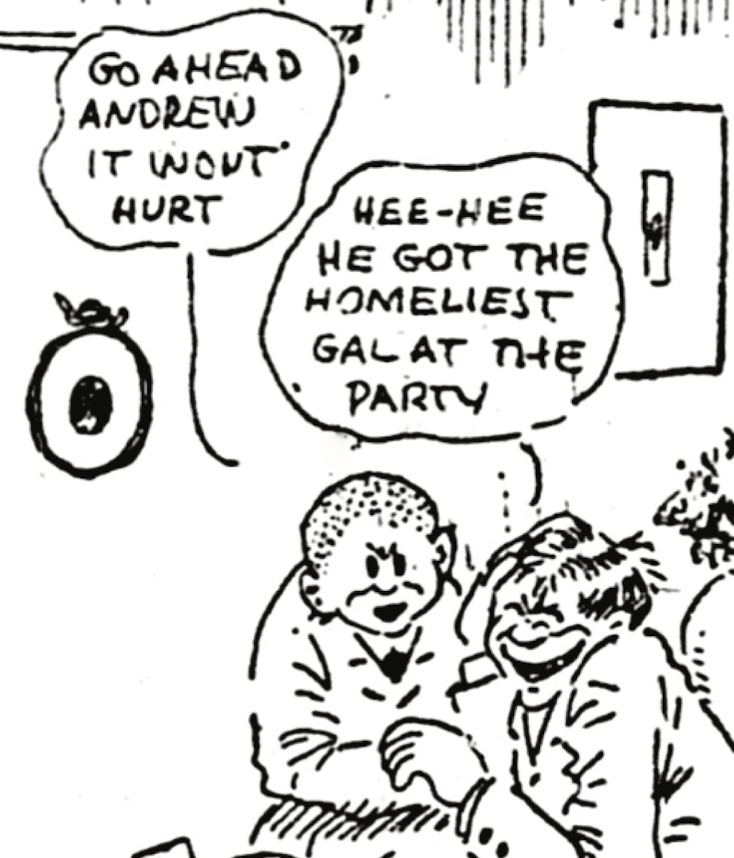
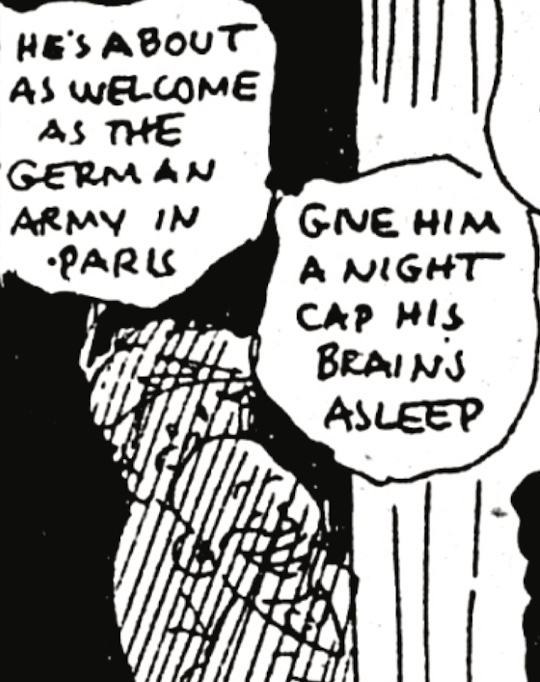
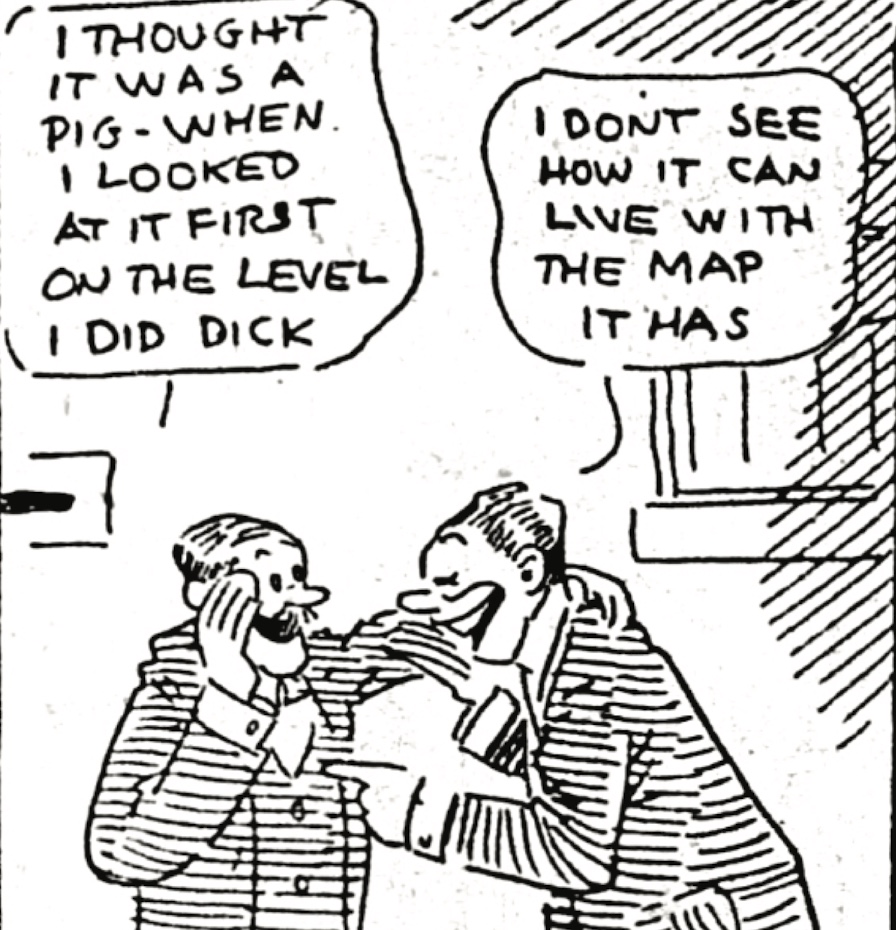
Indeed, for all of the homey quaintness of Tad’s situations, they are surrounded by pettiness and resentment, schadenfreude as a basic human reflex. “Rub some axle grease on it,” chortles one wag about a co-worker struggling to grow his first mustache. “I’d hide him if he was my son,” an employee whispers as office brown-nosers suck up to the boss introducing his boy. “Look at the fat thing. She dances like a piano mover,” a party guest snarks over the boss’s daughter. And metaphors for “stupid” became a regular aside from someone in the peanut gallery: “Nobody’s home and the teapot’s cracked”; “Nobody’s home and the furnace is broke;” etc. became a convention of the strip. This is the art of the put down, the raucous audience from the cheap seats throwing tomatoes, but in this case they are pelting the performances of everyday life. And the strip constructs social interactions as essentially performative. There is an upstage and downstage to these dioramas, comments from the wings, and frequent references to “giving the once over” or “panning.” In dorgan’s America, we are either giving small performances or serving as audiences judging them.
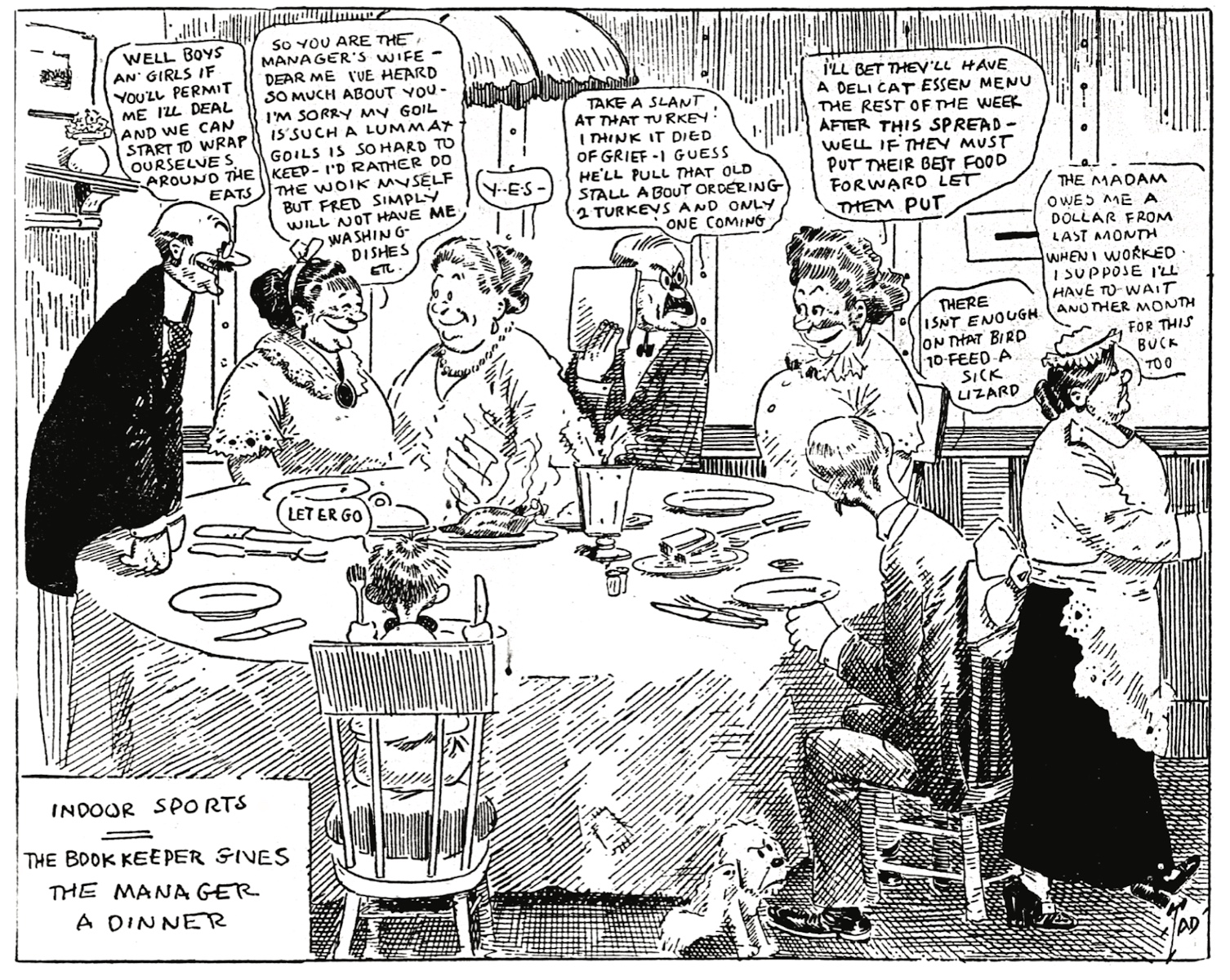
Tad had it right naming the strip “Indoor Sports.” because he is bringing to the social interactions in bars, living rooms, steakhouses all of the jousting, teasing, performative boasting, tribal thinking, relentless second guessing and bad judgment of the sports culture. The strip is not just refreshingly vulgar, but it is a view of America itself as fundamentally, wondrously vulgar and a bit mean. Tad’s people are unforgiving and tactless, mocking everything from dress to weight, other people’s ambition, their looks, their earnestness. And everyone is a fraud on some level. This is not an America of sentiment, community spirit, adorable heartwarming moments. Which is to say it is not the America of middle-class magazine covers. This is a genuine counterpoint to America’s idealized self-view peddled in other media. And has the baseness and brutality of sport. As Wood points out in his intro to the reprint, the strip most often appeared in the sports pages, where Tad already had a national reputation as a boxing cartoonist especially. And the artist was himself allergic to gentility of any sort.
But Tad isn’t presenting a world of hypocrisy so much as a give and take between performance and razzing, the boast and the put down. He is not making Sinclair Lewis or Sherwood Anderson’s point about the shallow surfaces of middle class and small town America, let alone registering H.L. Mencken’s contempt for the American “booboisie.” Instead, he is dramatizing an endless social dynamic where people boast and get deflated, fabricate and get called on it, and somehow this maintains a social balance. It is noteworthy that unlike other strips, no violence or even raised tempers occur in Indoor Sports. There is a kind of social stasis maintained by all of this snarky banter.
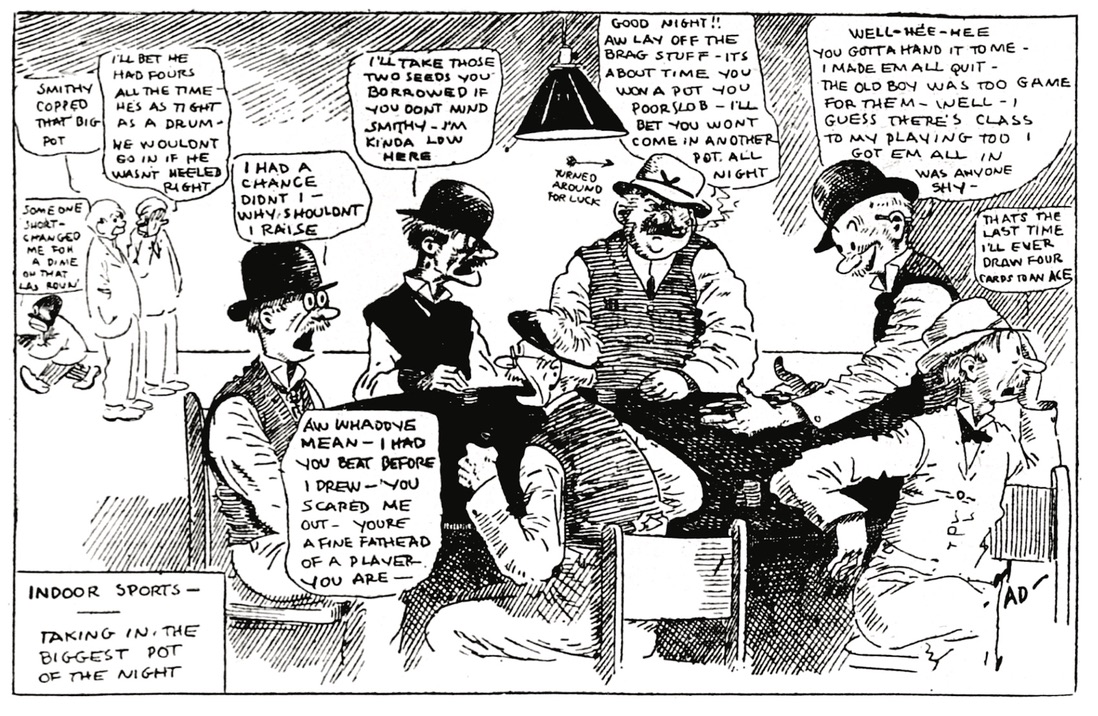
And basically the strip is ethnographic, a kind of comedic sociology of the commonplace. Tad was among the earliest chroniclers of modern male insecurity – Bro-viating – if you will. As his middle and working class men become more servile, under the thumbs of petty bosses, wives, unctuous middle managers, their bravado heightens. Among my favorites is “Taking in the Biggest Pot of the Night.” Losing at a poker game ignites a firestorm of resentments, rationalizations, blame, petty paybacks. It it like a carefully observed ethnography of externalization. Bravado, saving face, self-justification become the bulwarks for fragile male ego. Tad’s women dont have the same specificity of type and language as the men but they too are sharply judgmental, especially of other women, who are presumed to be conniving. And they often dish about how unhappy other people’s marriages are.
Inside Sports was as current as the rest of the newspaper. Tad referenced everything from contemporary song lyrics to hair and suit styles to Pancho Villa to European war news. But his specialty was always the language of the moment and colorful slang that welled up from common conversation. He is famous for popularizing “hard-boiled,” “dumbbell,” “drugstore cowboy” among others. But you will also find yourself Googling a host of unfamiliar idioms like “Kelly” (hat), “dumb Isaac” (don’t be so negative). Like all things that smacked of privilege, he rejected formal literary constructions in favor of a richer artistry he sees in street lingo.
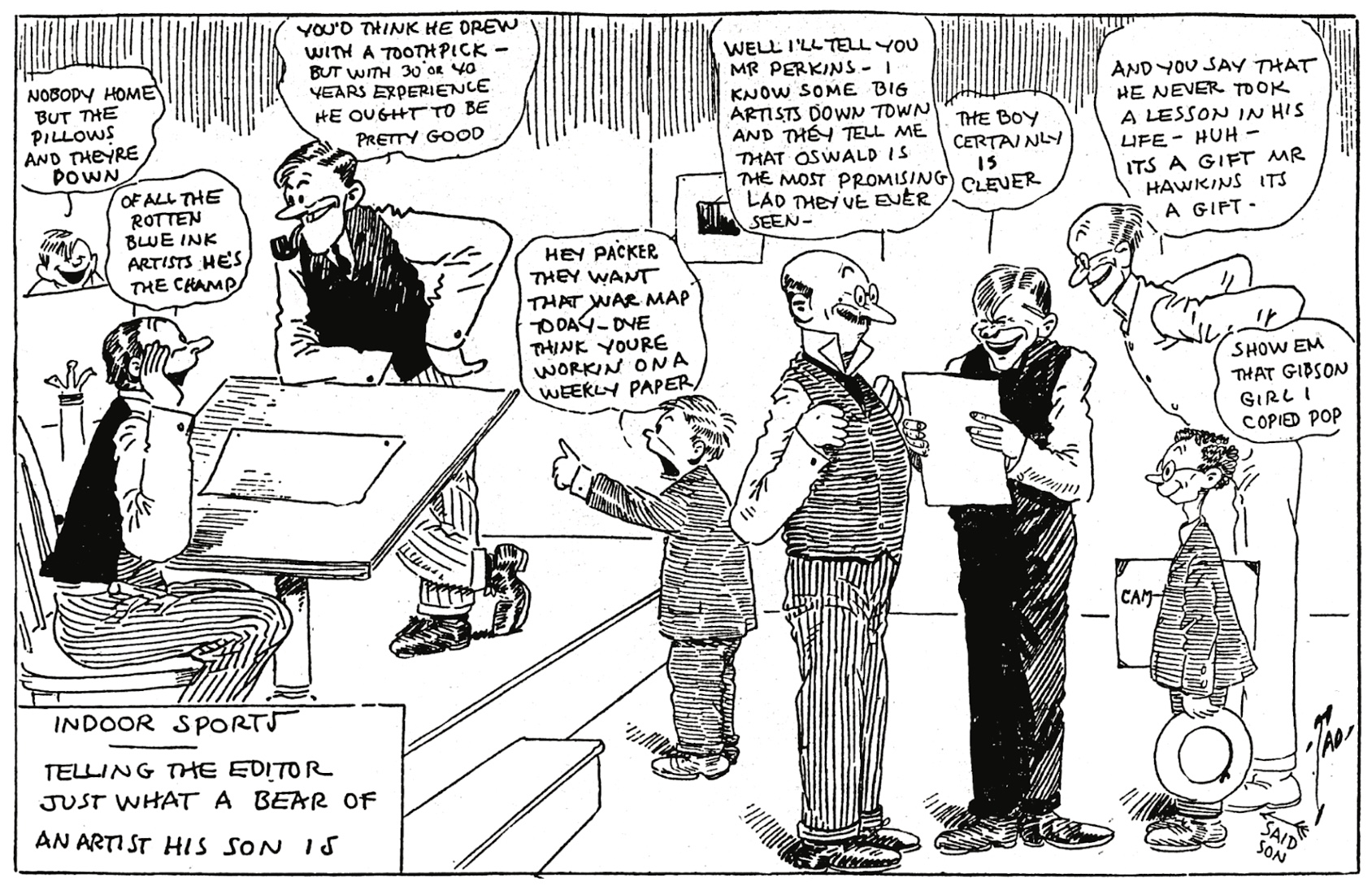
In all of its sharp wit, nasty asides, petty grievances, Indoor Sports embodies much of what made the comic strip exceptional art. As a medium it seemed to celebrate the richness of common people, common language and common experience over and above the exceptional, the formal, the official. There is a populist energy and authenticity in the best of comics that are notably American. We are always aware that all of those chortling nabobs in the background of Tad’s Indoor Sports will themselves take their turn as the center of ridicule at some point…as will we ourselves. No one is spared because those tiny laughable pretensions are unexceptional and universally shared. It is a flavor of self-mockery that is fundamentally democratic.
Discover more from Panels & Prose
Subscribe to get the latest posts sent to your email.

